


More news on this day
Severe weather across the Midwest has triggered a cascade of airline disruptions at Northwest Arkansas National Airport, with American Airlines and United Airlines together facing 39 schedule changes and cancellations that temporarily severed key nonstop links to Chicago and Denver.
Get the latest news straight to your inbox!
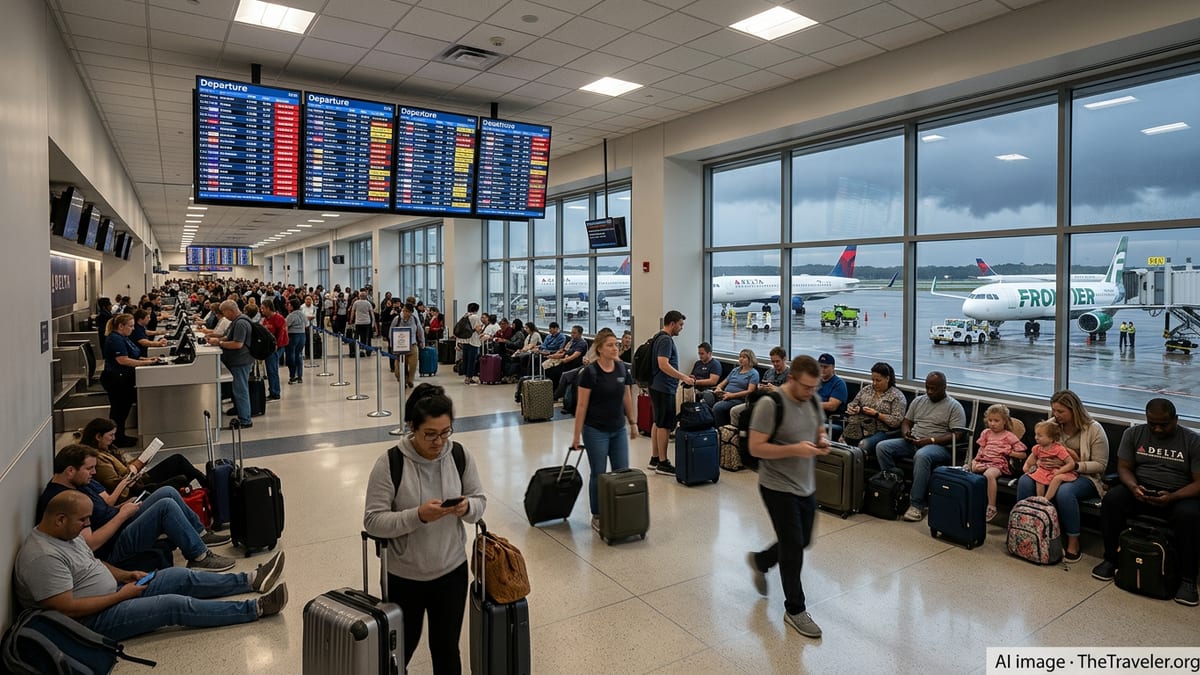
Weather Turbulence Cascades Into Regional Gridlock
Publicly available tracking data and airline alerts indicate that a fast-moving line of storms across the central United States has translated into significant operational strain for carriers serving Northwest Arkansas. The ripple effects have been particularly acute for American Airlines and United Airlines, whose networks are closely tied to major hubs in Chicago and Denver.
Flight-status boards for Thursday and Friday show a combined 39 instances of cancellations or significant delays on American and United services touching Northwest Arkansas National Airport, including several rotations that normally connect Bentonville and Fayetteville to Chicago O’Hare and Denver International. Many of those flights were either scrubbed outright or delayed long enough to force missed onward connections.
The pattern reflects a familiar chain reaction in modern hub-and-spoke air travel. Heavy weather around a few critical hubs in Illinois and Colorado, mixed with crew-duty constraints and tight aircraft utilization, quickly translated into ground stops, rolling delays, and ultimately cancellations on regional spokes such as Northwest Arkansas.
Air-travel analysts note that the disruptions have landed just as carriers are preparing for a record summer travel period. Industry forecasts released this week project that more than 70 million Americans will take trips during the broader Independence Day window, leaving airlines with little slack to absorb operational shocks.
Chicago and Denver Links Temporarily Severed
Northwest Arkansas National Airport has long depended on nonstop flights to Chicago and Denver as crucial connective corridors for both business and leisure travelers. Traffic data for the twelve months through early 2026 list Chicago O’Hare among the airport’s busiest routes and Denver among its top western gateways, with American and United prominent on both corridors.
On the storm-affected days, those links partially collapsed. Several American and United departures from Northwest Arkansas to Chicago were removed from the schedule or showed prolonged, rolling delays, while inbound aircraft from O’Hare were diverted, canceled, or substantially late. A similar pattern emerged on Denver services, with United’s operations constrained by conditions and knock-on effects at Denver International.
For travelers on the ground in Arkansas, the result was a temporary loss of nonstop options to two of the country’s most important connecting hubs. Passengers heading to international destinations or smaller regional cities that rely on one-stop itineraries through Chicago or Denver found themselves stranded or rebooked on complex routings through alternate hubs such as Dallas–Fort Worth, Houston, or Charlotte.
Airport departure boards and third-party trackers showed periods when no American or United flights were actively operating between Northwest Arkansas and Chicago or Denver, underscoring how quickly a regional gateway can be cut off when several sequential legs are disrupted at once.
Travelers Confront Rebookings, Missed Connections, and Long Lines
For passengers, the 39 disruptions translated into a wide range of practical challenges. Many travelers reported missed connections at Chicago O’Hare after late-arriving flights from Northwest Arkansas, as minimum layover times vanished amid ground delays and holding patterns. Others faced outright cancellations and had to join long queues at customer-service counters to secure new itineraries or overnight accommodations.
Public commentary on social channels and travel forums described scenes of crowded gate areas, limited information, and extended waits to speak with airline representatives. Some passengers were rebooked onto later flights via alternate hubs, while others accepted travel credits or opted to delay trips entirely when same-day options disappeared.
Families heading to summer vacations, corporate travelers bound for meetings in major metropolitan areas, and international passengers connecting via Chicago all faced uncertainty. In some cases, rebooked itineraries added multiple stops and turned what would normally be a short hop from Northwest Arkansas into a full-day journey.
Standard airline policies for weather-related disruption generally limit cash compensation while emphasizing rebooking and waivers. As a result, many travelers focused on securing alternative seats and hotel rooms, often turning to mobile apps and airline websites when in-airport support lines grew lengthy.
American and United Networks Under Summer Strain
The disruptions at Northwest Arkansas highlight how exposed regional spokes can be to turbulence in the larger networks of American Airlines and United Airlines. Both carriers have invested heavily in Chicago O’Hare as a central connecting point, while United has also built Denver into a major western hub, making performance at those airports critical for smaller cities.
Operational updates from recent months show both airlines ramping up capacity for the 2026 summer season, adding flights and frequencies across domestic and international networks. While the growth offers more options in normal conditions, it also means aircraft and crews are tightly scheduled, leaving limited buffer when storms, air-traffic restrictions, or ground delays develop at key hubs.
Observers note that a series of recent travel waivers tied to thunderstorms in Chicago and severe weather in the broader Midwest has foreshadowed the current challenges. Each new storm system forces airlines to adjust flight banks, reposition aircraft, and sometimes cancel entire rotations, which then cascades into airports such as Northwest Arkansas that rely on a handful of daily connections to major hubs.
Industry data and recent travel seasons suggest that this pattern may continue through the peak summer months, as carriers balance high passenger demand with operational complexity and increasingly volatile weather in critical air corridors.
What Passengers in Northwest Arkansas Can Do Next
For travelers booked on American or United services from Northwest Arkansas in the coming days, publicly available guidance from airlines and travel organizations emphasizes preparation and flexibility. Flyers are encouraged to monitor their reservations closely using airline apps or websites, as schedules can continue to shift while carriers restore normal operations on disrupted routes.
Travel experts recommend building extra connection time into itineraries that pass through storm-prone hubs like Chicago and Denver during active weather patterns, and considering early-morning departures when possible, since those are often less affected by the day’s accumulated delays. When severe weather is forecast, some passengers may find it worthwhile to move trips forward or backward by a day if change-fee waivers are available.
For those already affected by the 39 disruptions, options typically include rebooking to later flights on the same carrier, rerouting through alternate hubs, or requesting travel credits where airline policies allow. Travelers with time-sensitive plans might look at nearby airports in the broader region if seats from Northwest Arkansas remain limited as schedules reset.
While the latest round of cancellations and delays underscores the vulnerability of regional airports to hub disruptions, it also highlights the role of transparent communication and proactive planning. As summer travel demand builds, passengers in Northwest Arkansas are likely to keep a close eye on the performance of their Chicago and Denver connections whenever the next line of storms approaches.