


More news on this day
Travelers moving through Patrick Leahy Burlington International Airport on June 19 are facing a choppy travel day, as multiple reports show three departures significantly delayed and five flights canceled across several major U.S. carriers serving key domestic routes.
Get the latest news straight to your inbox!
Mixed Day for Departures on Core Hub Routes
Flight status boards at Patrick Leahy Burlington International Airport reflect a patchwork of disruptions rather than a single sweeping shutdown, with affected services concentrated on key hub connections. Publicly available tracking data shows that three flights listed as departing Burlington have encountered extended delays, while five others have been canceled outright, interrupting passengers’ plans to reach major connecting airports.
The impact is spread across familiar players at the Vermont airport, including American Airlines, Delta Air Lines, United Airlines and low cost carrier Breeze Airways, which together anchor much of Burlington’s domestic network. These airlines typically provide nonstop access from Burlington to large hubs such as Charlotte, Detroit, Chicago, New York area airports and major leisure destinations, so even a limited cluster of cancellations can ripple through itineraries well beyond northern New England.
In some cases, the disruption appears to involve early morning and late afternoon flights, time bands that are crucial for business travelers, same day connections and weekend leisure trips. Several services that ordinarily support onward links to the Midwest, the Southeast and sun destinations are either operating well behind schedule or not operating at all, prompting passengers to scramble for rebooking options.
While the total number of affected flights remains modest compared with a full schedule day, the concentration on popular domestic routes gives the disruption an outsized effect, particularly for travelers who depend on Burlington as their primary link to the national air network.
Operational and Weather Factors Feed Into Disruptions
Publicly accessible flight tracking feeds and airline status pages do not always specify a single cause for each delay or cancellation, but the pattern at Burlington fits into a broader mix of operational and weather related pressures visible across U.S. aviation. When upstream aircraft arrive late into hub airports, or when thunderstorms and congestion trigger ground delays elsewhere, smaller airports such as Burlington can experience sudden schedule gaps as aircraft and crews are reassigned.
Airport planning documents and recent community discussions highlight that many carriers at Burlington rely on shared ground handling staff, particularly for smaller or newer entrants like Breeze Airways. When staffing is tight, a late arriving aircraft can create a domino effect, as crews attempt to turn multiple flights in close succession. Flyers have reported in recent months that short handed ramp and gate teams sometimes lengthen turnaround times, which can amplify even minor schedule disruptions.
Weather often magnifies these vulnerabilities. Although Burlington’s airfield is accustomed to operating in challenging winter conditions, summer thunderstorms and low ceilings along the Eastern Seaboard can still force airlines to slow or stop traffic into major hubs. Because many of Burlington’s flights operate as spokes into those same hubs, a storm hundreds of miles away can still translate into a same day cancellation or rolling delay for Vermont based travelers.
Travel industry advisories emphasize that these sorts of localized disruption clusters are becoming more visible to passengers as real time tracking tools and airline apps make schedule changes instantly apparent. On a day such as June 19, a Burlington traveler checking a flight number may see a status shift from on time to delayed or canceled with little warning as airlines adjust their operations.
Travelers Confront Long Lines, Missed Connections and Rebooking Challenges
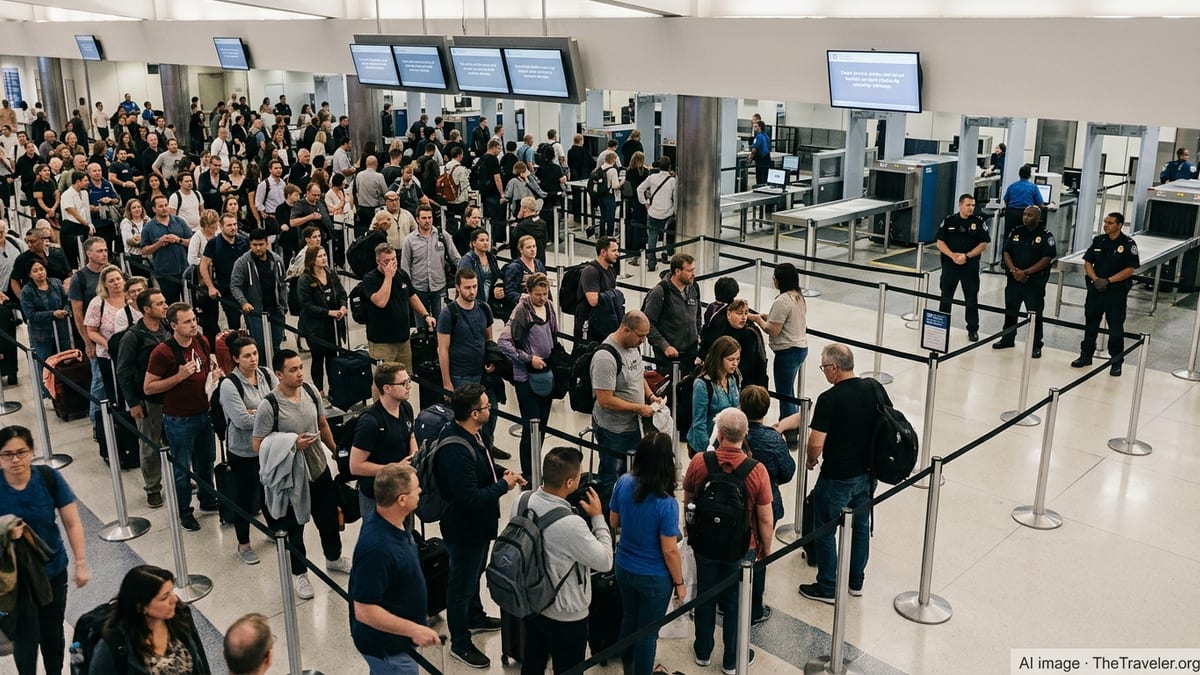
For passengers on the ground at Patrick Leahy Burlington International Airport, today’s disruptions are creating familiar pain points: longer waits at ticket counters, questions about missed connections and uncertainty about when they will actually depart. When five flights on a compact schedule are canceled and others are running late, even a relatively small terminal can feel crowded as travelers cluster around gate podiums and customer service desks.
Travel discussion forums focused on Burlington and Vermont have in recent months chronicled the frustrations that follow sudden schedule changes at the airport, including lengthy lines at airline counters, limited same day rebooking alternatives and tight staffing during off peak hours. When irregular operations hit, some passengers report that they are offered hotel and meal support by their carriers, while others end up arranging their own accommodations or ground transport to larger airports such as Boston or Montreal in hopes of salvaging onward journeys.
Because Burlington’s network is heavily built around hub connections, a canceled outbound flight can also translate into a lost seat on an international or cross country service later in the day. Travelers whose first leg is scrubbed face the added task of reconfiguring entire itineraries, which may include nonrefundable hotels or tours at their destination. For those trying to return to Vermont, a cancellation at a hub can result in unplanned overnight stays and added expense.
Consumer advocates consistently recommend that passengers monitor their flights closely, especially on days when multiple services at a given airport are showing problems. Using airline apps or real time trackers, passengers can sometimes spot an upstream delay before it appears on the Burlington departure board, allowing a bit more time to contact the carrier digitally rather than waiting in a physical queue.
American, Delta, United and Breeze Under Scrutiny
With American Airlines, Delta Air Lines, United Airlines and Breeze Airways all appearing among the affected carriers, some Burlington area flyers are again raising questions about reliability and scheduling strategy at the airport. Publicly available airport impact assessments note that these airlines serve as the backbone of Burlington’s scheduled service, connecting Vermont to key hubs such as Charlotte, Philadelphia, Chicago, Detroit and Orlando, as well as seasonal routes tailored to leisure demand.
Local travel commentary has pointed out that some of the most frequently disrupted services are operated by regional affiliates on behalf of the major brands, which may be more vulnerable to aircraft and crew shortages. When one flight in a multi leg day is interrupted, operators sometimes choose to cancel a later Burlington turn to reposition aircraft where demand is higher, leaving smaller markets with fewer backup options.
Breeze Airways, which has in recent years expanded from Burlington to several sun and secondary city destinations, has helped diversify the airport’s network but also depends on a relatively lean operation. On days with multiple irregularities across the system, a carrier with limited spare aircraft can have little room to recover quickly, which can translate into longer delays or one flight being dropped entirely.
At the same time, Burlington’s role as a regional gateway for travelers from across Vermont and southern Quebec means that even a small cluster of cancellations affects a geographically broad catchment. Passengers driving several hours to reach the airport may find out only upon arrival that their flight is heavily delayed or canceled, underscoring the importance of checking status frequently before leaving home.
What Passengers Can Do on a Disrupted Day at BTV
On a day when three flights are delayed and five canceled, travelers at Patrick Leahy Burlington International Airport still have a few practical steps available to reduce stress. Travel experts generally advise arriving at the airport earlier than usual when widespread disruptions are visible on flight boards, both to clear security comfortably and to allow time for any necessary rebooking at the counter or via self service kiosks.
Passengers are also encouraged to use airline mobile apps or websites to request alternative flights, same day changes or refunds where eligible. Many carriers now permit customers to rebook within a certain date range without additional change fees when disruptions are system driven. When a flight is canceled outright, publicly available airline policies often describe whether vouchers, hotel support or meal credits may be provided, depending on the cause of the disruption and local regulations.
For those with tight onward connections, considering earlier departures from Burlington, even on a different carrier, can sometimes provide a buffer against cascading delays at hub airports. Some Vermont travelers also weigh the option of using larger regional gateways such as Boston or Montreal for particularly time sensitive trips, accepting the added ground travel in exchange for a greater choice of backup flights.
For today, the combination of delayed and canceled flights at Patrick Leahy Burlington International Airport is a reminder that even well regarded small airports are not immune to the broader strains in the national aviation system. Travelers relying on Burlington’s core domestic routes are likely to feel the effects well into the day as airlines work to rebalance aircraft, crews and passenger itineraries.