


More news on this day
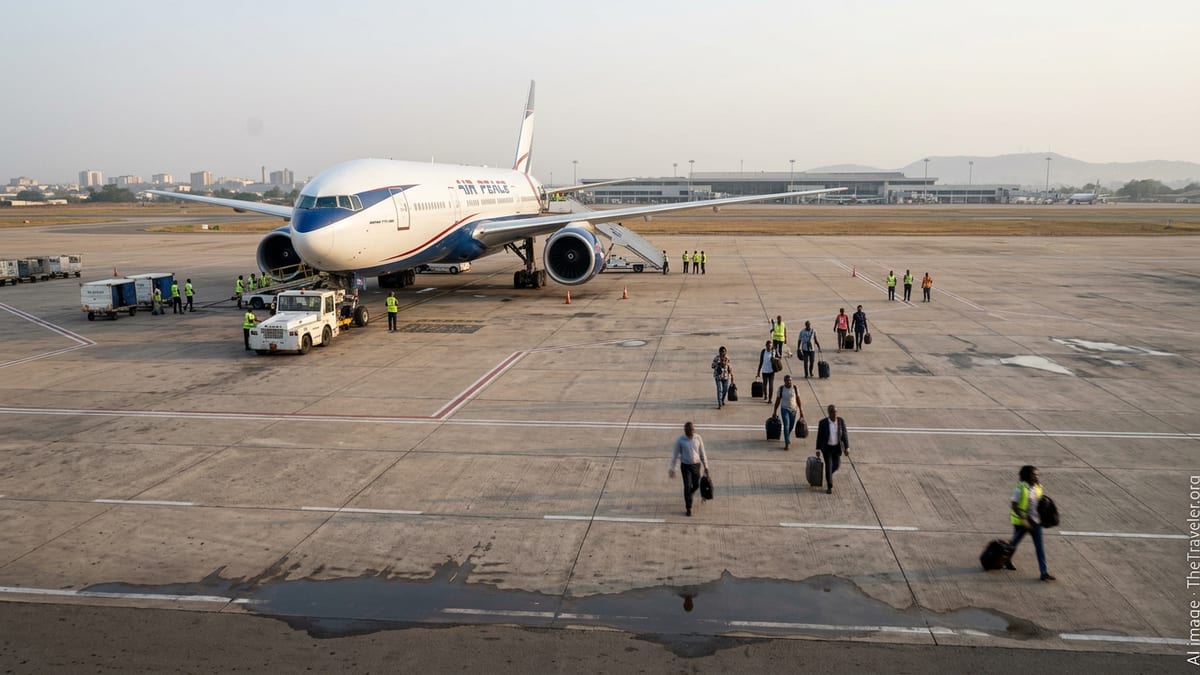
Publicly posted Nigeria Civil Aviation Authority data for August 2026 indicates that two major domestic carriers, Air Peace and United Nigeria Airlines, each recorded delay levels above 70%, intensifying scrutiny of punctuality and consumer protections in Nigeria’s busiest air corridors.
Get the latest news straight to your inbox!
What the August disruption figures show
The regulator’s “Summary of Domestic Airline Disruption Operations” for August 2026 aggregates performance across 15 airlines and portrays delays as a system-wide issue rather than an isolated problem. The summary indicates 7,961 domestic flights were operated during the month, with 4,765 logged as delayed and 36 recorded as cancelled.
Air Peace, the country’s largest domestic airline by flight volume in the dataset, operated 1,864 flights in August. The summary shows 1,330 of those flights were delayed, a 71.4% delay rate, along with seven cancellations.
United Nigeria Airlines recorded 1,231 flights, with 943 delayed, translating to roughly three out of every four flights. In the same NCAA summary figures reported in Nigerian media coverage, United Nigeria also posted eight cancellations, the highest cancellation total among the airlines listed for August.
Delay duration: many short setbacks, but long delays still matter
The NCAA breakdown shows the bulk of disruptions were relatively short, which matters for travelers trying to decide how early to arrive, whether to book tight same-day connections, and how to plan ground transportation on arrival. The summary groups delays by duration bands, including 16 minutes to one hour and one to two hours as the most common categories.
Published coverage based on the regulator’s breakdown shows 2,801 flights fell into the 16-minute to one-hour delay band, and 1,322 were delayed between one and two hours. Longer disruptions were less common but still substantial: 407 flights were delayed between two and three hours, and 235 flights were delayed for three hours or more.
Air Peace accounted for a significant share of the longest delays reported for August, with 108 flights delayed at least three hours. United Nigeria recorded 41 flights delayed three hours or more, while other carriers had fewer flights in that longest-delay bracket.
Regulatory pressure: United Nigeria told to match schedules to fleet capacity
In early September, the NCAA published a separate notice describing regulatory action directed at United Nigeria Airlines, tying enforcement to operational planning and passenger treatment. The regulator’s notice outlines an instruction for the airline to improve flight operations, adhere to passenger-rights rules, and avoid expanding routes beyond what its current fleet can reliably support.
According to the regulator’s publicly posted account, the directive was delivered in Abuja during a consultative meeting held on September 9, 2026, and later summarized by the NCAA in a news update dated September 10, 2026. The notice also references concerns about passengers being stranded without adequate communication or assistance, and points to Part 19 of the Nigeria Civil Aviation Regulations (Nig. CARs) as the consumer protection framework the airline is expected to follow.
The same NCAA notice indicates United Nigeria acknowledged shortcomings and committed to clearing pending ticket-refund cases within 14 days, described as the official refund timeline. For travelers, the episode signals that punctuality problems are now being discussed in the language of capacity management, not only day-to-day operational hiccups.
What passenger-rights rules mean during lengthy delays or cancellations
For travelers, the most immediate practical question is what assistance is required when delays stretch beyond minor schedule slips. The NCAA’s passenger-rights guidance, published on its website, sets out baseline assistance and compensation expectations for both domestic and international travel when delays or cancellations occur.
For domestic flights, the NCAA states that passengers are entitled to refreshments after two hours from the scheduled departure time, and that beyond three hours the air carrier shall reimburse passengers the full value of their tickets. For cancellations on domestic routes, the NCAA guidance lists compensation of 25% of the fare unless passengers were informed at least 24 hours before the scheduled time of flight, alongside the right to reimbursement of the full value of the ticket.
For international flights, the NCAA outlines a stepped approach: refreshments and communications support for delays between two and four hours, meals for four hours or more, and hotel accommodation plus transport when the reasonably expected time of departure is at least six hours after the previously announced departure time.
What this means for travelers booking Nigeria domestic routes now
The August numbers are likely to influence how passengers plan domestic trips in Nigeria heading into the busier late-year travel period. High delay rates can change the “true” travel time on routes that are short on paper, especially where airport access, security queues, and road traffic around major terminals already compress schedules.
Travelers with time-sensitive commitments may want to prioritize itineraries with larger time buffers, avoid tight same-day connections between domestic and international flights, and confirm airline communication channels before arriving at the airport. Where travel is discretionary, selecting earlier departures can reduce cascading impacts from late aircraft rotations that accumulate throughout the day.
The NCAA summary does not assign causes to individual delays, limiting how precisely travelers can attribute disruptions to weather, air traffic management, aircraft availability, or airport-side constraints. Still, the combination of published disruption totals and the regulator’s separate operational directive to United Nigeria underlines that on-time performance has become a prominent consumer issue, with enforcement and passenger-rights compliance now part of the public record.