


Oslo Central Station, known locally as Oslo S, is the heart of Norway’s rail network and the main gateway into the capital for domestic and international travelers. Whether you are arriving from Oslo Airport, changing to a regional train, or simply looking for left-luggage and a coffee between connections, understanding how the station is laid out and how train routes and platforms work can save you time and stress. This guide walks you through the essentials, from airport trains and regional routes to wayfinding, lockers, ticketing, and practical station services.
Get the latest updates straight to your inbox!
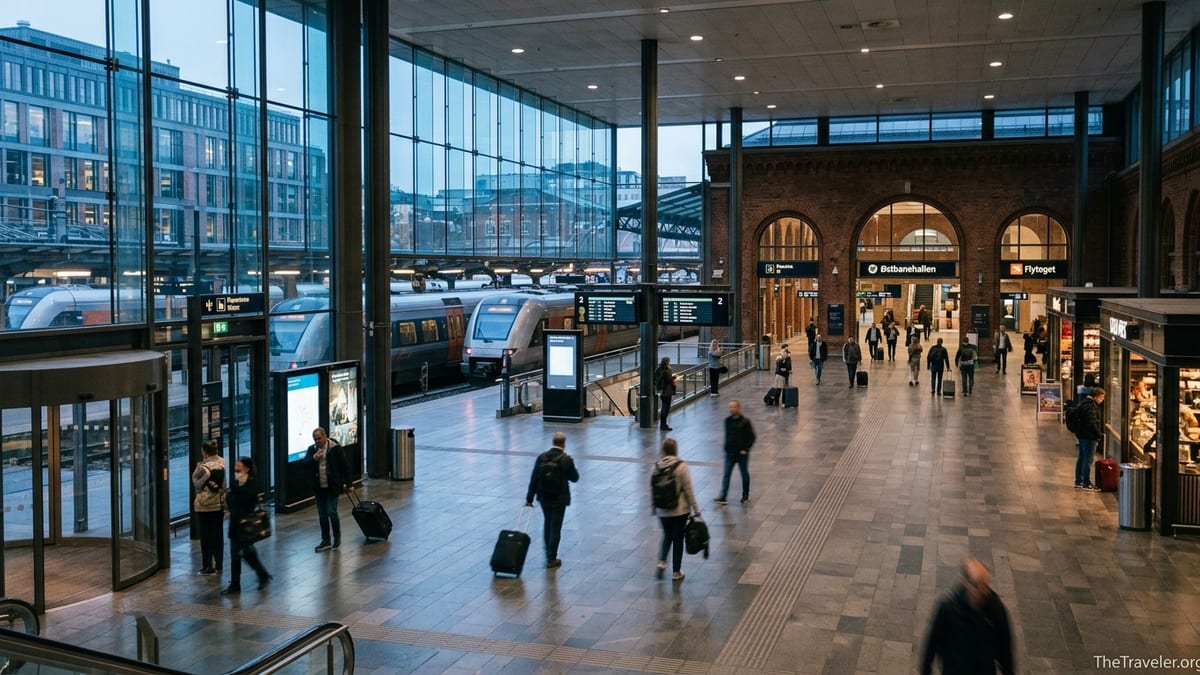
Understanding Oslo Central Station at a Glance
Oslo Central Station sits on the eastern edge of the city center, right where the historic Østbanehallen brick terminal meets a modern glass concourse. It is Norway’s largest railway station and the main hub for long-distance, regional, commuter, and airport trains. In practice, this means almost every major rail route in southern Norway passes through Oslo S at some point, making it an unavoidable and very useful transfer point.
The station is organized around a wide main hall with ticket machines, information screens, and multiple exits. Tracks are numbered and run roughly north–south, with entrances from the city side on the south and from the bus terminal and taxi ranks on the north. If you arrive carrying luggage, you will notice that most facilities you need in the first ten minutes are concentrated around this central concourse: ticket machines, convenience stores such as Narvesen and 7-Eleven, ATMs, and the main information desk.
For most visitors, the key is to understand that Oslo S is both a through-station and a terminus. Some trains start or end here, while others continue through to stations like Nationaltheatret, Lysaker, Sandvika, and Drammen. When you check departure screens, it is worth paying attention to whether your train terminates at Oslo S or simply passes through, especially if you plan to continue to another part of the Oslo region without changing trains.
Public transport in the wider city, including trams, buses, metro, and many local trains, is coordinated by the operator Ruter. For travelers, this means that an ordinary Ruter or Vy ticket can often cover multiple legs, such as a regional train from the airport to Oslo S and then a tram or metro onward to your hotel, as long as the trip is within the time validity printed on the ticket. This integration is one reason many budget-conscious visitors choose regular trains instead of the dedicated airport express.
Key Train Routes Serving Oslo S
Several different operators run trains through Oslo Central Station. Vy, Norway’s main passenger rail company, runs most commuter, regional, and intercity services. Go-Ahead Nordic and SJ Norge operate some long-distance routes under contract, and the dedicated Airport Express Train, Flytoget, also uses the station. From a passenger perspective, the important thing is to know your line number and final destination rather than the operator’s corporate name.
For airport travelers, there are two primary options between Oslo Airport Gardermoen and Oslo S. Flytoget offers a dedicated high-frequency airport express service that usually runs up to six times per hour in peak periods and takes around 20 minutes from the airport to central Oslo. A one-way adult ticket typically costs noticeably more than a regular regional train, but you get frequent departures, luggage-friendly carriages, and slightly faster journeys. By contrast, Vy’s regional or local services on the same Gardermoen Line cost roughly half the price, take only a few minutes longer in practice, and usually run two to three times per hour depending on time of day.
Beyond the airport connection, Oslo S is the main departure point for popular tourist routes. Vy regional lines toward Lillehammer connect with onward trains to Dombås and Trondheim, while services to Skien and the Vestfold coast leave from other platforms in the same station. Trains to Gothenburg and Stockholm also typically call at Oslo S, giving international travelers a straightforward rail link into Sweden. If you are planning a classic Norway in a Nutshell style journey, you might start here on a morning train to Myrdal or Bergen, with long-distance services leaving from the higher-numbered platforms.
Within the Oslo region, commuter trains radiate from Oslo S to suburbs and nearby towns such as Lillestrøm, Ski, Asker, and Kongsberg. These lines are particularly useful if you are staying outside the city center or visiting attractions beyond the reach of the metro. The same ticket that brings you into Oslo S might allow you to continue on a commuter train, provided you remain within the defined zone structure and time limits explained in the ticketing apps and machines.
How Platforms and Wayfinding Work
Oslo Central Station’s platforms are numbered, and each is clearly shown on departure boards in the main hall and on smaller electronic signs above the platform entrances. The layout is relatively straightforward if you give yourself a few extra minutes the first time you navigate it. Trains to and from Oslo Airport often use the lower-numbered tracks, and travelers from the airport will typically arrive on platforms close to the main concourse so they can quickly reach ticket machines, onward connections, or the exit toward the bus terminal.
Real-time information screens list all departures with departure time, line number, operator, final destination, and intermediate stops. For example, a Vy regional service toward Lillehammer will normally show its full route, including its stop at Oslo Airport along the way. Platforms can change at short notice, particularly during infrastructure works or disruptions, so it is wise to recheck the screens even if you think you know your train’s track. Loudspeaker announcements are made in Norwegian and often repeated in English when changes or delays occur.
If you are arriving from Oslo Airport and planning to continue by metro, tram, or bus, follow the signs from your arrival platform towards “Trikk,” “T-bane,” or “Bussterminal.” The metro and tram stops at Jernbanetorget are reached via a short walk from the station’s main hall, while the main bus terminal is just across a covered footbridge from the northern exits. A common real-world example is a traveler arriving on a regional Vy train from the airport, then following the Jernbanetorget signs to catch metro line 1 toward Majorstuen without purchasing a separate ticket, provided the original train ticket is still valid in time and zone.
For travelers with mobility needs, step-free routes are available to all main platforms via elevators and ramps. Station signage will highlight accessible paths, and staff at the information desk can explain which lifts are best to use for certain tracks. Because some platforms are on slightly different levels, it is helpful to allow an extra few minutes if you are using wheelchairs, strollers, or heavy baggage to navigate between them.
Tickets, Apps, and Price Examples
Ticketing at Oslo S reflects Norway’s integrated public transport system. The two apps most visitors end up using are Ruter, which covers buses, trams, metro, and many local trains in the Oslo region, and Vy, which handles a broad range of regional and long-distance train tickets. There is also the national Entur app, which can sell tickets for multiple operators in one place. In the station itself, you will find Vy-branded ticket machines, generic machines for regional transit, and staffed service points where you can get in-person help.
From a price perspective, a typical adult ticket on a Vy regional or local train between Oslo Airport and Oslo S currently costs in the region of 130 to 140 Norwegian kroner when bought in an app or at a machine. By comparison, a Flytoget ticket on the same stretch is usually more than twice that amount for a one-way adult fare, though discounts may apply for youths, students, or certain travel cards. Since the difference in travel time is only a few minutes, many travelers arriving during daytime hours choose the regular Vy train, especially if they intend to connect onward within the Oslo region using the same time-based ticket.
For urban travel within Oslo, single tickets in the Ruter system are time-limited rather than point-to-point. A typical adult single for the central zone covers 60 minutes of travel and can be used on buses, trams, metro, and many local trains that call at Oslo S and Jernbanetorget. If you plan a day of sightseeing, a 24-hour or multi-day Ruter pass may be more economical, allowing unlimited travel within specified zones. It is common, for instance, for a visitor to validate a 24-hour pass in the Ruter app at Oslo S, then use it for a tram to the Opera House area, a metro out to Holmenkollen, and a bus to the Bygdøy museums, all within the same day.
When purchasing longer-distance rail tickets, such as Oslo to Bergen or Trondheim, booking in advance through the Vy app or website often yields cheaper “low-price” fares compared with buying last-minute at the station. Even so, same-day tickets are widely available, and machines in the main hall are designed to let you select your route in English, pay by card, and receive a printed ticket or digital code within a couple of minutes.
Station Services: Lockers, Food, Shops, and Lounges
Oslo Central Station offers a broad range of services that make it easier to handle long layovers or one-day stopovers. One of the most practical features for travelers is the automated luggage lockers, located near the Flytoget terminal and the entrances toward Østbanehallen. These lockers are run by a commercial provider and come in several sizes, including standard small and medium boxes, larger lockers for big suitcases, and elongated units for skis. Pricing is structured per hour with a capped maximum for 24 hours and for one week; for example, the largest standard lockers are typically capped at just under 300 Norwegian kroner per day, while small lockers cost significantly less.
Payment for the lockers is normally by card, including common international brands such as Visa and Mastercard, via a touchscreen interface that can be switched to English or Norwegian. You pay for at least the first hour up front with your card, then settle any additional time when you open the locker again. Travelers using hotels with fixed check-in times often take advantage of this service to leave bags at Oslo S for half a day while they explore the city center on foot or by tram, picking them up later to continue to their accommodation.
For food and drink, Oslo S and its adjacent Østbanehallen complex host a mixture of quick-service outlets, bakeries, and sit-down restaurants. Inside the station you will typically find convenience chains like Narvesen and 7-Eleven for coffee, sandwiches, and snacks, along with fast-casual options suitable for grabbing a meal between trains. Østbanehallen, the restored brick terminal at the east end of the station, provides a more atmospheric setting with cafes and eateries that appeal to both commuters and visitors heading to events at the nearby Opera House.
Travelers with higher-class tickets on certain long-distance services, or frequent travelers with membership in specific rail or airline schemes, may have access to lounges either within the station or at neighboring transport hubs such as Oslo Airport. Even without lounge access, the station concourse offers plenty of seating, free or time-limited Wi-Fi from local telecom providers, and access to restrooms for a small fee. These practical details can make a real difference if you are waiting for an overnight train departure or traveling with children and need somewhere to regroup.
Accessibility, Safety, and Practical Tips
Oslo Central Station has been progressively modernized to meet current accessibility standards. Most platforms are reachable by elevators as well as stairs, and tactile paving assists visually impaired passengers along key routes. The main concourse is on a single level with wide corridors, automatic doors, and step-free access to ticket machines and the primary exits. For passengers requiring boarding assistance, it is advisable to contact the operator in advance through their customer service channels, but station staff can also coordinate ad hoc help when possible.
From a safety standpoint, Oslo S is busy but generally orderly, particularly during daytime and early evening. Security staff and police patrol periodically, and the bright, open design of the main hall keeps lines of sight clear. As in any major station, pickpocketing can occur, so keeping bags closed and valuables secured is sensible, especially in crowded areas around ticket machines or during peak commuting hours. Many travelers find it reassuring to keep larger bags in the paid lockers instead of carrying them while exploring nearby streets, particularly if they are arriving very early or leaving late in the day.
One practical tip is to familiarize yourself with both the south-facing city exits and the north-facing exits toward the bus terminal and taxi stands. If you are transferring to long-distance buses, including coaches to other parts of Norway or Sweden, the main bus terminal lies just across a short enclosed bridge from the station. Knowing this route in advance can save you from navigating busy traffic intersections at street level with suitcases in tow.
Another useful detail is that many of the smaller services you might look for, such as currency exchange, pharmacies, and small supermarkets, may not be inside the central concourse itself but within a few minutes’ walk of the main doors. A compact supermarket near the bus terminal side is popular with airport arrivals who want to buy snacks or basic groceries before heading to rented apartments or budget hotels elsewhere in the city.
Planning Connections and Handling Disruptions
Because Oslo S is such a key national hub, most rail operators plan their timetables to allow for straightforward connections between major services. For example, afternoon arrivals from Oslo Airport on Vy regional trains are often timed to give a comfortable window before popular departures toward Bergen or Trondheim. Even so, it is wise to build in buffer time, particularly in winter months when snow and ice can affect parts of the network and cause knock-on delays.
Several digital tools help you monitor the real-time situation. Operator-specific apps such as Vy, as well as third-party timetable sites and national journey planners, show live departure and arrival times, platform allocations, and disruption alerts. At the station, large boards above the main concourse list all departing trains in chronological order, and smaller boards near each platform repeat this information. If a platform change occurs close to departure, staff typically make audio announcements in Norwegian and, on busy routes, in English as well.
If your onward train is heavily delayed or canceled, the first step is usually to speak with staff at the operator’s service desk or contact them via in-app chat. Depending on the cause of the disruption and the type of ticket you hold, you may be entitled to rerouting, hotel accommodation, or partial refunds. In practice, when there are minor delays of 10 to 20 minutes, most passengers simply wait it out in the concourse, using the time to grab a coffee or a quick meal at one of the nearby outlets.
For tight same-day itineraries, such as a traveler landing at Oslo Airport in the morning and trying to connect through Oslo S to an afternoon train to Bergen, it can be worth choosing an earlier airport train than strictly necessary. The small time buffer helps protect you from minor arrivals delays, especially during busy travel periods, and gives you a chance to get your bearings in the station before boarding the long-distance service.
The Takeaway
Oslo Central Station is more than just a set of platforms. It is the main interchange point between Norway’s long-distance rail network, its airport connections, and the local metro, tram, and bus systems of the capital. Understanding how the station is laid out, knowing the difference between the regular Vy trains and the dedicated Flytoget airport express, and making use of practical services such as lockers and integrated ticketing can make your journey significantly smoother.
By allowing a little extra time for wayfinding, purchasing tickets through recommended apps, and using the station’s shops and eateries strategically, you can turn even a short connection at Oslo S into a manageable and even pleasant part of your trip. Whether you are stepping off a plane at Oslo Airport, boarding a night train north, or spending a day exploring the city center, Oslo Central Station is designed to be a functional, traveler-friendly hub at the heart of your Norwegian journey.
FAQ
Q1: Which train should I take from Oslo Airport to Oslo Central Station?
Most budget-conscious travelers take a Vy regional or local train, which costs roughly half the price of the Flytoget Airport Express and arrives only a few minutes later at Oslo S.
Q2: How long does the train from Oslo Airport to Oslo S take?
Flytoget usually takes around 20 minutes from the airport to Oslo Central Station, while the Vy regional or local trains take only a few minutes longer under normal conditions.
Q3: Do I need to book train tickets to or from Oslo S in advance?
For local and regional services, you can usually buy tickets on the day through apps or machines. For popular long-distance routes like Oslo to Bergen or Trondheim, advance booking often provides better prices and seat availability.
Q4: Where can I store my luggage at Oslo Central Station?
There are automated luggage lockers near the Flytoget area and Østbanehallen, with various sizes and hourly pricing capped at a daily and weekly maximum, payable by card.
Q5: Is Oslo Central Station accessible for travelers with reduced mobility?
Yes. Most platforms are reachable by elevators or ramps, the main concourse is step-free, and tactile paving and clear signage support travelers with mobility or visual impairments.
Q6: How do I find my platform at Oslo S?
Check the large departure boards in the main hall for your train’s line number, destination, and track, then follow the numbered signs to the correct platform, rechecking shortly before departure in case of changes.
Q7: Can I use one ticket for both the train to Oslo S and onward metro or tram travel?
Often yes, if you are using a time-based ticket within the Ruter or Vy system that covers the relevant zones and is still valid when you transfer to metro, tram, or bus at Jernbanetorget.
Q8: Are there food and shopping options inside Oslo Central Station?
Yes. The station and adjoining Østbanehallen offer convenience stores, cafes, bakeries, and restaurants, from quick grab-and-go outlets to sit-down dining suitable for longer waits.
Q9: What should I do if my train from Oslo S is delayed or canceled?
Monitor the departure boards and apps for updates, then contact the operator’s service desk or in-app support. Staff can advise on rerouting, refunds, or alternatives depending on the disruption and your ticket type.
Q10: Is Oslo Central Station safe late at night?
Oslo S is generally considered safe, with staff and security present, though it is sensible to keep normal big-city precautions, such as watching your bags and remaining in well-lit, populated areas of the concourse.