


More news on this day
Passengers at Oslo Airport encountered significant disruption as a cluster of eight cancellations and 111 delays affected flights operated by Scandinavian Airlines, Icelandair, Norwegian Air Shuttle, Widerøe and Finnair, interrupting air links to major hubs including Copenhagen, Stockholm, Helsinki, London and Amsterdam.
Get the latest news straight to your inbox!
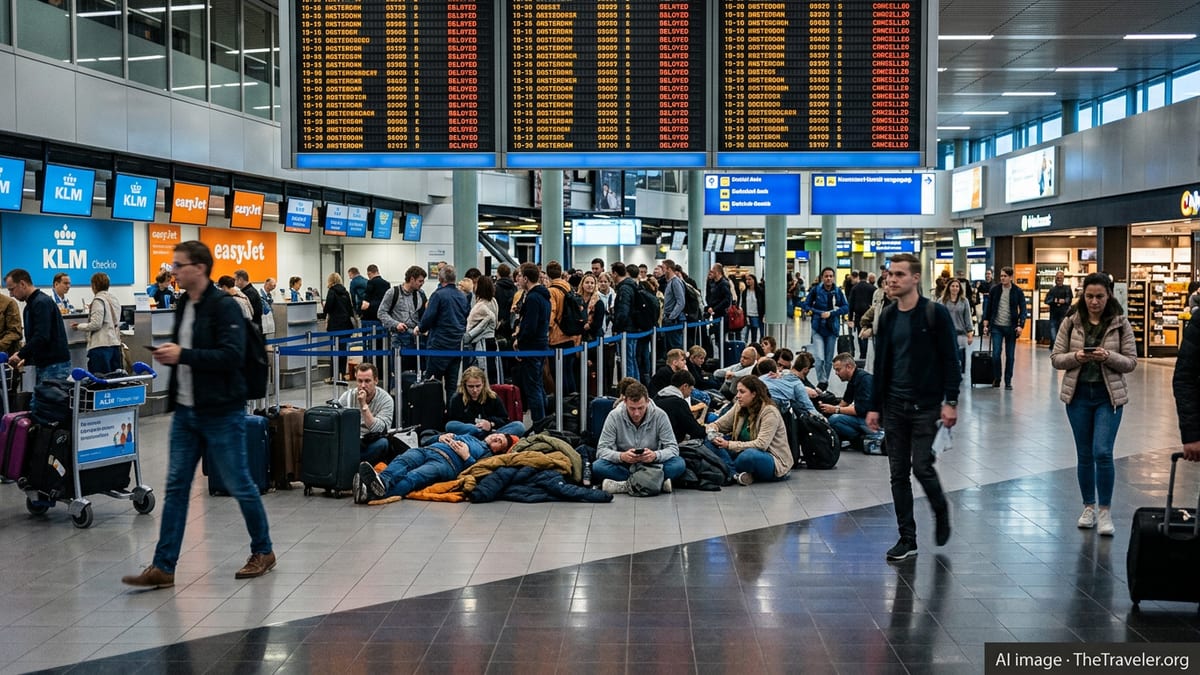
Nordic Hub Under Strain as Operations Slow
Oslo Airport, Gardermoen, a primary gateway for Norway and an important transfer point for Nordic and European traffic, experienced a sharp rise in irregular operations as cancellations and delays mounted across several carriers. Publicly available airport and aviation tracking data show that flights serving key regional and European destinations encountered sustained schedule disruption over the course of the day, with knock-on effects for both point-to-point and connecting passengers.
The pattern of disruption centered on services operated by Scandinavian airlines, including Scandinavian Airlines, Norwegian Air Shuttle, Widerøe, Finnair and Icelandair. These carriers collectively maintain dense schedules from Oslo to other Nordic capitals and to major European hubs, making any reduction in punctuality highly visible across the region’s air network.
Reports indicate that while only a limited number of flights were fully cancelled, the cumulative impact of more than one hundred delays significantly reduced operational reliability for travelers. With many departures pushed back and arrivals rescheduled, aircraft rotations, crew planning and onward connections all came under pressure.
Oslo’s role as a connector to Northern Europe further heightened the effect, as late arrivals from the Norwegian capital can disrupt aircraft and crew availability at downline airports, multiplying the travel impact well beyond Norway’s borders.
Key Routes to Copenhagen, Stockholm and Helsinki Affected
According to flight-monitoring boards and schedule data, services from Oslo to Copenhagen, Stockholm and Helsinki were among the most heavily affected. These routes are normally some of the busiest in the Nordic region, linking major political and economic centers and feeding substantial connecting traffic into wider European and intercontinental networks.
Flights to Copenhagen serve as a critical bridge into southern Scandinavia and continental Europe, with passengers often using the Danish capital as a transfer point. Delays on this corridor can quickly cascade into missed onward departures, particularly for itineraries built on tight connection windows.
Similarly, routes from Oslo to Stockholm and Helsinki play an essential role in intra-Nordic business and government travel, as well as in tourism. Even modest delays can cause day trips to be curtailed or abandoned and can force travelers onto later services or alternative routings through secondary hubs.
Operational data show that, in several cases, flights that did operate departed or arrived considerably behind schedule, reducing overall network punctuality and increasing the risk of baggage misconnection and crew reassignments.
London and Amsterdam Links See Knock-on Disruptions
Beyond the Nordic capitals, disruptions also touched major Western European hubs, particularly London and Amsterdam. Both cities are heavily used by Norwegian travelers as gateways to global long-haul networks, and many itineraries rely on timely feeder services from Oslo to function smoothly.
Published route information highlights London and Amsterdam among the most popular international destinations from Oslo, underlining their strategic importance. When departures on these city pairs face persistent delays, passengers not only confront longer waits at the gate, but also increased uncertainty about reaching long-haul departures to North America, Asia and the Middle East.
Travelers on affected flights faced a heightened risk of missed connections, extended layovers and, in some cases, the need for overnight stays if onward options were limited. Airlines typically attempt to rebook impacted passengers on later services or via alternative hubs, but heavy loads during peak travel periods can constrain available capacity.
For Oslo-origin passengers using London or Amsterdam as their primary connecting points, the day’s irregular operations translated into a mix of late arrivals, compressed connection times and last-minute itinerary changes that added stress and complexity to their journeys.
Wide Range of Carriers Grapple With Operational Pressures
The disruptions spanned a broad mix of operators that collectively underpin Oslo’s regional and international connectivity. Scandinavian Airlines and Norwegian Air Shuttle together account for a large share of departures to Copenhagen, Stockholm and London, while Widerøe supports regional feeding traffic that often connects onward through Oslo to European hubs.
Finnair and Icelandair, both with established roles in Nordic and transatlantic markets, also saw schedules affected. Finnair’s Oslo to Helsinki flights often feed long-haul services onward to Asia and North America, while Icelandair’s network via Reykjavik offers alternative connections across the Atlantic. Delays on these sectors can erode the time buffers built into carefully choreographed bank structures at their home hubs.
Public performance statistics published by European airports and aviation bodies show that even relatively small numbers of cancellations, when combined with a high volume of delayed flights, can diminish airline punctuality indicators and put additional strain on customer-service operations. As frontline teams manage rebookings and passenger inquiries, back-office functions must adjust aircraft routing and crew scheduling to restore stability.
While most flights eventually operated, sustained delays can also influence future travel planning, with some passengers choosing earlier departures or extended layover times on sensitive routes to mitigate the risk of missed connections during periods of heightened disruption.
Advice for Travelers Navigating Ongoing Irregularities
Travel analysts note that when an airport experiences a cluster of cancellations and a high number of delays within a single operational window, residual effects can linger into subsequent rotations, especially on short-haul networks with tight turnarounds. For passengers with upcoming travel from Oslo, or connecting through the Norwegian capital to Copenhagen, Stockholm, Helsinki, London or Amsterdam, closer attention to real-time flight information is advisable.
Publicly accessible trackers and official airport departure and arrival boards provide the most up-to-date picture of individual flight status. Travelers are encouraged, where possible, to build extra time into itineraries that include transfers through major European hubs, particularly when relying on late-afternoon or evening departures that may be more vulnerable to knock-on delays.
Those with flexible schedules may also benefit from monitoring seat availability on alternative departures, as airlines sometimes make additional capacity available or adjust aircraft types to accommodate disrupted passengers. While same-day changes can be limited during peak periods, earlier or later departures on the same route may offer a more reliable path to key destinations.
As operations gradually normalize, Oslo Airport is expected to work through the backlog created by the day’s irregularities. However, with capacity across the European network often running close to peak during busy travel seasons, even a short period of concentrated disruption can serve as a reminder of the importance of contingency planning for travelers heading to or through major Nordic and European hubs.