


More news on this day
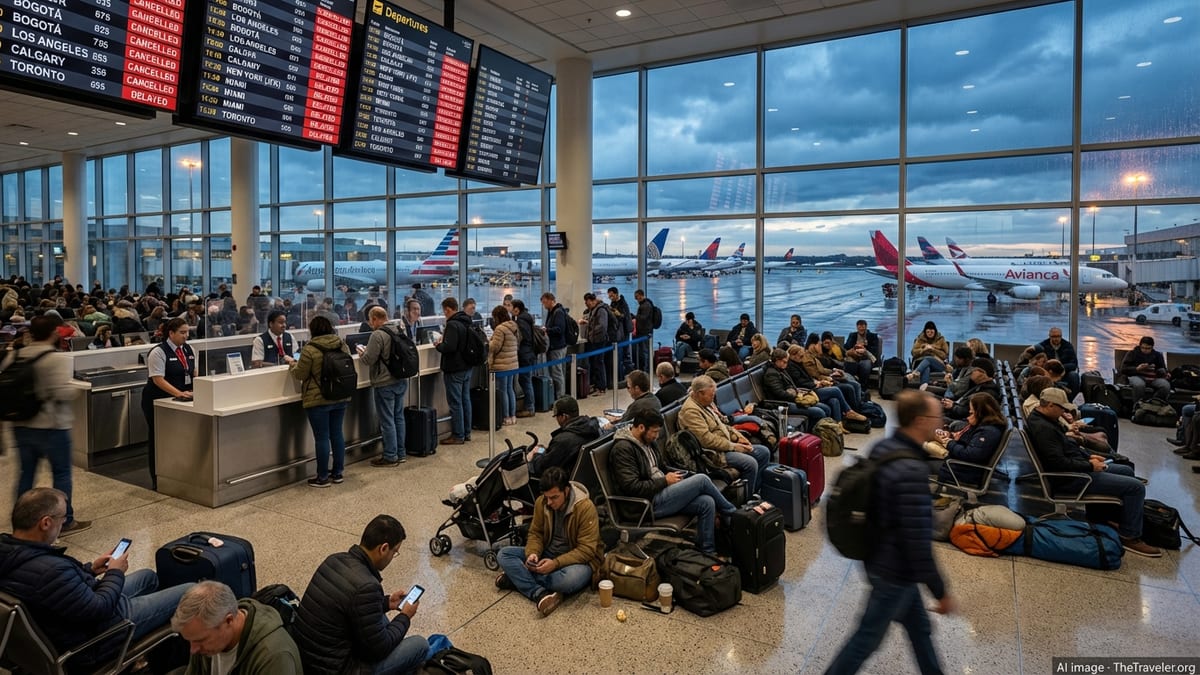
Widespread air travel disruptions across the United States spilled into a new day after a communications failure connected to a key Federal Aviation Administration facility near Philadelphia snarled operations at major Northeast airports, contributing to more than 1,358 flight delays and 85 cancellations and triggering a broader ripple effect across airline networks.
Get the latest news straight to your inbox!
What triggered the disruption, and why the Northeast was hit hardest
Published coverage indicates the disruption began when communications lines tied to air traffic operations in the Philadelphia area were damaged, affecting the flow of aircraft into some of the country’s busiest airports. The incident forced air traffic managers to slow or temporarily halt arrivals and departures, creating long backlogs that lasted for hours.
The New York City area felt the impact most acutely, with Newark Liberty International Airport experiencing an extended period with little to no arriving commercial traffic for much of the day. Cascading impacts were also reported at New York’s LaGuardia and John F. Kennedy International airports, as well as at Philadelphia International Airport, where hundreds of flights were scrubbed amid the disruption.
Even after service began returning, the systemwide knock-on effects were unavoidable. When a large hub pauses or throttles arrivals, aircraft and crews end up out of position, and delays then spread to later departures across the country, especially on tightly scheduled routes.
Delays and cancellations mount as airlines work to reset schedules
Live flight-tracking data and airport status updates showed a heavy volume of delays and a notable number of cancellations as airlines attempted to recover. The disruption was not confined to one carrier: travelers across multiple airlines faced delayed departures, missed connections, and rebookings into the following day.
In the New York and Philadelphia corridor, the level of disruption reflected the concentration of flights and constrained airspace. Newark and Philadelphia were among the hardest hit airports reported in published coverage, while operations at LaGuardia and JFK also saw significant interruptions before gradually resuming.
Airline recovery typically takes longer than the initial outage because of crew duty-time limits, aircraft rotations, and gate availability. Even when air traffic restrictions are lifted, departures can remain delayed as airports work through aircraft on the ground and incoming flights waiting for arrival slots.
FAA traffic management advisories show ongoing constraints beyond the outage
While the communications issue drove the major Northeast disruption, FAA traffic management tools showed that other constraints were also active around the country, compounding travel friction. On Tuesday, FAA system advisories listed ground delay programs for Boston tied to runway-taxi or construction impacts and for San Francisco tied to weather and low ceilings.
These overlapping operational limits matter because airline networks are interconnected. A disruption in the Northeast can strain recovery capacity elsewhere, and separate delay programs at major airports can reduce the ability to swap aircraft or reroute passengers efficiently.
For travelers, that means a delay originating far from the Northeast can still be affected by aircraft that never arrived on time, crews that timed out, or rebooked passengers filling remaining seats on alternate routes.
What travelers can do now if their flight is delayed or canceled
With the disruption’s aftereffects lingering, travelers scheduled to fly through the New York and Philadelphia region can benefit from checking flight status repeatedly before leaving for the airport. During irregular operations, schedules can shift quickly as airlines add recovery flights, swap aircraft, or consolidate lightly booked departures.
Rebooking flexibility may vary by airline and fare type, but published coverage indicated some carriers offered fee-free changes during the disruption window. Travelers who see multi-hour delays may also want to proactively look at later same-day options, alternate nearby airports, or different routings that bypass the most constrained hubs.
Passengers experiencing cancellations should keep records of expenses and communications, and review the airline’s stated policies for meals, lodging, and rebooking. For travelers already at the airport, monitoring gate changes and app notifications can help avoid missed boarding calls when flights are reassigned to different gates during recovery.
Why a single outage can snarl national travel, and what comes next
The Northeast’s airspace is among the most complex in the country, with high traffic volume, tight spacing between major airports, and limited room for reroutes. When communications or radar-related capabilities are impaired, traffic managers often have to reduce arrival rates sharply to maintain safe spacing, quickly creating queues in the air and on the ground.
Publicly available aviation oversight and reporting in recent years has highlighted how aging infrastructure and telecom dependencies can create outsized operational impacts when something breaks. The latest disruption, tied to communications lines and a backup failure reported in published coverage, underscores how redundancy can still be vulnerable if multiple links in the chain are compromised.
As airlines and airports work through the backlog, travelers can expect the recovery pattern to vary by route and airport. Flights scheduled early in the day often stabilize first, while later departures may remain subject to rolling delays as aircraft and crews are repositioned and as FAA programs and weather constraints continue to evolve.