


More news on this day
A significant fire at Paignton railway station in Devon has brought Great Western Railway services to a standstill, triggering severe travel disruption across the Torbay resort and wider regional network.
Get the latest news straight to your inbox!
Fire breaks out at busy Devon seaside hub
Reports from the scene indicate that a large blaze took hold at Paignton railway station on Tuesday morning, sending thick smoke into the air above the popular South Devon resort. Early information from regional news outlets describes multiple fire crews deployed from across South Devon as the incident unfolded.
Initial coverage suggests that the fire affected station infrastructure and nearby railway equipment, prompting an immediate halt to train movements in and out of Paignton. Images shared by local media show flames and smoke in the vicinity of the platforms and station buildings, although full details of the damage are still emerging.
Paignton is a key gateway for holidaymakers heading to Torbay’s beaches and attractions, particularly in the height of the summer season. The fire therefore struck at a time when passenger numbers are typically increasing, magnifying the impact of any disruption on both leisure and local commuter traffic.
According to publicly available information, there have so far been no widely reported serious injuries linked to the incident. The primary concern has been the integrity of railway infrastructure and the safe management of crowds as services were suspended at short notice.
Great Western Railway services cancelled between Paignton and Newton Abbot
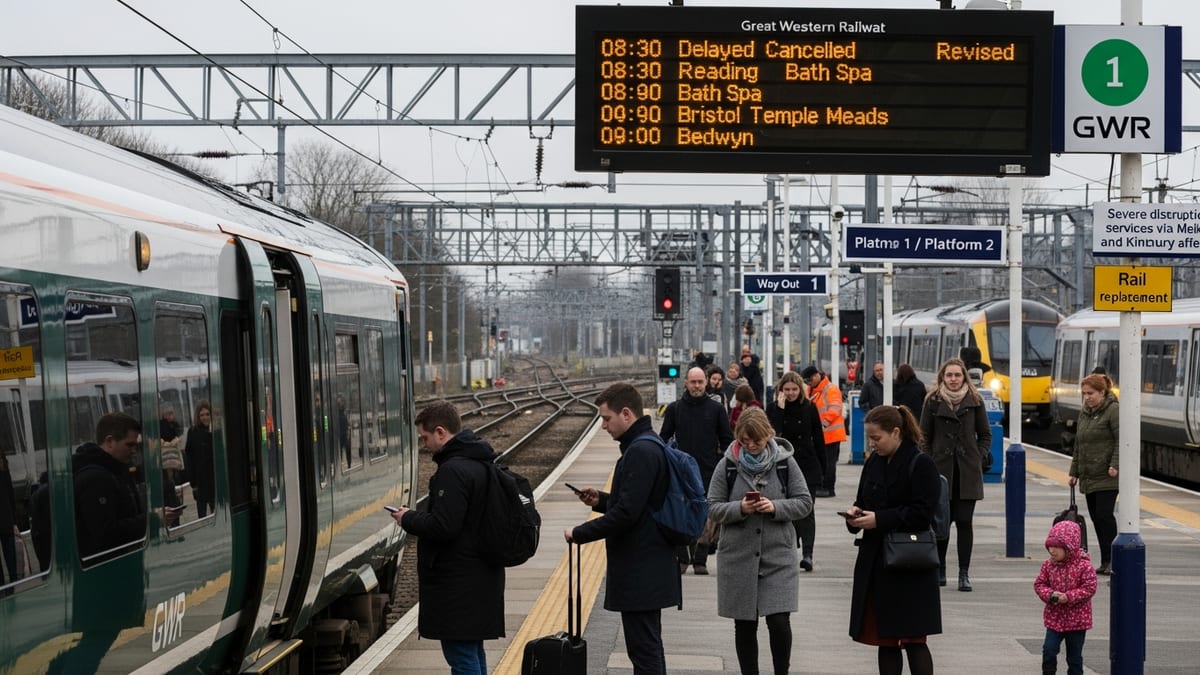
Great Western Railway’s online updates and live journey tools show that no trains are currently operating between Paignton and Newton Abbot, with the line effectively closed in both directions. Services that would normally run through Torquay and Torre have been curtailed or cancelled, affecting passengers along a significant stretch of the Riviera Line.
Information published by the operator indicates that trains from Exeter St Davids and points further north are terminating at Newton Abbot, where passengers are being advised to seek alternative routes. Disruption is expected to continue for much of the day while the damage at Paignton is assessed and safety checks are carried out.
The fire has also compounded wider vulnerabilities on the regional rail network. Recent incident reports have already highlighted earlier disruption on Great Western Railway routes in Devon and Somerset, illustrating how a single failure point can quickly reverberate across a busy summer timetable.
Passengers planning to travel to or from Paignton, Torquay and surrounding stations are being urged by operators and rail information services to check live departure boards and revised timetables before setting out, as services may be altered at short notice while recovery work continues.
Road closures and local disruption around Paignton town centre
The impact of the station fire has not been limited to the rail network. Local coverage notes that key routes including Torbay Road and Hyde Road, which run close to the station and link the seafront with Paignton’s commercial centre, have been closed to traffic to allow emergency services to operate.
These closures are contributing to congestion in the town centre, with buses and private vehicles facing diversions away from the station area. For a resort that relies heavily on easy access between the promenade, accommodation, attractions and transport hubs, the combined road and rail disruption is presenting significant logistical challenges.
Visitors arriving by car are being encouraged through public messaging to allow extra time for journeys and to follow local diversion signs, while those already in Paignton may find walking routes to the waterfront and nearby attractions altered as cordons are established around the affected station zone.
Businesses in the immediate vicinity of the station are also experiencing knock-on effects, with reduced footfall and restricted access during what is typically a busy trading period. Many are monitoring official updates closely in the hope that rail and road links can be restored swiftly once the site is made safe.
Summer travel plans thrown into uncertainty
The blaze has arrived at a difficult moment for domestic tourism, with families and holidaymakers relying on rail links to reach South Devon’s coastal resorts during the peak summer getaway. Paignton, with its beach, pier and connections to the heritage Dartmouth Steam Railway, is particularly popular with visitors arriving by train.
Travel reporters note that the sudden loss of through services to Paignton is forcing passengers to replan at short notice, often involving extra changes, rail replacement options or a switch to road transport. Those carrying luggage or travelling with children face added inconvenience as journeys become longer and less direct.
Travel comparison sites and journey planners are already reflecting multiple cancellations on Great Western Railway services into Torbay, and there is potential for crowding on alternative routes as passengers divert via other South West corridors. The disruption follows a series of recent rail incidents in the wider region, reinforcing concerns about network resilience during periods of high demand.
Accommodation providers in Torbay and along the English Riviera are watching developments closely, given the importance of reliable transport for check in and check out days. Some are advising guests to build in additional travel time or to consider flexible arrival arrangements while the situation at Paignton station remains unresolved.
What rail passengers should do now
With the situation still developing, rail industry information platforms are advising anyone planning to use Great Western Railway or connecting operators in South Devon to verify the latest service status before leaving home. Journey planners are being updated throughout the day to reflect line closures, cancellations and any emerging replacement options.
Passengers who had reserved tickets specifically to or from Paignton are being directed by publicly available guidance to check whether their tickets can be used on alternative routes or at different times. In previous incidents of this scale, operators have typically allowed some flexibility on travel dates and routes, particularly where no trains can safely reach the affected station.
Those already en route are encouraged via rail information channels to listen for station announcements and to be prepared for last minute platform changes or diversions. As trains terminate short at Newton Abbot and other hubs, staff are signposting onward travel options where available, though capacity is expected to be under strain during peak periods.
Until engineers have fully assessed the impact of the fire on signalling and station infrastructure, it remains unclear when normal services into Paignton will resume. For now, the advice for travellers is to stay informed, allow generous contingency time and be prepared to alter routes as the rail network adapts to one of the most disruptive incidents to hit the English Riviera’s mainline station in recent years.