


Few Caribbean reef names light up cruise message boards like Palancar. Lying just off Cozumel’s sheltered southwest coast, Palancar Reef is famous for clear water, towering coral formations, and easy drift snorkeling. If your ship docks in Cozumel and you want Palancar in your day, you face a key choice: book the cruise line’s excursion, or head there independently via taxi to Playa Palancar and a local boat. Both options can work beautifully, but they come with very different prices, logistics, and risks. This guide breaks down what cruise passengers really experience on each approach so you can match the plan to your budget, timing, and comfort level with DIY adventures.
Get the latest updates straight to your inbox!
Understanding Palancar Reef and Playa Palancar
Palancar Reef sits on the southwest side of Cozumel and forms part of the Arrecifes de Cozumel National Park, a protected marine area known for dramatic coral walls, swim-throughs, and abundant marine life. For cruise visitors, Palancar is typically accessed on a small snorkel boat or dive boat that heads out from the island’s west coast. Most tours combine Palancar with nearby reefs such as Colombia or Paradise, adjusting the itinerary to the day’s sea conditions and group abilities.
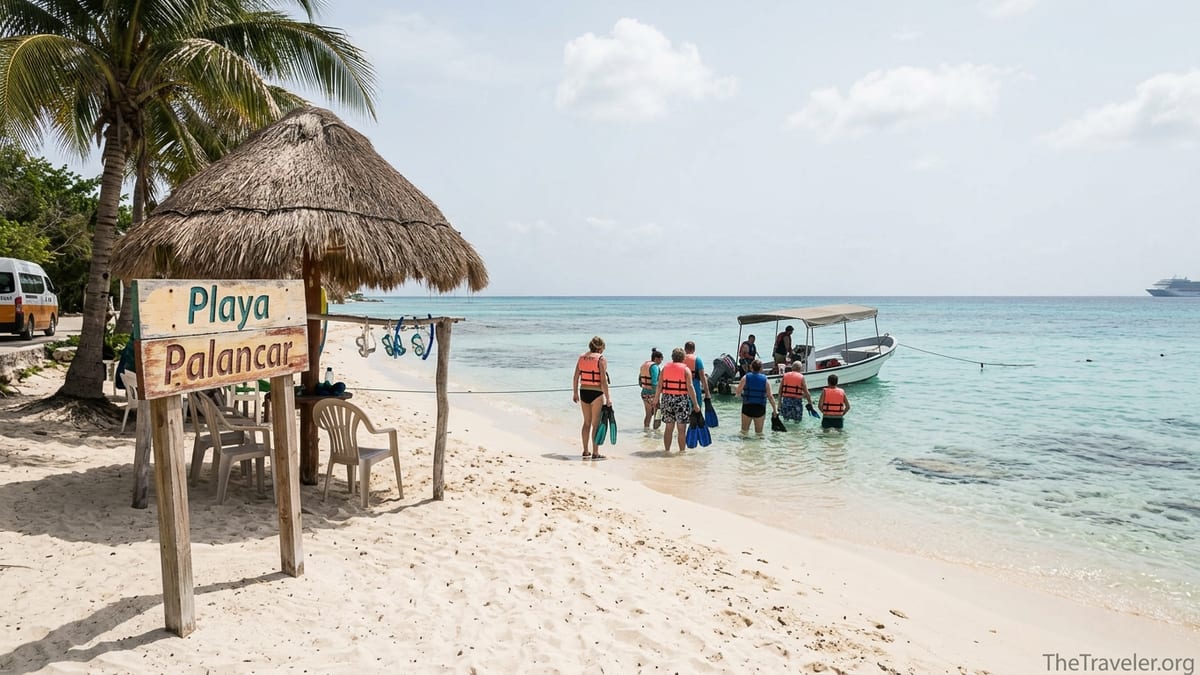
Playa Palancar is the beach gateway that many independent cruisers use to reach the reef. Located roughly 11 to 12 miles south of the main cruise piers along Cozumel’s coastal road, it is a low-key beach club with soft white sand, simple facilities, and local operators offering snorkel trips by small boat out to Palancar and surrounding reefs. Unlike more developed clubs such as Mr. Sanchos or Playa Mia, Playa Palancar has a more natural feel and tends to draw travelers who prioritize water quality and reef access over big pools and water toys.
For cruise passengers, this pairing matters: the reef is offshore and not swimmable from the beach, but Playa Palancar gives you a relaxed beach base and a straightforward jump-off point for boat trips to the reef. If all you want is a fast snorkeling fix and a guaranteed ride back to the ship, a ship excursion might make more sense. If you like flexibility, quieter sand, and local prices, the taxi-plus-beach-club route can be very appealing.
Because Palancar lies within a national marine park, independent operators and cruise-line partners alike must follow local regulations about where they anchor, how many reefs they visit, and how many people they take. Rules can shift over time, so expect some variability in exact reef stops and be ready to go with what your captain deems best on the day.
Getting From the Cruise Port to Playa Palancar
Cozumel has three cruise terminals used by major lines: Puerta Maya and the International Pier sit side by side just south of town and handle most Carnival, Royal Caribbean, and Norwegian calls, while Punta Langosta sits in downtown San Miguel and serves a mix of lines. From any of these piers, Playa Palancar is a straightforward taxi ride along the island’s main coastal highway heading south. Typical driving time is about 20 to 30 minutes depending on traffic and which pier you start from.
Recent local guides and beach-club resources indicate that taxi fares from the cruise piers to Playa Palancar generally fall in the ballpark of 25 to 35 US dollars per taxi each way for up to four passengers, with posted zone-based rates at the taxi stands rather than meters. You will usually find an organized line of cabs just outside each terminal’s gate. It is normal and recommended to confirm the price with the dispatcher or driver before you get in, then pay in cash at the end of the ride in either US dollars or Mexican pesos.
As a concrete example, a family of four docking at Puerta Maya might walk through the small shopping area, exit the security gate, and reach the taxi rank within a few minutes. After confirming a 30 dollar fare to Playa Palancar, they would have a roughly 25 minute ride past other beach clubs and parks along the coast. Sharing taxis with another cruise couple headed to the same beach is common and can cut the per-person cost substantially. For solo travelers, the flat taxi rate can make Playa Palancar pricier compared with closer clubs, so it is worth asking others in your ship’s roll call or online groups if they want to split a cab.
Returning to the pier is equally simple: taxis wait at or near Playa Palancar’s entrance for much of the cruise day, especially when ships are in port. If you have a specific all-aboard time that feels tight, tell your server or the beach staff what time you want to leave and they will typically help you flag a taxi with plenty of margin. In very busy periods with many ships in port, there can be short waits for return cabs, so building in a buffer is essential.
Ship Excursions to Palancar Reef: Pros, Cons, and Realistic Expectations
Booking a Palancar or “3 reef” snorkel tour through your cruise line is the most straightforward way to ensure the ship takes responsibility for your timing. These excursions are usually operated by local partners but sold and scheduled by the cruise line. A typical half-day Palancar snorkel excursion might cost a cruise guest somewhere around 75 to 120 US dollars per adult, with kids discounted, and include bus or boat transport from the pier, snorkel gear, a guided swim at one or two reefs, and sometimes a beach club stop.
The biggest advantage is missed-ship protection. If your ship’s own excursion is delayed by a late-returning bus or a slow-moving group, the ship either waits or arranges to get you back on board. For first-time cruisers, families with anxious grandparents, or travelers who are uncomfortable negotiating with local taxis, this peace of mind carries real value. It also simplifies planning: you book online before the cruise or on board, meet at a designated theater or pier location, and follow the group.
On the downside, cruise-line tours often carry more people per boat and may spend limited time actually in the water at Palancar itself. Some itineraries advertised with the Palancar name may substitute a closer site like Paradise Reef or combine reefs in a way that shortens the Palancar stop if currents are strong or the schedule gets tight. You may also have less control over snorkeling depth, pace, and how long you linger at a favorite coral head or with a sea turtle.
In practical terms, a ship excursion might look like this: you meet on board at 8:00 a.m. for a 9:00 a.m. tour, walk off with the group, ride a bus to a marina 10 minutes away, then board a large snorkel boat with 40 to 80 passengers. You spend 20 to 30 minutes at Palancar, 20 to 30 minutes at another reef, perhaps an hour at a partner beach club with included drinks, then bus back to the pier by mid-afternoon. The day is comfortable and predictable, but if your chief goal is maximum reef time with fewer people around you, a smaller independent operator might serve you better.
Going Independent: Taxi to Playa Palancar and Local Boats
Choosing the independent route usually looks like this: you walk off the ship, catch a taxi to Playa Palancar, settle into the beach club, then book an on-the-spot snorkel trip to Palancar Reef with one of the small local boats that operate from the beach. Alternatively, you may pre-book a Palancar snorkel package directly with Playa Palancar Beach Club or a trusted operator that includes transport from town or from the pier-area taxi stand.
On many port days, small operators on the sand gather groups of about 8 to 12 snorkelers on open fiberglass boats for two-reef runs that often include Palancar plus another site like Colombia. Pricing can vary with demand and season, but as of recent seasons a two-reef snorkel trip from Playa Palancar has commonly been in the rough range of 40 to 60 US dollars per person, including gear and a guide. For a couple or family that has already paid 30 dollars each way for a taxi, the overall cost can still undercut some cruise-line tours, especially when ship excursions for similar itineraries run into triple digits per person.
An independent Palancar day might unfold like this: your ship is in port from 8:00 a.m. to 6:00 p.m., and you are among the first off at 8:15 a.m. By 8:30 a.m. you are in a taxi heading south, and before 9:00 a.m. you are stepping onto Playa Palancar’s sand with a coffee from the beach bar. You arrange a 10:00 a.m. snorkel departure for your group of eight, enjoy two reef stops over about 90 minutes, and are back at the beach by late morning. After a relaxed seafood lunch and a couple of hours on loungers, you ask staff to call you a taxi at 2:30 p.m., reaching the pier around 3:00 p.m. with a full three-hour buffer before all-aboard.
The main trade-off is that if something goes wrong that is not clearly the ship’s fault, you are responsible for getting back in time. If an independently booked boat suffers mechanical trouble far from shore, or an afternoon thunderstorm keeps it from returning on schedule, the ship may not wait. That risk is small but real. You also need to be comfortable saying no to upsells, confirming prices in advance, and keeping an eye on the time instead of relying on a cruise staffer’s countdown.
Timing, Buffers, and Missed-Ship Risk
Regardless of which option you choose, timing is the key variable that separates a spectacular Palancar day from a stressful one. Ships typically list a scheduled arrival and departure time, with an “all-aboard” about 30 minutes before departure. For example, if your itinerary shows Cozumel 8:00 a.m. to 6:00 p.m., all-aboard is often 5:30 p.m. at the latest. You need to work backward from that time to ensure you are comfortably on the pier, not just in a taxi, when that deadline hits.
With a ship excursion, your main timing obligations are showing up on time for the tour meeting point and paying attention to your guide’s instructions. The operator builds in buffers for traffic and loading times. However, even line-sponsored tours can run tight if a late tour departure meets choppy seas or slow-moving participants, so it is still smart to carry your ship’s daily schedule and a watch set to ship time.
For an independent taxi-and-beach day at Playa Palancar, a conservative rule of thumb many seasoned cruisers follow is to plan to be leaving the beach at least 3 hours before all-aboard, especially if you are more than 20 minutes away by road. That might sound excessive for a 25 minute drive, but it allows for a brief wait for taxis, a slow line re-entering the pier shopping complex, and the occasional traffic slowdown near the terminals when several large ships are in port. If you want to do a morning snorkel trip plus beach time, favor an early departure from the ship and early return to town.
Missed-ship horror stories in Cozumel are rare considering the thousands of daily visitors, but they do happen, almost always involving independent tours that tried to squeeze too much into a short port call. To minimize risk, avoid planning Palancar as a DIY trip on days when your ship is in port for only a few hours, when you arrive late due to weather, or when you dock after noon and depart in the early evening. In those cases, a ship-run excursion or a closer beach club is usually the wiser call.
Gear, Comfort, and Suitability for Families
Both cruise-line excursions and independent boats from Playa Palancar normally include basic snorkel gear: mask, snorkel, and fins. The quality can vary, especially on high-volume boat tours, so frequent snorkelers often prefer to bring their own masks for a better fit. If you are traveling with kids who may be picky about comfort or hygiene, having their own child-sized masks can make the difference between a magical day and a leaky, frustrating experience.
Life jackets are typically mandatory for group snorkel tours at Palancar, regardless of whether you book through the ship or independently. For families, this is reassuring, but active swimmers should understand that they will be floating at the surface rather than free-diving down to inspect every coral head. Some independent captains may allow more flexibility for strong swimmers, but this is at their discretion and subject to local rules on the day.
For parents, one of the main questions is whether Playa Palancar as a base is easier or harder than a ship excursion. On the plus side, the beach itself is shallow near shore, the sand is soft, and there are shaded seating areas where a non-snorkeling parent or grandparent can relax while others head out on the boat. Food at the beach club is generally casual Mexican and seafood, which works well for many children, and staff are familiar with serving cruise families on tight schedules.
For those with very young children, mobility issues, or sensory sensitivities, the controlled environment of a ship excursion may be more comfortable. You typically walk only a short distance from ship to bus to dock, follow clear instructions in English, and have staff accustomed to helping families with strollers and special requests. The boats that partner with cruise lines also tend to have more shade, restrooms, and ladders designed for easier re-entry from the water, which can be especially important for older travelers.
Costs and Value: What You Really Pay
Ship excursions to Palancar Reef or multi-reef snorkel trips that feature Palancar as a highlight tend to cluster in a similar price band across major cruise lines, often somewhere around 80 to 130 US dollars per adult. These prices typically roll several components into a single fee: transportation from the pier, boat time, guiding, use of gear, and sometimes an open bar or lunch at a partner beach club. Families of four can see their Palancar day total reach several hundred dollars quickly, particularly when teenagers are charged adult rates.
Independent options break that bundled cost into distinct pieces. You will likely pay 25 to 35 dollars each way per taxi, 40 to 60 dollars per person for a small-boat snorkel trip from Playa Palancar, and whatever you spend on food, drinks, and optional chair or umbrella rentals at the beach club. For a couple sharing taxis and each buying a two-reef snorkel, the math might look like around 120 to 160 dollars total before food, compared with potentially over 200 dollars for two spots on some ship tours. For a larger family, the difference can grow, but only if you are comfortable with the DIY logistics.
Value also shows up in the experience itself. Many travelers perceive more value in a calmer boat with 10 people than in a larger vessel with 50, especially when everyone is paddling at once above the same sea turtle. On the other hand, some cruisers happily pay a premium to remove uncertainty, preferring a ship excursion that includes a structured beach stop with inflatables and pools where kids can burn energy safely under lifeguard supervision. Only you can decide whether you prefer to spend your budget on peace of mind, extra drinks and activities, or a smaller crowd around you in the water.
One way to combine value and security is to book in advance with a well-reviewed independent operator that specializes in cruise-timed Palancar trips. Many of these businesses set departure times that reflect typical ship schedules, include taxi or minivan pickup close to the pier, and emphasize clear missed-ship policies. This still is not the same guarantee as a ship’s own tour, but it can feel more organized than simply showing up and negotiating with the first beach vendor you meet.
Practical Tips to Reduce Stress and Stay Safe
Whichever route you choose, a few practical habits can make your Palancar day smoother. First, build in more buffer time than you think you need, particularly on the return. Aiming to be back at the pier two to three hours before all-aboard allows for delays without turning every red light into a source of anxiety. Check your ship’s daily newsletter for the official ship time and remember that it may not match local time; always operate on ship time when planning independent tours.
Second, pack smart. A light rash guard or swim shirt can make surface snorkeling more comfortable under Cozumel’s strong sun, and a small dry bag helps protect your phone, cruise card, and cash on the boat. Reef-friendly sunscreen is required in the marine park, and applying it before you leave the pier reduces a lot of mess. If you have prescription lenses, consider a prescription mask or contact lenses, since standard rental gear is rarely customized.
Third, manage expectations about weather and sea conditions. While Cozumel’s west coast is generally sheltered, wind and currents can still stir things up, especially in winter. On some days, harbormasters restrict smaller boats or certain reefs for safety, which can affect both ship excursions and independent tours. A reputable operator or your ship’s shore excursion desk will be up front about any adjustments. Having a flexible mindset and a backup plan, such as shifting from a reef focus to a relaxed beach day if visibility is poor, will keep your port call enjoyable even when nature does not fully cooperate.
Finally, treat Cozumel’s reef system like the fragile ecosystem it is. Avoid standing on coral, keep your fins off the reef, and do not touch marine life. Even gentle contact can damage organisms that took decades to grow. Both cruise-line guides and independent captains increasingly emphasize low-impact snorkeling, and joining them in that effort helps preserve Palancar for future visitors.
The Takeaway
For many cruise passengers, Palancar Reef is the highlight of a Western Caribbean itinerary, and Cozumel makes it surprisingly accessible in a single port day. The choice between a ship-sponsored excursion and an independent taxi-and-beach-club adventure to Playa Palancar ultimately comes down to your comfort with logistics, your budget, and how much you value ship-backed timing guarantees over smaller crowds and flexible pacing.
If you are a first-time cruiser, traveling with very young children or older relatives, or docking in Cozumel for only a short window, a cruise-line Palancar excursion can deliver a worry-free experience with all the moving parts handled for you. You pay more per person, but you gain a structured day and strong protection against missed-ship scenarios. On longer port days, especially for travelers willing to keep a close eye on the clock, an independent run to Playa Palancar can offer quieter sand, smaller boats, and potentially better value.
Whichever path you take, the key ingredients are the same: know your ship’s all-aboard time, build in a generous return buffer, clarify prices before you commit to taxis or tours, and lean on the expertise of local guides who know Palancar’s moods. Do that, and you will remember Cozumel not for frantic clock-watching, but for drifting over coral formations and watching rays and turtles glide beneath you in the clear blue water.
FAQ
Q1. How long is the taxi ride from the Cozumel cruise port to Playa Palancar?
The taxi ride usually takes about 20 to 30 minutes each way, depending on which pier you dock at and current traffic near the terminals.
Q2. How much does a taxi to Playa Palancar typically cost from the cruise pier?
Recent reports suggest a ballpark of about 25 to 35 US dollars per taxi each way for up to four passengers, with fixed zone pricing rather than meters.
Q3. Is it safe to visit Palancar Reef independently instead of booking a ship excursion?
It can be safe if you choose reputable operators, leave the ship early, and plan to return with a generous time buffer, ideally arriving back at the pier two to three hours before all-aboard.
Q4. Can I snorkel Palancar Reef directly from the beach at Playa Palancar?
No. Palancar Reef is offshore. From Playa Palancar you join a small boat tour that takes you out to the reef and returns you to the beach afterward.
Q5. Are independent Palancar snorkel trips cheaper than ship excursions?
They often are on a per-person basis, especially for families, but you must add taxi costs and food. Ship excursions cost more but bundle transport, guiding, and timing protection.
Q6. Is Palancar Reef suitable for children and beginner snorkelers?
Yes, conditions are usually calm and life jackets are provided, but children should be comfortable in open water and follow guides closely. Very young or nervous swimmers may do better on a shorter, shallow-reef trip.
Q7. What kind of snorkel gear is provided on Palancar tours?
Most operators provide a mask, snorkel, fins, and a required life jacket. Quality varies, so frequent snorkelers and families often bring their own well-fitting masks.
Q8. What happens if an independent Palancar tour returns late and my ship has already left?
If you booked independently, the responsibility for rejoining the ship is yours. You would need to work with local authorities and your cruise line to reach the next port at your own expense.
Q9. Do I need to book an independent Palancar snorkel in advance?
Advance booking can help during busy seasons and for larger groups, but many travelers also arrange same-day trips directly at Playa Palancar when boats have space.
Q10. Is visiting a closer beach club a better idea than Palancar on a short Cozumel stop?
If your time in port is limited or you are anxious about timing, choosing a nearby beach club just a short taxi ride from the pier is generally safer than a longer independent trip to Playa Palancar.