


More news on this day
A localized operational disruption at Palm Beach International Airport in Florida rippled across the busy U.S. East Coast corridor on Tuesday, resulting in six cancellations and at least 29 delays affecting Delta Air Lines, JetBlue Airways, and American Airlines passengers, according to live tracking data and aviation analytics services.
Get the latest news straight to your inbox!
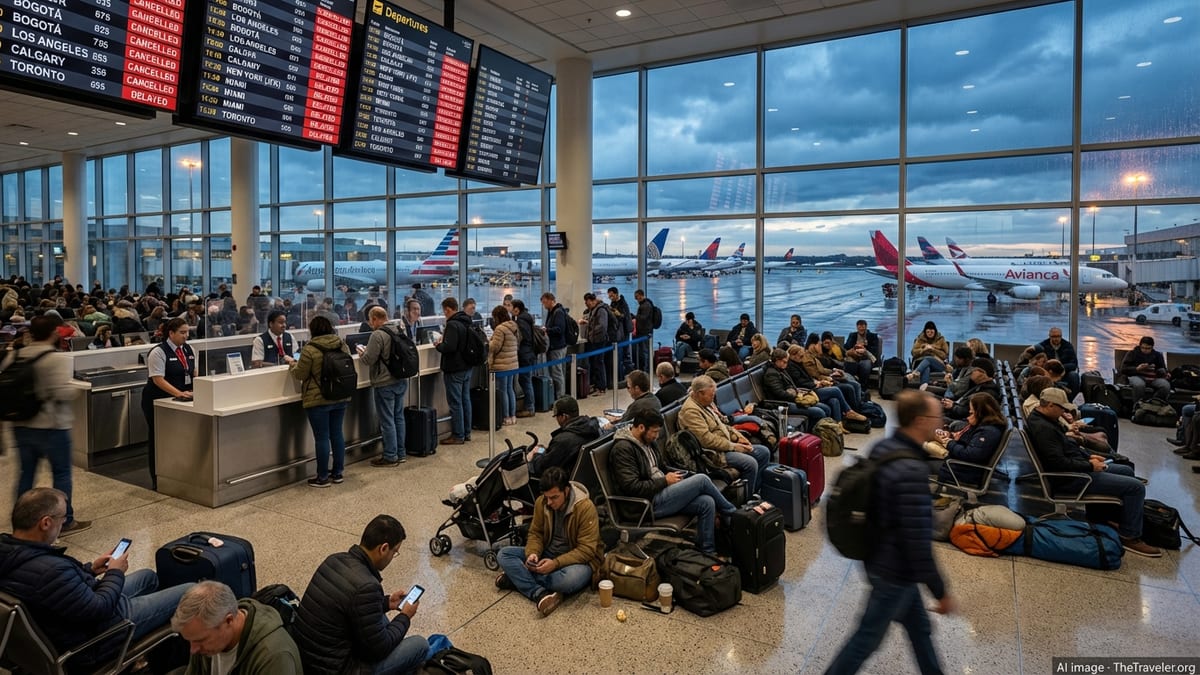
Palm Beach Tarmac Trouble Spreads Through Airline Networks
Tracking dashboards that compile real time data from Palm Beach International showed an unusual early wave of schedule changes concentrated around midmorning, with departures to major hubs in New York, Boston, Atlanta, and Charlotte most heavily affected. While Palm Beach handles far fewer daily departures than Miami or Fort Lauderdale, its role as a spoke into several large network hubs meant the disruption quickly propagated outward.
Publicly available operational data indicates that six flights operated by Delta, JetBlue, and American were ultimately canceled, with another 29 departures and arrivals forced into delay windows ranging from 30 minutes to just over two hours. Many of the affected services were turnarounds, which meant a late inbound aircraft almost immediately translated into a late outbound rotation, compounding the timetable stress.
Aviation performance summaries for Palm Beach highlight how quickly minor irregularities can snowball at the airport, particularly in the June to October thunderstorm season, when the airfield is already prone to short term ground stops and runway constraints. That seasonal vulnerability left little margin to absorb Tuesday’s disruption, even if the original trigger was brief.
Airport reference material from federal aviation authorities also notes that Palm Beach’s mix of commercial traffic, flight school operations, and helicopter movements can contribute to frequency congestion on the ground during irregular operations, creating additional friction when airlines are trying to reroute or re-time flights on the fly.
Delta, JetBlue, and American Bear the Brunt
Data derived from airline specific trackers shows that the three largest network carriers at Palm Beach were responsible for the bulk of the schedule fallout. Delta, JetBlue, and American operate some of the airport’s highest profile routes to Boston, New York, and other northern hubs, and those flights were disproportionately represented among Tuesday’s delays.
JetBlue, which has built a strong leisure and visiting friends and relatives customer base into South Florida, experienced multiple late departures on key northbound services, according to independent flight status portals. Several of those aircraft had already been running behind schedule earlier in the day from other East Coast airports, leaving little slack when the Palm Beach disruption hit.
American and Delta, both of which use Palm Beach as a feeder point into their respective hubs, also saw their tightly timed morning and early afternoon rotations come under pressure. With many of those flights connecting into busy bank structures at major hubs, even short delays at Palm Beach risked missed onward connections for travelers heading to the Midwest and West Coast.
Historical traffic reports from Palm Beach show that the three carriers have steadily grown their combined seat share over the past several summer seasons. That concentration, while offering travelers more nonstop options, also means that any localized problem at the airport is more likely to be felt by a broad swath of passengers across their networks.
East Coast Corridor Feels Knock On Effects
By midafternoon, the impact of the Palm Beach aviation wobble was visible well beyond South Florida. Delay patterns on independent trackers showed scattered slippages on related routes along the East Coast, notably on flights linking New York area airports, Boston, and Washington with Florida destinations.
Because many Palm Beach flights act as positioning or continuation legs for aircraft that subsequently operate from other airports, the initial six cancellations forced schedule planners to reshuffle equipment elsewhere in the network. In some cases, passengers departing from cities hundreds of miles away encountered aircraft substitutions or last minute gate changes traceable back to the earlier Palm Beach disruption.
Industry analysis of previous East Coast incidents has underscored how tightly coupled the corridor has become, with airports like Palm Beach, Fort Lauderdale, Orlando, and Tampa acting as integral nodes in a complex web of point to point and hub based services. When a small node encounters capacity constraints, the result can quickly manifest as rolling delays along the entire seaboard.
Travelers caught in Tuesday’s knock on effects reported, via public social media posts and message boards, a familiar mix of extended gate holds, on board waits for release slots, and tight connection windows as aircraft tried to claw back schedule integrity throughout the day.
Weather, Infrastructure, and Seasonal Crowds Add Pressure
While the precise origin of Tuesday’s disruption was not immediately clear from public data, the pattern matched a broader seasonal trend in Florida aviation, in which weather, heavy demand, and infrastructure limitations frequently combine to create short, sharp breakdowns in punctuality. Palm Beach sits in a region where afternoon thunderstorms are common in June, and any accompanying ground stop or runway flow restriction can erode on time performance within minutes.
Recent federal infrastructure reports for Palm Beach have also cited ongoing work on runway and taxiway systems, along with recurrent airspace management challenges during peak hours. Even when construction does not directly close a runway, temporary procedures and tighter spacing requirements can slow the rate at which aircraft depart or arrive, making the system more fragile during periods of high volume.
At the same time, Palm Beach has seen a steady increase in leisure traffic as travelers seek alternatives to more congested South Florida gateways. That growth, documented in airport traffic summaries, means that summer schedules now operate close to the airport’s practical capacity on certain days, leaving less room to recover when individual flights fall out of place.
Analysts note that these structural factors do not cause every disruption, but they do set the backdrop against which operational missteps, technical issues, or fast moving weather can more readily trigger a localized aviation meltdown like the one seen on Tuesday.
What Travelers Can Expect in the Coming Days
As of late afternoon, live status boards showed that most operations at Palm Beach were trending back toward normal, with delay durations gradually shrinking and no additional cancellations beyond the initial cluster affecting Delta, JetBlue, and American. However, schedule experts caution that residual disruptions can linger into subsequent days as aircraft and crews are repositioned and maintenance windows adjusted.
Consumer advocacy resources advise passengers booked to or from Palm Beach through the week to monitor their flight status closely, check in early, and be prepared for minor timing shifts as airlines work through the aftermath. U.S. transportation rules require carriers to provide automatic refunds when flights are canceled or significantly delayed and customers choose not to travel, and several major airlines also outline additional care commitments in their own customer service plans.
Industry observers emphasize that, in a tightly wound summer schedule, even a disruption quantified in single digit cancellations and a few dozen delays can serve as an early warning of how vulnerable the East Coast system remains. With more storms and heavy travel days ahead, Palm Beach’s experience on Tuesday may prove to be a preview of the operational stress points airlines and passengers will continue to face this season.