


More news on this day
A sudden cluster of flight cancellations involving major airlines including Air France, British Airways, Emirates and Delta is disrupting traffic through Paris on Tuesday, unsettling links to key destinations such as Riyadh, Toulouse, London Heathrow, Dubai, Florence, New York JFK and Barcelona.
Get the latest news straight to your inbox!
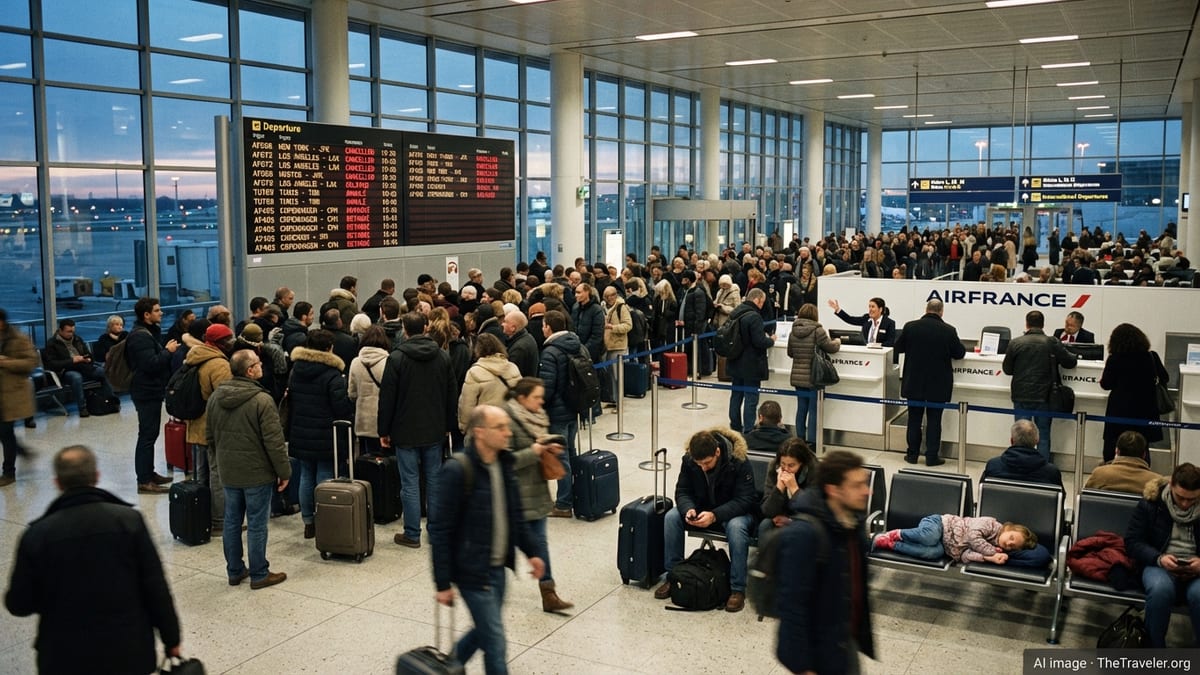
Major Carriers Hit by Concentrated Disruptions
Publicly available schedules and live tracking platforms on 26 May indicate that at least ten flights tied to Paris have been canceled or heavily disrupted within a short window, affecting services operated by or marketed through Air France, British Airways, Emirates, Delta and other partners. While the cancellations are spread across both Charles de Gaulle and Orly, their concentration on high‑demand corridors has amplified the impact on travelers and onward connections.
Services between Paris and major European cities such as Toulouse, Barcelona and Florence have been among those most exposed. Short‑haul routes form the backbone of the French and wider European networks, carrying both point‑to‑point passengers and those connecting to long‑haul flights across the Atlantic, Middle East and Africa. When several of these flights are removed from the schedule on the same day, disruption often ripples far beyond the immediate origin and destination pair.
Transcontinental links are also affected. Monitoring tools show schedule changes and cancellations touching Paris connections to New York JFK and London Heathrow, with disruptions not only to non‑stop flights but also to codeshare itineraries that rely on smooth transfers via the French capital. Delta and Air France joint venture services, as well as British Airways departures that feed into the Paris–London corridor, appear among the itineraries experiencing irregular operations.
The result for travelers is a patchwork of delays, rebookings and overnight stays as airlines attempt to consolidate loads, reclaim schedule integrity and work around operational constraints. With multiple large carriers impacted at once, alternative options within Europe can quickly become limited, especially for same‑day re‑routing.
Paris Hubs Under Pressure
Paris Charles de Gaulle and Orly are once again under pressure as the latest disruptions hit an already busy late‑May travel period. Earlier in the month, published coverage about Charles de Gaulle highlighted a spike in delays and a smaller number of cancellations tied to operational difficulties, showing that the system has been running close to its limits.
On Tuesday, live data show that routes linking Paris to London Heathrow, Barcelona and other European gateways have experienced schedule adjustments and cancellations close together in time. These flights serve as key feeders into transatlantic and Middle Eastern banks, which means knock‑on effects when aircraft, crews or connection windows are no longer available as planned.
The current pattern also affects regional French markets such as Toulouse, which rely heavily on Paris connections for international travel. When a Toulouse–Paris rotation is canceled, travelers heading onwards to long‑haul destinations like New York or Dubai can find themselves mis‑connecting even if the long‑haul sector continues to operate. Airlines typically respond by rebooking passengers through alternative hubs such as Amsterdam, Frankfurt or London, but seat availability can be tight at short notice.
For Paris airports, maintaining punctuality is particularly challenging on days when several airlines are adjusting schedules at once. Turnaround times lengthen, and ground handling resources are stretched as multiple flights are retimed or merged, creating further room for delays and additional last‑minute cancellations later in the day.
Middle East and Transatlantic Links Affected
The latest cancellations have particular resonance on routes to the Middle East, especially Riyadh and Dubai, which had already seen schedule volatility in recent months. Public discussion in aviation forums and earlier reports noted that Air France‑KLM and partner carriers adjusted or suspended select services to Riyadh and Dubai during periods of heightened geopolitical risk, concentrating more of the remaining traffic on airlines such as Emirates.
On Tuesday, passengers traveling between Paris and Riyadh or Dubai are facing an uneven landscape of options. Emirates, which maintains a strong presence on the Dubai–France corridor, remains a critical link, but when Paris departures are canceled or retimed, connections at Dubai and other regional hubs can be missed. Travelers then depend on rebooking into later departures or rerouting through alternative Middle Eastern or European hubs, which may already be operating near capacity.
Transatlantic services are also under strain. Schedules show that the Paris–New York JFK market, served by Air France and joint‑venture partner Delta, has been operating against a backdrop of earlier irregularities on specific days in May. When one or more departures are removed, the remaining flights can quickly fill, leaving passengers with few same‑day options. Some are being shifted to indirect routings via European cities such as London or Amsterdam, lengthening travel times and increasing reliance on tight intra‑Europe connections that themselves are experiencing delays.
Because Paris is a central hub for travel between Europe and Africa as well, any disruption on long‑haul banks that also touch the Middle East or North America can have cascading effects. Aircraft rotations may be swapped or shortened, altering the availability of widebody capacity across multiple continents over subsequent days.
Knock‑On Impacts Across Europe
The cluster of cancellations around Paris is reverberating throughout the European network. Flights between Paris and London Heathrow, Barcelona and Florence function as vital links not only for France‑origin travelers, but also for those feeding in from other European and international points. When these high‑frequency routes lose capacity suddenly, nearby airports often see increased demand as airlines attempt to reroute passengers around the disruption.
For instance, London Heathrow and Barcelona are both key transfer points in their own right. Canceled or heavily delayed flights from Paris into these hubs can disrupt onward journeys to North America, Latin America and the wider Mediterranean. Travelers who expected simple one‑stop itineraries may find themselves facing additional connections or overnight stops while airlines reconstruct their travel plans.
Florence and other smaller airports connected to Paris are particularly vulnerable. They may have only a handful of daily flights to major hubs, and a single cancellation can effectively remove all same‑day options. In such cases, rail links or alternative regional airports in Italy, Spain or southern France become important emergency routes for travelers attempting to rejoin the global network.
Across Europe, the knock‑on effects can include aircraft and crew out of position for subsequent rotations, causing additional delays or cancellations on routes that are geographically distant from Paris itself. This interconnectedness means that a localized operational issue at one hub can have continent‑wide consequences over a period of several days.
What Travelers Are Experiencing and How to Respond
Reports from passenger forums and social media over recent weeks describe a pattern of last‑minute schedule changes affecting flights to and from Paris, including examples of cancellations on transatlantic services and regional sectors such as Florence and Barcelona. Travelers recount being rebooked one or two days later or being routed through alternative European hubs on partner airlines.
Against the backdrop of Tuesday’s cancellations, consumer advocates typically recommend that passengers monitor their flight status frequently on both airline apps and independent flight‑tracking platforms, as changes may appear there before email notifications arrive. Keeping contact details up to date in airline profiles can help ensure that text or app alerts are received quickly when rebooking options are offered.
In the European Union context, passengers whose flights are canceled or heavily delayed may have rights to care, assistance and, in some circumstances, financial compensation, depending on the cause of the disruption and the length of delay. Travelers are often advised to retain boarding passes, receipts for meals or accommodation and any written notices from the airline, as these can support later claims.
With schedules remaining fluid after Tuesday’s wave of cancellations, industry observers suggest building in additional buffer time for connections through Paris in the coming days, especially on itineraries involving Riyadh, Dubai, New York JFK and high‑demand European cities such as London and Barcelona. Booking earlier flights in the day or allowing longer layovers can provide more room to maneuver if further adjustments arise.