


More news on this day
Dozens of holidaymakers remain stranded on the Cape Verde island of Boa Vista after an easyJet service to Porto was cancelled earlier this week, with reports describing long waits for information and a slow rollout of alternative travel plans.
Get the latest news straight to your inbox!
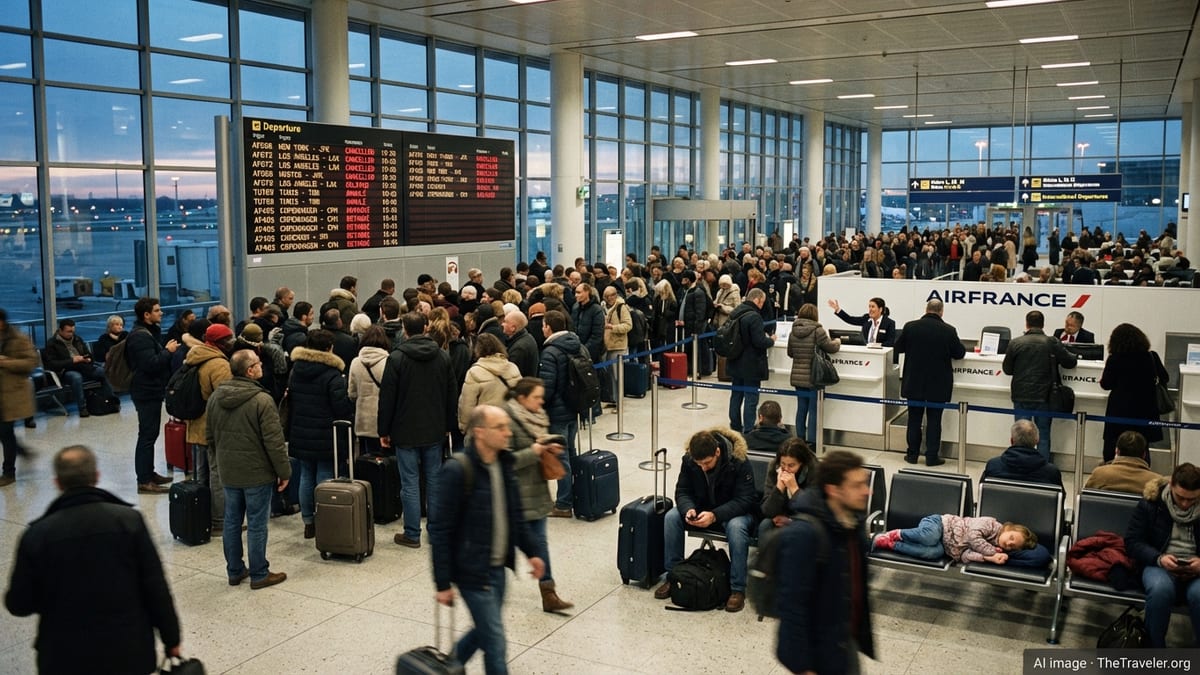
Flight from Boa Vista to Porto cancelled after aircraft disruption
Publicly available information indicates that the affected flight was scheduled to operate between Boa Vista, in the Cape Verde archipelago, and Porto in northern Portugal on Tuesday, 25 August 2026. Around 130 passengers were due to travel on the service when it was cancelled shortly before departure.
According to published coverage, easyJet attributed the disruption to knock-on operational issues after the aircraft assigned to the Boa Vista–Porto rotation became stranded in Basel, Switzerland. Local reports link the earlier disruption in Central Europe to adverse weather and resulting air traffic control constraints, which prevented the aircraft from reaching Cape Verde in time to operate the return leg to Portugal.
News reports in Portugal note that the cancellation left a significant number of leisure travelers, including families with children, unable to return home as planned at the end of their holidays in Boa Vista. Some passengers had onward travel or work commitments in Portugal, heightening the impact of the disruption.
Regional media tracking the incident highlight that the affected route is one of a limited number of direct connections between Cape Verde and northern Portugal. When a single flight is withdrawn from the schedule, alternatives are often constrained by aircraft availability, seasonal demand and the relative isolation of the island.
Passengers report long waits and uncertainty in Boa Vista
Coverage from Portuguese outlets and international news summaries describes passengers facing extended waits in Boa Vista as they sought clarity on when they could travel to Porto. Some travelers reported that initial information about rebooking options was scarce, with uncertainty over whether they would be moved to another easyJet flight or rerouted via different European hubs.
Accounts cited in local media indicate that not all affected customers were immediately accommodated in hotels, and some described difficulties arranging meals and transport while they waited. Several reports refer to travelers monitoring flight-tracking websites and airline updates on their own to piece together what options might become available.
The incident has resonated particularly strongly in Portugal, where previous cancellations on routes linking the country to Cape Verde and other Atlantic islands have periodically left passengers stranded for days. Comparisons are being drawn with earlier disruptions elsewhere in the region, where limited connectivity and high seasonal demand complicated recovery efforts for airlines.
Consumer-focused coverage notes that, for many travelers, the main frustration lies less in the initial cause of the cancellation and more in the perceived lack of timely, practical information about next steps, especially for those traveling with children or facing imminent work or study obligations on their return.
Airline response and options for rerouting
In public statements cited by news outlets, easyJet has said it is working to support passengers affected by the Boa Vista–Porto cancellation, including arranging alternative flights and providing accommodation and meals where required. The airline has also indicated it will reimburse “reasonable” additional expenses incurred as a result of the disruption, in line with its standard policies.
Given the limited number of direct services between Cape Verde and Porto, rerouting options may involve connections via Lisbon or other European gateways, depending on seat availability. Aviation tracking services show that easyJet operates several routes linking Portugal and Cape Verde, but aircraft rotations and high summer-season loads can restrict the speed at which stranded passengers are re-accommodated.
Travel-industry analysis points out that in such cases airlines typically prioritize filling seats on upcoming flights and may also explore placing affected passengers on services operated by partner carriers, subject to commercial agreements and seat inventory. However, this process can take time to finalize, particularly when a large group of passengers must be moved at once.
For travelers still on Boa Vista, publicly available guidance suggests closely monitoring booking records and airline notifications, as rebookings may be processed in batches. Those with urgent needs are often advised by consumer groups to retain detailed receipts for accommodation, meals and local transport while they await confirmation of new travel arrangements.
Passenger rights and compensation considerations
The incident has renewed attention on air passenger rights for flights linking the European Union with destinations such as Cape Verde. EasyJet, as a UK-based carrier operating flights from and to EU territory, is generally subject to European-style passenger-protection frameworks on services departing from the EU or arriving there under certain conditions.
Legal and consumer commentators quoted in Portuguese media note that eligibility for fixed-sum compensation under European regulations depends on whether the disruption is judged to arise from “extraordinary circumstances,” such as severe weather or air traffic control restrictions, which may exempt airlines from some compensation obligations. However, even in those cases, carriers are typically required to provide care, including meals, refreshments and accommodation where necessary, until passengers can be transported to their final destination.
Specialist travel-law sites observing the Boa Vista case emphasize that the classification of a disruption can be complex when multiple factors are involved, such as weather-related restrictions in a different country combined with ensuing operational challenges. Passengers are often encouraged to submit formal claims through airline channels and, if needed, seek independent advice to clarify their rights in specific situations.
The Boa Vista cancellation is also prompting fresh discussion about how well airlines communicate these rights to passengers at the airport and through digital channels. Consumer advocates argue that clear, consistent information can help reduce anxiety for stranded travelers and support more orderly handling of accommodation and rebooking in remote holiday destinations.
Concerns over resilience on island holiday routes
The disruption in Cape Verde is drawing wider attention to the resilience of air links serving island tourism markets. Routes to destinations such as Boa Vista often rely on relatively small numbers of weekly flights operated by a handful of carriers, with limited spare aircraft capacity in peak season.
Aviation analysts note that this structure can leave travelers particularly exposed when a single cancellation occurs, especially if the affected aircraft cannot be quickly replaced. Recovery options can be further constrained by airport infrastructure, crew-duty limits and the cost of positioning substitute aircraft over long distances.
Commentary in Portuguese and international travel media suggests that the Boa Vista incident may feed into broader conversations about contingency planning for island routes, including the potential role of additional backup capacity and clearer service-level expectations during peak holiday periods. For now, attention remains focused on how quickly stranded passengers in Cape Verde can be returned to Porto and how effectively the lessons from this disruption will be applied to future operations.
News Minimalist coverage of the Boa Vista–Porto cancellation
RTP report on easyJet’s cancelled Cape Verde–Porto flight
Portugal News Today summary of passengers stranded in Cape Verde