


More news on this day
easyJet has scheduled an additional service between Tunisia and Northern Ireland after more than 100 passengers were left stranded in the North African country when a Belfast-bound flight was cancelled at short notice, according to recent reports.
Get the latest news straight to your inbox!
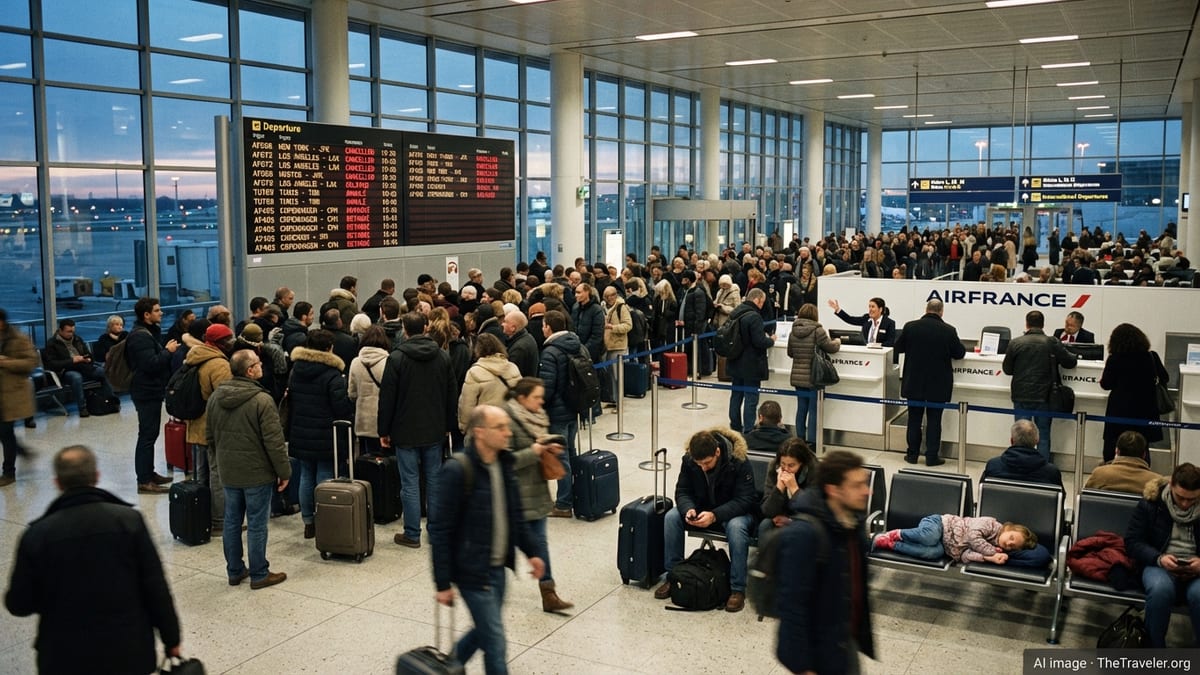
Short-Notice Cancellation Leaves Holidaymakers Stuck Abroad
Published coverage indicates that the disruption began when an easyJet flight from Enfidha-Hammamet International Airport in Tunisia to Belfast International Airport on 22 August 2026 was cancelled with limited advance warning. The service, identified in multiple reports as a seasonal route for leisure travellers, was scheduled to carry more than 100 passengers back to Northern Ireland at the end of their trips.
Passengers cited in news and consumer-rights coverage describe learning of the cancellation at or close to the time of departure, leaving many already checked out of hotels and without immediate clarity on alternative travel arrangements. The incident drew attention in the United Kingdom and Ireland because of the number of families and package-holiday customers affected during the peak summer period.
The cancellation added to a broader picture of operational strain across parts of the European short-haul network during the busiest weeks of August, when high demand, tight aircraft utilisation and local factors such as weather or airport capacity constraints can combine to disrupt schedules.
Airline Schedules Extra Flight to Repatriate Customers
In response to the disruption, publicly available information indicates that easyJet has scheduled an additional flight to return affected customers from Tunisia to Belfast. This extra service, often referred to in coverage as a rescue or recovery flight, is designed to consolidate stranded passengers onto a dedicated rotation rather than relying solely on spare seats on existing services.
Reports suggest that the additional flight was arranged after it became clear that rebooking all affected travellers on standard scheduled services would not be possible within a reasonable timeframe because of limited capacity on the Tunisia to UK routes at this stage of the summer season. The airline’s move is in line with general disruption-management practices, where carriers sometimes add ad hoc flights to move customers when other options are constrained.
According to information published by flight-rights organisations, many of the stranded travellers had already spent several days attempting to secure alternative arrangements. The extra flight is therefore being framed in coverage as a significant step toward normalising the situation, although it comes after a period of uncertainty and additional hotel nights for some passengers.
Passenger Rights and Support Under European Regulations
The episode has renewed attention on the protections available to air travellers under UK and European-style compensation rules. Guidance provided by consumer-advocacy and flight-compensation platforms highlights that, when a flight departing from Tunisia to the UK is operated by a UK or EU carrier, passengers may benefit from rights similar to those set out in EU261 and its UK equivalent, subject to the precise circumstances of the disruption.
According to these publicly available resources, travellers on the cancelled Enfidha to Belfast service may be entitled to care and assistance, including meals, refreshments and hotel accommodation where an overnight stay becomes necessary, as well as transport between the airport and the place of accommodation. In certain cases, financial compensation may also be payable if the cancellation is found not to have been caused by extraordinary circumstances and if required notice periods were not met.
easyJet’s general disruption information, published on its website, states that the airline aims to provide affected customers with options such as rebooking onto the next available flight, choosing an alternative route to the same destination or requesting a refund for unused flights. In the case of package holidays booked through easyJet holidays, the company’s published guidance indicates that it will arrange alternative flights and cover necessary overnight stays where required to complete the trip.
Operational Pressures on Popular Leisure Routes
The incident in Tunisia comes during a period in which many European carriers are operating close to pre-pandemic capacity on key leisure routes across the Mediterranean. Industry updates and the airline’s own travel-information pages show that high demand, tight turnaround schedules and region-specific constraints can quickly translate into knock-on disruption when a single rotation is delayed or cancelled.
Observers note that seasonal destinations such as Tunisia, where services may operate only a few times a week from particular UK regional airports, are particularly vulnerable when irregular operations occur. Limited frequencies and high load factors can make it harder to find spare seats at short notice, increasing the likelihood that additional flights or chartered capacity will be required to repatriate stranded customers.
Published operational guidance from easyJet explains in general terms that, when flights are disrupted, passengers are encouraged to use online self-service tools or the airline’s app to review rebooking and refund options. However, situations involving large groups in a single resort or on a dedicated holiday flight, as in the Enfidha to Belfast case, can require more coordinated solutions involving both the airline and tour operators.
What Travellers Can Do During Similar Disruptions
Travel experts and passenger-rights organisations responding to the Tunisia disruption highlight several practical steps for travellers caught in similar situations. One commonly cited recommendation is to document all expenses incurred because of the cancellation, including hotel stays, meals and local transport, and to retain receipts for potential reimbursement under the carrier’s duty-of-care obligations.
Another step involves monitoring the airline’s official channels, such as the disruption or latest-travel-information sections of its website, which are frequently updated with details of additional flights, schedule changes and rebooking instructions. For customers on package holidays, guidance suggests maintaining close contact with the tour operator, which typically has responsibility for coordinating replacement flights, accommodation and transfers.
Specialist compensation services also point out that affected travellers may later choose to pursue claims for statutory compensation where applicable, or to escalate complaints to national enforcement bodies or alternative dispute resolution schemes if they believe that their rights have not been fully respected. These options often depend on the flight’s origin, destination, carrier and the specific reasons for the cancellation.
As the extra easyJet flight begins returning passengers from Tunisia, the episode serves as a reminder of the complexities involved in managing high-season operations and of the importance for travellers of understanding their rights and available support when plans are unexpectedly disrupted.
AirHelp: easyJet Enfidha to Belfast cancellation overview
easyJet: delays and cancellations information