


More news on this day
New York and New Jersey’s 118-year-old PATH rail network is moving deeper into the digital age, with new real-time monitoring and data systems designed to make cross-Hudson journeys more reliable on some of the region’s oldest infrastructure.
Get the latest news straight to your inbox!
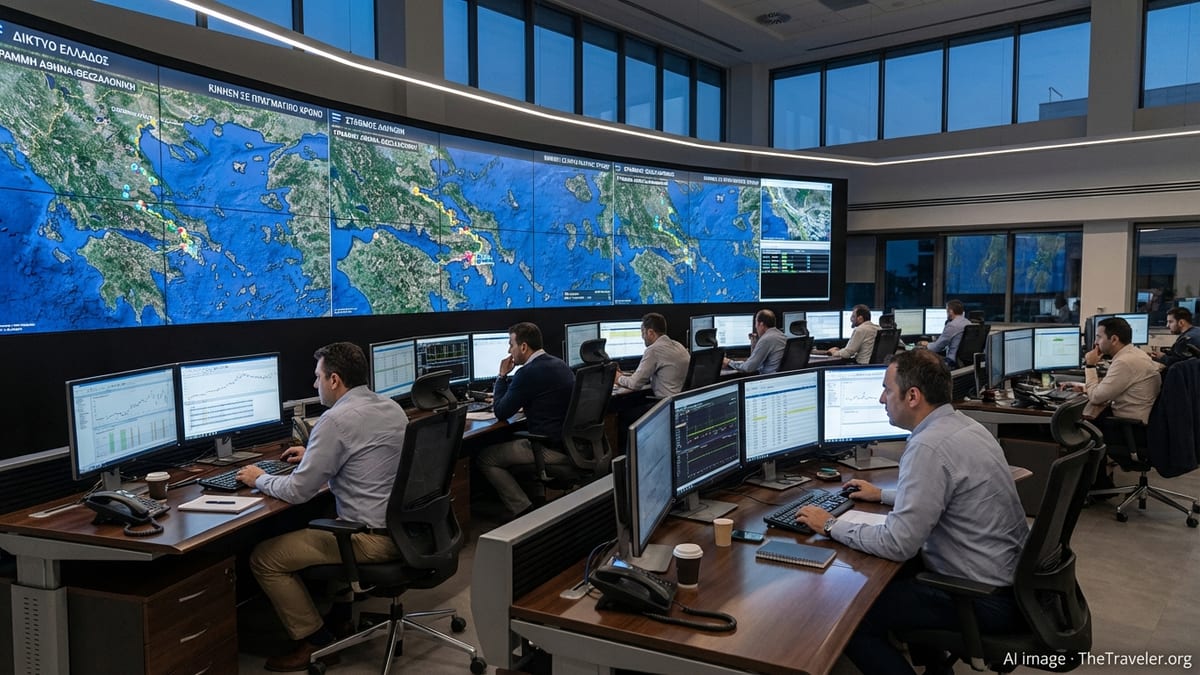
Modern Technology for a Century-Old Lifeline
Publicly available planning documents show that the Port Authority’s PATH system, which carries more than 200,000 riders on an average weekday through tunnels that are over 100 years old, is a central focus of the agency’s 2026–2035 capital program. Investments earmarked for the line emphasize state-of-good-repair work paired with digital upgrades that give operators better visibility into what is happening on the network in real time.
Reports indicate that the agency is prioritizing systems that allow continuous tracking of train locations, traction power demand and the condition of critical components, rather than relying solely on scheduled inspections. This mirrors a wider shift in North American rail operations toward condition-based maintenance, where data from sensors and analytics platforms drive decisions about when and where to intervene on the network.
The modernization push arrives as PATH is recovering ridership and operating more intensive service, including expanded weekend operations across all four lines for the first time in decades. With more trains running through century-old tunnels under the Hudson River, real-time monitoring is becoming a key tool to keep delays in check and maintain reliability for commuters who increasingly depend on the system.
Real-Time Power and Infrastructure Monitoring
According to information published through the Port Authority’s open innovation challenge program, PATH is actively seeking solutions that provide real-time visibility into traction power usage along the network. The initiative is aimed at tracking power demand, identifying constraints and generating actionable insights that can help prevent service disruptions before they occur.
The traction power challenge describes a goal of integrating continuous data feeds from substations and wayside equipment into centralized platforms, so operations staff can see emerging issues in near real time. This level of monitoring is intended to support quicker responses during incidents, more efficient use of available power and better planning for future capacity increases across the tightly constrained cross-Hudson corridor.
In parallel, industry documentation from major suppliers highlights the role of wayside condition monitoring and health and usage monitoring systems in supporting modern rail operations. These systems use trackside sensors, high-speed imaging and connected devices on rolling stock to monitor wheels, brakes, bearings and other components while trains are in service, sharply reducing the need to pull equipment from operation for routine checks.
From Scheduled Inspections to Condition-Based Maintenance
Globally, rail operators are turning to analytics platforms that process millions of data points each day from trains and infrastructure to detect faults early and move toward condition-based maintenance. Technical materials from leading vendors describe remote monitoring centers that ingest data from on-board systems and wayside detectors, using algorithms to predict when a component is likely to fail and recommending targeted interventions.
Such approaches allow operators to schedule maintenance at optimal times, rather than following fixed time-based intervals that can either over-maintain healthy assets or miss issues that develop between inspections. For a compact, intensively used system like PATH, this shift has notable implications: fewer unplanned failures can translate directly into more reliable peak-period service and less cascading delay across the network.
Industry examples point to remote monitoring hubs that can flag anomalies in braking performance, track geometry or catenary interaction long before passengers experience slowdowns. When applied to older infrastructure, these tools can act as an early-warning system, helping engineers understand how century-old tunnels, tracks and structures are performing under modern service patterns and higher passenger volumes.
Riders See More Service as Behind-the-Scenes Systems Evolve
The Port Authority’s latest capital plan outlines a multibillion-dollar program for PATH, including major station renovations, track renewals and fleet improvements. The same document underscores that the system now moves more than 60 million passengers per year, reinforcing the need for both physical upgrades and smarter monitoring tools to keep up with demand.
Recent service changes demonstrate how the network is evolving in practice. Published service advisories and independent coverage note that PATH has expanded weekend operations on all four lines, offering more consistent connections between New Jersey hubs and Manhattan. To sustain these higher frequencies through aging tunnels and yards, the operator is leaning more heavily on real-time operational data, from train tracking to power management.
Passenger-facing tools are also reflecting the shift toward real-time information. Third-party applications now provide live arrival estimates for PATH trains alongside other New York region services, drawing on data feeds that have become more robust as back-end systems improve. While these consumer apps sit on top of the network rather than controlling it, their accuracy depends on the same underlying monitoring infrastructure that staff use to manage daily operations.
Part of a Larger Wave of Rail Digitalization
PATH’s focus on monitoring and analytics is emerging alongside a broader wave of rail modernization projects in the New York and New Jersey region. Neighboring agencies are advancing digital safety systems and major tunnel and bridge replacements, and intercity operators have highlighted similar uses of real-time data for asset management and incident response.
Across the industry, suppliers are promoting integrated suites that tie together wayside detection, on-board sensors and centralized analytics for freight and passenger operators alike. Documentation for these systems emphasizes reductions in downtime, better planning of maintenance windows and the ability to extend the life of critical assets, outcomes that are particularly attractive for networks built in the early 20th century and now expected to handle 21st-century traffic.
For riders, much of this transformation will remain invisible, taking place in control centers, equipment rooms and cloud platforms rather than on station platforms. Yet the impact is expected to be felt in more consistent headways, fewer sudden outages and a PATH network that is better equipped to support the region’s long-term growth, even as its 118-year-old tunnels remain at the core of the trans-Hudson connection.
Port Authority PATH ridership and service expansion update
PATH traction power monitoring and load intelligence challenge