


More news on this day
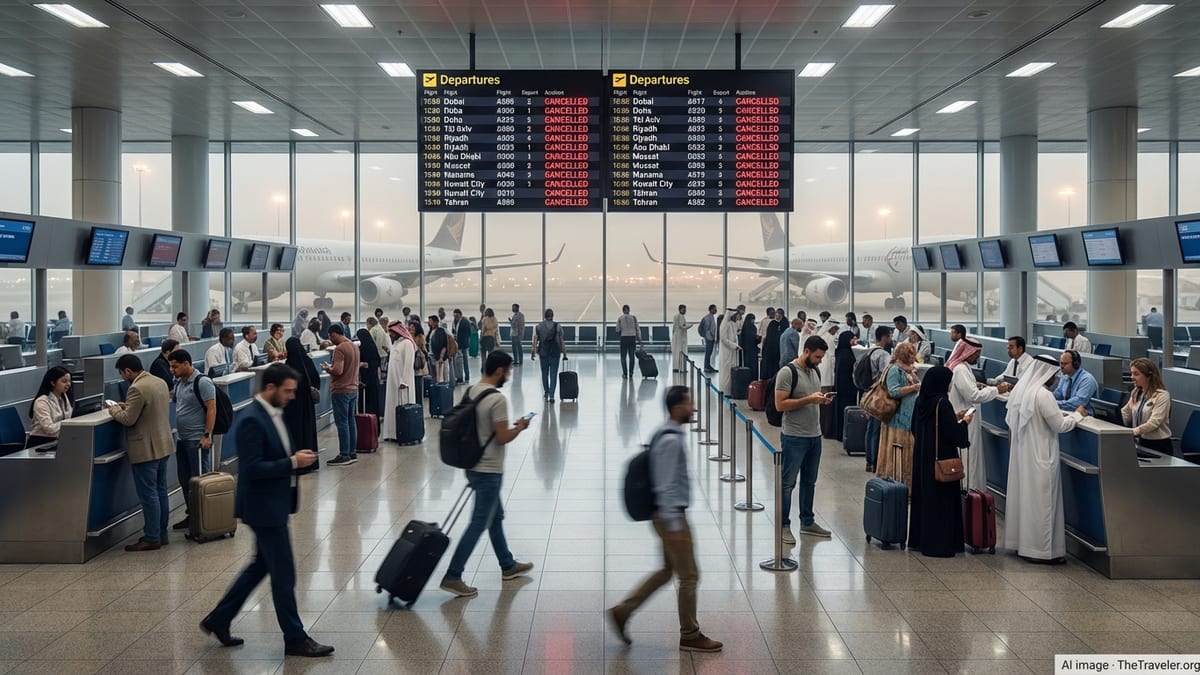
Hundreds of travelers have been left scrambling for alternatives across Peru after a cluster of recent cancellations by Air Canada, LATAM, and other carriers disrupted new and existing routes linking Lima and regional cities with Toronto Pearson and key hubs across the Americas.
Get the latest news straight to your inbox!
New Cancellations Collide With a Fragile Recovery
The latest disruptions hit as Peru’s aviation sector is still rebuilding its international network and domestic frequencies following years of uneven recovery. Publicly available flight data and recent industry coverage indicate that at least five newly scheduled or recently relaunched services have been withdrawn or heavily curtailed, affecting travel between Lima, Toronto, and several secondary cities.
Air Canada only recently restored seasonal nonstop operations between Lima and its hubs in Toronto and Montreal, positioning the routes as vital links for both inbound tourism and onward connectivity to Europe and Asia. The current round of cancellations has reduced options for passengers moving between Peru and Canada, especially those relying on a single-carrier itinerary to avoid complex transfers.
At the same time, LATAM has been paring back parts of its Lima network, including regional routes that serve as feeders into the capital’s Jorge Chávez International Airport. Industry reports show that services such as Tucumán–Lima and Lima–Havana are being withdrawn on economic and regulatory grounds, removing important connectors for travelers heading onward to North America and other South American capitals.
For affected passengers, the result is a patchwork of last-minute schedule changes, rebookings, and outright cancellations that can strand travelers not just in Lima, but also in high-altitude gateways such as Cusco and regional cities that depend on Lima for onward links.
Toronto Pearson Feels the Knock-On Effects
Toronto Pearson International Airport is again seeing heightened disruption as airlines adjust capacity, respond to operational pressures, and in some cases suspend services they deem uneconomic. Recent data compiled from flight trackers and Canadian travel reporting show days with double-digit cancellations and dozens of delays for Air Canada and its regional partners, particularly on North American and transborder routes.
These pressures ripple across the network. When long-haul flights between Toronto and South American hubs are delayed or canceled, passengers arriving from Peru can miss connections to domestic Canadian destinations or onward international flights. Conversely, disruptions at Pearson can prevent aircraft and crews from positioning to operate southbound services, leading to cancellations that cascade back into Peru.
Analysts note that operational shocks at a major hub such as Toronto Pearson can quickly overwhelm contingency plans, especially when combined with weather events, air traffic flow restrictions, or crew availability issues. In that environment, newly restarted or lower-frequency routes are often among the first to be reduced or temporarily suspended.
For travelers caught in the middle, this can translate into extended airport waits, unplanned overnight stays, and a scramble to find seats on alternative departures at a time when loads on remaining flights are already high.
Domestic Links Inside Peru Under Strain
The impact is being felt just as sharply within Peru’s borders. Coverage of recent operational days highlights multiple cancellations on core domestic corridors such as Lima–Cusco and Lima–Arequipa, including services operated by LATAM and its affiliates. On busy travel days, more than half a dozen flights on these routes have been withdrawn, forcing passengers into lengthy queues and uncertain rebooking timelines.
These domestic links are critical for both international tourists and local travelers. Visitors landing in Lima from Canada, the United States, or Europe often have only a narrow connection window to reach onward flights to Cusco, gateway to Machu Picchu. When a domestic leg is canceled with limited notice, passengers may find themselves stranded in Lima despite having completed a long intercontinental journey.
Regional tourism operators warn that such instability can erode confidence in multi-stop itineraries that rely on tight coordination between long-haul arrivals and domestic departures. Reports from recent weeks describe scenarios in which travelers arriving from North America discovered that their same-day connections to Cusco or regional cities had been pulled from the schedule after they were already en route.
The strain is not confined to purely domestic routes. Regional links from Lima to cities such as Santiago and São Paulo have also seen cancellations, further complicating travel plans for those using Peru as a connection point rather than a final destination.
Passengers Navigate Compensation and Rebooking Rules
With multiple carriers and jurisdictions involved, travelers are facing a complex landscape of passenger rights and compensation rules. In Canada, regulations administered at the federal level include obligations for airlines to rebook passengers on the next available departure in many disruption scenarios. In practice, however, consumer advocates note that high load factors and limited remaining capacity can make this obligation difficult to fulfill promptly.
In Peru and across South America, a patchwork of national and regional rules governs refunds, vouchers, and hotel accommodations when flights are canceled or significantly delayed. According to publicly available advisories and airline statements, many carriers offer fee-free changes or refunds when cancellations are driven by schedule overhauls or route withdrawals, but the process can vary depending on where the ticket was purchased and whether it includes multiple airlines.
Recent traveler accounts circulating online describe long waits for customer service by phone and at airport counters, along with confusion over whether rebooking on another airline is possible at no extra cost. In some cases, passengers report being told to pursue travel insurance claims for out-of-pocket expenses such as hotels and meals when carriers decline to provide vouchers.
Consumer-facing guidance from travel organizations emphasizes the importance of documenting disruption, requesting written confirmation of cancellations, and checking both the operating carrier’s policies and applicable national regulations before accepting or rejecting rebooking options.
Connectivity Questions for Peru’s Tourism and Trade
The wave of cancellations is sharpening debate over the resilience of Peru’s air connectivity at a moment when international tourism is gaining momentum and trade ties with North America and other regions are expanding. Lima’s role as a hub for both domestic and international traffic means that schedule changes by airlines such as LATAM and Air Canada have an outsize effect on the wider network.
Industry commentary points to several contributing factors, including rising operating costs, new airport and transit fees in Peru, and competitive pressures on marginal routes. For airlines, reducing or canceling services that are underperforming financially can be a rational response to these headwinds, but for destination markets the consequence is a narrowing of options that can deter visitors and complicate logistics for exporters.
Stakeholders in tourism and commerce are watching closely to see whether other carriers will step in to backfill capacity on affected routes or introduce new services that restore lost links. So far, most of the adjustments have occurred through reductions rather than additions, reinforcing concerns that Peru’s reliance on a limited number of key carriers and hubs leaves travelers vulnerable when disruptions occur.
As northern hemisphere summer approaches and demand for travel to South America rises, the experience of passengers now stranded or delayed in Peru serves as a warning that fragile route networks and tight operational margins can quickly translate into real-world hardship when cancellations concentrate on a few pivotal connections.