


More news on this day
At Saskatoon John G. Diefenbaker International Airport, Air Canada’s Autism Aviation Day has given local families a rare chance to rehearse every step of air travel, turning an often overwhelming experience into a structured, supportive learning opportunity.
Get the latest news straight to your inbox!
A Milestone Event for Saskatoon Families
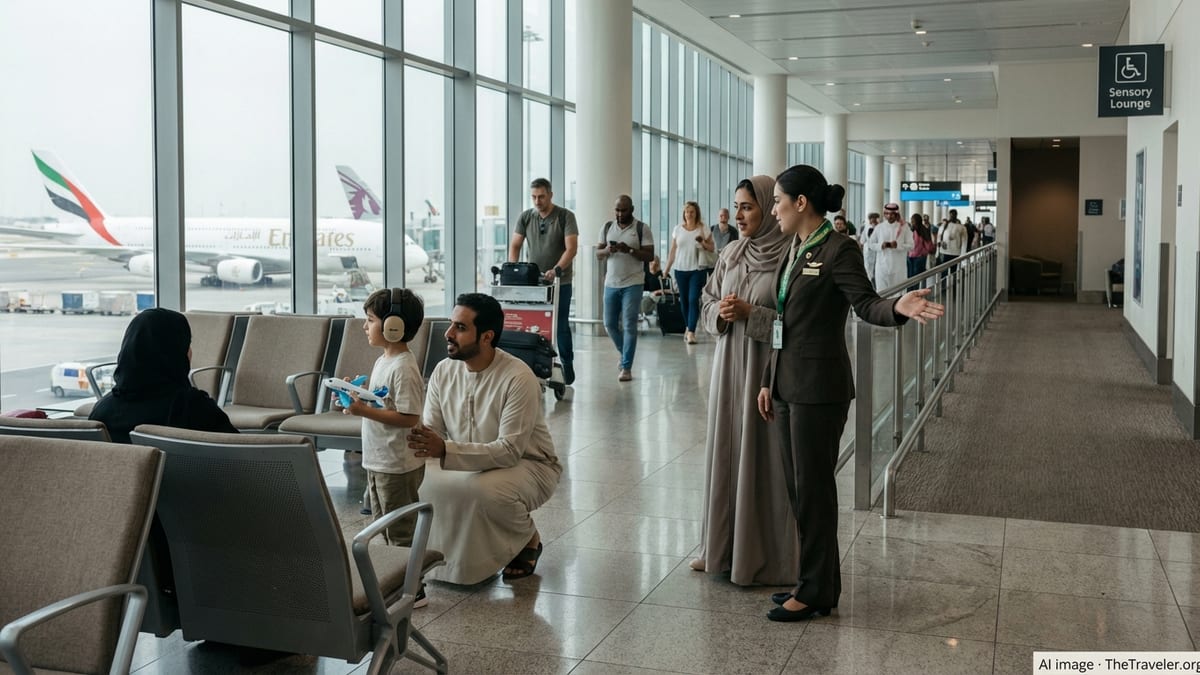
Families gathered before dawn at Saskatoon John G. Diefenbaker International Airport for the city’s first Autism Aviation Day, a simulation event designed to mirror a real flight from check in to landing. According to published coverage, the early morning schedule helped keep the terminal quieter and less stimulating for children on the autism spectrum, while still providing an authentic airport environment.
Participants moved through airline check in, interacted with customer-service staff and navigated the security checkpoint, all at a measured pace. Aviation personnel and autism-support workers were on hand to explain each step, repeat instructions when needed and allow extra time for children to process new sights and sounds.
Public reports indicate that the experience culminated in boarding an Air Canada aircraft for a short flight over Saskatoon. The aircraft taxied, took off and completed a brief loop, giving children the opportunity to feel engine vibrations, cabin noise and changes in pressure in a setting where they could pause, ask questions and seek support.
For many families, this was a first chance to observe how their child might respond to air travel without the added pressure of tight schedules, crowded terminals or the financial stakes of a missed vacation. The event’s low risk setting is being highlighted by participating organizations as a key factor in helping parents decide whether and how to plan future trips.
Inside the Autism Aviation Day Experience
Autism Aviation Days are structured to break air travel into predictable, repeatable steps. Publicly available information from Air Canada and community partners describes a carefully choreographed sequence: parking, entering the terminal, checking bags, passing through security, waiting at the gate, boarding and sitting through takeoff and landing.
In Saskatoon, airport staff dimmed certain overhead lights where possible, minimized unnecessary public-address announcements during key moments and allowed families to move together through screening lines. Children could see carry on bags placed on the conveyor belt, watch screening officers work and then practice collecting their belongings, a process that is often stressful during regular travel.
Once on board, families were encouraged to experiment within the bounds of safety, such as opening and closing tray tables, trying seatbelts more than once and using noise-cancelling headphones or comfort items. Flight attendants offered a short demonstration similar to a standard safety briefing, giving children a preview of what they can expect on a typical commercial flight.
Organizers emphasize that repetition is central to the concept. By allowing families to rehearse in a supportive environment, the program aims to build a mental script that children can draw on later, reducing uncertainty and anticipatory anxiety when they travel for school, medical appointments or holidays.
National Expansion of an Inclusive Travel Program
Saskatoon’s event is part of a broader expansion of Autism Aviation Days across Canada. Air Canada and its foundation arm have been developing the program since 2023 in partnership with airports and regional autism organizations, initially focusing on British Columbia before extending to other provinces.
Company communications and accessibility reports show that early events in Victoria and Vancouver introduced hundreds of children and their caregivers to airport procedures in small, guided groups. By 2024, the program had grown to multiple cities, with reports indicating that more than one hundred families participated that year and that numbers continued to rise in 2025.
In Edmonton and Kamloops, similar simulation days have included collaborations with local autism service providers and airport authorities, as well as support from security agencies for modified screening experiences. Public information indicates that these efforts collectively served several hundred children nationwide, with Saskatoon now joining the roster of host airports.
The program’s growth reflects a wider industry focus on accessible travel, as airlines and airports respond to rising expectations around disability rights and inclusive service. Autism Aviation Days are emerging as a practical, on-the-ground expression of that shift, creating measurable opportunities for families who might otherwise avoid flying altogether.
Building Skills, Reducing Anxiety and Inspiring Confidence
Parents of autistic children often cite unpredictability, sensory overload and rigid timelines as major barriers to air travel. Simulation days like the one in Saskatoon seek to address each of these stress points directly by pairing predictable routines with hands-on practice and visible support.
Publicly available descriptions of the program highlight skill-building as a central goal. Children practice standing in line, presenting identification documents with a parent, answering simple questions from airline staff and following multi step instructions at the gate. These tasks are common in everyday life but can become significantly harder in an unfamiliar, crowded terminal.
The controlled nature of Autism Aviation Day also helps families test accommodations and coping strategies. Some children use noise-reducing headphones, compression garments or visual schedules; others benefit from social stories that outline each stage of the journey. By trying these tools in a live airport environment, parents can see what works, adjust their plans and communicate more precisely with airlines ahead of future trips.
Reports from previous events in other cities suggest that many families leave with new confidence and a clearer understanding of their child’s needs in transit. For some, it opens the door to long-postponed family visits or vacations. For others, it confirms that shorter regional flights may be a more realistic first step, helping them set expectations in a way that respects both their child’s comfort and their own resources.
Air Canada’s Broader Accessibility Commitments
The Saskatoon event aligns with Air Canada’s wider accessibility strategy, which includes initiatives for travelers with both visible and non visible disabilities. Company documents describe commitments to staff training, adaptive services and collaboration with disability advocates to identify gaps and pilot new approaches.
One element highlighted in recent accessibility reporting is the adoption of the Hidden Disabilities Sunflower program, which signals that a traveler may have an invisible disability and could require additional assistance or extra time. According to those reports, Air Canada was among the first carriers in North America to formally recognize the program across its network.
Autism Aviation Days also connect with broader federal efforts in Canada to promote barrier free transportation. National transport authorities have encouraged carriers and airports to work with disability communities on concrete, experiential programs rather than limiting accessibility work to policy updates and training modules alone.
For Saskatoon families who participated in the simulation flight, these national strategies are taking very local form. The practice journey at their home airport illustrates how inclusive design, community partnerships and targeted programs can translate into real-world skills, comfort and confidence for future flights.