


More news on this day
Pakistan International Airlines is set to restore a direct weekly flight between Islamabad and Beijing from July 3, 2026, reestablishing an important air bridge for tourists, students and business travelers moving between Pakistan and China.
Get the latest news straight to your inbox!
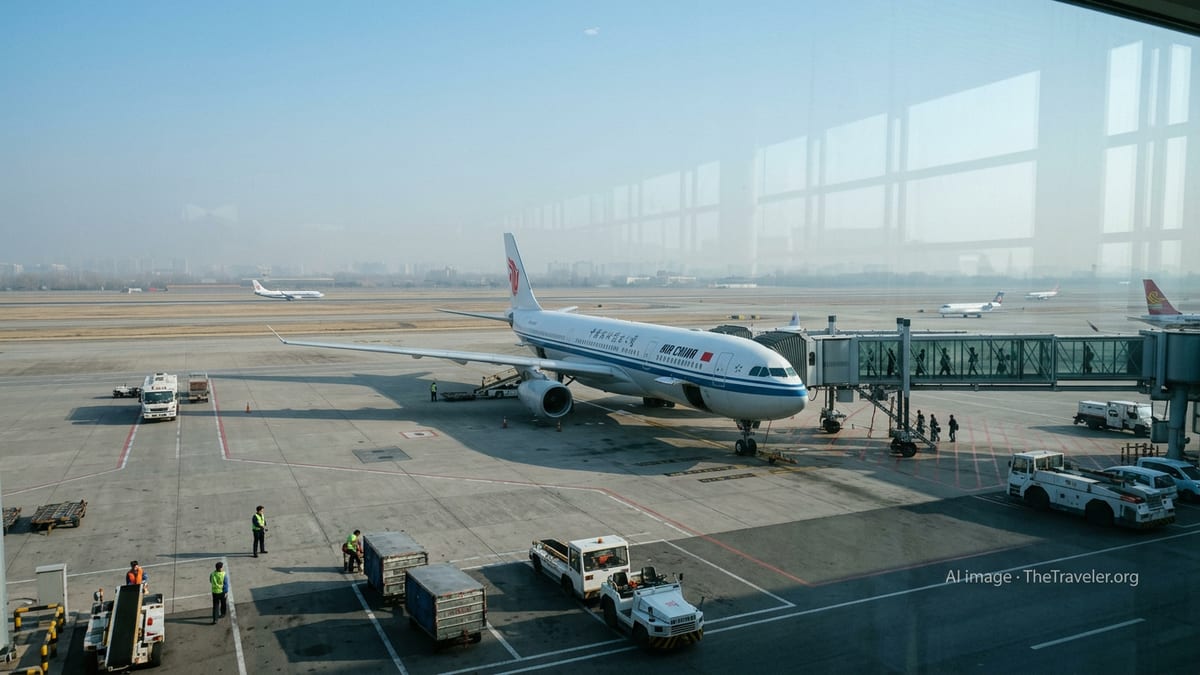
Weekly Nonstop Service Returns on Strategic Route
Publicly available schedules show that PIA will resume nonstop operations between Islamabad International Airport and Beijing Capital International Airport with one weekly rotation beginning Friday, July 3, 2026. Industry timetable data lists flight PK854 operating from Islamabad to Beijing, with a scheduled flight time of around five and a half to six hours, restoring a convenient nonstop option on the busy Pakistan–China corridor.
Route information compiled by aviation schedule trackers indicates that the Islamabad–Beijing link had previously been suspended, with some reports attributing the pause to high jet fuel costs and broader financial pressures on the carrier. The upcoming relaunch places the Chinese capital back on PIA’s international network alongside existing services to other Asian and Middle Eastern hubs.
Air travel platforms tracking the ISB–PEK sector describe the resumed operation as a weekly service, currently planned on Fridays, positioning it as a key choice for travelers who prefer to avoid connections through third-country hubs. The nonstop nature of the flight also shortens overall journey times compared with itineraries requiring transfers in cities such as Urumqi, Istanbul, Doha or Dubai.
The renewed connection complements services operated by Chinese carriers on Pakistan–China routes and helps diversify travel options at a time when demand for cross-border movement for work, study and tourism continues to grow.
Boost for Tourism and Cultural Exchange
Travel industry analysis suggests that the restoration of the Islamabad–Beijing nonstop flight is likely to benefit leisure travelers in both countries. For Pakistani visitors, easier access to Beijing opens up itineraries that include the Great Wall, imperial landmarks and connections to other Chinese destinations via domestic networks. For Chinese tourists, the direct link simplifies trips to northern Pakistan’s mountain regions and heritage sites accessible from the capital.
Tour operators and online booking platforms have in recent years highlighted rising interest in Pakistan’s high-altitude landscapes among Chinese travelers, particularly journeys that combine Islamabad with Gilgit-Baltistan and the Karakoram Highway. A nonstop Beijing–Islamabad route reduces travel complexity for such multi-stop tours, potentially making them more competitive against alternative adventure destinations.
The flight also supports cultural and educational exchanges that have expanded alongside infrastructure and investment projects between the two countries. Easier air access to Beijing can encourage short-term cultural programs, exhibitions and people-to-people initiatives that depend on reliable, predictable flight options.
With the service operating on a weekly basis, itinerary planners are likely to build packages around the Friday departure and arrival pattern, targeting group tours, educational delegations and cultural events that can align with the fixed schedule.
Key Link for Students and Academic Institutions
The resumed Islamabad–Beijing flight is expected to carry a significant number of students, given the large Pakistani community enrolled in Chinese universities. Over the past decade, publicly available education statistics have pointed to a steady increase in Pakistani students choosing China for degrees in engineering, medicine, information technology and language studies.
A weekly nonstop service from Islamabad provides a direct route for many of these students, particularly those with families in northern and central Pakistan who previously relied on multi-stop itineraries. For new intakes each academic year, the timing of flights around late summer and early autumn is especially important as universities set fixed reporting and registration deadlines.
Education consultants and travel agents that specialize in student mobility are likely to view a restored direct service as an advantage when coordinating group departures. A single-leg journey can simplify baggage handling, reduce visa and transit requirements through third countries and lower the risk of missed connections during peak travel periods.
Universities and training institutes in both countries may also find it easier to host short-term academic exchanges, faculty visits and joint conferences when a direct capital-to-capital air link is available, even at a once-weekly frequency.
Business and Trade Ties Receive New Support
The Islamabad–Beijing route plays a role in supporting business travelers linked to infrastructure, technology and energy projects associated with broader Pakistan–China cooperation. Analysts of regional connectivity note that frequent travel by project managers, engineers, investors and government-linked enterprises often relies on dependable air links between capitals.
According to coverage in regional business media, PIA’s decision to reinstate the route aligns with efforts to strengthen trade and investment flows and to maintain face-to-face contact between corporate and institutional partners. For many sectors, from construction and logistics to telecommunications and finance, occasional but well-timed direct flights can be more important than high-frequency services routed through distant hubs.
Business travel demand is typically sensitive to scheduling, particularly the ability to arrive in Beijing in time for meetings and to return to Islamabad without extended layovers. The published timetable for PK854 and its return counterpart appears calibrated to permit at least short stays for negotiations, site visits and contract signings over a long weekend or compact workweek.
Freight capacity in the belly hold of passenger aircraft can also contribute, on a limited scale, to high-value or time-sensitive cargo flows. Even a single weekly departure can support shipments of documents, samples and smaller consignments, complementing larger cargo operations managed through other gateways.
Regional Connectivity and Competitive Landscape
The reintroduction of PIA’s nonstop Islamabad–Beijing flight takes place in a competitive environment shaped by Chinese and Gulf carriers. Data compiled by aviation trackers shows that Air China and other airlines already connect Pakistani cities to Chinese hubs, often via multi-stop routings or services linked with Karachi and Lahore.
At the same time, major Gulf and Turkish airlines continue to carry substantial Pakistan–China traffic through their hubs, marketing one-stop itineraries between Islamabad and multiple Chinese destinations. The return of a nonstop PK-branded service gives PIA a clearer presence on a route central to Pakistan’s international relations, even if only once weekly.
Islamabad International Airport is positioning itself as a growing regional hub for northern Pakistan, with a network that includes connections to the Middle East, Europe and Asia. Adding back Beijing as a nonstop destination fits within that broader pattern of rebuilding long-haul and regional routes after several years of restructuring in the country’s aviation sector.
How the relaunched service performs will depend on load factors across seasons, fare competitiveness and the reliability of operations. However, the decision to restore the flight from July 2026 signals renewed confidence in demand across tourism, education and business segments on one of Pakistan’s most strategically significant international corridors.