


Pigeon Point Beach, often simply called Pigeon Beach, is the closest easy-going stretch of sand to English Harbour and Falmouth Harbour on Antigua’s south coast. Set on the west side of the Middle Ground peninsula in St Paul parish, it lies within the wider Nelson’s Dockyard National Park area and looks straight across sheltered Falmouth Harbour. This is a compact, tree-backed, family-friendly beach rather than a wild castaway cove, popular with local families, yacht crews and independent travellers who want calm water, convenient facilities and a relaxed atmosphere within walking distance of English Harbour.
Get the latest updates straight to your inbox!
What Pigeon Point Beach Is Like
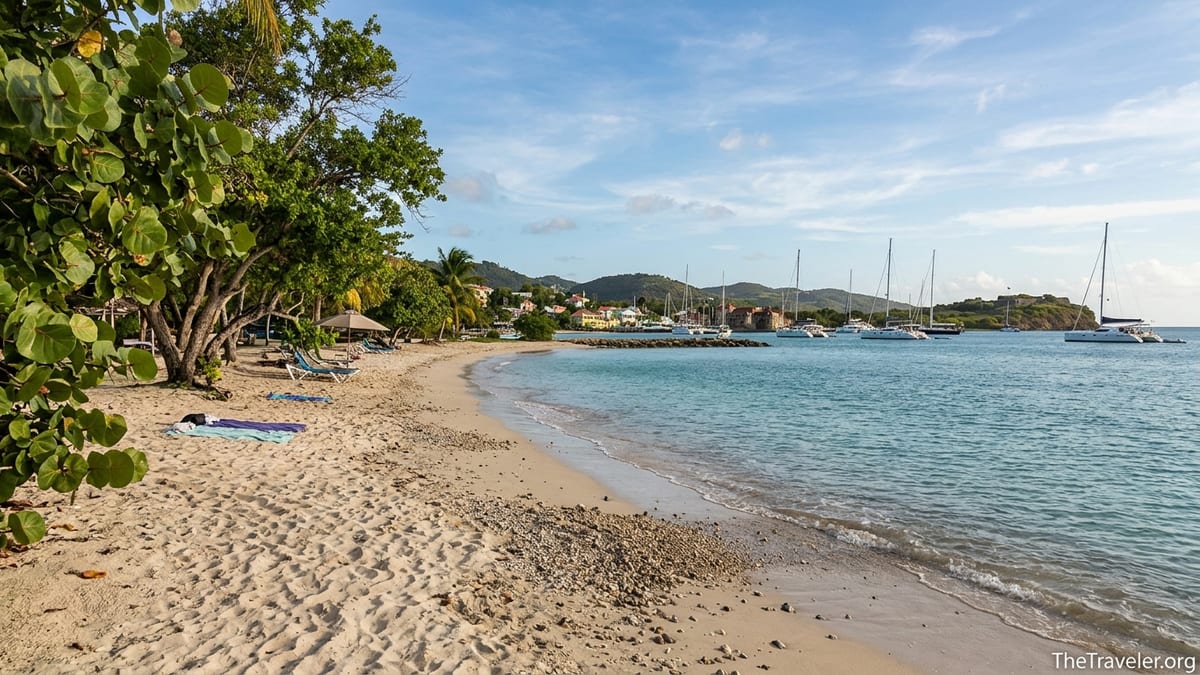
Pigeon Point Beach is relatively small, with a curved sweep of sand a few hundred metres long, framed by low headlands and the masts of yachts anchored across Falmouth Harbour. The sand is light-coloured and generally soft underfoot, although there can be a narrow band of small stones or shells along the waterline in places. The beach is lined with sea grape and other shade trees, which provide natural cover from the midday sun and make it easy to find a spot to spread a towel without needing to rent a lounger.
The water here is usually calm because the beach faces into Falmouth Harbour rather than the open Atlantic. Entry is gently shelving and the shallows extend a fair way out, which suits less confident swimmers and children with supervision. On most days the sea is clear enough for casual snorkeling close to shore, although visibility and colour vary with recent weather and boat traffic in the harbour.
The overall atmosphere is laid-back and local-friendly. Pigeon Point is not attached to a resort and does not feel manicured or exclusive; it is a public beach that draws a mix of Antiguan families, yacht crews coming ashore from Falmouth Harbour, and visitors staying in guesthouses around English Harbour. Expect it to be livelier at weekends and during the main yachting season from December to April, when regattas and Antigua Sailing Week bring more people into the area, and noticeably quieter on weekday mornings in the shoulder months.
Because it is not a resort-managed private beach, there is no gate fee for the sand itself. Facilities can change from season to season and depend on the beach bar and restaurant operations. As of late 2026, visitors report public toilet facilities close to the main parking area and simple showers or rinsing points associated with the beachside businesses. Sun loungers and umbrellas are typically available for rent through the main beachfront restaurant, but the exact number, quality and prices vary and cannot be guaranteed at any given time.
Getting There and Parking
Pigeon Point Beach sits just west of central English Harbour and Nelson’s Dockyard. From the dockyard gates or the marina area around Falmouth Harbour, most visitors reach the beach on foot or by a very short drive. Walking from Nelson’s Dockyard to the sand is roughly 1 kilometre and typically takes about 15 to 20 minutes at an easy pace along paved local roads. The route involves some minor undulations but no steep hills, and it is manageable for most reasonably mobile visitors.
Sidewalks are intermittent along the way, so you may share the road with local traffic for short stretches. There is basic street lighting in parts of English Harbour village, but the approach closer to the beach can feel dim after dark. Travellers walking in the evening often prefer to carry a small torch and wear light or reflective clothing. For visitors with limited mobility, the uneven verges and lack of continuous pavements may pose challenges, so a short taxi ride directly to the beach parking area is usually the more comfortable option.
Arriving by car from other parts of Antigua, you follow the main road into English Harbour and then local signposts towards Pigeon Point. The final approach is along a narrow access road that ends at a public parking area just behind the trees. At the time of writing, parking here is free and unmetered, but spaces can fill up on busy weekends and during major regattas, when extra cars spill along the approach road.
There is no dedicated public bus service that drops passengers directly at the sand. Most local buses terminate around the main junctions at Falmouth or English Harbour, from where it is still a walk or short taxi hop to Pigeon Point. Taxis are easy to arrange through hotels, marinas or stands in English Harbour and St John’s. Fares from St John’s to English Harbour are commonly quoted in the region of 40 to 60 US dollars one way for up to four passengers as of late 2026, depending on negotiation and time of day, with a small additional amount to continue down to the beach.
Facilities, Food and Drink
For a relatively small cove, Pigeon Point has a good concentration of food and drink options, especially around the central part of the beach. The headline venue is Catherine’s Café, a long-running French-Caribbean restaurant that operates directly on the sand among the shade trees. According to recent tourism and restaurant guides, Catherine’s Café runs as a full-service beach restaurant with lunch and often dinner service during the higher season, as well as a bar, desserts and a more relaxed lounge area.
Opening hours at Catherine’s Café are seasonal. In high season, roughly December through April, it typically opens most days for lunch and certain evenings, while in the quieter summer months it may reduce hours or close for short off-season breaks. Reservations are recommended for weekend lunches and peak yachting events, as the restaurant can be very popular with both visitors and yacht crews. Sunbed and umbrella rentals on the front row are usually managed through the restaurant, often with either a per-day hire charge or a minimum food and drink spend; exact arrangements, prices and any minimums change from season to season, so it is wise to check when you arrive.
Alongside Catherine’s Café, there are occasionally smaller beach bars or pop-up vendors closer to the parking end of the sand, selling cold drinks, snacks and sometimes simple grilled items. These are not guaranteed year-round and are more common during busy months, at weekends and when cruise traffic is feeding into English Harbour. Visitors should not rely on them as their only food source outside the main restaurant. Fortunately, the short distance back to English Harbour village means additional cafés, bakeries and bars are only a few minutes’ drive or a 15 to 20 minute walk away.
Public toilets near the beach are reported by recent visitor guides and are generally adequate but basic, with availability influenced by the operations of the nearby businesses and the national park. Simple open-air showers or taps for rinsing off sand and saltwater can also be found near the main access point, though they may occasionally be out of service. As a public beach without a single resort operator, trash facilities are limited, so visitors are encouraged to pack out what they bring and treat the area respectfully.
Swimming, Snorkeling and Water Activities
The defining characteristic of Pigeon Point’s water is its relative calmness, thanks to its position inside Falmouth Harbour. On a typical day outside stormy weather, waves lap gently onto the shore, and the lack of strong surf makes it suitable for casual swimming and paddling. Families often choose this beach precisely because younger children can play in the shallows under supervision without being knocked by breakers.
Guides from local sailing and yachting associations highlight the western side of Pigeon Point, closer to the headland, as the better area for light snorkeling. Here, rocks and patches of seagrass hold small reef fish and occasional invertebrates, and you may spot the odd ray or turtle if you are fortunate. However, experienced snorkellers consistently rate nearby Galleon Beach and the waters around the Pillars of Hercules at the mouth of Freeman’s Bay as more rewarding for underwater scenery, with richer coral formations and more varied marine life.
There are no large-scale watersports concessions based directly on Pigeon Point at present. Most visitors who snorkel here bring their own mask, snorkel and fins, or borrow equipment from yachts and guesthouses. Organized snorkeling tours by boat generally depart from English Harbour or Falmouth Harbour marinas and head to offshore reefs, Cades Reef or the Pillars of Hercules rather than using Pigeon Point itself as a primary site. Stand-up paddleboards, kayaks and sailing dinghies are a frequent sight in the wider harbour, but rentals are usually arranged through yacht clubs, hotels or independent operators rather than from kiosks on the beach.
As with other beaches in active harbours, swimmers should be aware of boat traffic. Dinghies and small tenders often transit close to shore, especially near the dinghy docks serving the restaurant and parking area. There are no permanent lifeguard stations on Pigeon Point Beach at the time of writing, and marked swim zones may be minimal or absent. Common-sense precautions apply: stay aware of your surroundings, do not swim across recognized dinghy channels, avoid going too far out into the harbour, and heed any local advice about temporary currents or poor visibility after heavy rain.
When to Visit and Local Events
Pigeon Point can be visited year-round, but the experience varies with Antigua’s seasons. From roughly December to April, dry-season weather, lighter humidity and the international yachting calendar bring the highest number of visitors to English Harbour. During these months the beach is busier, particularly on regatta days and during Antigua Sailing Week, when yachts fill Falmouth Harbour and crews descend on Pigeon Point for swims, lunches and sundowners. The upside is a lively atmosphere and a full complement of beach services; the downside is more competition for parking, restaurant tables and shady spots.
The late spring and autumn shoulder months are often a sweet spot for travellers who prefer more space. Temperatures are still warm, but there are fewer visiting yachts and cruise passengers, so weekdays can feel pleasantly quiet. Some venues may trim their hours slightly outside peak season, so checking current opening information for Catherine’s Café and other local spots is wise if you are planning a special meal on the beach.
Atlantic hurricane season officially runs from June to November, with August to October the period of greatest tropical storm risk. Even when there is no active storm, passing systems can stir up swells and reduce water clarity, especially if strong southerly or westerly winds funnel into the harbour. In these conditions the beach sees fewer people and swimming may feel less inviting. Should a storm or severe weather watch be in place, local authorities can close beaches or restrict access at short notice.
Regular weekly events tied specifically to Pigeon Point are limited, but the wider English Harbour area is known for its social calendar. The famous Shirley Heights Sunday sunset party, with barbecues and live music, takes place on the hilltop above English Harbour rather than on the sand, and many visitors combine a daytime visit to Pigeon Point with an evening up at the lookout. Pop-up sundowner gatherings and live music can occasionally occur at the beachfront restaurant in high season, but schedules change frequently; the best approach is to ask locally once you arrive.
Nearby Beaches and Walks
One of Pigeon Point’s strengths is its position among several contrasting south-coast beaches. Galleon Beach, across the harbour entrance at Freeman’s Bay, is widely praised for its snorkeling, particularly towards the eastern end near the rock formations of the Pillars of Hercules. Reaching Galleon Beach from English Harbour usually takes about 10 to 15 minutes by car or taxi via the inland road, or a short water taxi ride from the dockyard when services are running. The sand here feels slightly more secluded and, when conditions are calm, the underwater life is richer than at Pigeon Point.
Freeman’s Bay itself forms the sheltered anchorage around Galleon Beach, offering a mix of beach access, anchored yachts and scenic views back towards Nelson’s Dockyard and the fortifications on the surrounding hillsides. Water taxis and small boat operators based in English Harbour often use Freeman’s Bay as their base for snorkeling excursions. Compared with Pigeon Point, Freeman’s Bay and Galleon Beach feel a touch more oriented towards day visitors seeking snorkeling and scenic hikes rather than a quick swim from town.
Windward Beach, on the opposite side of the peninsula from English Harbour, faces the Atlantic and offers a much wilder feel. It is reachable by a short drive or, for fit walkers, a hike across the low hills from the harbour area in around 30 to 45 minutes. The sand is broad and often windswept, the waves can be significantly stronger, and there are far fewer facilities. This beach suits confident swimmers and walkers seeking solitude more than families with small children.
For walkers based at or near Pigeon Point itself, the Middle Ground Trail is a rewarding option. Official national park information describes this path running across the Middle Ground between Pigeon Point and Fort Berkeley at the mouth of English Harbour, with trailheads near the western end of Pigeon Beach and at the fort. Recent hiking notes suggest a one-way walking time of roughly 45 minutes to an hour at a relaxed pace, with moderate gradients, some rocky sections and limited shade. Proper footwear, water and sun protection are essential, and hikers should be cautious on exposed sections in wet or very windy weather.
Combining Pigeon Point with English Harbour Sightseeing
Because Pigeon Point lies inside the broader Nelson’s Dockyard National Park area, it is easy to weave beach time into a day of historical sightseeing. Many independent travellers start with a morning visit to Nelson’s Dockyard, exploring the restored Georgian-era naval buildings and museum, then walk or drive over to Pigeon Point around midday for lunch and a swim. The stroll from the dockyard to the beach is short enough that you can move between the two without needing a car if you prefer.
Another popular combination is to spend the early afternoon relaxing on Pigeon Point before heading up to Shirley Heights for sunset. Driving from the English Harbour area up to the Shirley Heights Lookout car park usually takes around 15 to 20 minutes, not counting any stops at viewpoints along the way. On the famous Sunday nights, when barbecues and live bands attract both locals and visitors, it is sensible to leave extra time for traffic and parking and to check current event hours, as they can shift slightly through the season.
Fort Berkeley, which guards the entrance to English Harbour on a narrow peninsula, can also be tied into a Pigeon Point visit, particularly if you enjoy walking. You can either start on the Middle Ground Trail from near Pigeon Beach and hike across to the fort, or drive to the dockyard and follow the short coastal path out along the peninsula. In either direction you are rewarded with sweeping views over the harbours, anchored yachts and the surrounding hills.
For yacht crews on moorings or at marinas in Falmouth Harbour, Pigeon Point functions as a convenient shore leave spot: a place to land the dinghy, stretch your legs, use the beach showers and enjoy a restaurant meal without moving the boat. Cruise visitors on day trips that include Nelson’s Dockyard sometimes get an hour or two at the beach as part of a wider tour. Because schedules for historic sites, lookout bars and cruise excursions change periodically, travellers should confirm up-to-date opening times and transport arrangements when planning detailed itineraries.
Costs and Practical Tips
As of late 2026, travellers typically treat Pigeon Point as a low-cost beach option where the main expenses are transport, food and any optional lounger rentals. Taxi fares from St John’s to the English Harbour area are often in the region of 40 to 60 US dollars one way for up to four passengers, with smaller add-ons for detours and waiting time. Within English Harbour itself, short taxi hops down to the beach are usually negotiated locally at modest rates, or you can arrange a transfer directly with your accommodation.
At Catherine’s Café and similar sit-down venues on the beach, main lunch dishes commonly run from the mid-teens to around 30 US dollars, depending on ingredients and style, with cocktails and wines priced in line with other popular Caribbean beach restaurants. Simple local beers, soft drinks and snacks from smaller vendors or shops in English Harbour cost less. Sunbed and umbrella rentals, where offered, can range from roughly 15 to 30 US dollars per person for a day, or may be tied to a minimum food and drink spend; because these figures shift over time, it is best to ask for the current arrangement when you arrive and budget with some flexibility.
Cash remains useful. While established restaurants and many taxis in the English Harbour area accept major credit cards, smaller vendors, independent drivers and informal water taxis often prefer cash, typically in Eastern Caribbean dollars or US dollars. ATMs are available around English Harbour and Falmouth Harbour but are not present directly on the sand, so withdraw what you need before heading to the beach. Carrying a small dry bag or waterproof pouch for valuables is sensible if you plan to swim in turns.
The tree cover on Pigeon Point provides welcome shade, but the tropical sun is strong even on hazy days. High-factor reef-friendly sunscreen, a hat and light cover-up are recommended, along with plenty of drinking water. In the late afternoon and around dusk, mosquitos and sandflies can appear among the trees, especially after rain; a light insect repellent or long-sleeved layer helps keep bites to a minimum if you plan to stay for sunset drinks.
As a beach shared by local families, visiting sailors and land-based tourists, Pigeon Point benefits from considerate behaviour. Keep noise levels moderate, avoid flying drones without permission, dispose of rubbish responsibly and do not climb onto or board moored yachts. Glass on the sand is strongly discouraged. With a little care and preparation, most visitors find Pigeon Point an easy, welcoming place to spend a few hours by the water.
Is Pigeon Point Beach Right for You?
Pigeon Point Beach suits travellers who value convenience, calm water and a friendly, mixed crowd over dramatic isolation. Families appreciate the gentle slope into the harbour and the availability of shade and nearby facilities. Yacht crews and independent sailors use it as a relaxed shore base where they can eat well, meet friends and dip into the sea without leaving Falmouth Harbour. Visitors staying around English Harbour or Falmouth will find it a natural, everyday beach within walking distance of their accommodation.
Day-trippers from St John’s who are touring Nelson’s Dockyard and Shirley Heights often enjoy adding Pigeon Point as a refreshing swim stop, though those who prioritise extensive snorkeling or wild surf might prefer Galleon Beach, Freeman’s Bay or Windward Beach once the main sights are done. Budget travellers can keep costs down by walking from English Harbour, bringing their own towels and simple picnic supplies, and limiting spending to occasional drinks or a single restaurant meal.
If your ideal beach day involves loud music, late-night parties and extensive watersports rentals directly on the sand, Pigeon Point may feel subdued compared with resort-backed beaches elsewhere on Antigua. On the other hand, if you like the idea of a sheltered local cove framed by yacht masts, with a very good restaurant under the trees and historic sights just up the road, then basing yourself around English Harbour with Pigeon Point as your “local” beach is an excellent choice.