


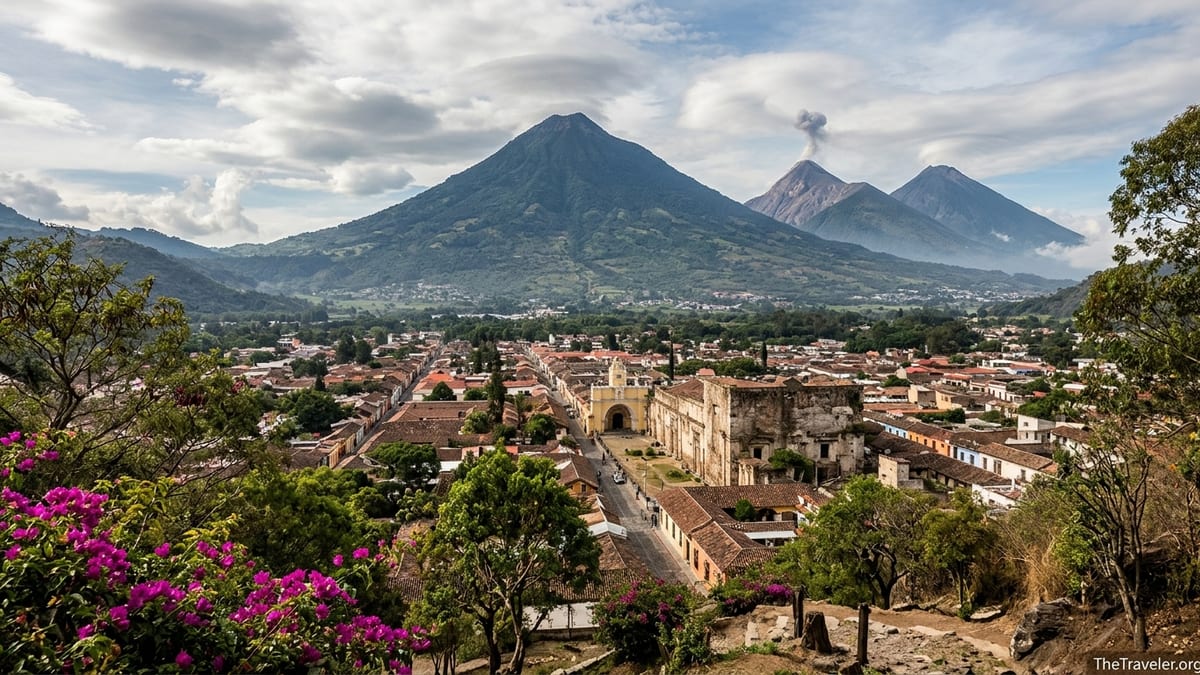
Set in a highland valley ringed by volcanoes at roughly 1,500 meters above sea level, Antigua Guatemala enjoys a temperate subtropical highland climate that feels like spring for much of the year. While the country’s Pacific coast and lowlands can be hot and humid, Antigua’s elevation keeps daytime temperatures pleasantly moderate and nights cool, which shapes when visitors find the most comfortable weather, the biggest crowds and the best value.
Get the latest updates straight to your inbox!
How Antigua’s Highlands Shape Its Climate
Antigua Guatemala lies in the central highlands, west of Guatemala City, at an altitude often cited around 1,500 meters or about 5,000 feet. This elevation moderates temperatures so that even at midday conditions are usually warm rather than scorching, and evenings often call for a light sweater. The climate is classified as subtropical highland, with marked dry and rainy seasons rather than four distinct temperate seasons.
Across the year, daytime temperatures in town tend to hover in the mild to warm range, while nights can feel cool, especially from November through February. Compared with the country’s coasts and lowland plains, humidity in Antigua is generally more comfortable, though it rises in the rainy months. The surrounding volcanoes also influence local weather and visibility, so clear days after overnight showers can bring striking views of Volcán de Agua and, on the horizon, Fuego’s occasional plumes.
Travelers should remember that conditions on nearby volcano slopes and high camps are cooler and more exposed than in the city itself. While Antigua’s streets may feel mild in a light jacket, predawn starts for hikes such as Acatenango can be much colder and windier. Planning when to visit therefore means balancing the pleasant highland climate in town with the realities of regional weather, rainfall patterns and seasonal demand.
Dry Season: December to April
The classic dry season in Antigua runs from roughly late November or December through April. During these months, skies are often clearer, rainfall is infrequent and many days pass with little more than a brief passing shower, if any. Typical daytime temperatures remain comfortably warm, while nights can be crisp, especially around December and January, when some visitors appreciate a light fleece or sweater after dark.
Humidity is usually at its lowest of the year in this period, which makes walking the cobblestone streets, exploring ruined churches or taking day trips to nearby villages particularly pleasant. Clearer air also improves visibility for volcano views. Official tourism materials for Sacatepéquez note that this part of the year generally offers the best conditions for admiring the surrounding peaks, with more consistent blue skies and fewer afternoon storms than in the rainy months.
Not surprisingly, this is high season for international visitors. From late December holiday travel through Easter, demand for hotels, shuttles and guided tours tends to be strongest. Aggregated pricing from hotel and vacation rental platforms shows that average nightly rates in Antigua are near their yearly peak in March and April, while budget surveys report that hotel prices in the city often run noticeably higher in peak season than in the low season. Travelers who prioritize the most stable weather and best mountain views should look at this window, but should book well ahead, especially around Christmas, New Year and Semana Santa.
Rainy (Green) Season: May to October
Antigua’s rainy season, sometimes called the green season, typically starts in May and runs through October. Climate summaries and study abroad handbooks for the region describe a consistent pattern: mornings usually begin sunny or partly cloudy, with showers or thunderstorms more likely from midafternoon into the evening. Rainfall intensity can vary widely, from light showers to heavy downpours, and there are often dry breaks of several hours even on wettest days.
Temperatures during the rainy season generally remain mild, with daytime highs similar to the rest of the year and nights still cool but not cold. Humidity is higher, and cobblestone streets can become slick during storms, so non-slip footwear is useful. The countryside around Antigua turns lush and green, coffee plantations thrive and the volcanic slopes are at their most verdant. Many travelers enjoy the dramatic skies and the rhythm of planning outdoor activities early in the day, then retreating to museums, cafés and cloisters when afternoon rains arrive.
The heaviest rains usually occur between roughly September and early October, when regional reports also highlight a higher risk of localized flooding and occasional landslides on mountain roads. While Antigua’s historic center itself is typically accessible, heavy weather can disrupt travel to and from Lake Atitlán, the Pacific coast or highland villages if roads are affected. For visitors, this is more a question of flexibility than danger: allowing extra travel time and having a backup plan for excursions is sensible, especially late in the season.
On the plus side, international visitor numbers tend to be lower in many rainy-season weeks, and accommodation prices often soften compared with the driest months. Data from hotel comparison and vacation rental analytics show lower average nightly rates in some mid-rainy-season months such as August or October than in April, reflecting reduced foreign demand. Travelers willing to accept some rain in exchange for fewer crowds and potentially better deals may find this period appealing.
Peak Holiday Periods and Domestic Travel Weeks
Beyond the broad dry and rainy seasons, certain holiday periods dramatically influence crowd levels in Antigua. Late December and early January see a surge of both international and domestic visitors. Local tourism sources report large New Year’s Eve events in Antigua’s central plaza and very high projected visitor numbers for the city during the end-of-year holidays. Hotels across the range from guesthouses to upscale properties often approach full occupancy around Christmas and New Year, and prices tend to reflect that demand.
Another crucial time is Semana Santa, or Holy Week, which in 2026 runs from Palm Sunday on 29 March through Easter Sunday on 5 April. Antigua is one of the most important centers for Holy Week celebrations in the country, with numerous processions, vigils and elaborate sawdust carpets laid along the streets. Municipal announcements for recent years have listed more than one hundred officially organized Holy Week activities in the city and its parishes, underlining the scale of the event.
Domestic holiday weeks and long weekends also shape crowd patterns. Guatemala’s Independence Day on 15 September brings patriotic parades and student marching bands, and Antigua, as a historic former capital, typically hosts related civic events and increased local visitors from Guatemala City and nearby towns. Early November, especially around 1 November, sees the famous giant kite festival in Sumpango in the same department, which draws many travelers who base themselves in Antigua. December brings pre-Christmas events such as the Quema del Diablo on 7 December in some communities, Advent and Christmas markets and processions that increase weekend bustle.
These peak times offer rich cultural experiences but also higher demand for services. Shuttles between Antigua and the international airport in Guatemala City can sell out at popular departure times, and volcano hikes may run closer to capacity. For any stay overlapping national holidays, festival weekends or school vacations, advance bookings and some schedule flexibility are strongly advised.
Semana Santa in Antigua: Spectacle and Practicalities
Holy Week in Antigua is widely regarded as one of the most impressive Easter celebrations in Latin America. Processions carry large wooden floats depicting biblical scenes through the cobblestone streets, accompanied by brass bands and penitents in purple or black robes. Residents and visiting groups create intricate alfombras, or carpets, from colored sawdust, flowers and pine needles, transforming major routes into temporary works of art before each procession passes and symbolically tramples them.
In recent years, national media and official tourism estimates have spoken of well over a million visitors in and around Antigua during Holy Week. Hotel executives quoted in Guatemalan outlets have reported occupancy levels commonly above 80 percent for the period, with many central hotels effectively full for the key days from Holy Thursday to Easter Sunday. Even modest guesthouses often require multi-night stays and non-refundable deposits in this window.
City authorities and the municipality publish detailed Holy Week guides and procession schedules each year, which may include maps, procession start times and information on temporary road closures. Recent announcements have referenced dozens of procession routes through the historic center, with specific streets closed to vehicle traffic for extended periods. Police and civil protection agencies typically implement additional security measures, crowd controls and traffic diversions, particularly around Palm Sunday and the Triduum from Holy Thursday to Holy Saturday.
Because dates and logistics can change from year to year, travelers considering a Holy Week visit should consult the latest official municipal guides, local parish announcements and current-year tourism information rather than relying on older timetables. Central hotels near the main squares and traditional routes can book out many months in advance, especially properties that regularly host repeat Holy Week guests. Those who wish to attend but prefer less intense crowds sometimes plan to arrive in the weeks of Lent leading up to Holy Week, when there are still many processions and carpets but slightly more availability.
Festivals and Public Holidays Beyond Easter
Antigua’s calendar is rich with events beyond Semana Santa. Civic and patriotic dates such as Guatemala’s Independence Day on 15 September bring school parades, music and decorated streets, and the city’s colonial architecture makes it a favored backdrop for commemorative acts and concerts. While not everything closes completely, travelers will find more local visitors, busier plazas and occasional traffic diversions near parade routes.
In early November, many visitors use Antigua as a base to reach the Festival de Barriletes Gigantes, or Giant Kite Festival, in nearby Sumpango. Held around All Saints’ Day on 1 November, the event features enormous hand-crafted kites displayed and flown in the cemetery and fields, attracting large crowds and organized tours. Accommodation in Antigua can be busier the nights around the festival, and shuttles or private transfers should be reserved ahead of time.
More recently, Antigua has also become known for cultural happenings such as the Festival de las Flores, typically held in November, when large-scale floral installations and art pieces appear throughout the city. Tourism reports have noted hundreds of thousands of visitors for the festival and very high hotel occupancy during its main weekend. December brings a series of Advent events, posadas and Christmas-related activities, along with New Year’s celebrations on the central plaza that can last into the early hours.
Because festivals can evolve, change dates or adopt new formats, travelers are wise to cross-check any specific event against the latest year’s information from municipal cultural offices or the national tourism institute. A flower festival, concert series or Christmas market that existed in one year may shift weekend, venue or scale in the next, and some events that gained prominence in 2024 or 2025 may be adjusted by 2026 or later.
Prices, Availability and Practical Considerations by Season
Accommodation prices in Antigua fluctuate with both international and domestic demand. Analysis of hotel and vacation rental data indicates that average nightly rates tend to peak around the dry-season months of March and April and fall during some of the wetter months, such as August or October. Separate budget travel assessments using booking engines have observed that hotel rooms in Antigua can average almost twice as much in peak season as in the lowest-demand periods, although exact differences vary by property and category.
For a rough illustration, recent vacation rental analytics for Antigua showed average nightly rates across listings exceeding one thousand quetzales in April, compared with under one thousand in October over a two-year period. Hotel price comparison services have similarly identified August as one of the more affordable months for hotel bookings, with typical nightly prices noticeably below those seen in some of the high-season weeks. These figures are snapshots rather than guarantees, but they support the broader pattern of higher prices in the driest, most popular months and somewhat lower prices in the rainy shoulder.
Availability follows the same curve. During Holy Week, Christmas, New Year and major festival weekends, central hotels and popular guesthouses can be fully booked, and last-minute travelers may have to look to outlying neighborhoods or higher price brackets. In contrast, midweek nights in the heart of the rainy season usually offer more choice, from budget hostels to boutique stays, sometimes with promotions or walk-in discounts. Tour operators for volcano hikes, coffee farm visits and cooking classes often have more flexible schedules outside peak periods.
Other timing considerations include air quality and visibility for volcano views, which are typically best after unsettled or rainy periods when dust and haze have been washed from the air. National and international media occasionally report on heavy rains triggering landslides on mountain roads or, more rarely, volcanic activity leading to precautionary closures of specific trails. Travelers planning visits during the heaviest rains, or soon after, should monitor updated local news and any safety advisories from authorities to understand current road and trail conditions.
Security, Protests and States of Emergency
Guatemala has periodically faced security-related incidents, localized protests and, at times, states of emergency in particular regions. In recent years, national and international news outlets have reported demonstrations linked to political and judicial developments, some of which have affected transport routes to and from major cities. While Antigua itself is primarily a tourist and cultural center, access roads, especially the main highway connecting it to Guatemala City, can be affected by blockades or slowdowns when nationwide protests occur.
Occasionally, heavy rains combined with infrastructure challenges have led authorities to declare temporary alerts or limited states of emergency in certain departments, mainly to enable faster disaster response. These measures do not necessarily target tourists but can influence road repair priorities, curfews in specific localities or the availability of certain services. For travelers, the key is not to avoid entire seasons preemptively but to stay informed as travel dates approach.
Before finalizing dates, visitors should consult up-to-date travel advisories from their home government and follow current local reporting for Guatemala. Major international wire services and local news organizations regularly cover significant security developments, road closures and safety-related measures. Situations can evolve quickly, so information from early in the year may not hold by the time of a planned trip months later.
On the ground, working with reputable local operators and heeding the advice of hotel staff can help travelers respond to any disruptions that do arise. Adjusting departure times, using alternative shuttle routes or rearranging the order of day trips are common ways visitors adapt to short-term conditions without losing the overall experience of Antigua.
Choosing Your Best Time: Decision Guide and Month-by-Month Overview
If your top priority is consistently pleasant weather and clear volcano views, the core dry season from late December through March is usually the best fit. Skies are often at their clearest, humidity is lower and rain is relatively rare. Within that, January and February can feel slightly cooler at night than March or April, which some visitors prefer for walking-intensive days. However, these same months, especially around the Christmas to New Year period and during Semana Santa when it falls in March or April, bring Antigua’s largest crowds and highest prices.
Travelers seeking a balance between reasonable weather and moderate crowds might look to the shoulders of the rainy season, such as late May to June or again in October when the rains gradually ease. Expect more frequent afternoon showers than in the dry season but also lush landscapes and, on many days, clear morning hours ideal for tours and volcano viewpoints. Outside major festivals, hotel availability in these periods is generally better, and published average nightly prices tend to sit below peak-season highs.
For those who prize cultural immersion above all else, timing a trip around key events like Semana Santa, Independence Day in mid-September, the kite festival in early November or the Festival de las Flores later in November can be deeply rewarding. Each of these, however, requires extra planning. It is essential to verify the current year’s dates and program, as well as any special arrangements such as pedestrianization plans or extended opening hours, through official municipal or tourism channels as the season approaches.
As a simplified month-by-month guide, visitors can think of January as dry and busy, with high foreign tourist presence; February as similar, often with slightly warmer days; March and April as very popular, warmer and often at or near annual peaks in festival activity and prices; May and June as the start of the green season with more showers but manageable crowds; July and August as firmly rainy but lively with some international vacationers and somewhat softer prices; September as wet, patriotic and busy around Independence Day; October as among the wetter but quieter months with lower average rates; November as transitional, with cultural highlights like kites and flowers and rising visitor numbers; and December as a festive, increasingly busy lead-up to the holiday peak. Exact conditions vary by year, but this framework can help travelers align their priorities with Antigua’s evolving seasonal rhythms.