


Crossing the Øresund Bridge from Copenhagen opens up two very different flavors of southern Sweden. Malmö is a larger, modern waterfront city of around 350,000 people, with wide squares, bold architecture and a revitalized harbor front. Lund, 20 kilometers to the northeast, is a compact university town built around a medieval cathedral and cobbled lanes, where bicycles outnumber cars and student nations drive much of the nightlife. Both work well as day trips, but they deliver distinct experiences and costs that matter when you only have one or two days.
Get the latest updates straight to your inbox!
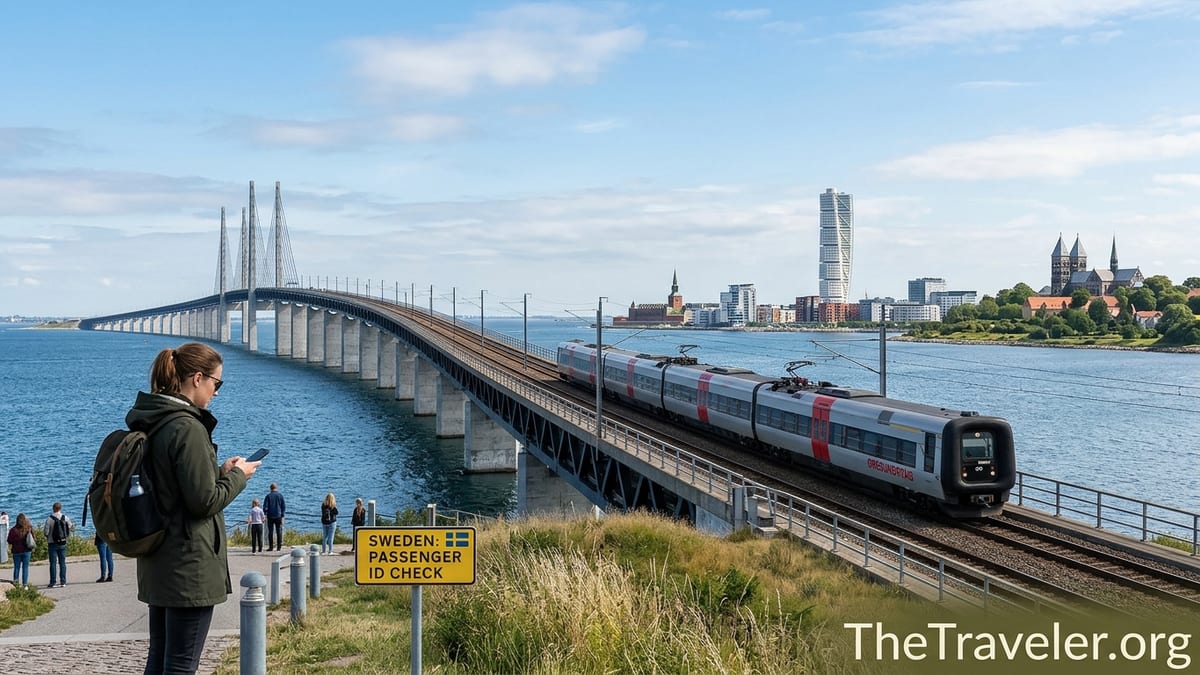
Getting There: Øresundståg Times, Tickets and ID Checks
Both Malmö and Lund are served by the same Øresundståg regional trains linking Copenhagen with southern Sweden. According to the 2026 timetable, trains run roughly every 20 to 30 minutes during the day on the Copenhagen Airport to Malmö and Lund route, rising to about four trains per hour at busy times between Copenhagen Central and Malmö, and at least two per hour reaching Lund. Typical journey times are about 35 to 40 minutes from Copenhagen Central Station to Malmö Central Station and around 50 to 55 minutes to Lund Central, depending on the specific departure. From Copenhagen Airport, Malmö is reached in roughly 25 minutes and Lund in about 40 minutes under the current schedule.
Ticketing across the bridge is handled through Skånetrafiken and DSB. As of late 2026, a standard adult single ticket from Copenhagen Airport or Copenhagen Central to Malmö Central purchased through the Skånetrafiken app falls in the region of 150 to 170 SEK equivalent, with Lund tickets slightly higher, often around 170 to 190 SEK one way. Exact prices vary by exchange rate and sales channel, so travelers should check the current price in the Skånetrafiken or Øresundståg app on the day they travel rather than relying on older guidebook figures.
Because this is a border crossing between Denmark and Sweden, travelers must carry valid photo identification. Sweden has extended temporary internal border controls through much of 2026, and checks are most often carried out at Hyllie, the first Swedish station after the Øresund Bridge. Trains are timetabled to pause here for several minutes to allow police to walk through and check passports or national ID cards. European Union nationals can normally use their national ID; travelers from elsewhere should carry their passport and, where required, proof of Schengen entry rights such as visas or residency permits.
A ticket from Copenhagen to Lund is valid for the whole through journey via Hyllie and Malmö Central, so you do not need to buy a second ticket when the train stops in Sweden. That makes it easy to ride to Malmö, break your journey there, then continue to Lund later on the same day as long as your ticket or day pass covers the full period and zones. However, standard single tickets are generally time limited, so if you plan to spend several hours in Malmö before heading to Lund, it is usually simpler to buy separate singles or a 24-hour cross-border ticket that explicitly allows return or onward travel the same calendar day.
Is It Practical to Visit Both Malmö and Lund in One Day?
The train time between Malmö Central and Lund Central is short, about 10 to 12 minutes, with multiple departures per hour in 2026. This makes it physically possible to see both cities on one long day trip from Copenhagen, for example spending a late morning and lunch in Lund and the afternoon and early evening in Malmö. From platform to platform, though, every change and transit adds friction: short waits for trains, walking to sights, and time lost orienting yourself twice.
Financially, combining both cities can be efficient if you use a time based or day ticket that covers Copenhagen, the Øresund crossing and the Skåne zones including Malmö and Lund. Cross border 24 hour tickets commonly cost about the same as two standard single trips across the bridge, though details change with fare adjustments. If you instead buy point to point singles on the day, visiting Malmö only will usually cost a bit less than continuing to Lund, because you are paying for an extra zone and more distance in Sweden.
In practice, travelers with just one spare day in Copenhagen who want a relaxed pace are usually better choosing either Malmö or Lund and exploring it in depth. Seeing both in one day tends to work best for visitors who are comfortable walking quickly, prioritizing just a couple of headline sights in each place and starting early from Copenhagen. Time sensitive experiences like the astronomical clock show at Lund Cathedral around midday can become stressful if your Malmö visit runs long or if there are minor train delays.
If you have two days, a combined plan makes much more sense. You can stay based in Copenhagen, using identical morning trains over the bridge on both days, or choose a hotel in Malmö near the central station and day trip up to Lund on the fast regional trains. Because Malmö has a wider choice of hotels, especially business class properties near Malmö Central and Triangeln, basing yourself there and doing a short hop to Lund often gives better value than sleeping in Lund itself during peak university periods.
Malmö’s Highlights: Waterfront City Squares, Castles and Neighborhoods
Malmö offers a broader city experience, mixing historic quarters with redeveloped docklands and immigrant rich neighborhoods. In the old center, the cobbled square of Lilla Torg is the natural starting point. It is ringed by 16th and 17th century facades now filled with restaurants and bars, many offering outdoor seating under heaters even in cooler months. A typical main course in one of the mid range brasseries here might run to 180 to 260 SEK, with lunch specials closer to 130 to 150 SEK. For budget travelers, grabbing a coffee and sharing a pastry in one of the cafés on nearby Södra Förstadsgatan keeps costs down while still soaking up the atmosphere.
Just west of the center, Malmöhus Castle anchors a cluster of museums inside a 16th century fortress surrounded by earthworks and a moat. Malmö Museer combines city history exhibitions, an aquarium and rotating cultural shows. Admission in 2026 generally uses a combined ticket model with adult entry around the low 100s SEK for access to the castle and associated museums. Children often receive free or heavily discounted entry, but families should check current details on Malmö Museer’s official information before visiting, as seasonal exhibitions can alter access and pricing.
To understand modern Malmö, head out to Västra Hamnen, the Western Harbour district created on former shipyard lands by the Øresund. The area showcases sustainable housing, waterfront promenades and the city’s architectural icon, the Turning Torso residential tower. The promenade along Sundspromenaden offers long sea views back toward Copenhagen, with food trucks and casual spots serving falafel, burgers and fish dishes at prices often between 90 and 160 SEK for a filling meal. Even in winter, well dressed walkers and cyclists use the paths, though Baltic winds can be sharp and daylight in December is limited to around six to seven hours.
South of the center, Möllevången illustrates Malmö’s multicultural side, with Asian supermarkets, Middle Eastern bakeries and inexpensive eateries clustered around Möllevångstorget. It is one of the best areas for those seeking lower priced food and nightlife. A sit down falafel plate can run around 80 to 100 SEK, and a pizza at a neighborhood pizzeria similar amounts, noticeably below the prices at tourist heavy squares. For visitors, the trade off is a slightly grittier feel, especially at night, though the area is very much part of everyday Malmö life and is well used by students and young residents.
Lund’s Core: Medieval Cathedral, Open Air Museum and University Quarter
Lund is smaller and more concentrated than Malmö, with around 100,000 residents and a dominant university founded in the 17th century, layered on top of a town that dates back to the Viking era. Almost all key sights sit within a 10 to 15 minute walk from Lund Central Station. The skyline is defined by Lund Cathedral, a Romanesque building first consecrated in the 12th century. Visitors come for its dim stone interior, crypt, and the astronomical clock that performs mechanical shows daily at set times around midday and mid afternoon, though schedules can shift slightly with church services and seasons.
Immediately east of the cathedral lies Lundagård, the leafy park that functions as the university’s historic heart. Academic buildings and museums ring the lawns, and students crisscross it by bicycle in every direction during term time. The atmosphere is especially lively on weekday afternoons in spring and early autumn, when student nations advertise events and outdoor seating spills from café doors. Coffee in Lund’s student oriented cafés, such as those along Klostergatan and Kyrkogatan, is often slightly cheaper than equivalent spots in central Malmö, with typical latte prices around 40 to 50 SEK.
Just a few minutes’ walk to the southeast brings you to Kulturen, one of the world’s older open air museums. It spreads across several city blocks of preserved and relocated historic buildings, with interiors furnished to illustrate Swedish life from the Middle Ages through the 20th century. According to Kulturen’s current admissions information, adult tickets cost 150 SEK, with seniors and students paying around 120 SEK. Visitors aged 0 to 18 enter free, making it comparatively good value for families. Opening hours vary through the year: shorter hours in winter months and extended opening during summer and for festivals. Certain Mondays outside peak periods may see partial closures, so checking the specific day’s schedule is important if you only have a short window in Lund.
Lund also offers quieter corners like the Botanical Garden, located about 10 minutes’ walk east of the cathedral. Maintained by Lund University, it combines outdoor plantings with greenhouse collections. Entry to the gardens is typically free, with a modest fee for access to greenhouses or special exhibitions when they are open. This makes the garden an appealing stop in any season: a leafy, low cost alternative for travelers who want a short break from sightseeing with children or who need a calm place to regroup before catching their train back to Copenhagen.
Food, Cafés, Shopping and Nightlife: Costs on the Ground
Price data from recent cost of living surveys in Sweden shows Malmö and Lund relatively close in restaurant and grocery costs, with Malmö scoring slightly higher on restaurant price indices by only a small margin. In practice, this means travelers can expect to pay in the range of 120 to 180 SEK for a basic sit down meal in either city, with casual places charging less and higher end venues more. Student density in Lund helps keep everyday places competitive. Falafel, noodle bars and lunch buffets often fall between 90 and 130 SEK, which is appealing for budget conscious day trippers.
Malmö’s dining scene is broader and more international, especially around Lilla Torg, the pedestrian drag of Södergatan, and the Möllevången district. A visitor could easily spend a full evening on a progressive tasting of falafel stands and Middle Eastern bakeries around Bergsgatan and Möllevångstorget, then finish with drinks at one of the craft beer bars or cocktail lounges that spill out from Friisgatan and surrounding streets. Alcohol is tightly regulated throughout Sweden, but Malmö’s larger population and proximity to Copenhagen support a more varied nightlife than Lund, including clubs and late night venues near the central station.
In Lund, nightlife revolves around student nations and university societies, many of which technically restrict full access to members or enrolled students. Visiting non students can still find bars and restaurants around the central streets, but they may find fewer large music venues and dance clubs than in Malmö. The upside is a more relaxed, small city feel, where evening crowds are less intense and walking between café like bars on side streets such as Bytaregatan and Lilla Fiskaregatan remains easy even on Friday nights during the semester.
Shopping is also more extensive in Malmö, which has both central shopping streets and larger malls within tram or bus reach, including the complex near Triangeln Station. Lund’s retail offering is compact but pleasant, centered on pedestrian lanes near the cathedral and the Stortorget square, with a mix of chain stores and independent shops. For day trippers interested in Scandinavian fashion or design brands, Malmö’s choice is noticeably better. Those seeking bookshops, student friendly thrift stores and smaller design studios may prefer Lund.
Accommodation Near the Stations: Prices and Seasonal Pressures
Although many Copenhagen based visitors return the same evening, some travelers may want to spend one or two nights in Sweden. Around Malmö Central, a mix of business hotels and mid range chains usually dominate, with several properties located within a five minute walk of the platforms. In 2026, typical double room prices for chain hotels near Malmö Central on a weekday in shoulder season often fall roughly in the 1,200 to 1,700 SEK per night range for flexible rates, with discounts sometimes available for advance purchase. Prices climb on major conference weeks or summer weekends, but the broader supply helps keep options open.
South at Triangeln, a newer station under the city’s shopping district, you find more modern hotels integrated with a mall environment and tram connections. Room rates here are broadly similar to those near Malmö Central, sometimes slightly lower on quiet nights, and the location is convenient for walking to Möllevången. For nightlife oriented visitors who still want straightforward access to trains onward to Copenhagen or Lund, Triangeln strikes a good balance between atmosphere and transport connectivity.
Lund Central Station has a smaller cluster of hotels within easy walking distance. With fewer rooms overall and steady demand from visiting lecturers, conference attendees and families of students, Lund’s prices can match or even exceed Malmö at peak times. For example, during university term starts in late August and early September, or around major academic conferences, centrally located hotels regularly rise well above 1,500 SEK per night and may sell out. During quieter periods and winter weekends without major events, prices can sink below 1,200 SEK for advance bookings, but spontaneous travelers may still find choice limited.
When comparing accommodation strictly on value, Malmö usually comes out ahead: it offers more rooms across various categories, slightly more aggressive competition among brands and fewer dates where everything is fully booked due to academic calendars. For travelers intent on visiting both Malmö and Lund without changing hotels, staying in Malmö near Central Station or Triangeln and using quick trains to Lund is generally the more economical and flexible strategy.
Sample One Day Itineraries and a Two Day Combined Plan
A realistic Malmö day trip from Copenhagen might begin with a mid morning Øresundståg departure from Copenhagen Central, arriving at Malmö Central around 10:00. From there, a short walk into the old town leads you through Stortorget to Lilla Torg for a coffee break. Late morning can be devoted to Malmöhus Castle and its museums, including a walk through the castle grounds and neighboring Slottsträdgården park. After a lunch stop at a café near the castle or at the Saluhall indoor food market, continue by bus or on foot to Västra Hamnen to stroll the waterfront by Turning Torso. Finish with an early evening meal in Möllevången before boarding a 20:00 or 21:00 train back across the bridge.
For Lund, an efficient day trip could start with a train that brings you into Lund Central around 09:30. Walk straight up toward the cathedral to catch the astronomical clock show close to midday. Between arrival and the show, explore the cathedral crypt and climb the slight rise through Lundagård to see the historic university buildings. After the clock performance, take lunch at a nearby student friendly café or restaurant, many of which offer weekday lunch specials including a main dish, salad buffet and coffee. The afternoon can be dedicated to Kulturen’s open air museum, where a few hours allow you to move between historic farmsteads, townhouses and craft exhibitions, and then finish with a gentle walk through the Botanical Garden before returning to the station for an early evening train.
With two days, a combined plan might assign the first day to Lund for history and the second to Malmö for waterfront and nightlife, or vice versa depending on the weather forecast. One workable approach is to base yourself in Malmö, arriving from Copenhagen in the morning of day one and checking into a hotel near Malmö Central. After exploring the central square and Västra Hamnen, you spend the night in Malmö, then take a short 10 to 12 minute train to Lund on day two for a focused visit to the cathedral, Kulturen and the university quarter. An evening train then takes you directly back to Copenhagen.
This combined approach minimizes luggage handling. You only cross the bridge with your bags once in each direction and use light daypacks on the short Malmö Lund hops. The additional train cost for the Malmö to Lund segments is small compared to the cross border fare, especially if you buy regional day tickets covering Malmö, Lund and local buses. The main cost driver is accommodation choice, so careful selection of a mid range Malmö hotel often has a bigger budget impact than the exact ticketing structure for intra Skåne travel.
Budget Calculations, Accessibility and Weather Considerations
Putting numbers together for a two night stay, a solo budget traveler based in Malmö might expect to spend approximately 1,100 to 1,400 SEK per night on a well rated budget hotel or guest room booked in advance, 300 to 450 SEK per day on meals if relying on falafel, lunch specials and supermarket snacks, and about 350 to 500 SEK for trains and local transport over two days, including Copenhagen to Malmö return and at least one return trip to Lund. Adding one or two paid attractions such as Malmöhus Castle and Kulturen lifts the total by another 250 to 300 SEK. That suggests an approximate two night cost in the range of 2,500 to 3,500 SEK for a frugal but comfortable traveler, excluding shopping and alcohol.
For a couple in a mid range hotel, room costs do not quite double, as one room is shared. Using a 1,400 to 1,800 SEK nightly rate near Malmö Central, two nights would total around 2,800 to 3,600 SEK. Daily food at sit down restaurants and cafés might cost 600 to 900 SEK for two people, depending on how many meals are eaten out. Cross border train fares and local travel could come to 700 to 1,000 SEK for both over two days. Adding attraction entries for two adults at Kulturen and one or two Malmö museums increases costs by around 500 to 600 SEK. Overall, a moderate spending couple might plan loosely for 5,000 to 7,000 SEK for a two night, two city taste of Skåne starting and ending in Copenhagen.
Both Malmö and Lund are broadly walkable, though Malmö covers a larger area and longer waterfront stretches. Many main streets, plazas and museum entrances are wheelchair accessible, and Swedish cities generally provide dropped curbs and tactile paving at crossings. In Malmö, travelers with limited mobility may prefer to use local buses or the city’s bike and scooter sharing options to bridge the distance between the central station, Malmöhus and Västra Hamnen. In Lund, the compact core is stitched together by cobbled streets that can be bumpy under wheels, but distances between the station, cathedral, Kulturen and the Botanical Garden are short and mostly flat.
Weather matters significantly, especially in winter. Around December and January, daylight in southern Sweden can be as short as six to seven hours, so planning outdoor sights for midday is wise. Rain and wind over the Øresund are common in shoulder seasons. Malmö offers more rainy day alternatives, with its castle museums, contemporary art spaces and covered shopping malls. Lund’s Kulturen has many indoor rooms, but pathways between them are outside, and parts of the museum may feel less atmospheric in heavy rain. In the darkest months, the warm glow of cafés around Lund’s cathedral square and Malmö’s central streets partly offsets the climate, but photographs and waterfront walks are at their best from late spring through early autumn.
Which City Wins? Category by Category Verdicts
For historic atmosphere, Lund is the clear winner. Its 12th century cathedral, dense medieval street grid and park like university quarter create a coherent historic fabric that is hard to match. Simply wandering from the station through Lundagård to the Botanical Garden feels like walking through living history, with student life layered atop centuries old buildings.
When it comes to museums, the comparison is closer. Malmö has greater variety, including Malmöhus Castle’s combined historical and natural science collections, as well as contemporary art spaces, while Lund counters with the depth and quality of Kulturen’s open air displays and several university museums. Visitors with a strong interest in built heritage and folk life may slightly prefer Lund, while those who value a mix of art, city history and family friendly exhibits inside a castle environment may lean toward Malmö.
For food and nightlife, Malmö takes the lead. Its diverse population supports everything from inexpensive falafel in Möllevången and waterfront casual dining in Västra Hamnen to upscale Nordic restaurants in and around Lilla Torg. Nightlife is more varied and later running than in Lund, with more bars and clubs catering to non students. Lund’s scene is very enjoyable but more localized, especially if you are not plugged into student nation events.
Families often find both cities workable, but Lund edges ahead for child friendly culture. Free entry for children at Kulturen and generally modest distances between sights mean less time shepherding kids on public transport. Malmö remains attractive for families who want playgrounds and wide waterfront walks, yet the larger city environment and longer walking legs between key sights can be more tiring for younger children.
On pure budget grounds, Malmö and Lund are surprisingly close in everyday prices, but Malmö’s broader hotel inventory and many informal eateries give it a narrow win for overnight value. For strict day trippers returning to Copenhagen, Lund can feel cheaper once you are on the ground, thanks to student oriented café and lunch prices, partially offsetting the slightly higher train fare from Copenhagen than Malmö.
Finally, for travelers who want to explore both cities without changing hotels, Malmö is the most practical base. Staying near Malmö Central or Triangeln keeps you minutes away from fast trains to Lund while still offering plenty to fill evenings at your doorstep. With clear expectations about train times, weather and walking distances, you can confidently choose the city that aligns best with your priorities, or weave both into a well paced two day escape from Copenhagen.