


More news on this day
With tens of millions of Americans traveling for Thanksgiving 2026 amid higher fares and recurring weather and technology disruptions, consumer authorities and insurers say travel insurance can help absorb costly surprises such as trip cancellations, long delays, lost baggage and overseas medical bills, but warn that protection depends heavily on when the policy is bought and the specific wording of each plan.
Get the latest news straight to your inbox!
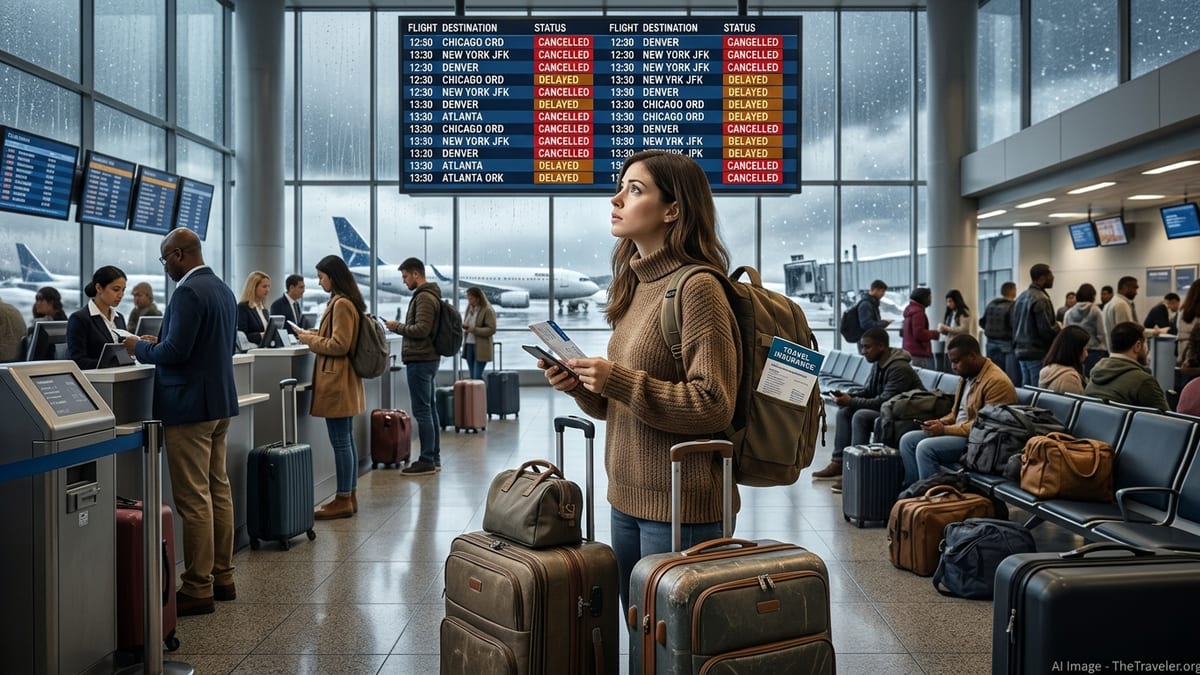
Holiday disruption risks are high, but protection is uneven
Forecasts for the 2026 Thanksgiving period point to another crowded and occasionally turbulent holiday travel week, with motor club estimates indicating more than 80 million Americans are likely to travel at least 50 miles from home and flight prices significantly higher than a year ago. At the same time, a nationwide ground stop and separate airline technology outage earlier in November have focused fresh attention on how vulnerable trips are to events outside individual travelers’ control.
Travel insurance is designed to shield travelers from some of the financial impact of these disruptions. Industry and regulatory guidance describes comprehensive policies that can reimburse prepaid, nonrefundable trip costs for specific covered reasons, pay benefits when flights or other transportation are substantially delayed, compensate for lost or delayed baggage and cover emergency medical care while abroad. However, the protections are not automatic, and they sit alongside, rather than replace, existing rights travelers may already have with airlines and other providers.
In the United States, federal rules require airlines to refund passengers when a flight is cancelled or significantly changed and the traveler chooses not to travel, including refunds of nonrefundable fares and certain optional fees. Airlines must also compensate passengers for bags that are lost or significantly delayed, up to regulated liability limits, although they have considerable discretion on how they handle expenses tied to mishandled baggage. Travel insurance typically builds on these baseline rights by reimbursing additional out-of-pocket costs or covering non-air elements of a trip, but it does not usually duplicate refunds a carrier is already obligated to pay.
What standard travel insurance policies typically cover
Most retail travel insurance products sold to U.S. consumers cluster around a set of standard coverage types that regulators and industry groups describe in consumer guides. Trip cancellation coverage can reimburse prepaid, nonrefundable costs when a traveler cancels a trip for one of the reasons listed in the policy, which often include serious illness or injury of the traveler or a close family member, death in the family, certain types of extreme weather that make a home or destination uninhabitable, or a covered strike affecting common carriers.
Trip interruption and trip delay benefits apply after a journey has begun. Interruption coverage can help reimburse unused portions of a trip and additional transportation if a traveler has to cut a vacation short because of a covered event, such as a sudden illness or a natural disaster affecting the destination. Delay coverage typically reimburses reasonable additional expenses such as hotel nights, meals and ground transportation when a carrier delay exceeds a minimum number of hours set out in the plan, subject to daily and total benefit caps.
Baggage loss, damage and delay protections fill some of the gaps left by airline liability limits and exclusions. U.S. and international rules cap what airlines must pay for mishandled bags and often exclude certain items, while travel insurance policies may cover personal belongings up to a specified limit per item and in total, after accounting for depreciation and other conditions. Separate baggage delay benefits can reimburse the purchase of clothing and toiletries when checked bags take longer than a set number of hours to arrive.
For many Thanksgiving travelers, the most consequential part of a policy is often the medical component. Domestic travelers with robust health insurance may already have coverage within the United States, but benefits can be more limited or out-of-network in some locations. For international trips, standard U.S. health plans may offer little or no coverage. Travel medical insurance can help pay for emergency treatment overseas, while separate emergency medical evacuation benefits can cover transport to a facility capable of providing necessary care, which can otherwise run to tens of thousands of dollars or more.
Known storms, timing rules and the limits of winter weather coverage
Winter weather is one of the most common causes of disruption during Thanksgiving and the broader holiday season, and travel insurers have updated their public guidance in recent weeks following severe storms and mass cancellations in early 2026. Companies that specialize in comparing policies note that standard trip cancellation coverage generally applies only when a policy is purchased before a storm becomes a “known event” affecting travel, and when the disruption meets specific conditions such as the complete cessation of services at the departure or destination point for a minimum period listed in the contract.
For example, guidance from major insurers indicates that if a traveler buys a plan well ahead of their Thanksgiving departure and a blizzard later forces the closure of their departure airport for long enough to trigger the policy, they may be able to claim for prepaid nonrefundable costs they cannot recover from airlines, hotels or tour operators. By contrast, purchasing a plan after a winter storm watch or warning has been issued for relevant locations will typically exclude that particular storm from coverage, because most policies do not cover foreseeable or already forecast events.
Travelers who want broader discretion to cancel for reasons that standard policies exclude, such as anxiety about traveling during a predicted weather pattern that falls short of officially closing airports, often look at optional upgrades labeled cancel for any reason or similar terms. Insurer materials describe these as add-ons that reimburse a percentage, frequently between half and three quarters, of nonrefundable trip costs if the traveler cancels within specified time frames, such as at least two days before departure, regardless of the underlying reason. These benefits tend to be more expensive, must usually be purchased soon after the first trip payment is made and may not be available in all states.
Even when extreme weather is a covered cause, travel insurance does not guarantee compensation for every inconvenience. If an airline rebooks a traveler onto a later flight that still allows most of the trip to proceed and the traveler chooses to cancel instead, standard trip cancellation benefits may not apply unless the delay crosses the threshold written into the policy, such as the loss of more than a set percentage of the scheduled trip length. Travelers considering whether insurance is “worth it” for Thanksgiving travel are therefore urged by regulators and consumer advisers to check not only whether weather is listed as a covered peril but also the specific definitions and waiting periods that apply.
How much coverage costs and what travelers may already have
The price of travel insurance for Thanksgiving trips varies according to trip cost, traveler age, destination, duration and the comprehensiveness of benefits. Market studies by industry associations indicate that in recent years Americans have spent billions of dollars annually on travel protection products, with comprehensive policies typically pricing out as a single-digit percentage of the insured trip cost in many scenarios. That means coverage for a several-thousand-dollar family holiday can often cost a few hundred dollars, although premiums can be higher for older travelers or those opting for extensive medical and evacuation benefits.
Consumer protection bodies emphasize that standalone policies are only one source of potential coverage. Many midrange and premium credit cards that charge annual fees include built-in trip cancellation, trip interruption, delay and baggage protections when travel is purchased with the card. These benefits are governed by separate terms that can differ significantly from standalone insurance and may cap payouts at lower amounts, but they can reduce or eliminate the need to buy extra coverage for some travelers, especially on shorter domestic trips with modest nonrefundable costs.
Before purchasing a new policy, regulators recommend that travelers inventory existing protections. This includes checking health insurance to see what is covered out of state or overseas, reviewing credit card guide-to-benefits documents for trip protections, and understanding airline refund and voucher policies during irregular operations. Because U.S. federal rules require cash refunds rather than credits in several circumstances when flights are cancelled or significantly changed and a traveler chooses not to fly, some expenses may already be refundable without an insurance claim. Insurance can still play a role by covering non-air components, such as prepaid vacation rentals or theme park tickets that are not refundable through the provider.
Travelers should also be aware that some protections sold alongside tickets or hotel bookings are limited in scope. Optional add-ons offered during the checkout process on airline or online travel agency sites may provide so-called waiver products that allow for more flexible changes or credits, rather than regulated insurance that pays cash benefits for specified losses. State insurance regulators advise consumers to distinguish between these products, ask who the actual insurer is, and confirm whether the product is subject to state insurance protections and complaint mechanisms.
Practical steps for Thanksgiving travelers considering insurance
With Thanksgiving 2026 on the near horizon, regulators, insurer guidance and consumer advocates converge on a few practical steps for travelers deciding whether and how to buy coverage. First, insurance is generally more effective when purchased shortly after the first trip payment is made, rather than at the last minute. Early purchase can preserve eligibility for optional benefits such as cancel for any reason, lock in coverage before specific storms or other hazards become known, and ensure that pre-existing medical condition waivers, where offered, apply to the trip.
Second, comparing policies from multiple licensed insurers can help travelers match coverage to the specific risks of their Thanksgiving plans. Someone driving a short distance to stay with family in the same state might prioritize roadside assistance or may opt to rely on existing health insurance and card protections, whereas a family flying internationally to visit relatives could focus on emergency medical, evacuation and robust trip interruption coverage. Independent comparison platforms and insurer summaries can clarify differences in benefits, but the binding text is always the full policy document, which should be reviewed carefully.
Third, if disruptions occur, documentation is crucial. Travelers who intend to file a claim are advised to keep all receipts for extra expenses such as meals, hotels and replacement clothing, obtain written confirmation of delays or cancellations from airlines or other carriers where possible, and file baggage reports promptly when bags are lost or delayed. Most insurers require claims to be submitted within specified time limits and may request evidence that the traveler first sought refunds or assistance from carriers or suppliers where those entities are responsible.
Finally, because insurance regulation in the United States is primarily handled at the state level, travelers who encounter difficulties with a provider over Thanksgiving and other holiday travel periods can raise concerns with their state insurance department or, for air travel issues, with federal aviation consumer protection authorities. These agencies collect complaints, publish consumer information and, in some cases, take enforcement action where they identify patterns of noncompliance. For travelers, that means that the most effective use of travel insurance over the busy Thanksgiving period comes from understanding in advance how it interacts with existing rights, buying appropriate coverage early, and keeping careful records if the journey does not go as planned.