


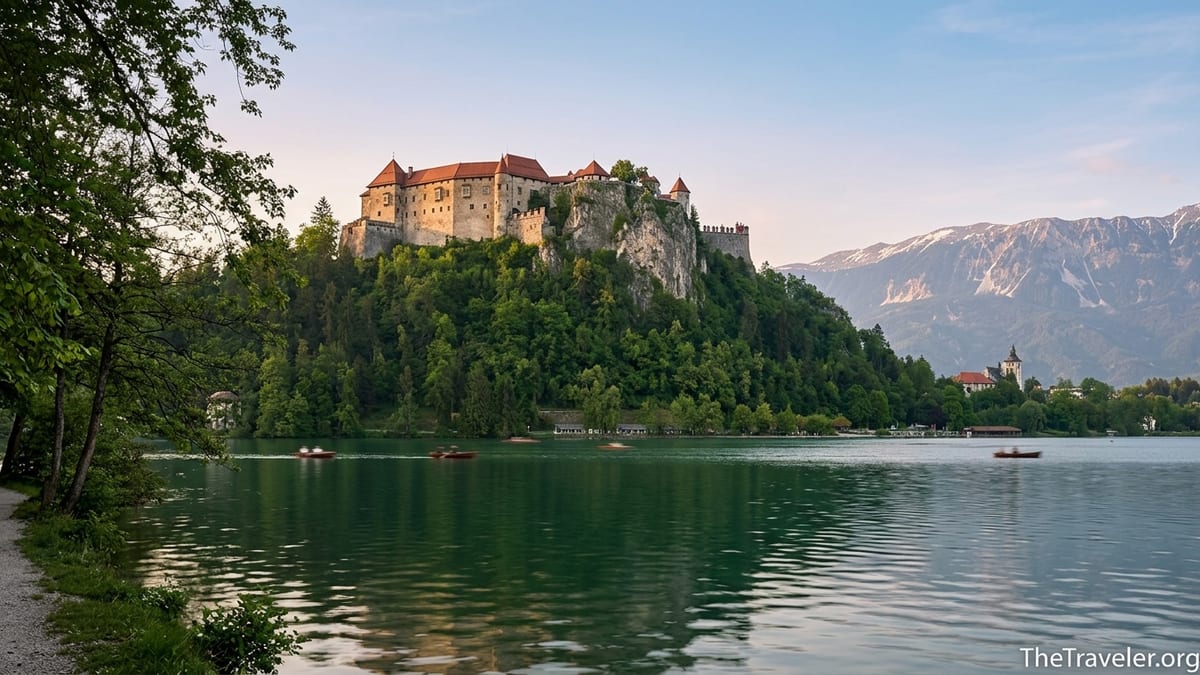
Perched on a 130‑metre cliff above the emerald surface of Lake Bled, Bled Castle is one of Slovenia’s most photographed landmarks and a highlight of almost every trip to the country. Planning your visit, however, takes a bit more thought than simply turning up at the gates. From ticket prices and opening hours to the steep access path, crowded summer buses from Ljubljana, and where to get the best views once you are on the ramparts, a little preparation will make your time at the castle far more enjoyable.
Get the latest updates straight to your inbox!
Why Bled Castle Deserves a Place in Your Itinerary
Bled Castle is widely regarded as the oldest castle in Slovenia, with written sources mentioning it as early as 1011. Today it is one of the country’s most visited attractions, thanks to its dramatic setting high above Lake Bled and the backdrop of the Julian Alps. Even if you are not a dedicated castle enthusiast, the combination of history, architecture and sweeping lake views makes it a standout stop on any Slovenia itinerary.
In practical terms, Bled Castle is compact enough to fit into a half‑day, yet rich enough to reward a slower visit. Many travelers pair a castle visit with a walk around the 6‑kilometre lakeside path, a ride in a traditional pletna boat to the island church, or a swim at one of the public bathing areas in summer. If you are visiting as a day trip from Ljubljana, you can realistically combine the castle with a lakeside stroll and a slice of Bled’s famous cream cake in town before heading back to the capital.
The castle is also an easy addition to a wider alpine route. Travelers driving between Ljubljana and Bohinj, or looping through the Julian Alps toward Kranjska Gora, often schedule a two‑night stop in Bled, using one morning or evening for the castle and another for nearby Vintgar Gorge or a hike into Triglav National Park. The short distances in Slovenia mean you can use Bled as a base without feeling rushed.
Beyond the logistics, the experience itself is memorable. Standing on the upper terrace at sunset, looking down at the tiny island church lit up on the lake, is one of those travel moments people remember long after their trip. Planning ahead simply increases the chances that you will be enjoying that view instead of queuing at the ticket booth or searching for a parking spot.
Tickets, Prices and Opening Hours in 2026
Ticket prices for Bled Castle in 2026 reflect its popularity, so it is worth factoring them into your budget. As of the current price list, an adult ticket costs in the low‑to‑mid 20‑euro range, with reduced prices for students and seniors and cheaper family combinations that can make sense if you are visiting with children. Children under a certain age typically enter for a substantially reduced fee or free of charge; if you have a large family, it is worth checking current family rates at least a few days before you arrive.
These prices include access to the castle complex, courtyards, terraces, small museum spaces, chapel and craft demonstrations such as the printing workshop. They do not automatically include extras like wine tastings, special events or guided tours, which may carry an additional charge. For example, a short guided tour in English or German may be offered at set times in high season for a modest per‑person supplement, while private themed tours or special evening events are priced higher and usually require advance booking.
Opening hours vary by season, and this can significantly affect your plan. In the long summer days from roughly late spring to early autumn, the castle is usually open for extended daytime hours that allow you to visit early in the morning or near sunset. In the shorter days of late autumn and winter, closing time typically moves earlier, which can catch day‑trippers by surprise. A traveler arriving on a 16:00 bus from Ljubljana in November may find they have barely an hour at the top before closing, which feels rushed once you account for the climb from the lakeshore.
If you want to avoid disappointment, check hours shortly before your trip and build in a time cushion. Many visitors aim to arrive at the castle at least two hours before closing so they have time to explore the museum rooms at an unhurried pace and still linger on the terraces. Buying tickets on the spot normally works, but in the busiest summer weeks around July and August, or on sunny weekends and public holidays, arriving early in the morning can save you from slow‑moving queues at the entrance.
How to Get to Bled and Up to the Castle
Most international travelers reach Bled from Ljubljana, which is about 55 kilometres away. Public buses run regularly, with one‑way fares generally in the 6 to 8 euro range and journey times of around 1 hour 15 minutes under normal traffic. These buses can be extremely busy in peak summer, particularly on weekends, with reports of travelers being unable to board the first bus because it was already full when it arrived at intermediate stops. If your schedule is tight, try to board at Ljubljana’s main bus station and aim for an early departure.
Trains from Ljubljana stop at Lesce‑Bled station, which is several kilometres from the lake. From there, a local bus or taxi connects to Bled town. The train option is often more reliable in busy periods, since trains are less likely to be over capacity, but you should budget extra time and a few euros more for the local transfer. Private shuttle companies and organized day tours also serve Bled from Ljubljana and nearby airports; while more expensive, they can be a good solution for families or groups who prefer not to navigate crowded public buses.
If you are driving, the journey from Ljubljana to Bled generally takes around 45 minutes in light traffic. Summer weekends and peak holiday periods can be much slower, particularly approaching Bled where congestion builds as day‑trippers circle for parking. Lakeside parking can cost a couple of euros per hour or more, and many of the closest small lots fill early. In recent seasons, the municipality has encouraged visitors to use designated park and ride lots on the edge of town, with local shuttles or a dedicated Bled bus bringing people closer to the lake and castle area.
From the lakeshore, several paths head up to the castle. The most common route starts near the lakeside and climbs steeply through the forest, with a combination of paved sections and stone or wooden steps. It is short but brisk, and many visitors report needing short breaks if they are not used to hills. Another option is the road access on the back side of the hill, which allows cars and small tour buses to drop passengers near the entrance and use the official castle parking area. This parking is limited and subject to separate parking fees, so do not assume that buying an entry ticket guarantees a parking space right at the top.
Accessibility, Fitness Levels and What to Wear
The path up to Bled Castle from the lake is scenic but demanding, particularly in hot weather or for those with mobility issues. Expect a sustained incline over several hundred metres with uneven surfaces and steps. For reasonably fit visitors, it is a 10 to 20‑minute climb. Travelers with knee problems, very young children or heavy camera gear often find it surprisingly strenuous. In summer, many people start their day with the climb to the castle while temperatures are cooler and then spend the midday hours by the lake.
Inside the castle grounds, cobbled courtyards, staircases and changes in level are part of the experience. This historic layout means that full step‑free access to every viewpoint and interior room is limited. If you or a companion uses a wheelchair or has reduced mobility, it is worth checking the latest accessibility notes before you go and being realistic about which parts of the site you will comfortably reach. Some visitors choose to focus on the upper terrace views and the more accessible exhibition rooms rather than attempting every stairway.
Footwear is more important here than at many city attractions. Comfortable walking shoes or sturdy sandals with good grip are strongly recommended. The cobblestones can be slick in the rain, and the forest path becomes muddy after storms. Flip‑flops and very smooth‑soled fashion sneakers often prove frustrating on the steeper sections. In shoulder seasons like April or October, a light waterproof jacket and an extra layer are wise, as temperatures can drop quickly once the sun dips behind the mountains and wind picks up across the lake.
In terms of dress code, there is none for visiting the castle itself, though you may want to bring something slightly neater if you have booked a lunch or dinner at the castle restaurant. Even then, casual smart clothing is more common than anything formal. Sun protection is crucial in summer; the terraces are exposed, and travelers frequently underestimate how strong the alpine sun can be, especially when reflected from the lake’s surface.
What to See and Do Once Inside the Castle
Once through the entrance, visitors step into a layered complex of courtyards, walls and viewpoints that reveal the castle’s thousand‑year story. The lower courtyard often hosts small craft demonstrations, such as a traditional printing workshop where staff operate a replica Gutenberg‑style press, printing souvenir certificates on thick paper. Nearby, you may find a wine cellar where staff demonstrate historical bottling techniques; tastings are usually available for an additional fee, making this an atmospheric way to sample local Slovenian wines.
The upper levels house a small but thoughtfully presented museum, tracing the history of Bled and its castle from early medieval times to the present. Exhibits include archaeological finds from the region, models showing how the castle evolved over the centuries and everyday objects that illustrate life in and around Bled. While the displays are not as expansive as those in major European palaces, they offer enough context to make the stones and walls around you feel alive, especially if you are visiting with teenagers interested in history.
The real highlight for most travelers, however, is the view. From the open terraces and battlements, you look down on Lake Bled, its small island crowned by the Church of the Assumption, and the forested slopes of the surrounding mountains. Photographers typically favour late afternoon or early evening light, when the sun moves behind the Julian Alps and warm side‑light picks out the textures of the lake, church and town. On misty mornings in spring and autumn, you may find the castle emerging above low fog in the valley, while the lake and island remain partially hidden, creating a moody, layered landscape.
Families can also find plenty to occupy children. In high season there are often costumed characters, such as a “count” and “countess,” who appear at events, as well as occasional medieval‑themed performances or demonstrations. Children enjoy exploring the terraces, peering through arrow slits and posing for photos by the cannons overlooking the lake. If your kids are younger, building in time for a relaxed ice cream stop back down by the lake afterward is a good way to round off the outing.
Food, Drink and Budgeting Your Visit
Eating at Bled Castle is not mandatory, but many visitors choose to plan at least a coffee or dessert stop into their visit. The on‑site restaurant is known for its lake‑view terrace and a menu featuring refined takes on Slovenian dishes. Expect main courses in roughly the 25 to 40 euro range, similar to higher‑end restaurants in Ljubljana. A multi‑course lunch or dinner with wine can quickly add up for a couple or family, but for some travelers the combination of food and views justifies the splurge, especially to mark a special occasion.
For a more casual option, there is usually a café or kiosk within the castle grounds or just outside them, offering coffee, soft drinks, pastries and simple snacks at prices a little above what you would pay in town but still manageable for most visitors. Many people choose to eat a larger meal in Bled itself, where there is a range of restaurants and bakeries at different price points, and treat the castle as a sightseeing stop complemented by a drink or small treat rather than a full dining experience.
Do not forget to factor transport, parking and potential extras into your castle budget. For a typical couple coming from Ljubljana by bus in 2026, a realistic estimate might be: around 15 euros per person for return bus tickets, 20‑plus euros per person for castle entry, and an additional 10 to 15 euros each for snacks or a simple meal in town. Add in a shared pletna boat ride to the island or a rowboat rental, and a full day around the lake can easily reach 80 to 100 euros for two, while still feeling reasonable compared to many Western European destinations.
If you are traveling with a family, check for family ticket combinations and consider self‑catering some meals. Many apartments in Bled have small kitchens, and supermarkets in town offer picnic supplies, from local cheeses and bread to fruit and Slovenian chocolate. A common pattern for budget‑conscious travelers is to enjoy a picnic lunch by the lake, visit the castle in the afternoon and then indulge in a slice of Bled cream cake and coffee at one of the lakeside cafés before returning to Ljubljana or their accommodation.
When to Visit and How to Avoid the Crowds
Bled Castle is open year‑round, and each season offers a different experience. Summer is the busiest period, coinciding with school holidays and warm weather ideal for swimming in the lake. The crowds at the castle reflect this, with peak hours from late morning to mid‑afternoon. During these times, terraces can feel packed, and space along the walls for unobstructed photographs is limited. If you must visit in July or August, aim to be at the ticket office soon after opening, or plan a later visit that overlaps with the last two hours of the day, when day‑trippers start heading back to Ljubljana.
Spring and early autumn provide a smoother experience for many travelers. In April, May, September and early October, you still have a good chance of clear days and pleasant temperatures, but with noticeably fewer visitors. This is when many photographers, hikers and road‑trippers choose to come. The surrounding landscape is especially photogenic in late October when the forests around the lake turn shades of gold and red, and the lower sun angle gives the castle and island a warmer glow.
Winter visits can be atmospheric, particularly after snowfall, when the castle and surrounding slopes are dusted in white. However, shorter daylight hours, colder temperatures and the possibility of icy steps require more caution. Some services, such as certain lake activities or seasonal events, operate on reduced schedules in winter. On the upside, a clear, crisp January morning can bring some of the quietest conditions of the year, with plenty of room on the terraces to enjoy the view in peace.
Regardless of the season, it pays to think about timing across your day, not just at the castle. For example, you might arrive in Bled mid‑morning, walk part of the lakeside path and have an early lunch in town, then climb to the castle for a mid‑afternoon visit and sunset views, before descending for an evening bus. Alternatively, sunrise‑enthusiasts often photograph the lake from opposite viewpoints like Mala Osojnica, then visit the castle later in the morning once it opens. The key is to avoid stacking every major attraction in the peak midday window if you have any flexibility.
The Takeaway
Planning a visit to Bled Castle in 2026 means thinking about a few concrete factors: how you will reach Bled, how fit you and your companions are for the climb, when the castle opens and closes in your travel month, and how its not‑insignificant ticket cost fits into your daily budget. None of these are complicated, but neglecting them can turn a dreamlike postcard setting into a slightly stressful excursion.
With a little foresight, however, Bled Castle becomes exactly the kind of highlight you hope for on a trip to Slovenia. Pre‑check the bus or train schedules from Ljubljana, allow time for queues in high season, wear shoes that can handle cobblestones and steps, and decide in advance whether you want to splurge on a restaurant meal or simply sip a coffee on the terrace. Combining a castle visit with a lakeside walk, a pletna boat ride and a slice of cream cake results in a full day that balances activity and relaxation.
Most importantly, give yourself time simply to stand on the upper walls and take in the view. The outline of the island church, the curve of the shoreline and the distant peaks of the Julian Alps are what have drawn travellers here for generations. Long after you have forgotten exactly how many euros the ticket cost, that view from Bled Castle will likely remain one of your defining images of Slovenia.
FAQ
Q1. How long do I need to visit Bled Castle properly?
Most visitors are comfortable with 1.5 to 2 hours inside the castle, plus extra time for the climb up and down. If you enjoy photography, museum exhibits or a drink on the terrace, plan for at least half a day including the walk from the lakeshore and time to pause at viewpoints.
Q2. Is Bled Castle worth visiting if I am only doing a day trip from Ljubljana?
Yes, it fits well into a day trip, but you will need to plan your schedule. With a morning bus from Ljubljana, you can walk part of the lake, climb to the castle for a two‑hour visit and still have time for a café stop before catching an evening return bus. Avoid arriving on the last buses of the afternoon in winter, when opening hours are shorter.
Q3. Can I drive all the way up to Bled Castle and park there?
There is road access and a small parking area near the castle, but spaces are limited and parking is charged separately from the entry ticket. In peak season, it often fills early, and you may be directed to car parks lower down the hill or to park and ride lots around Bled, continuing by local bus or on foot.
Q4. How difficult is the walk up from Lake Bled to the castle?
The walk is short but steep, with a combination of paved sections, steps and uneven surfaces. For most reasonably fit adults it takes 10 to 20 minutes, but it can feel strenuous in hot weather or if you are not used to hills. Good shoes and a bottle of water make the climb much more comfortable.
Q5. Are there guided tours available at Bled Castle?
Guided tours are often available, particularly in high season and for pre‑booked groups. There may also be scheduled short tours in major languages such as English and German for individual visitors at set times. If a guided visit is important to you, it is wise to check current offerings and times shortly before your trip.
Q6. Is Bled Castle suitable for visitors with limited mobility?
The site has several steep sections, cobbled surfaces and stairs, which make full access challenging for visitors with limited mobility. Some viewpoints and exhibition spaces are reachable with assistance, but others are not. If mobility is a concern, plan to use road access to minimize climbing and check the latest information about accessible routes before visiting.
Q7. What should I wear and bring for a visit to Bled Castle?
Comfortable walking shoes with good grip are the most important item, as paths and cobblestones can be uneven or slippery. In summer, bring sun protection and water for the climb; in cooler months, pack an extra layer and a light waterproof jacket. A small backpack is more practical than a large shoulder bag on the steps and narrow passages.
Q8. Can I visit Bled Island and Bled Castle on the same day?
Yes, many travelers combine both. A typical plan is to take a pletna boat or row out to the island in the morning, return for lunch by the lake and then walk or drive up to the castle in the afternoon. Allow enough time between activities, especially if you are relying on public transport back to Ljubljana or another destination.
Q9. Are there places to eat or have a drink at Bled Castle?
There is a restaurant with lake views inside the castle grounds, offering full meals at prices comparable to upscale Slovenian restaurants, as well as a more casual café or kiosk for drinks and snacks. Many visitors choose to enjoy a coffee or dessert at the castle and have their main meal in Bled town, where there are more options at various price levels.
Q10. Do I need to book Bled Castle tickets in advance?
Most visitors buy tickets on arrival, and this usually works fine outside the busiest times. In peak summer or on sunny weekends, arriving early in the day is more important than pre‑purchasing. If special evening events, performances or combined tour packages are offered during your visit, those may require advance booking according to the organiser’s instructions.