


Ringed by forested slopes and limestone peaks in Slovenia’s Triglav National Park, Lake Bohinj feels far removed from the crowds at nearby Lake Bled. Here the focus is on cold, clear water, quiet trails and big alpine views. With careful planning you can swim, hike and explore its shoreline in a single long day, or settle in for several nights and use Bohinj as a base for the Julian Alps. This guide focuses on practical, up to date details so you can experience the best of Lake Bohinj on foot and in the water, without adding to the pressure on this protected landscape.
Get the latest updates straight to your inbox!
Understanding Lake Bohinj and When to Visit
Lake Bohinj is the largest permanent lake in Slovenia, set at about 526 meters above sea level in the upper Sava Bohinjka valley. It sits entirely inside Triglav National Park, which means stricter rules on driving, camping and water use than at many other European lakes. The lake itself is roughly 4 kilometers long and just over 1 kilometer wide, with a road skirting most of the northern shore and footpaths tracing both banks. The small village of Ribčev Laz anchors the eastern end, with Stara Fužina slightly inland to the north and Ukanc at the quiet western tip.
For hiking and swimming, late May to September usually offers the most reliable conditions. In June and September daytime highs around the low 20s Celsius are common, which is comfortable for walking but the water can feel bracing. In July and August air temperatures often climb closer to 27 to 30 degrees on hot days, while the lake typically remains much cooler, often somewhere in the mid-teens to low twenties depending on depth and recent weather. Locals will happily plunge in when the surface warms, but visitors unused to cold lakes should be prepared for a shock.
Weekends in peak summer are busy, especially during heatwaves when Ljubljana and Bled residents escape to the mountains. If your schedule allows, plan Bohinj days for midweek and aim to be at the lake before about 10:00 in the morning. In shoulder seasons such as late May or early October the atmosphere can feel very quiet, but higher hiking routes may still hold snow or lingering ice, particularly on shaded north-facing slopes and passes above 1500 meters.
Winter brings a different character altogether. The lakeshore paths are usually walkable, but higher routes and the Vogel plateau shift into ski terrain, and the lake’s edge can be icy. Swimming is then strictly for experienced cold-water bathers with the right equipment. If your main goal is hiking in snow-free conditions combined with long, relaxed swims, focus on a window from roughly mid-June to mid-September and watch local forecasts closely.
Getting to Lake Bohinj and Moving Around
Most international visitors reach Lake Bohinj from Ljubljana or from Lake Bled. Without a car, the simplest option is the regular bus service that runs from Ljubljana’s central bus station through Bled and onward to Bohinjska Bistrica, Ribčev Laz and Ukanc. Tickets are typically inexpensive compared with Western Europe, often costing in the range of a few euros one way from Bled to Bohinj, but in summer buses can be crowded and some travellers report being unable to board at intermediate stops when vehicles are already full. To improve your chances of a seat, board at the first stop of the line whenever possible and target less popular departure times, such as early morning or late afternoon.
Trains connect Ljubljana with Bohinjska Bistrica via the scenic Bohinj railway line. From Bohinjska Bistrica it is about 6 kilometers to the lake, which you can cover by local bus, taxi or a pleasant cycle along the valley path. Travelers who enjoy rail journeys sometimes choose this route specifically for the views of gorges, tunnels and traditional villages along the way. Car rentals are widely available in Ljubljana and at the country’s main airport, but congestion between Bled and Bohinj in summer is common and parking at the lakefront is tightly controlled, so driving is not always the fastest solution at peak times.
Once in Bohinj, the municipality and park authorities strongly encourage visitors to leave cars in designated parking areas away from the immediate lakeshore and use seasonal shuttle buses. Official information highlights that parking is allowed only in marked spaces, and that overnighting in campervans is restricted to certain lots and campsites. In summer, a park and ride system usually operates from larger valley car parks such as Bohinjska Bistrica, with shuttle buses stopping at Ribčev Laz, Stara Fužina, the Savica waterfall car park and Ukanc. This makes it realistic to combine a morning hike from one point with an afternoon swim somewhere else, returning by bus rather than retracing your steps.
For getting around on your own steam, the flattest area is the valley floor between Bohinjska Bistrica and the lake, threaded with walking and cycling paths that avoid the main road. In practice, many visitors will walk or cycle from Ribčev Laz to Stara Fužina in about 20 minutes, using the riverside path rather than the traffic-busy roadway. If you prefer not to navigate timetables or drive yourself, choosing accommodation in Ribčev Laz or Stara Fužina lets you start walks straight from your door and reach the most popular swimming areas on foot.
Classic Lakeside Walks and Viewpoint Hikes
The simplest way to explore Bohinj on foot is the relatively gentle loop path around the lake. Walking the full circuit usually takes between three and four hours at an unhurried pace, allowing for photo stops and breaks. The northern shore path is broader and more developed, occasionally joining the quiet road and passing near cafés, small beaches and jetties. The southern shore path feels wilder as it weaves closer to the tree line and the water’s edge, with roots and stones underfoot and more limited opportunities to step off trail.
Most day-trippers walk only part of the loop, for instance from Ribčev Laz to Ukanc along the northern shore in around 90 minutes, then return the same way or via a seasonal boat service. This one-way option works well if you have children or plan to combine the walk with a longer hike to Savica waterfall from Ukanc. Another common variation is to walk the quieter southern shore in the morning shade and then swim at one of the wider beaches on the north side in the warmer afternoon light.
For a higher viewpoint, the Vogel cable car near Ukanc carries you up to the Vogel ski area in around five minutes. From the upper station you can take short walks to panoramas that look back across Lake Bohinj with the Julian Alps rising behind. On a clear day, these viewpoints provide some of the most iconic photographs of the region. Trails from the upper station range from easy, family-friendly paths to more demanding mountain routes that require sure-footedness and appropriate footwear. Even if you do not plan a serious hike, it is wise to bring a light jacket, as temperatures at the top can feel significantly cooler than by the lake.
Closer to the water, two classic half-day hikes appeal to many visitors. The first is the path to Savica waterfall from the Savica car park west of Ukanc. After a short approach on a forest track you continue up hundreds of stone steps to a viewing platform opposite the falls. Entrance fees are charged at a small booth, with recent prices for adults in the range of a few euros. The second outing is the walk through Mostnica Gorge from Stara Fužina, where a marked trail follows the emerald Mostnica river upstream past narrow rock walls and natural bridges. This route offers cooling shade and opportunities to sit directly above churning water, but swimming is not permitted inside the gorge itself.
Swimming in Lake Bohinj: Where, When and How
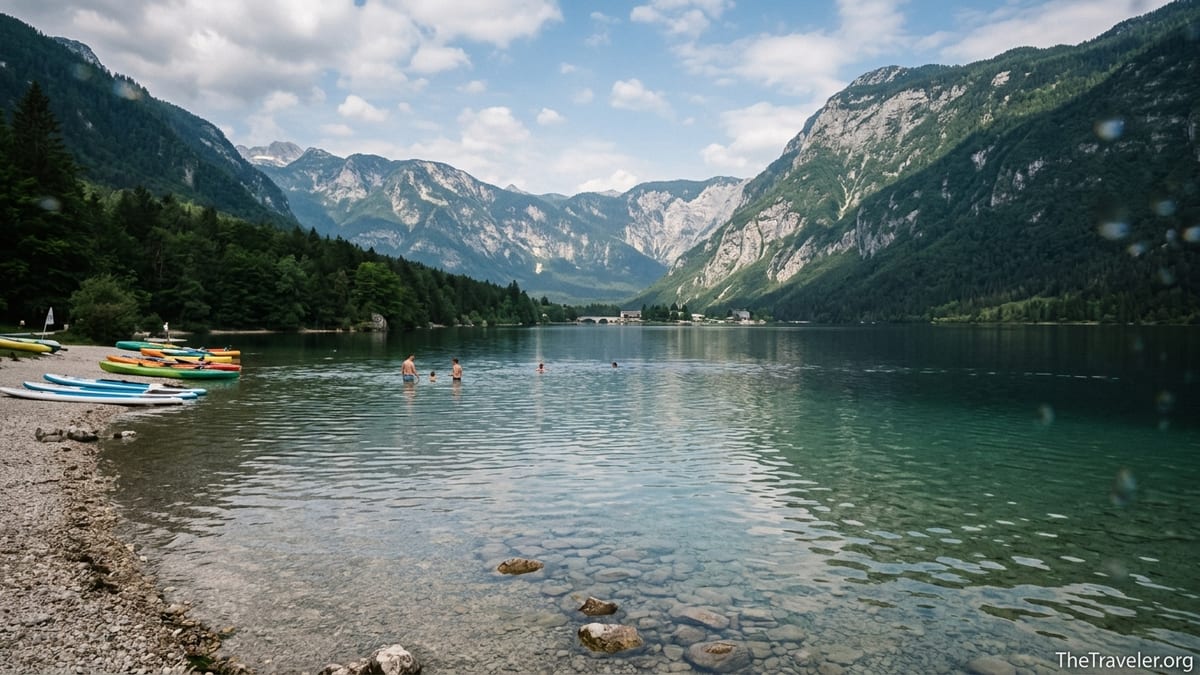
Unlike some alpine lakes where swimming is confined to paid lidos, Lake Bohinj has multiple free-access bathing areas along its shores. The most popular spots cluster near Ribčev Laz and along the north shore toward Stara Fužina, where grassy banks and small pebble beaches slope gently into the water. In high summer on a warm afternoon you will see families spread out on picnic blankets, paddleboarders heading away from shore and swimmers following the shallow shelf until the bottom drops away into darker blue.
The water is clear and typically cold, fed by mountain streams and underground springs. Even in July and August many visitors describe the first immersion as bracing, especially if they enter quickly rather than wading slowly. To manage the temperature, consider short, repeated dips rather than a single long swim, and have dry layers ready on shore. Lightweight neoprene socks or a thin wetsuit can help those who wish to stay in longer or swim distances parallel to the beach.
Local guidelines stress that entry and exit should take place at designated points, particularly where there are marked bathing areas or boat traffic. Inflatable toys and stand up paddleboards are widely used on calm days, but you should keep outside the marked lanes used by the small passenger boats that shuttle between Ribčev Laz and Ukanc in summer. For your own safety, avoid swimming far from shore in windy conditions, when short chop can build quickly and make progress difficult. There are no lifeguards along most of the natural shoreline, so treat the lake as an open-water environment rather than a supervised pool.
Respect for the environment is essential. Park rules forbid washing with soap or detergent in the lake, even biodegradable products. Food waste and litter must be packed out, and campfires on the beaches are not allowed. Glass bottles present a particular hazard because broken shards can be difficult to spot in grass or pebbles. Many visitors carry drinks in reusable metal flasks and place them in the shallows to keep cool, which both cuts down waste and avoids broken glass. As you choose your swimming spot, favor areas that already see heavy use rather than trampling fragile reed beds or entering from muddy, vegetated banks.
Planning Longer Hikes from the Lake
Although the shoreline walks and short outings to Savica or Mostnica Gorge will satisfy many visitors, Lake Bohinj also serves as a gateway to longer alpine hikes. From the forest above Stara Fužina you can gain the Vogar and Pršivec plateaus, which offer impressive views down onto the lake. These routes are steep and in places rocky, so sturdy footwear and good fitness are recommended. In summer, start early to avoid midday heat in the lower forest, carrying sufficient water because springs can be intermittent by late season.
The Vogel plateau above Ukanc, reached via cable car, provides access to high-level routes with relatively modest initial effort. Once you step off the upper station you are already surrounded by mountain scenery, and from there you can follow marked trails towards peaks and ridgelines that survey both the Bohinj basin and more distant summits. Weather can change quickly at altitude, so check forecasts before riding up and carry layers, a waterproof shell, snacks and a basic first aid kit even for half-day excursions. If low cloud is forecast, you may prefer to save the cable car for a clearer day and focus on lower valley walks instead.
For experienced hikers, Bohinj is one of the traditional starting points for multi-day routes into the heart of the Julian Alps, including approaches to Triglav, Slovenia’s highest mountain. These multi-day itineraries typically involve overnight stays in staffed mountain huts and require knowledge of alpine conditions. If you are new to the region, a practical way to sample this terrain is to book a local guiding service for a day or two, either through accommodation providers in Bohinj or specialist agencies in Ljubljana. A guide can match a route to your fitness and experience, from a demanding summit push to a moderate traverse among high meadows and karst ridges.
Whatever length of hike you choose, remember that you are within a national park with strict rules about wild camping and fires. Bivouacking outside official shelters is generally not permitted. Instead, plan to return to lakeside accommodation or make advance bookings in mountain huts if you intend to stay high. Carrying a physical map of the Bohinj and Triglav National Park area is strongly advised, as phone reception can be patchy in gorges and behind ridges, and batteries drain more quickly when constantly searching for signal.
Practical Tips: Parking, Costs and Staying Sustainable
Parking at Lake Bohinj is a frequent source of visitor frustration, largely because space is limited and controls are tight to protect the lakeshore from congestion. Official guidance makes clear that vehicles may be left only in marked spaces, with enforcement officers regularly patrolling informal roadside pull outs. In practice this means you should plan and budget for parking as part of your trip, rather than hoping to find a free spot at the water’s edge. Municipal car parks in the wider valley, such as near Bohinjska Bistrica or in Stara Fužina, generally cost less per hour than lots directly by the lake, and in summer they are linked to the lakeshore by shuttle buses.
Recent seasonal information from local tourism offices shows sample rates in the range of a few euros per hour at popular lots near the lake, increasing during the busiest daytime hours. All-day parking will usually cost more than a basic bus fare from Bled to Bohinj, which is why many visitors choose to leave cars further away and rely on public transport for the final stretch. Motorhome owners must pay close attention to signs, as overnight parking is restricted to specified areas, such as certain valley car parks and established campsites. Fines for violations can erase any savings from free or cheap unofficial stops, and they contribute to strained relations between residents and tourists.
Food and drink around Bohinj are priced broadly in line with the rest of rural Slovenia. In Ribčev Laz you can expect to pay a moderate sum for a main dish such as grilled trout or a hearty stew at a lakeside restaurant, while a takeaway coffee from a small kiosk may cost only a little more than in Ljubljana. Budget-conscious hikers often stock up at supermarkets in Bohinjska Bistrica or larger towns before arriving, then supplement with snacks or occasional meals out. Water from public taps and mountain huts is usually drinkable unless specifically marked otherwise, so carrying a refillable bottle helps minimize plastic use and cuts costs.
From a sustainability perspective, Bohinj’s authorities actively promote car-free travel, longer stays rather than brief hit-and-run visits, and respect for park rules. This aligns well with the interests of hikers and swimmers who value quiet trails and clean water. By choosing to visit outside absolute peak weekends, taking shuttles or bikes instead of driving between near-identical viewpoints, and supporting locally run guesthouses and eateries, you help ensure that Lake Bohinj remains a place where nature dominates the experience. Simple choices, such as staying on marked paths to avoid erosion or carrying a small bag to pack out any litter you find, have a real impact over a busy season.
The Takeaway
Exploring Lake Bohinj on foot and in the water is less about ticking off a checklist of attractions and more about settling into a slower rhythm. A well-planned visit might see you taking an early bus from Ljubljana, walking along the northern shore from Ribčev Laz to Ukanc in the cool of the morning, riding the Vogel cable car for wide alpine views, then returning for a late afternoon swim near Stara Fužina as the day-tripper crowds thin. With more time you could add shaded hikes through Mostnica Gorge, a stair climb to Savica waterfall and perhaps a longer ridge walk above the lake.
What makes Bohinj special is the way serious mountain landscapes, cold, clear water and small-scale villages coexist within a compact area. Yet that same compactness means the valley can feel strained when too many cars and unprepared visitors arrive at once. Approaching the lake with realistic expectations about water temperature, parking, transport and trail difficulty helps you avoid common frustrations and leaves more space for what you came for: hiking under limestone peaks, swimming in one of Slovenia’s purest lakes and pausing often to take in views that feel, at least for now, relatively untouched.
FAQ
Q1. Can I visit Lake Bohinj as a day trip from Ljubljana without a car?
Yes. Regular buses connect Ljubljana with Bohinj via Bled, and trains run to Bohinjska Bistrica with onward buses, but in peak summer services can be crowded so start early and allow extra time.
Q2. How long does it take to walk around the entire lake?
Most visitors need about three to four hours to complete the lakeside loop at a relaxed pace, not counting photo stops, swims or café breaks along the way.
Q3. Is the water at Lake Bohinj warm enough for comfortable swimming?
The lake is fed by mountain streams so it stays cool. In July and August the surface can feel refreshing rather than icy, but many people still find it bracing and limit swims to shorter dips.
Q4. Where are the best places to swim at Lake Bohinj?
Popular swimming areas include the grassy and pebbly shores near Ribčev Laz and along the north shore toward Stara Fužina, where access is easy and the entry slope is gentle.
Q5. Do I need special equipment to hike around Lake Bohinj?
For lakeside paths, sturdy walking shoes and weather-appropriate clothing are usually enough. For higher routes to viewpoints or onto the Vogel plateau, proper hiking boots, layers and rain protection are strongly recommended.
Q6. How busy is Lake Bohinj compared with Lake Bled?
Lake Bohinj is generally quieter and feels less developed than Bled, but weekends and hot summer days can still be very busy, especially around midday and near the most accessible beaches.
Q7. Is it possible to see Savica waterfall and still have time for swimming?
Yes. Many visitors combine a morning trip to Savica waterfall, including the stair climb to the viewpoint, with afternoon swimming or walking along the lakeshore, particularly if they use the shuttle buses to save time.
Q8. Can I camp freely by the shore of Lake Bohinj?
No. Wild camping and overnighting in vehicles outside designated campsites and approved parking areas are not allowed in Triglav National Park. Use official campsites or accommodation in nearby villages instead.
Q9. Are there lifeguards on the beaches at Lake Bohinj?
Most of the natural shoreline is unsupervised, so you should treat the lake as open water, stay close to shore if you are not a strong swimmer and keep a close watch on children.
Q10. What is the best season for combining hiking and swimming at Lake Bohinj?
From roughly mid-June to mid-September you are most likely to find snow-free lower trails and water warm enough for regular dips, although conditions vary by year and day-to-day weather.