


The Julian Alps in northwest Slovenia pack an impressive mix of emerald lakes, high mountain passes, quiet farming villages and accessible hiking into a relatively compact area. With good roads, reliable public transport on key routes and a growing network of small guesthouses, it is one of the easiest alpine regions in Europe to explore without losing that sense of wild mountain drama. This guide focuses on how to combine hiking, lakeside downtime, traditional villages and scenic drives into a coherent itinerary so that a few days in the Julian Alps feels like a complete journey rather than a rushed checklist.
Get the latest updates straight to your inbox!
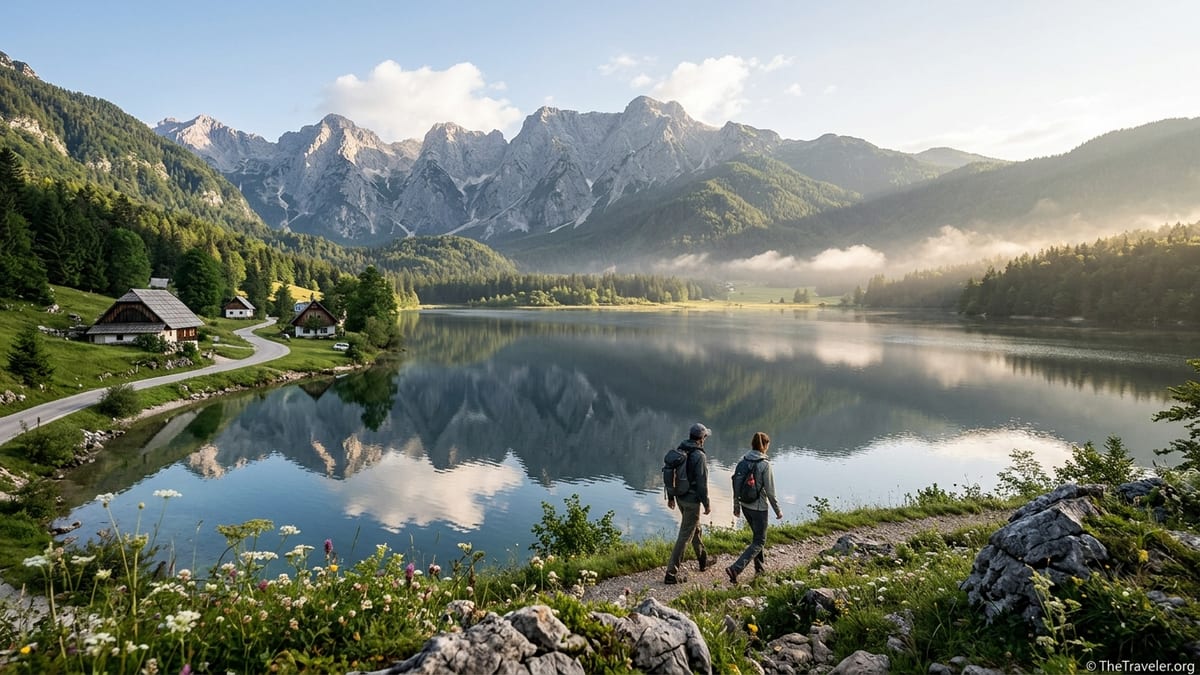
Getting Oriented: Where the Julian Alps Are and How to Reach Them
The Julian Alps sit in the northwest corner of Slovenia, straddling the borders with Italy and, at their fringes, Austria. Most of the classic landscapes travellers associate with the region, including Lake Bled, Lake Bohinj and many of the best-known summits, lie inside or on the edge of Triglav National Park. Distances between bases are short: it takes around 40 minutes to drive from Ljubljana Airport to Lake Bled, roughly an hour and a half to Lake Bohinj, and about 90 minutes to reach Kranjska Gora near the Italian and Austrian borders, depending on traffic and season.
For visitors flying in, Ljubljana is the most practical entry point, with seasonal flights from larger European hubs and car-rental desks at the airport. Many travellers pick up a compact manual car here and return it after a loop through the Julian Alps; in high summer, a small car is more convenient than an SUV on narrow passes. Arriving overland, you can reach Jesenice and Lesce-Bled by international train from Austria or Italy, then continue by regional bus or shuttle. Buses run regularly between Ljubljana, Bled and Bohinj, and there are seasonal services into the Soča Valley and over Vršič Pass, although a car gives you far more flexibility for scenic detours.
If you plan to drive beyond Slovenia into Italy or Austria, confirm cross-border permissions when booking a rental. Cars registered in Slovenia normally come with a motorway vignette included, which covers tolls on Slovenian highways, but certain mountain roads such as the Mangart Saddle road may charge a small additional fee in cash at a hut or barrier. Having some euros on hand for parking machines, mountain huts and tolls will make day-to-day travel much smoother.
Choosing Your Base: Bled, Bohinj, Kranjska Gora or Bovec
Most travellers structure a Julian Alps trip around one or two bases rather than changing accommodation every night. Lake Bled works well as a soft landing, with a concentration of hotels, restaurants, lakeside promenades and day-trip options. It can feel busy in July and August, but that also means practical services such as supermarkets, bakeries and rental shops for bikes and rowboats are close at hand. For many, one or two nights here at the beginning or end of a trip is enough to climb to viewpoints like Ojstrica, walk the lakeshore and perhaps visit the nearby Vintgar Gorge.
Lake Bohinj, about 30 to 40 minutes’ drive west of Bled, offers a quieter alternative with a stronger national-park feel. The small village of Ribčev Laz at the eastern tip of the lake has a cluster of guesthouses, simple hotels and a few restaurants, while Stara Fužina slightly inland has farm stays and family-run apartments. Travellers often base themselves here for two to four nights to combine hiking to Savica Waterfall, taking the cable car up to Vogel for ridge walks and views of Mount Triglav, and swimming from the grassy shores. Parking around the lake is regulated and generally paid, particularly in high season, so factor a modest daily parking budget into your plans.
On the northern flank of the Julian Alps, Kranjska Gora feels like a compact alpine resort town, with ski infrastructure that transitions into a base for hiking and cycling in summer. Staying here puts you close to Lake Jasna, the starting point of the famous Vršič Pass road, and a number of family-friendly valley walks. It suits visitors who like the convenience of walking to restaurants and cafes in the evenings while still being surrounded by jagged peaks. Further southwest, the Soča Valley and the town of Bovec sit below the highest summits and offer easier access to turquoise pools and gorges, canyoning and rafting, and more relaxed riverside paths. Many road-trip itineraries pair two nights in Bohinj with two in either Kranjska Gora or Bovec to experience both sides of the range.
Hiking Highlights: From Lakeside Strolls to Accessible Peaks
The Julian Alps offer a wide spectrum of walking, from lakeside circuits suitable for families with pushchairs to full-day scrambles on rugged limestone ridges. Around Lake Bohinj, an obvious introduction is the mostly flat path that traces the northern shore, where you can stroll for an hour or two between forest, meadows and small beaches. From the western end of the lake, a well-marked trail climbs to Savica Waterfall in about 45 to 60 minutes, with steps and railings in steeper sections. A combined outing, walking part of the shore then ascending to the waterfall, makes a realistic half-day for moderately fit walkers.
For bigger views without committing to a serious alpine ascent, the cable car from Ukanc up to Vogel is a straightforward choice. At the top station, short waymarked trails lead to viewpoints over Lake Bohinj and the central Julian Alps. In clear weather you can see Mount Triglav’s distinctive pyramid. There are also longer hikes along the ridge to nearby peaks, where you can step away from the crowds that cluster near the cable car. Alpinists often use this plateau for multi-day hut-to-hut journeys, but day-hikers can simply set a turnaround time and return to the lift for a café stop before descending to the valley.
On the north side of the range, Vršič Pass functions as a high trailhead. A popular hike from the pass leads to Slemenova Špica, a rounded summit with a small tarn and classic views toward Jalovec and other needles. The walk typically takes three to four hours out and back, with moderate elevation gain on rocky paths, and is a good introduction to higher terrain in stable summer weather. Further afield, ambitious hikers might look at routes across the Seven Lakes Valley or multi-day circuits that link mountain huts; many organised walking holidays now use these trails, with luggage transfers between valleys so that guests hike with only a daypack.
Lake Bled and Lake Bohinj: Water, Relaxation and Short Walks
Lake Bled and Lake Bohinj anchor many Julian Alps itineraries and deliver very different atmospheres. At Bled, the focus is as much on the lakeside scene as on the mountains. The paved path circling the lake takes about an hour and a half at a leisurely pace, with benches, rowing-boat rentals and viewpoints along the way. Short but steep woodland trails climb to classic photo spots like the Ojstrica and Mala Osojnica viewpoints, where you look back over the lake toward the island church and clifftop castle. These mini-hikes are often busiest at sunrise and sunset, when the light is soft and the water calm.
Lake Bohinj, by contrast, feels more elemental. There are no island churches or prominent castles, just a still, long lake framed by dark forest and high cliffs. The water here is slightly cooler than at Bled but popular for swimming in summer, especially from the pebbly beaches near Ribčev Laz and the meadow areas along the northern shore. Simple lakeside kiosks and small cafes sell picnic basics and hot drinks, but the overall feel is low-key. You can rent kayaks or stand-up paddleboards from seasonal operators and explore the shoreline, or simply wade out as the evening sun drops behind the ridges.
Public buses link Bled and Bohinj several times a day, which means you can base in one and day-trip to the other without a car, though service is more limited outside peak season. In summer, both lakes see parking controls and shuttle schemes designed to reduce congestion at the most popular car parks and trailheads. Checking the latest local transport information once you arrive, either via your accommodation host or tourist information offices in Bled and Bohinj, will help you align your hiking days with available bus or shuttle options.
Alpine Villages and Local Culture
Part of the pleasure of travelling through the Julian Alps lies in spending unhurried time in small villages where daily rhythms still revolve around farming, forestry and, increasingly, guesthouse hospitality. In Stara Fužina near Lake Bohinj, you might wake to the sound of cowbells as herders move cattle toward high pastures, then wander past drying racks and vegetable gardens on your way to the trailhead. Many homes here have converted an attic or barn into simple holiday apartments, often run by multi-generational families who can share firsthand suggestions about seasonal walks, berry-picking spots or quiet swimming places.
Kranjska Gora combines this traditional feel with more resort amenities. Its compact centre has outdoor-gear shops, bakeries and small supermarkets, along with a sprinkling of hotels and apartment blocks built for the winter ski trade. From here, short walks lead up the Krnica Valley or to Lake Jasna on the edge of town, where wooden piers and a small café sit against a backdrop of sharp grey peaks. Nearby villages such as Rateče or Podkoren retain a sleepier atmosphere and work well for travellers who want to step back from the main resort while staying within a short drive of its services.
Over the pass in the Soča Valley, Bovec and Kobarid blend mountain culture with river life. Traditional stone houses line narrow streets, and in summer you will see whitewater rafts and kayaks stacked on trailers in front of guesthouses, ready for early-morning departures. Museum exhibitions in towns like Kobarid explore the difficult First World War history of the region, when these valleys formed a contested frontline. Today, the same slopes hold peaceful hiking paths and viewpoints where interpretive boards explain former trenches and routes, adding a reflective layer to what otherwise might be purely scenic days.
Scenic Drives: Vršič Pass, Mangart Saddle and Lakeside Roads
Even if hiking is your main focus, the roads of the Julian Alps are experiences in themselves. The Vršič Pass between Kranjska Gora and the Soča Valley is Slovenia’s highest paved mountain pass, reaching around 1,611 metres and incorporating roughly 50 numbered hairpin bends. The northern approach starts at Lake Jasna and climbs quickly through spruce forest to more open terrain, with lay-bys where you can pull over to admire views of surrounding summits. Near one of the early bends stands the wooden Russian Chapel, built to commemorate prisoners of war who died while constructing the road during the First World War, a sombre counterpoint to the scenery.
Driving the full stretch from Kranjska Gora to Bovec without stopping might take about an hour, but most travellers build in longer, lingering at small mountain huts for coffee or walking short sections of trail. In summer, cyclists share the road, and buses operate on a limited schedule linking the two valleys. Conditions vary by season: in late spring and early autumn you can encounter patches of snow or ice on shaded corners, while in July and August the main challenge is accommodating campervans and tour buses on narrow bends. Allow unhurried time, drive defensively and be prepared to stop frequently to let uphill traffic pass.
Another spectacular but slightly quieter road leads up to the Mangart Saddle, high above the upper Soča Valley. This former military road winds through tunnels and across exposed slopes, with a toll payable near the start during the main season. Although the paved road does not quite reach the summit of Mangart, it brings you to a high cirque where hiking paths fan out across meadows and rocky ridges. Because the road is narrow and can be affected by rockfall or snow, it is advisable to check local reports in Bovec or at tourist information points before attempting the drive, particularly early or late in the season.
Elsewhere in the region, roads along the shore of Lake Bohinj, through the Pokljuka Plateau forests, and across the lower passes on the edges of Triglav National Park offer calmer scenic driving. Many organised cycling holidays now use these same routes, which speaks to their combination of good tarmac and inspiring views. If you are driving, be especially attentive on bends, as you may encounter groups of road cyclists climbing at low speed or descending quickly. Pullouts, picnic tables and wayside chapels invite impromptu pauses that often become the most memorable moments of a road trip.
Practical Planning: Seasons, Gear and Safety
Seasonal timing shapes what you can realistically do in the Julian Alps. Late spring and early autumn often provide a good balance of accessible trails, open passes and relatively light crowds, though snow can linger at higher elevations well into May and sometimes early June. July and August bring warm temperatures, longer daylight and reliable operations for cable cars, boats and shuttle buses, but also the heaviest visitor numbers around Lake Bled, Lake Bohinj and popular day hikes. In autumn, forests around Pokljuka and Bohinj turn rich shades of gold and orange, and afternoons can still feel pleasantly warm at lake level while mornings at higher passes require insulation layers.
For hiking, sturdy footwear with good grip is essential. Many local walkers use low-cut trail shoes rather than heavy boots for valley and mid-altitude routes, though boots can be reassuring on rougher or wet terrain. A lightweight waterproof jacket, sun hat and high-factor sunscreen are important regardless of season, as mountain weather can shift quickly from bright sunshine to showers. Trekking poles prove useful on steeper descents and are commonly seen on busier trails. If you plan to spend time above the tree line, a small first-aid kit, extra warm layer and plenty of water are sensible basics to carry.
Safety-wise, paths in the Julian Alps are generally well marked, but not every route is suitable for every visitor. The presence of fixed cables or ladders often signals that a path verges into via ferrata territory and requires specific equipment and experience. Tourist offices in Bled, Bohinj, Kranjska Gora and Bovec can recommend routes that align with your fitness and comfort level and update you on any temporary closures. Mountain huts along classic routes provide simple food, drinks and in some cases overnight accommodation; even if you do not plan to sleep in them, carrying some cash rather than relying solely on cards is wise, as card terminals can be unreliable during storms or busy periods.
Suggested Itineraries: Linking Lakes, Villages and Passes
With limited time, it helps to think in terms of clusters rather than trying to zigzag across the region every day. A four-night itinerary might start with one night at Lake Bled to settle in and walk the lakeshore, followed by two nights at Lake Bohinj with a cable car ride up to Vogel and a day hike to Savica Waterfall or along the northern shore. From there, you could drive via the Pokljuka Plateau to Kranjska Gora for a final night, exploring Lake Jasna in the evening and driving Vršič Pass the next morning, perhaps fitting in a short hike from the pass itself before descending into the Soča Valley and looping back toward Ljubljana.
Travellers with a week could deepen this loop by adding two nights in the Soča Valley, staying in Bovec or Kobarid, then returning to the interior via a different route. This allows time for easier riverbank walks, a visit to one of the gorges and a drive or shuttle to trailheads that reach balcony paths above the valley. Those who prefer to avoid frequent hotel changes might choose a single base such as Bohinj or Kranjska Gora and focus on day trips within an hour’s radius, returning each evening to the same guesthouse or apartment. In practice, many worthwhile hikes, lakes and villages fit comfortably within that distance.
Public-transport-based itineraries require a bit more forethought but are entirely feasible. You could, for instance, travel by bus from Ljubljana to Bled, onward to Bohinj, and then back to the capital for a day trip to the Soča Valley using an organised tour that includes transport over Vršič Pass. Choosing centrally located accommodation in Bled and Bohinj within walking distance of bus stops and shops will save you both time and taxi expenses. In shoulder seasons, confirm bus timetables close to your travel dates, as services may run less frequently once the main summer crowds thin out.
The Takeaway
The Julian Alps invite a style of travel that balances movement with stillness. It is entirely possible in a single day to hike to a high meadow, drive a string of hairpins over a pass and end the afternoon with bare feet in a lake, yet the region rewards those who slow down. Building your trip around a couple of bases, exploring nearby trails and villages in depth, and allowing for unplanned pauses at viewpoints and mountain huts often leads to richer experiences than racing between every named attraction.
Whether you are coming for your first taste of alpine hiking, returning after time in busier regions such as the Dolomites, or simply looking for a blend of clear water, mountain air and village hospitality, the Julian Alps offer accessible adventure. With realistic planning, attention to local conditions and a flexible approach to weather and energy levels, you can weave together lakes, villages, trails and scenic drives into a journey that feels complete yet still leaves you wanting to come back.
FAQ
Q1. How many days do I need to explore the Julian Alps properly?
Many travellers feel they get a good overview with four to six days, splitting time between two bases such as Lake Bohinj and either Kranjska Gora or Bovec. With a full week you can add slower days at the lakes or tackle longer hikes without rushing.
Q2. Do I need a car to visit the main lakes and villages?
A car gives you maximum flexibility for scenic drives and trailheads, but it is possible to visit Lake Bled and Lake Bohinj by bus from Ljubljana and to join organised day trips to the Soča Valley and Vršič Pass. Outside peak season, bus frequencies drop, so check timetables carefully if you are relying on public transport.
Q3. When is the best time of year to hike in the Julian Alps?
Most hikers aim for late June to late September, when higher trails are usually snow free and mountain huts, cable cars and lake facilities operate regularly. In May and early June, lower routes and lakeside walks can be delightful, but snow often lingers on passes and some high paths may still be unsafe without specialised equipment.
Q4. Are the trails suitable for beginners or families with children?
Yes, provided you choose routes matched to your fitness and comfort with uneven ground. Lakeside paths at Bled and Bohinj, shorter walks from cable car stations such as Vogel, and valley trails near Kranjska Gora make good introductions. Steeper, rocky or exposed routes should be approached cautiously, especially with younger children.
Q5. Can I visit both Lake Bled and Lake Bohinj in one day?
It is physically possible to see both in a single day, especially if you have a car, but you will only skim the surface. Many visitors prefer to spend at least one full day at each lake, or to base at one and make a single relaxed day trip to the other, rather than rush between them.
Q6. Is driving the Vršič Pass difficult or dangerous?
The road is narrow, steep and full of tight hairpin bends, so it demands concentration, but it is a well-maintained paved pass that thousands of vehicles cross in summer. If you drive slowly, use low gears, give way to uphill traffic and avoid it in poor weather or if you are very uncomfortable with mountain roads, it can be a rewarding and manageable experience.
Q7. What kind of hiking gear should I bring?
For most day hikes, comfortable footwear with good grip, a small backpack, waterproof jacket, warm layer, sun protection and enough water are sufficient. If you plan to venture onto longer or higher routes, consider trekking poles and a more comprehensive kit, and seek local advice about whether specialised equipment is needed for particular paths.
Q8. Are there mountain huts, and do I need to book them?
The Julian Alps have a network of huts offering simple meals, drinks and basic overnight accommodation. In peak summer, beds in popular huts often need to be reserved in advance, particularly at weekends. For day hikes, you can usually drop in for refreshments without a reservation, though it is wise to carry some snacks in case a hut is unexpectedly closed.
Q9. Is swimming allowed in the lakes?
Swimming is generally allowed in both Lake Bled and Lake Bohinj, and in summer you will see plenty of people in the water. At Bohinj in particular, the lake has a more natural feel, so be prepared for cooler temperatures and follow any signs about protected areas, safety and designated bathing spots.
Q10. How busy does the region get in July and August?
High summer brings significant crowds to Lake Bled, Lake Bohinj and headline attractions, especially on sunny weekends. Car parks can fill early and popular trails feel busy. If you are visiting in these months, try to start hikes early in the day, consider exploring lesser-known valleys and villages, and be prepared to use shuttle buses or walk a little farther from main parking areas.