


The Julian Alps are one of Europe’s most rewarding mountain regions for travelers who like their scenery wild, their hiking varied and their logistics pleasantly manageable. Stretching across the northwestern corner of Slovenia and into Italy, this limestone range combines jagged peaks with emerald rivers, glacier-fed lakes and historic villages that make it easy to mix outdoor adventure with culture and good food. This guide brings together the most useful current information on routes, parks and practical travel details so you can plan a realistic, memorable trip rather than just daydream over maps.
Get the latest updates straight to your inbox!
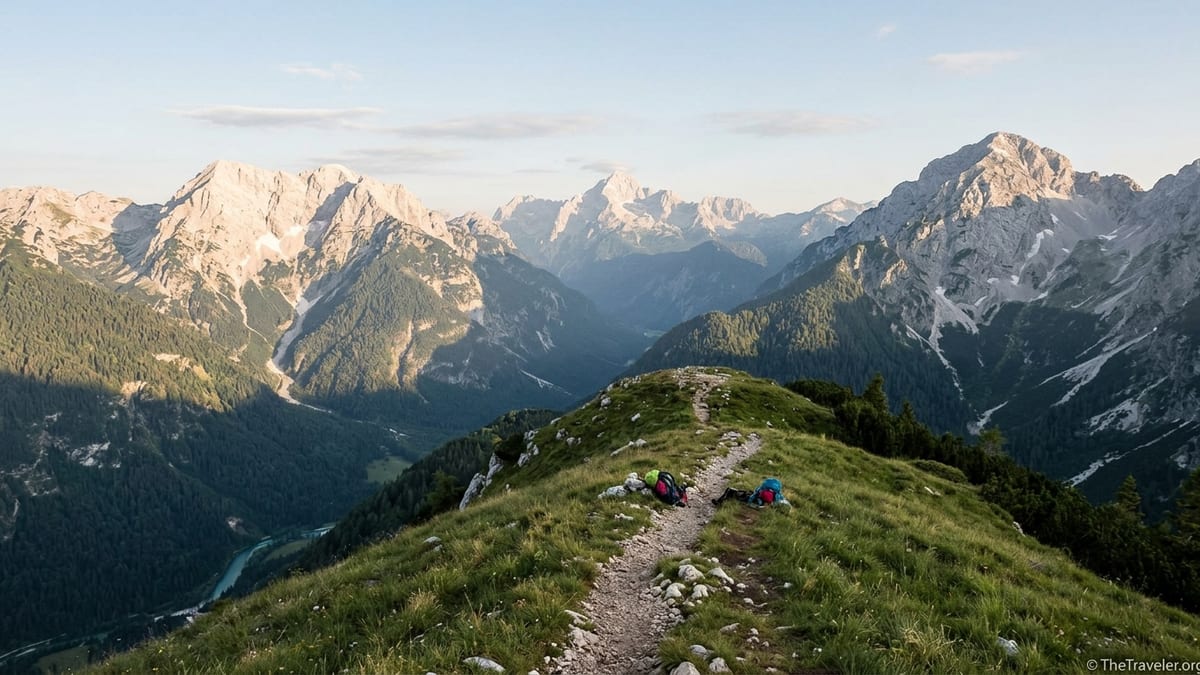
Understanding the Julian Alps and Triglav National Park
The Julian Alps cover a broad swath of northwestern Slovenia, with a large portion protected inside Triglav National Park, the country’s only national park. The centerpiece is Mount Triglav at 2,864 meters, surrounded by a labyrinth of valleys like Bohinj, Vrata, Trenta and Soča. From a traveler’s perspective, the region splits into a few clear hubs: Bled and Bohinj on the eastern side, Kranjska Gora to the north, and the Soča Valley towns of Bovec, Kobarid and Tolmin to the west.
Triglav National Park is not a single entry-gate style park but a patchwork of protected zones threaded with public roads and villages. You can drive from Ljubljana to Lake Bohinj in about 1 hour 30 minutes and still be entirely within the park’s landscape. This open structure means it is easy to combine short walks, cable car rides and scenic drives with more committing hut-to-hut treks, but it also requires more planning around parking rules, trailheads and seasonal closures.
Regulations inside the park are increasingly focused on preserving fragile alpine environments. Wild camping is prohibited, and swimming is banned in small alpine lakes even when they look tempting after a hot climb, while larger lakes such as Bled and Bohinj remain open for swimming in designated areas. Car access and parking are being tightened around popular spots, particularly Lake Bohinj and the Soča Valley, where designated parking areas and shuttle buses now operate in peak season.
For orientation, think of the Julian Alps as a rough triangle. At one corner sits Lake Bled with its island church, at another the high pass of Vršič above Kranjska Gora, and at the third the town of Tolmin at the southern entrance to the Soča Valley. Within this triangle you will find everything from easy lakeside paths and family cable car trips to demanding via ferrata climbs on the Triglav summit ridge.
Classic Day Routes for First-Time Visitors
Many travelers experience the Julian Alps through day hikes based from Bled, Bohinj or Kranjska Gora. One of the most accessible classic routes is the circuit around Lake Bohinj combined with the out-and-back walk into the Voje Valley and Mostnica Gorge above the village of Stara Fužina. A typical loop around the lake is about 12 kilometers and takes 3 to 4 hours at a leisurely pace; adding the gorge and valley can easily fill a full day and offers waterfalls, narrow rock corridors and traditional alpine pastures without serious exposure.
Another firm favorite for a first taste of high mountains without technical difficulty is the hike from the Pokljuka Plateau to viewpoints such as Debela peč. Pokljuka, a forested plateau above Bled, can be reached by car in about 45 minutes from Bled or via seasonal shuttle buses. From popular trailheads like Rudno Polje, you can follow marked paths that gain gradual elevation to rolling ridges with panoramic views over the Triglav massif, yet still return to your accommodation for dinner.
Near Kranjska Gora, the easy walk around Lake Jasna and into the Krnica Valley suits visitors who want mountain atmosphere without a big climb. Starting from the edge of Kranjska Gora, well-marked forest tracks lead into the valley in around 1.5 to 2 hours each way, ending at a simple hut serving soups and stews in season. On warm summer weekends the gravel parking at the valley entrance can fill by mid-morning, so arriving before 9 am helps avoid frustration.
On the western side, visitors based in Tolmin often head for Tolmin Gorges, a short but dramatic walk through narrow canyons on boardwalks and paved paths. The site operates a ticket system with defined seasonal opening dates, usually from spring into autumn, and is officially closed in winter when paths are not maintained. Recent seasons have also seen temporary closures of specific sections for maintenance, so it is wise to check current notices locally before planning your timing around the gorge.
Iconic Hut-to-Hut Routes and the Triglav Ascent
For many hikers the highlight of the Julian Alps is a multi-day hut-to-hut route, and the classic objective is Mount Triglav itself. Several popular ascents start from the Bohinj side or from the Vrata Valley near Mojstrana, usually involving one long approach day to a high hut and a second summit day finishing with a long descent. Typical high huts used on Triglav routes include Triglav Lodge at Kredarica at 2,515 meters and Planika Lodge at around 2,400 meters, both of which require advance booking in peak summer due to high demand.
The normal routes to Triglav involve sections of exposed scrambling protected by fixed cables. While the easiest lines are graded as non-technical via ferratas, they still demand a head for heights, sturdy footwear and ideally proper via ferrata equipment. In recent summers, local guides and regular visitors have noted very heavy crowds on fine August weekends, with queues forming on the summit ridge and at ladders. If you want a more relaxed experience, consider booking a guide and aiming for a weekday visit in late June, early July or early September rather than the absolute peak holiday weeks.
Hut-to-hut walkers who prefer to avoid the summit crowds can design 3 to 5 day loops that stay a step back from Triglav itself. One popular style of outing starts from Lake Bohinj, climbs to a mid-elevation hut such as Vodnikov Dom or Koča na Doliču and then traverses to remote huts like Zasavska Koča na Prehodavcih, before descending into the Soča Valley near Trenta. These routes provide airy ridgelines and high karst plateaus, with overnight stays in simple dormitories where half-board (dinner and breakfast) is typically the norm.
Advance reservations for huts are strongly recommended from roughly early July to early September, particularly on weekends. Some huts now offer online booking forms, while others still rely on email or phone. Prices are in line with other Alpine regions: a basic bed in a shared dorm might cost the equivalent of 25 to 40 euros per person, with half-board packages bringing the total closer to 50 to 70 euros depending on the hut and current food prices. Payments are often cash only, and many huts do not have reliable card terminals despite increased investment in solar power and communications.
Long-Distance Trails: Juliana Trail and Slovenian Mountain Hiking Trail
Travelers with more time often gravitate to long-distance routes that showcase the Julian Alps at a slower pace. The Juliana Trail is a relatively new circular route that loops around the eastern Julian Alps and skirts much of Triglav National Park. It is divided into roughly 20 stages of about 15 to 20 kilometers each, linking towns like Kranjska Gora, Bled, Bohinj, Tolmin, Kobarid and Bovec. The idea is to keep hikers predominantly in valleys and lower elevations, focusing on villages, rivers and cultural sites, while leaving the most fragile high mountain areas to those with suitable experience.
A typical Juliana Trail itinerary might start in Kranjska Gora, follow the Sava and Soča rivers through alpine meadows and small farms, and circle back via Bled and Bohinj. Because most stages start and end in inhabited places, you can sleep in guesthouses and small hotels instead of mountain huts, which appeals to hikers who like a hot shower and private room at the end of the day. It also makes luggage transfer services feasible, and several Slovenian and European walking operators now package parts of the route with pre-booked accommodation and GPX files.
More committed mountaineers sometimes use segments of the historic Slovenian Mountain Hiking Trail, a national trail that crosses the Julian Alps among other ranges. This route links multiple high huts including Triglav Lodge at Kredarica and generally requires good fitness and familiarity with alpine terrain, since some stages include rocky scrambles and lingering early season snowfields. For most overseas travelers on a first visit, cherry picking a few of its Julian Alps sections around Bohinj or Kranjska Gora is more realistic than attempting the full length in one trip.
For either long-distance option, timing and baggage logistics need careful thought. Bus links between endpoints of individual stages are improving, yet service frequency can still be limited outside July and August. If you prefer not to rent a car, a practical strategy is to base yourself sequentially in two or three hubs such as Bled, Bohinj and Bovec, and then walk outward on sections of the Juliana Trail before returning by bus or pre-arranged taxi.
Getting Around: Cars, Buses and Seasonal Shuttles
Transport in the Julian Alps is straightforward on paper and erratic in practice, especially if you expect urban-style frequency. There are regular buses from Ljubljana to Bled and onward to Bohinj that make car-free visits to both lakes realistic, particularly in summer. Trains also run between Ljubljana and the Lesce-Bled rail station, with local buses or taxis covering the final few kilometers to the lakefront. Ticket prices on intercity buses are generally modest, often in the range of a few euros for short regional hops, which makes them attractive for budget travelers willing to adapt their plans to the timetable.
Reaching more remote valleys and trailheads is where a rental car begins to feel close to essential. Connections from Bled or Ljubljana to the Soča Valley, for example, usually require multiple bus changes and careful attention to limited departures, especially outside peak tourist periods. Many Slovenes and frequent visitors advise renting a car if you want to drive the Vršič Pass, visit waterfalls such as Peričnik, or explore smaller villages and side valleys on your own schedule. Parking charges in the most popular areas, including around Bled, Bohinj and several Soča Valley hotspots, have risen in recent years, but they are still modest by big-city standards.
During high season some municipalities operate shuttle buses to reduce private car traffic. Around Lake Bohinj, for instance, summer shuttles typically connect the main car parks with the Savica Waterfall trailhead and Pokljuka plateau. In the Soča Valley, shuttle buses have been used to limit congestion at access points for Tolmin Gorges and popular swimming spots along the river. These services change from year to year, and timetables are often finalized only a few months before summer, so checking current local tourist office information shortly before your trip is important.
One area to watch closely in the next seasons is road access over the Vršič Pass, the famously twisty cobblestone road connecting Kranjska Gora with the Soča Valley. Recent construction and maintenance projects have led to daytime closures and diversions at various times, and more works are planned to improve drainage and parking near the summit. Even outside roadworks, the pass is typically closed or heavily restricted in winter and can remain snow-affected into spring. If your route planning involves crossing from Kranjska Gora to Bovec by car in shoulder seasons, always verify the latest conditions locally before committing accommodation on either side of the pass.
When to Go and What It Really Costs
The main hiking season in the Julian Alps usually runs from late June through September, with variations depending on snowpack and altitude. Lower valley routes around Bled, Bohinj and the Soča River become pleasant already in May, while the highest passes and north-facing gullies can hold snow well into early July after heavy winters. By late September nights at altitude are often cold, some huts begin to close or move to a reduced staffing model, and weather systems move through more quickly, making conditions more variable.
July and August bring the most reliable warm weather but also the largest crowds and the highest prices in resort towns. On sunny August weekends popular trails to Triglav and well-known gorges or waterfalls can feel surprisingly busy for such a small country. If your schedule allows, early July and the first half of September are excellent compromises: buses run frequently, huts and cable cars are fully operational, yet the main European holiday rush is slightly thinner.
Daily budgets vary widely depending on how you travel. Camping outside designated campgrounds is not allowed in the national park, so most visitors alternate between guesthouses and mountain huts. In resort towns like Bled and Kranjska Gora, expect midrange double rooms in summer to run from roughly 100 to 170 euros per night, with smaller pensions and private rooms in villages often a bit cheaper. In the Soča Valley and Bohinj area, prices can be slightly lower but still reflect the growing popularity of the region, especially for river sports.
Food and drink are reasonably priced compared with many Western European alpine regions. A main dish of hearty stew or grilled meat in a village restaurant might cost 10 to 18 euros, while a coffee on a lakeside terrace will typically be a few euros. In mountain huts, simple fixed menus are common: breakfast might include bread, spreads and tea or coffee, while dinner options often revolve around soups, goulash, pasta and seasonal specials. Portions are designed for hungry hikers, so many travelers find half-board in huts good value despite being more expensive than shopping in supermarkets.
Safety, Gear and Responsible Travel
The Julian Alps are accessible but they are still serious mountains, and every year local rescue services respond to incidents that could often have been avoided with better preparation. The biggest traps for visitors are underestimating how quickly weather changes, overestimating fitness for long days with significant elevation gain, and venturing onto via ferrata sections without the correct equipment. Cloud build-up and afternoon thunderstorms are common in summer, particularly after hot spells, and rock slabs can become very slippery once wet.
For safety and comfort, think in terms of alpine day lengths rather than city strolls. A typical marked route gaining 1,000 meters in elevation and covering 12 to 15 kilometers can easily take 6 to 8 hours including breaks, especially if you stop for photographs or hut lunches. Sturdy hiking boots with good grip are strongly recommended above the treeline, and trekking poles are useful on long descents. For any route that includes fixed cables or ladders, a sit harness, via ferrata lanyard and helmet are standard, and hiring a certified guide for your first such outing is money well spent.
Weather forecasts from the Slovenian Environment Agency and posted notices at trailheads and huts should always be factored into daily decisions. If storms or strong winds are forecast, high ridges and exposed ferratas are better avoided in favor of lower valley trails or cultural excursions. Mobile coverage has improved, but there are still shadow zones in deep valleys and on the far side of ridges, so you should not rely solely on smartphone mapping; a paper map and some basic navigation knowledge remain important.
Responsible travel also means respecting local rules designed to protect fragile ecosystems. Stay on marked paths to avoid trampling alpine vegetation, carry out all rubbish including food waste, and accept restrictions on swimming, camping and drone use. Many of Slovenia’s wildest corners feel pristine precisely because local communities and visitors have taken protection seriously. If you are traveling in a group, consider using public transport or shared shuttles for at least some days to lessen parking and traffic pressure around the most popular lakes and gorges.
The Takeaway
The Julian Alps offer a rare mix of big-mountain drama and manageable logistics, particularly for travelers willing to plan around seasons, public transport and hut reservations. First-time visitors can enjoy scenic day routes from Bled, Bohinj or Kranjska Gora without venturing far from paved roads, while more experienced hikers will find days of rewarding hut-to-hut traverses and long-distance trails that reveal the region’s quieter corners.
Success in this part of Slovenia comes from matching ambition with conditions on the ground. That means treating Triglav as a serious objective rather than a casual viewpoint, checking the latest updates on shuttles and roadworks, and booking popular huts well ahead for midsummer trips. It also means leaving some flexibility in your itinerary for weather changes and spontaneous discoveries, whether that is an extra night in a friendly village guesthouse or a slower day exploring gorges and rivers instead of chasing another summit.
Approached with patience and respect, the Julian Alps repay visitors many times over in clear streams, cloud-snagged ridges and quiet evening moments on hut terraces. With thoughtful preparation and realistic expectations, you can assemble a route that fits your abilities and interests, from family-friendly valley walks to challenging multi-day crossings that stitch the best of Triglav National Park into one unforgettable journey.
FAQ
Q1. Do I need a car to explore the Julian Alps and Triglav National Park?
Public buses make it feasible to visit hubs like Bled, Bohinj and Kranjska Gora without a car, especially in summer, but a rental car gives you far more flexibility for reaching trailheads, crossing passes such as Vršič when open and connecting the Soča Valley with other regions on your own schedule.
Q2. When is the best time of year to hike in the Julian Alps?
Most hikers target late June to late September, when snow has largely melted from higher routes and mountain huts operate on full schedules, with early July and early September offering a good balance of stable weather and lighter crowds compared with the busiest weeks of high summer.
Q3. Can beginners safely climb Mount Triglav?
Fit beginners with a head for heights can climb Triglav when conditions are dry if they go with an experienced guide, use proper via ferrata equipment and are prepared for a long, demanding day, but those uncomfortable with exposure or new to mountain terrain may be better starting with easier summits and high viewpoints first.
Q4. How far in advance should I book mountain huts in the Julian Alps?
For trips between early July and early September it is wise to book popular huts several weeks or even a couple of months in advance, especially on weekends, while outside peak dates you may find more flexibility but should still reserve once your route is clear.
Q5. Is wild camping allowed in Triglav National Park?
Wild camping is officially prohibited throughout Triglav National Park, so visitors are expected to stay in designated campgrounds in valley areas or use mountain huts, and rangers do issue fines when they encounter tents pitched in unauthorized locations.
Q6. What kind of budget should I plan for a week in the Julian Alps?
Budgets vary, but many midrange travelers allow for roughly 100 to 170 euros per night for a double room in resort towns, 50 to 70 euros per person for half-board in huts, plus daily spending on transport, occasional guided activities, restaurant meals and entrance fees to specific sites such as gorges or waterfalls.
Q7. Are the Julian Alps suitable for families with children?
The region is very family friendly if you choose routes carefully, with easy lakeside paths, short waterfall walks, cable car rides to viewpoints and gentle valley trails, while saving serious ridge hikes and via ferratas for older teenagers and adults with appropriate experience.
Q8. What maps or navigation tools should I use for hiking there?
Up-to-date paper hiking maps of Triglav National Park and the Julian Alps are widely sold in Slovenian outdoor shops and tourist offices, and are best used alongside offline-capable smartphone apps, but you should never rely on a phone alone because coverage and battery life can both be unreliable on longer days.
Q9. Can I swim in the lakes and rivers inside the park?
You can swim in larger lakes like Bled and Bohinj in designated areas and in some stretches of the Soča River where it is safe to enter, but swimming is prohibited in small high mountain lakes, and currents and cold water temperatures mean caution is always needed.
Q10. Do I need special insurance for hiking in the Julian Alps?
It is strongly recommended to carry travel insurance that explicitly covers hiking and mountaineering at the altitudes and difficulty levels you plan, because helicopter rescue and medical costs can be significant, and some visitors also join alpine clubs that offer additional mountain rescue coverage.