


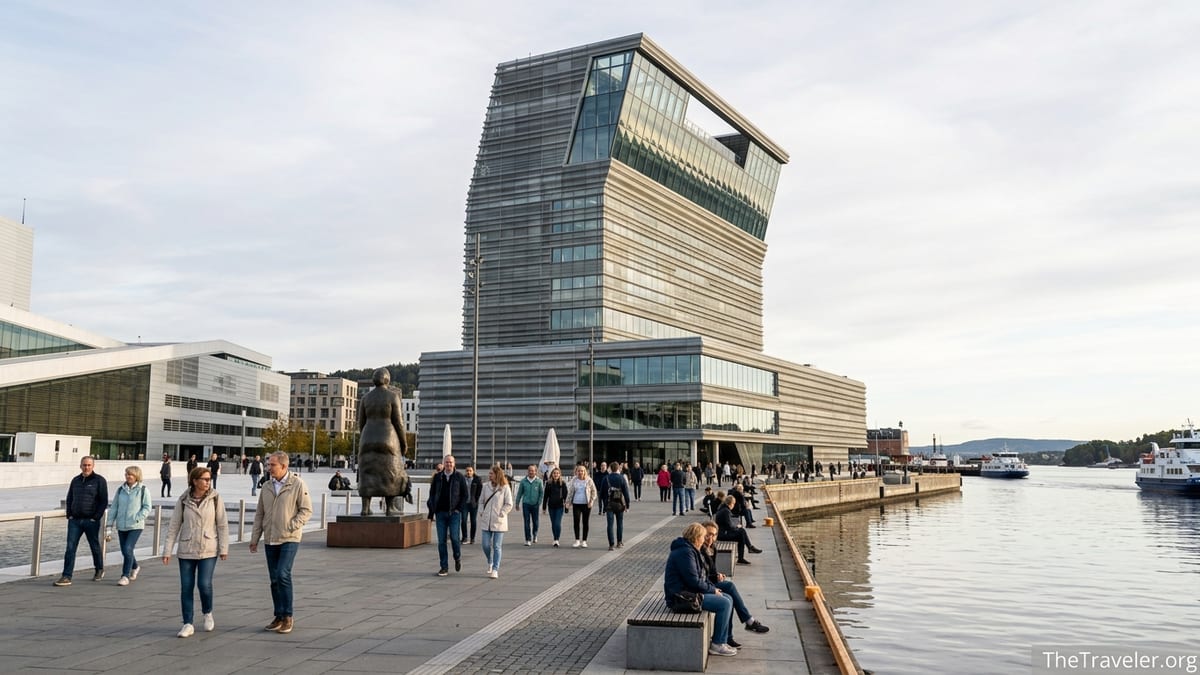
The Munch Museum, branded simply as MUNCH, has become one of Oslo’s headline attractions. Rising above the Bjørvika waterfront opposite the opera house, the 13-story museum houses the world’s largest collection of works by Edvard Munch, including multiple versions of The Scream. A bit of advance planning will help you navigate tickets, crowds, and the building itself so you can focus on the art and the fjord views.
Get the latest updates straight to your inbox!
Where the Munch Museum Is and How to Get There
MUNCH sits in the Bjørvika district on Oslo’s inner harbor, a short walk from Oslo Central Station. From the station, most visitors simply follow the waterfront past the Oslo Opera House; it takes around 5 to 10 minutes on foot at a relaxed pace. The building is hard to miss, with its tilted upper section leaning toward the fjord and big MUNCH lettering visible across the harbor.
Public transport is straightforward for those coming from other parts of the city. The nearest tram and bus stop is Bjørvika, served by several tram and bus lines that connect to neighborhoods such as Grünerløkka and Majorstuen. If you are coming straight from Oslo Airport, the airport train and regional trains both terminate at Oslo Central Station, so you can be at the museum in roughly 30 to 40 minutes from landing, assuming smooth connections.
Travelers who prefer to bike will find that the area around MUNCH is bike friendly, with paths along the harbor and bike racks nearby. In summer, many visitors use Oslo’s city bike scheme to hop between the opera house, the Deichman main library, and the museum, treating Bjørvika as an easy hub for a half-day walking and biking tour.
Driving is possible but not recommended for most visitors. The surrounding area has limited street parking and paid garages, and traffic in central Oslo can be slow at peak times. Unless you already have a car for a larger Norwegian road trip, public transport and walking are usually faster and much less stressful.
Tickets, Opening Hours, and Best Times to Visit
The museum normally opens at 10:00 in the morning, with closing times that vary by season and day of the week. In practice, this means you should always check the latest hours in the weeks before you travel, especially around Norwegian public holidays such as Easter and Christmas, when reduced hours or closures are common. Many travelers plan a late-morning or afternoon visit after spending the early hours exploring the harbor or the nearby opera house roof.
Standard adult tickets are sold as timed entry slots, which help control crowding in the galleries. Prices change occasionally, but you can expect a regular adult ticket to be noticeably more than the cost of a local tram fare and roughly in line with major European art museums. Children usually receive discounted or free admission, and families can often save by opting for family tickets when available. Tickets are commonly delivered as QR codes that you can show on your phone at the entrance, which speeds up entry and means you do not need to print anything.
If you plan to visit several attractions in Oslo in one or two days, the Oslo Pass is worth considering. The pass typically includes free entry to more than 30 attractions, including MUNCH and the nearby National Museum, plus unlimited public transport for 24, 48 or 72 hours. For example, a visitor using a 24-hour pass might see the Munch Museum in the morning, take the public ferry to Bygdøy to visit the Fram or Kon-Tiki museums in the afternoon, and still ride the tram back to their hotel, all on the same card.
To avoid crowds, plan for weekday mornings right at opening, or later in the afternoon from about 15:00. Crowd-tracking services and visitor reports consistently show that Saturdays and rainy summer afternoons are the busiest, especially when cruise ships are in port. The museum also offers free admission on Wednesday evenings between 18:00 and 21:00 outside of the July and August peak; this is popular with locals, so it is free but can be lively and busy.
What to See Inside: From The Scream to Sky-High Galleries
The museum’s permanent exhibitions are spread over multiple floors, so having a loose plan helps. Most visitors want to see The Scream first. MUNCH owns several versions, and at any given time one is typically on display as part of the Edvard Munch Infinite exhibition, which focuses on the artist’s recurring themes and motifs. The exact version and room can change, but staff and signage clearly indicate where to find it on the day you visit.
Beyond The Scream, the building is designed to encourage you to explore chronologically and thematically. Collection exhibitions with titles such as Edvard Munch Horizons, Edvard Munch Monumental, and Edvard Munch Shadows show everything from enormous painted murals to intimate studies of illness, love, and anxiety. These galleries stretch across floors including 4, 6, 7, and 11, so you will likely find yourself going up and down via elevators and escalators as you move between them.
Temporary exhibitions bring in other artists and new angles on Munch. In 2026, for instance, the museum is highlighting a show called Edvard Munch and the Chocolate Factory, which presents large decorative works he created for the Freia chocolate factory, as well as Paula Rego: Dance Among Thorns, a politically engaged exhibition by the influential Portuguese-British artist. Visitors in a given year should check which special exhibitions are running; they are included in the normal ticket but can draw large crowds in their first weeks.
Do not skip the upper floors. Some of the best views are from the higher gallery levels and the rooftop areas, where floor-to-ceiling windows frame the Oslofjord, the opera house, and the islands beyond. Many travelers treat a coffee break upstairs as part of their museum visit, combining an hour of art with a short pause to sit and watch ferries crossing the water below.
Guided Tours, Audio Guides, and Visiting With Kids
MUNCH offers a free audio guide that you can access on your own smartphone. This generally covers key works such as The Scream, Madonna, and The Sick Child, alongside commentary on the building’s architecture and Munch’s life. Because the audio runs through your personal device, it is worth bringing your own headphones or small wired earbuds. The museum’s Wi-Fi network, usually labeled for guests, is free and available throughout the building, which makes it easy to download the guide on arrival.
In addition to audio, the museum runs free or paid guided tours on selected days, often tied to specific exhibitions or themes. For example, you might find a daily English-language highlights tour during the summer season or special focus tours related to current shows like Paula Rego’s exhibition. These can fill up quickly, so it is sensible to check the schedule and arrive at the meeting point a little early if a tour is important to your visit.
Families will find the building more kid-friendly than many expect. The museum has a dedicated public workshop on one of the lower gallery floors, where children can draw, experiment with materials, and respond to what they have seen in the galleries. The workshop is typically included in the ticket price and is set up to allow kids to drop in for short creative sessions rather than committing to a long class.
When visiting with children, consider a two-part strategy: first, pick a few key works to see together, such as The Scream or the large mural rooms, then head to the workshop or the café for a reset. The combination of intense, emotional art and tall, glassy architecture can be overwhelming, so planning snack breaks and short gallery visits tends to make the day more enjoyable for younger visitors.
Food, Drink, and Those Famous Views
Food and drink are part of the MUNCH experience. On the ground floor, MUNCH deli & café offers coffee, pastries, and light lunches, with indoor seating and a terrace overlooking the harbor and the large sculpture The Mother by Tracey Emin in the plaza. This café is convenient both for a pre-visit breakfast and for a quick refuel between galleries, and it does not usually require reservations.
Higher up, the museum hosts a full-service restaurant on the 12th floor, where menus often draw on Norwegian ingredients and traditional dishes that Munch himself might have recognized. Typical options include seasonal fish, game, and vegetarian plates, with prices in line with mid- to upper-range Oslo dining. A main course might cost around what you would pay for a sit-down meal in other Nordic capitals, making it a place many visitors choose for a special lunch rather than a budget stop.
At the top level, a bar space with access to a rooftop terrace serves drinks and small bites, and stays open later than the galleries on selected evenings. This is popular with both locals and travelers, especially in summer when the long evening light glows across the fjord. Ordering a coffee or a glass of wine here can be a simple way to enjoy the architecture even if you are finished with the exhibitions for the day.
Keep in mind that you cannot bring outside food and drink into the galleries, and the museum is strict about protecting the artworks. Baby food and necessary medication are the main exceptions. If you are on a tight budget, many visitors eat a simple picnic on the public benches along the harbor before or after their timed entry and then use the café only for a coffee or dessert.
Practicalities: Bags, Lockers, Accessibility, and Comfort
The Munch Museum has specific rules about what you can carry into the exhibition halls. Backpacks, trolley suitcases, large handbags, and umbrellas are not allowed in the galleries. On arrival you will find a staffed cloakroom and self-service lockers in the lobby, where most visitors store coats and smaller bags. Locker capacity for larger luggage is limited, so it is better not to arrive with full-size suitcases if you can avoid it.
Baby strollers are not permitted inside the exhibition halls either. There is stroller parking near the entrance, and the museum offers baby carriers on loan, which many parents find more convenient when moving through the galleries. On busy weekends, the indoor stroller area can become full, and staff may ask you to park strollers outside under designated shelter.
The building is designed with accessibility in mind. Elevators serve all floors, and accessible toilets are available in the main cloakroom area and on several upper levels, including gallery floors and the restaurant level. Visitors who use wheelchairs or have limited mobility are asked to use the lifts, and the museum encourages others to prioritize elevator space for those who need it most. If you have specific access needs, the information desk in the lobby can provide details on quiet spaces, seating options, and accessible routes between exhibitions.
Comfort is worth considering on such a vertical visit. While you will find benches and occasional portable seats in many galleries, a full circuit of the building can involve a lot of standing. Wearing comfortable shoes, dressing in layers for variable indoor temperatures, and carrying a small bottle of water (consumed outside the galleries) all help. Many travelers pair their visit with a gentle walk along the waterfront afterward rather than another intense sightseeing stop.
Fitting MUNCH Into a Wider Oslo Itinerary
For many travelers, MUNCH is a central piece of a one- or two-day Oslo itinerary. A common pattern for a single day is to start at the Oslo Opera House, walking on the sloping roof and taking in panoramic views over the fjord and the city. From there, you can stroll ten minutes along the harbor to the Munch Museum for a mid-morning or early afternoon visit, then continue to the nearby Deichman main library or take a tram up to neighborhoods such as Grünerløkka for dinner.
With two or three days in the city, MUNCH combines well with the National Museum, which holds a broad collection of Norwegian art and design, and with the cluster of maritime museums on the Bygdøy peninsula, reached by ferry or bus. A traveler using a 48-hour Oslo Pass might, for example, visit MUNCH and the opera house on day one, then spend day two exploring Bygdøy’s Fram and Kon-Tiki museums before finishing at the Holmenkollen ski jump viewpoint.
Season matters. In summer, long daylight hours make evening visits especially rewarding. You could spend a sunny afternoon on the islands of the Oslofjord, return to the city for an early dinner, and then head up to MUNCH for a Wednesday evening free session, catching sunset from the rooftop bar. In winter, many visitors pair the museum with cozy indoor activities such as the Nobel Peace Center or Oslo’s cafés and bakeries, using MUNCH as a warm, light-filled refuge from short days and cold weather.
If you have only a short layover in Oslo, it is still possible to visit. Travelers with a 6- to 8-hour gap between flights sometimes take the airport train into the city, walk to the museum, spend two focused hours in key galleries, and then return to the airport. In that case, buy your timed ticket for about one hour after your scheduled train arrival to allow for delays, and avoid bringing heavy luggage that would complicate use of the museum lockers.
The Takeaway
Planning a visit to Oslo’s Munch Museum is less about strict scheduling and more about understanding how the building, the artworks, and the waterfront setting fit together. Knowing that tickets are timed, large bags must be checked, and The Scream may be in a specific gallery on a specific floor helps you shape a relaxed, confident visit. Choosing your moment, whether a quiet weekday morning or a free Wednesday evening, can make the difference between shuffling through crowded rooms and having time and space to sit with a painting.
Once the key logistics are in place, the museum becomes a flexible, rewarding experience: a place to see world-famous images up close, to discover lesser-known works by Munch and his contemporaries, to watch the light shift over the Oslofjord from a high terrace, or simply to enjoy a coffee above the city. With a bit of foresight, your time at MUNCH will feel like a highlight of your Oslo trip rather than a rushed checkbox, and it can anchor a broader exploration of Norwegian art, history, and landscape.
FAQ
Q1. How long should I plan for a visit to the Munch Museum?
Most visitors spend between two and three hours inside the museum, which is enough to see The Scream, explore a couple of collection floors, and take a short break in the café. Art enthusiasts who want to see every exhibition and attend a tour may want four hours or more.
Q2. Do I need to buy Munch Museum tickets in advance?
Advance purchase is strongly recommended, especially in summer, on weekends, and on days with popular exhibition openings. Timed slots can sell out, and buying ahead secures your preferred entry window. Same-day tickets are sometimes available on quieter weekdays, but relying on walk-up sales can mean waiting for a later time slot.
Q3. Is the Oslo Pass a good deal if I only want to see MUNCH?
If MUNCH is your only paid attraction and you will not use much public transport, a standard ticket is usually simpler. The Oslo Pass becomes good value when you combine MUNCH with other sights such as the National Museum, the Fram Museum, or Holmenkollen, and when you plan several tram, bus, or ferry rides within the pass duration.
Q4. Can I see The Scream every day?
The museum owns several versions of The Scream and typically has one on display as part of its permanent exhibitions. However, particular versions may rotate or be temporarily removed for conservation or loans. If seeing The Scream is essential to your trip, ask staff at the entrance to confirm where it is displayed that day.
Q5. Are there options for food inside the museum?
Yes. MUNCH deli & café on the ground floor offers coffee, pastries, and light meals, while the top floors house a restaurant and bar with more elaborate dishes and panoramic views. Prices are comparable to mid-range Oslo cafés and restaurants, and you do not need to leave the building for a full meal.
Q6. Is the museum suitable for young children?
It can be, with some planning. While some of Munch’s themes are dark and emotionally intense, the museum offers a hands-on workshop space and family-friendly activities. Short gallery visits broken up with creative playtime and snack breaks tend to work well for children of primary school age.
Q7. What should I wear for a visit to MUNCH?
Wear comfortable walking shoes and dress in layers. You may move between warm, busy galleries and cooler open areas with large windows, and you will likely spend quite a bit of time on your feet. Outdoor clothing like heavy coats can be stored in the cloakroom so you do not have to carry them through the exhibitions.
Q8. Is the Munch Museum fully accessible?
Yes, the building is designed to be accessible, with elevators to all floors, accessible toilets on multiple levels, and step-free routes through the main galleries. Visitors using wheelchairs or with reduced mobility are encouraged to use the lifts, and staff at the information desk can advise on the easiest paths and available seating.
Q9. Can I take photos inside the museum?
Photography is generally allowed for personal use in many areas, but flash and tripods are usually prohibited to protect the artworks and avoid disturbing other visitors. Some temporary exhibitions or individual works may have additional restrictions, so always check posted signs and follow staff instructions.
Q10. What is the best way to combine MUNCH with other nearby sights?
A practical plan is to start at the Oslo Opera House, walking on the roof, then continue to MUNCH for your timed entry. Afterward, you can visit the Deichman main library just behind the opera house or stroll along the harbor toward the city center. With more time, use trams or ferries included in the Oslo Pass to reach other major museums like those on Bygdøy.