


Few museums divide opinion quite like MUNCH, Oslo’s waterfront museum dedicated to Edvard Munch. Some travelers come away moved and energized, others feel overwhelmed by the scale or puzzled by the stark architecture. If you are planning a trip to Norway and wondering whether the Munch Museum deserves a place in your itinerary, it helps to know what the experience is really like, what art you will (and will not) see, and how art lovers and general travelers rate it in practice.
Get the latest updates straight to your inbox!
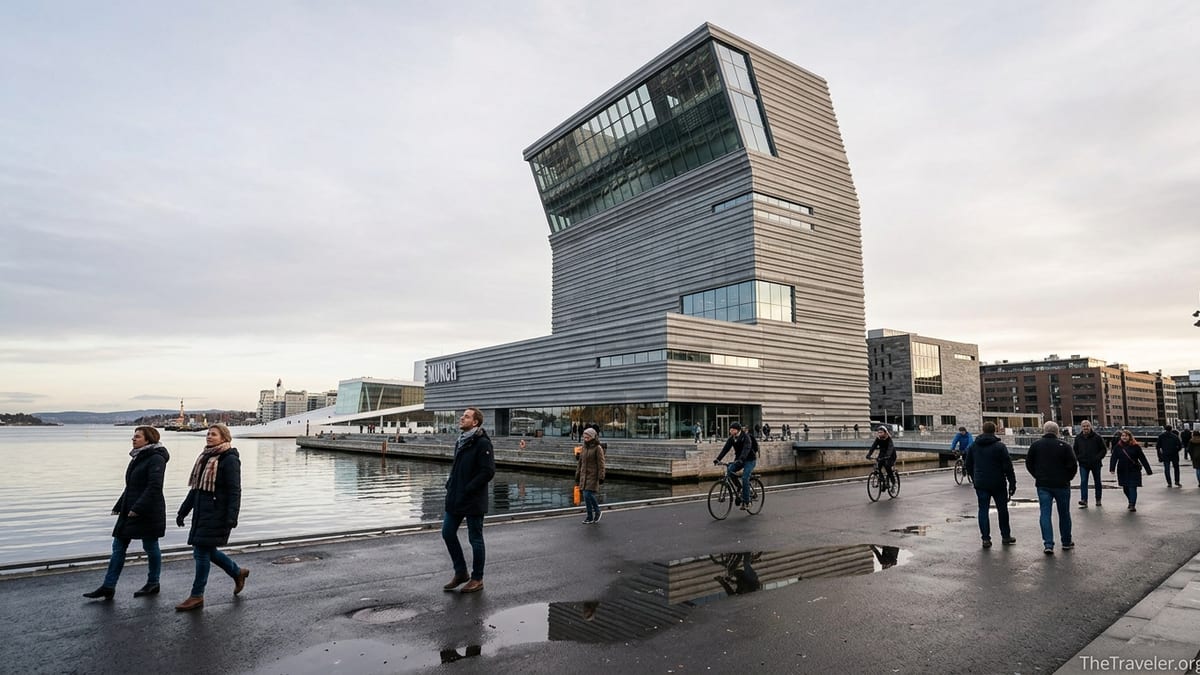
What Exactly Is the Munch Museum Today?
The Munch Museum, branded as MUNCH, is a 13-floor art museum in Oslo’s Bjørvika district, devoted primarily to the life and work of Norwegian painter Edvard Munch. The museum moved here in 2021 from its older, smaller site in Tøyen and now houses the world’s largest collection of Munch’s art, drawn from the vast body of paintings, prints and drawings he left to the city of Oslo in his will. The new building was designed as a full-scale cultural hub, with collection displays, large temporary exhibitions, performance spaces and event venues spread across its vertical tower.
For visitors, this means MUNCH is not a small, one-hour stop. Even a selective visit typically runs two to three hours, and enthusiasts can easily spend most of a day here. On a practical level, it operates like a major city museum: timed tickets are sometimes used for popular events, security screening is standard, and there are multiple cafes, a museum shop and a rooftop terrace folded into the experience.
Most of the time, you can expect several parallel exhibitions that present Munch’s work from different angles. For example, one floor might focus on his early life and bohemian years, another on his more colorful later paintings, and another on his printmaking. Alongside these, the museum usually hosts at least one major exhibition of either international modern art or contemporary artists in dialogue with Munch’s themes of love, anxiety and mortality.
Is It Worth It for Art Lovers?
For art lovers, especially fans of expressionism or psychologically charged painting, MUNCH is usually considered a must-see. The depth of the collection is its strongest argument. Instead of encountering a single famous work surrounded by crowds, you move through rooms filled with variations on Munch’s key motifs: lovers on the shoreline, tense interiors, melancholy figures under moonlight, and, of course, multiple versions of The Scream and related images of existential dread. Seeing these side by side gives a sense of an artist working through ideas obsessively over decades, something you cannot grasp from a single canvas in a mixed collection.
Travelers who know Munch only through reproductions are often surprised by the physical impact of the paintings: the roughness of the brushwork, the thin paint in some areas, and the strange, deliberately skewed perspectives. Many visitors report that works like The Dance of Life or The Sick Child stay with them more than The Scream itself, precisely because the museum provides context and breathing room. If you enjoy studying technique or following an artist’s development chronologically, MUNCH rewards slow looking and repeat visits.
Even those with broader modern-art interests tend to rank the museum highly. It sits comfortably on lists of “must-see” museums in Scandinavia and is frequently compared to single-artist institutions like the Van Gogh Museum in Amsterdam or the Picasso Museum in Barcelona. Visitors who have done that circuit often say MUNCH feels more experimental, both in its display design and in how strongly it leans into the emotional charge of the work rather than biographical trivia alone.
What About the Scream and Other Iconic Works?
Many travelers visit MUNCH primarily to see The Scream, and expectations here can make or break the experience. The museum owns several versions of the motif in different media, but not all are on permanent open display at all times. Light-sensitive works on paper are rotated to protect them, and one famous painted version is held by Norway’s National Museum. This means that while you are very likely to encounter some form of The Scream, it may be a pastel or print rather than the single definitive painting that lives in popular imagination.
Art lovers generally stress that this is not a reason to skip the museum, but it does call for realistic expectations. Travelers who arrive expecting a single climactic moment with a specific version of The Scream sometimes leave disappointed if it is not on view, even though they have seen dozens of equally important works. In practice, the more rewarding approach is to treat The Scream as one chapter in a larger story and let the museum’s curators guide you through Munch’s recurring themes: anxiety on the bridge, jealousy in relationships, the motif of the shoreline, and the tension between city life and nature.
A pragmatic tip is to check current exhibitions on the museum’s official site shortly before you go. The museum usually indicates where you can find The Scream during your visit, and front-of-house staff are used to answering this question. If you are a dedicated fan and seeing a painted version of The Scream is crucial to you, pairing MUNCH with Oslo’s National Museum, which also holds a major version, gives you the best chance of a satisfying encounter.
Architecture, Atmosphere and That Divisive Building
If there is one element of MUNCH that splits opinion more than any other, it is the building itself. The tall, tilting tower of glass and metal looms over Oslo’s modern waterfront and is instantly recognizable. Some travelers and architecture fans admire it as a bold, sculptural statement that fits the city’s new skyline. From the outside, it photographs well from the harbor promenade and from boats crossing the Oslofjord, especially in late-afternoon light when the facade’s panels catch the changing weather.
Others find it cold or even oppressive. The grey cladding and the slightly leaning profile have prompted comparisons to an airport terminal or a giant warehouse. A number of visitors describe the entry experience with its security check, escalators and long corridors as feeling more like boarding a flight than stepping into a traditional museum. If you are sensitive to austere contemporary interiors, this functional, minimal environment may feel less cozy than older European galleries.
Inside, the upside of this architecture is space and views. High ceilings, broad galleries and large windows on the upper floors create a dramatic backdrop to the art. Many travelers call out the panoramic views from the top levels towards the Oslo Opera House, the city center and the fjord as a highlight in itself. On a clear day, stepping out to the upper terrace can feel like a second attraction included in your ticket, and photographers in particular appreciate the vantage point.
Practicalities: Tickets, Time and Crowds
From a value perspective, the Munch Museum is broadly in line with other major European art museums. As of 2026, a standard adult ticket typically falls in the same general price band as admission to flagship institutions in cities like Copenhagen or Amsterdam. Youth, students and seniors often benefit from reduced rates, and children below a certain age usually enter free, making it a reasonably family-friendly option compared with paid attractions such as fjord cruises.
Opening hours vary by season, but in recent years the museum has generally opened from mid-morning until late afternoon or early evening most days, with occasional extended hours linked to events. Travelers who track crowd levels report that weekday mornings and later afternoons outside peak summer months tend to be quieter, while Saturdays, cruise-ship days and school holidays can see long lines at security and busier galleries. Specialized crowd calendars that track wait times show that midday periods, particularly in high season, are when you are most likely to queue, even with a pre-purchased ticket.
Plan at least two to three hours for a first visit, particularly if you want to see more than one Munch-focused floor and have time for a coffee or a look at the view. If you are combining the museum with the nearby Opera House roof walk, the new public library, or a harbor swim at the adjacent urban beach in summer, it becomes an easy full-day itinerary in the Bjørvika area. On wet or cold days, the museum is a comfortable anchor indoors, though you will want a rain jacket or warm layers for the walk from central Oslo.
How General Travelers Rate the Experience
Reactions from non-specialist travelers are mixed but informative. Many who would not describe themselves as “art people” still count MUNCH among the most memorable stops of their Oslo trip. Common positives include the way the museum explains Munch’s life through timelines, photographs and accessible wall texts, and the emotional resonance of rooms devoted to themes like love, illness and anxiety. Several visitors mention entering with only a vague sense of who Munch was and leaving with a much deeper appreciation of his influence on modern art and culture.
At the same time, some travelers feel that the building’s size and the density of the displays can be overwhelming. Without a clear plan or an audio guide, it is easy to drift between floors and end up fatigued before you reach the material that interests you most. Others are underwhelmed if they come expecting a single blockbuster gallery centered on The Scream and find that the museum is instead organized as multiple, more focused exhibitions that require concentration.
Reviews from families are generally positive but emphasize pacing. Parents who have a better experience often set expectations in advance, choosing one or two floors to explore fully rather than trying to see everything. The museum occasionally runs special family trails, hands-on elements or workshops aligned with school holidays, which help younger visitors connect with the art through drawing or storytelling rather than long stretches of quiet gallery time.
Tips to Get the Most Out of Your Visit
Whether the Munch Museum feels “worth it” often comes down to how you approach the day. One helpful strategy is to treat the museum as a layered experience rather than a checklist. Before you arrive, decide on your priorities: perhaps the early Symbolist works, the later landscapes, a temporary exhibition, or simply the building and views. Once inside, use the floor maps to move directly to those areas first. You can always circle back if you have spare energy.
Many art lovers recommend renting an audio guide or joining a short introductory tour if available. These tend to frame Munch’s life and recurring symbols in a way that keeps the galleries from feeling repetitive. For example, understanding how his childhood losses and periods of anxiety shaped works like The Sick Child or Anxiety can transform how you see entire rooms of paintings on similar themes. After such an introduction, exploring at your own pace is usually more rewarding.
On a practical note, comfortable shoes matter more here than in some smaller museums. The vertical layout means a lot of time on escalators and in elevators, plus walking long corridors. Breaks in one of the cafes or at the rooftop terrace help avoid museum fatigue. If you are budget-conscious, you might opt for a simple coffee and pastry rather than a full meal; prices in the building are in line with Oslo’s generally high cost of living.
The Takeaway
So, is the Munch Museum worth visiting? For most art lovers, the answer is a clear yes. The chance to immerse yourself in the world’s largest Munch collection, seeing his most famous motifs evolve across paintings, prints and drawings, is rare and powerful. The museum’s combination of ambitious architecture, strong programming and layered exhibitions makes it one of the most distinctive single-artist institutions in Europe.
For general travelers with limited time in Oslo, the calculation is more nuanced. If you enjoy museums, scenic viewpoints and contemporary architecture, MUNCH will likely feel like good value for an afternoon, especially when combined with a stroll around the harborfront. If you are indifferent to art museums and mainly interested in outdoor nature experiences, you might prefer to prioritize hikes, island ferries or the nearby Ekebergparken sculpture park and keep your Munch encounter to a shorter stop at the National Museum instead.
The key is to align the museum with your interests and manage expectations. Do not go solely for a single view of The Scream; go for the broader story of how one artist wrestled with love, fear and modern life, in a building that has become part of Oslo’s evolving identity. Approached on those terms, MUNCH often turns skeptics into surprised admirers.
FAQ
Q1. Where is the Munch Museum located in Oslo?
The Munch Museum, branded as MUNCH, stands in the Bjørvika waterfront district, a short walk from Oslo Central Station and near the Opera House.
Q2. How much time should I plan for a visit?
Most visitors are comfortable with two to three hours inside the museum, though dedicated art lovers can easily spend half a day if they explore multiple floors.
Q3. Is The Scream always on display at the Munch Museum?
The museum owns several versions of The Scream, but light-sensitive works are rotated, and one major painted version is held by the National Museum, so displays can vary.
Q4. Do I need to buy tickets in advance?
Buying tickets in advance is recommended in peak seasons, on weekends and for special exhibitions, as this helps you avoid longer lines at the entrance.
Q5. Is the Munch Museum suitable for children?
Yes, but it is best to choose a few floors and keep visits focused. Family-friendly materials and occasional activities help younger visitors engage with the art.
Q6. What are typical opening hours?
Hours vary by season, but in recent years the museum has generally opened from mid-morning to late afternoon or early evening on most days, with some extended hours for events.
Q7. Can I visit the rooftop terrace without seeing the exhibitions?
Access to the terrace is typically included as part of the regular museum visit, and most travelers reach it via the same ticket used for the exhibitions.
Q8. Are there places to eat inside the museum?
Yes, the museum includes cafes and dining options where you can buy coffee, snacks or meals, though prices reflect Oslo’s generally high cost of living.
Q9. Is the museum accessible for visitors with mobility issues?
The building is designed with elevators, ramps and accessible facilities, and staff can assist with directions to step-free routes and accessible restrooms.
Q10. Is the Munch Museum worth visiting if I am not an art expert?
Many non-experts find the museum moving and memorable, especially when they use an audio guide or tour; however, those uninterested in art may prefer to prioritize outdoor activities.