


More news on this day
Spain’s Plus Ultra Líneas Aéreas is withdrawing all scheduled flights to Bogotá and Cartagena for the remainder of 2026, a move that removes a niche transatlantic link and tightens already competitive air capacity between Spain and Colombia.
Get the latest news straight to your inbox!
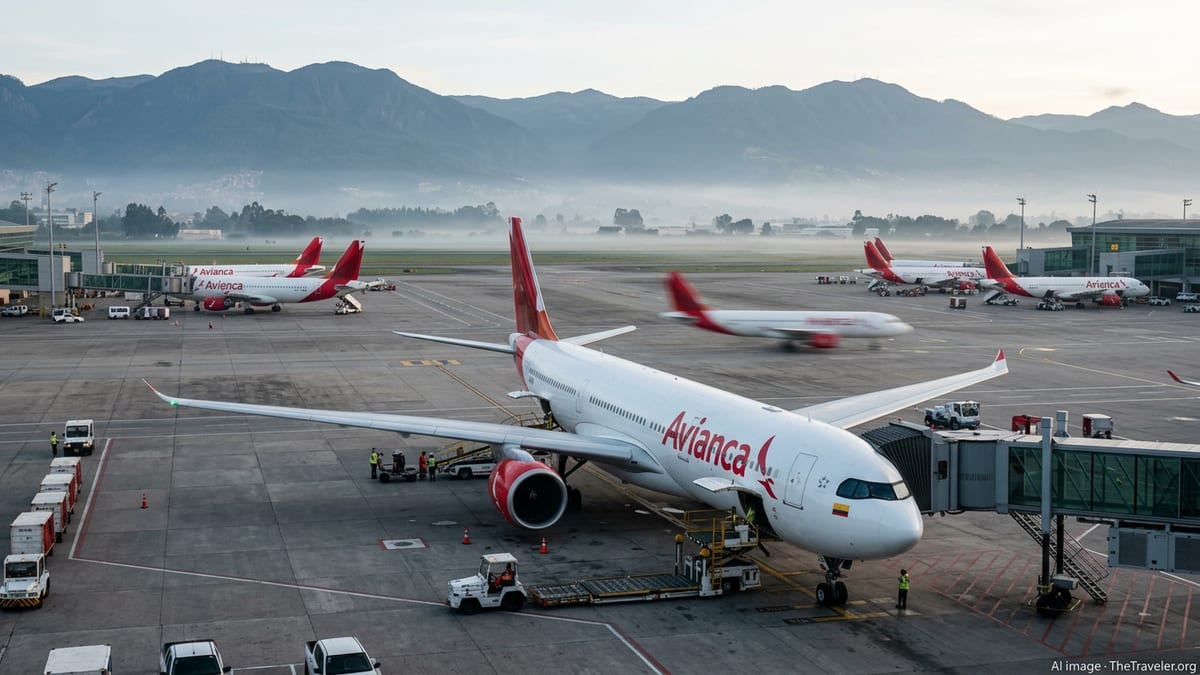
From Growth Story to Sudden Pullback
The retreat comes only months after Plus Ultra expanded in Colombia, using Cartagena de Indias as a strategic gateway for traffic between Madrid and destinations across the Caribbean and Central America. Earlier schedule data and trade coverage showed the airline operating up to nine weekly frequencies to the country, combining services to Bogotá and Cartagena.
Publicly available information indicates that the carrier had recently shifted its Colombia program away from a triangular Madrid–Bogotá–Cartagena routing to a mix of nonstop and tag-on services. Cartagena gained a dedicated weekly nonstop rotation from Madrid, while Bogotá flights were paired with Caracas as part of an efficiency-focused triangle.
Despite those adjustments, which were positioned as a way to optimize connectivity and preserve the Spain–Colombia link, Plus Ultra has now opted to suspend all Colombia operations starting in early June 2026. Industry-focused analyses describe the change as a temporary suspension, but no firm restart date has been placed in schedules for the remainder of the year.
The reversal underscores how quickly regional network strategies can shift when long-haul costs rise and demand patterns evolve. What was recently framed as a strengthening of Colombia capacity has turned into a full withdrawal for the rest of the Northern summer and upcoming winter seasons.
Fuel Costs and Market Pressures Behind the Decision
Aviation trade outlets report that Plus Ultra’s suspension of Colombia routes is closely tied to rising operating costs, particularly jet fuel prices influenced by instability in the Middle East. Long-haul routes such as Madrid–Bogotá and Madrid–Cartagena are especially sensitive to fuel volatility because they operate with widebody aircraft and depend on sustained load factors to remain profitable.
Coverage in European business media points to Colombia-specific challenges that further complicate the economics of these flights. Higher fuel prices in the local market compared with neighboring countries, along with elevated taxes and airport charges, are cited as structural factors weighing on the viability of Spain–Colombia services for a smaller, long-haul focused airline.
Plus Ultra’s published network plans for the second half of 2026 suggest a redeployment of aircraft toward markets that are perceived to offer stronger yields or more favorable cost conditions, notably Venezuela and Peru, along with new growth in Argentina. In that context, Colombia appears as a casualty of a broader capacity reshuffle rather than an isolated retreat.
For carriers with relatively small fleets, such reallocation decisions can be decisive. With only a handful of Airbus A330s covering its intercontinental network, Plus Ultra’s choice to exit Colombia in 2026 effectively channels scarce widebody capacity into fewer, potentially more profitable long-haul corridors.
Impact on Spain–Colombia Connectivity
Even though Plus Ultra was not the largest player on Spain–Colombia routes, its withdrawal removes an alternative for travelers and for smaller markets relying on Cartagena as a connecting point. The airline had carved out a role as the fourth operator between Spain and Bogotá, after larger incumbents such as Iberia, Avianca and Air Europa, adding competition on fares and schedules.
With Plus Ultra’s departure, the bulk of non-stop capacity between Spain and Colombia will be concentrated among those major carriers. Air service analysts note that this could reduce choice on specific days and time bands, particularly for travelers who favored Plus Ultra’s routing via Cartagena or the combined Bogotá–Caracas triangle.
For Colombia’s Caribbean coast, the loss is especially tangible. Cartagena had been promoted as a rising transatlantic entry point, boosted by Plus Ultra’s expanded frequencies and use as a springboard toward the wider Caribbean. Removing that Madrid link for the rest of 2026 may slow momentum for the city’s ambitions as a long-haul hub, at least in the short term.
On the Spain side, the change marginally thins the portfolio of Latin American destinations offered from Madrid-Barajas by a Spanish long-haul specialist. The remaining Colombia capacity in 2026 will largely rest on network airlines able to blend point-to-point demand with connecting traffic from across Europe and beyond.
What Passengers Can Expect in 2026
According to reports in the aviation press, Plus Ultra intends to handle affected passengers through ticket changes, rebooking on alternative routes where possible, and refunds in line with prevailing consumer protection rules. Travel agencies and tour operators accustomed to packaging Spain–Colombia itineraries with the carrier’s services are being directed toward options on other airlines for departures after the early June cutoff.
Travelers who had booked itineraries involving both Bogotá and Cartagena on the same Plus Ultra ticket will see the greatest disruption, as the airline’s triangular and tag-on flights previously made it straightforward to combine both cities in a single trip. In 2026, those multi-city journeys will likely require mixed-carrier tickets or domestic connections within Colombia.
Prospective passengers are being encouraged by industry commentators to pay close attention to schedule updates and contact their booking channels to verify whether their flights are still operating. Given the complexity of long-haul network changes, some departure dates around the transition period in June 2026 may involve equipment changes or rerouting even before the full suspension takes effect.
Travel planners highlight that travelers looking for Spain–Colombia options in late 2026 should compare offerings across Iberia, Avianca, Air Europa and other connecting carriers via European hubs. While total capacity is reduced by the loss of Plus Ultra, multiple one-stop combinations remain available between secondary Spanish cities and Colombian destinations via Madrid and other European gateways.
Broader Signals for Transatlantic Niche Carriers
Plus Ultra’s decision to cancel its 2026 flights to Bogotá and Cartagena is being watched as a barometer for the resilience of smaller transatlantic specialists. The move illustrates how exposed such carriers are to shifts in fuel prices, regional taxes and airport costs, as well as competitive pressure from larger network airlines.
Analysts note that recent years have seen several niche long-haul operators fine-tune or scale back their Latin American portfolios as global conditions change. Adjustments range from frequency reductions and seasonal suspensions to complete withdrawals from particular country pairs when profitability cannot be sustained.
For Colombia and Spain, the development underscores the importance of maintaining a balanced mix of large network airlines and smaller competitors to keep fares and connectivity in check. While the immediate impact of Plus Ultra’s suspension may be absorbed by other carriers, the long-term question is whether space remains for mid-sized European airlines to experiment with alternative routings and secondary gateways like Cartagena.
As 2026 progresses, industry observers will be watching to see whether improving macroeconomic conditions or softer fuel prices tempt Plus Ultra or other carriers to revisit Colombia. For now, the removal of Plus Ultra’s Bogotá and Cartagena flights from the 2026 schedules stands as a reminder that transatlantic connectivity can change rapidly under cost and competitive pressure.