


More news on this day
Port Canaveral is accelerating its build-out as a leading U.S. cruise gateway, moving ahead with a major expansion of Cruise Terminal 5 and a 13-story parking garage designed to absorb rising passenger volumes and larger ships homeporting at the Central Florida facility.
Get the latest news straight to your inbox!
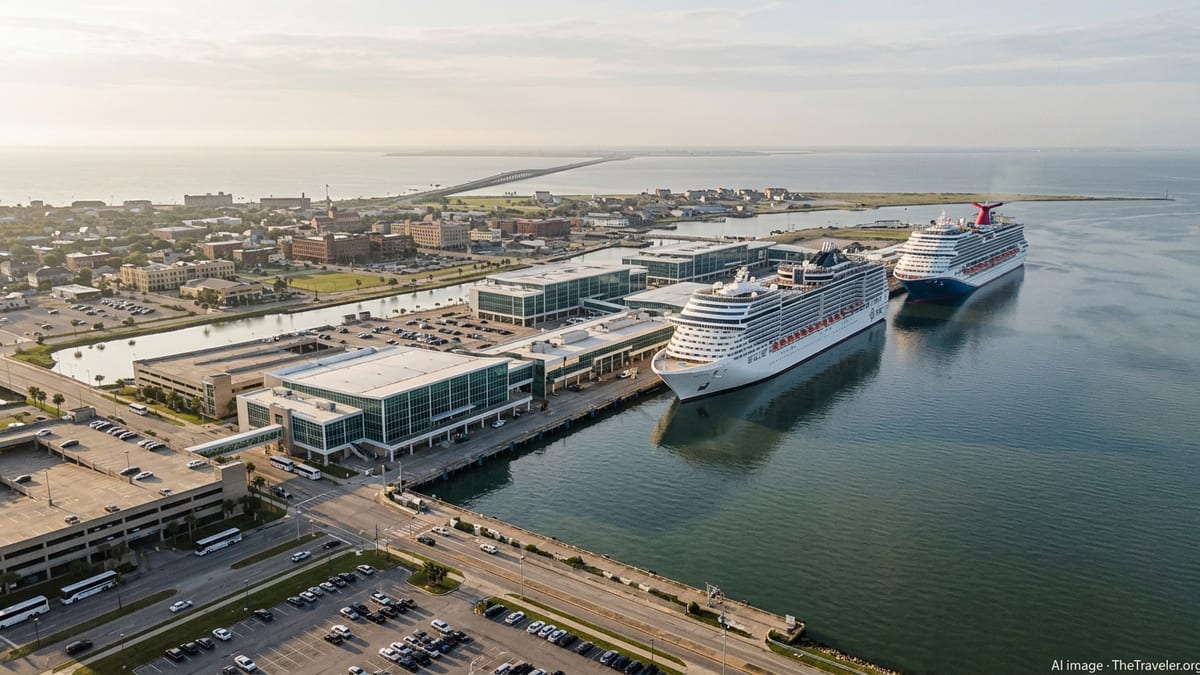
Terminal 5 Set to Nearly Double in Size
According to published project descriptions and recent industry coverage, the Cruise Terminal 5 building is being expanded from roughly 90,000 to about 170,000 square feet, almost doubling its interior space. The enlarged footprint is intended to handle so-called mega-ships that can carry more than 5,000 passengers at peak capacity.
Planning documents indicate that the terminal program includes additional security screening lanes, more check-in and queuing space, expanded seating and upgraded baggage handling areas. The aim is to reduce pinch points during the busiest arrival and departure waves while maintaining quick turnaround times between sailings.
Publicly available information shows that the Cruise Terminal 5 expansion carries an estimated price tag of about 78 million dollars and is scheduled to reach completion in December 2026, keeping the facility open to ship traffic while work proceeds. Reports indicate this is part of a broader multi-year capital plan to align Canaveral’s infrastructure with the latest generation of cruise vessels.
The build-out at Terminal 5 follows earlier investments at other facilities across the port, which has grown into one of the world’s busiest cruise hubs by passenger count. The current round of construction is described as a response to both long-term booking growth and specific deployment decisions by major cruise brands.
New 13-Story Garage Targets Drive-In Demand
Parallel to the terminal expansion, Port Canaveral is constructing a new 13-story parking garage near Cruise Terminals 5 and 6, characterized in port materials and cruise-industry reports as the largest and most complex parking project in the port’s history. The structure is budgeted at approximately 93 million dollars and will replace an older garage within the same general footprint.
Capital project updates from the Canaveral Port Authority describe the garage as a multi-level facility that will add more than 3,700 parking spaces, substantially increasing capacity for drive-in cruisers. The project is being delivered with port funds and is structured to keep existing operations functioning while the new building rises.
The design is intended to support Port Canaveral’s heavily regional customer base, with many passengers driving from across Florida and neighboring states. Industry commentary notes that more than four out of five cruise guests at the port typically arrive in their own vehicles, creating sustained demand for on-site parking directly adjacent to embarkation terminals.
In addition to more stalls, the new garage is expected to incorporate updated payment and access systems that reflect broader changes underway across port parking operations, including pay-on-entry models and expanded use of contactless payment options.
Construction Phasing While Ships Keep Sailing
Project summaries and recent cruise media coverage emphasize that the Cruise Terminal 5 expansion and associated parking improvements are being carried out under a “building while sailing” approach. That means ships continue to use the terminal during construction, with temporary adjustments to traffic flows and passenger pathways around active work zones.
Port planning documents outline phased demolition and construction steps to maintain sufficient parking inventory during the build. The existing garage serving Terminals 5 and 6 is being removed in stages, with temporary lots and revised circulation patterns used to keep embarkation and debarkation running on typical schedules.
Reports aimed at cruise passengers indicate that travelers may encounter modified walking routes, additional wayfinding signage and active traffic control on peak days while the project advances. However, the long-term intent is to deliver more direct connections from parking to the terminal, with covered walkways and additional vertical circulation to move people more efficiently.
The phasing strategy reflects broader trends at major cruise ports, where infrastructure upgrades must be balanced against full or near-full berthing calendars. For Port Canaveral, which handles multiple large-ship turnarounds on the same day, minimizing disruption has become a central part of project planning.
Part of a Wider Capacity and Mobility Program
The Cruise Terminal 5 expansion and 13-story garage form a core element of a wider capacity program that also includes work at Cruise Terminal 10 and other landside areas. Procurement documents for separate projects reference additional queuing space, baggage facilities and roadway improvements designed to streamline traffic flow around key berths.
Regional planning and port communications frame these investments as preparation for continued growth in Florida’s cruise sector, including the homeporting of larger ships and the entry of new brands. With passenger counts already rebounding and surpassing prior records in parts of the industry, Canaveral’s build-out is positioned as both catch-up and future-proofing.
Industry observers note that the combination of terminal expansion, structured parking and updated access roads is intended to reduce congestion during peak turnover windows. By increasing processing space and separating different vehicle types more clearly, planners aim to shorten curbside dwell times and improve overall throughput.
The emphasis on parking supply and circulation also reflects competition among Florida cruise ports, several of which are advancing or studying similar mobility and terminal projects. Port Canaveral’s decision to commit substantial capital to a single, high-capacity garage near Terminals 5 and 6 underscores how central the drive-to market has become to its business model.
Implications for Cruise Travelers and the Local Economy
For cruise passengers, the most visible changes in the coming years are expected to be larger, more open terminal interiors at Cruise Terminal 5 and a significantly taller parking structure within walking distance of the ship. Once complete, the projects are anticipated to offer more check-in stations, expanded security screening areas and a wider choice of covered parking spaces.
In the near term, travelers are being advised in consumer-focused coverage to allow extra time for embarkation while construction is active, particularly on days when multiple terminals are turning ships. Updated signage, temporary detours and modified entry lanes are likely to remain in place intermittently as work progresses toward the targeted late-2026 completion window.
Local economic analysts point to the expansion as another signal of the port’s role as a major tourism engine for Central Florida, supporting jobs in transportation, hospitality, retail and ship services. Higher passenger throughput at Cruise Terminal 5, coupled with greater parking capacity, is expected to boost spending in and around the port district and the wider Space Coast region.
As Port Canaveral advances its Cruise Terminal 5 and parking program, the combination of larger terminal space, a 13-story garage and supporting mobility upgrades is set to reshape the passenger experience at one of the world’s busiest cruise ports, reinforcing its position in a competitive global cruise market.