


More news on this day
Air travel across Europe has been hit by a fresh wave of disruption as a combination of severe weather, air traffic control restrictions and ongoing labor disputes has triggered 91 flight cancellations and at least 1,457 delays in a single day, affecting major hubs in Germany, Austria, Bulgaria, Switzerland and beyond.
Get the latest news straight to your inbox!
Major Carriers Hit as Disruptions Radiate Across the Continent
Publicly available flight tracking data for Europe on Monday shows a heavily disrupted network, with cancellations and delays concentrated around Germany, Austria, Bulgaria and Switzerland and knock-on effects across neighboring countries. The figures indicate that at least 91 flights were cancelled across the region while more than 1,450 were delayed, affecting hundreds of thousands of passengers at the height of the summer holiday season.
Lufthansa and its group partners, including Swiss and Austrian Airlines, appear among the most heavily affected, particularly at their main hubs in Frankfurt, Munich, Vienna and Zurich. British Airways has also experienced a wave of late-running services into and out of central European airports, with some short haul rotations cut from schedules as operations came under pressure.
The pattern of disruption reflects a mix of challenges. Thunderstorms and low cloud over parts of Germany have recently forced temporary air traffic control restrictions at Frankfurt and Berlin, leading to queues on the ground and in the air and rippling through tightly timed aircraft rotations. Reports from passenger-rights organizations also highlight how even relatively short ground stops can cascade into widespread delays when airports are already operating close to capacity.
In parallel, continuing industrial tensions in parts of the European aviation sector have periodically reduced staffing for both cockpit and cabin crews, especially at legacy carriers. Recent rounds of strikes and strike warnings in Germany have left airlines and passengers bracing for renewed walkouts, amplifying the operational fragility created by weather and congestion.
Germany, Austria, Bulgaria and Switzerland Among the Worst Affected
Germany once again sits at the center of the current disruption. Data and consumer-rights advisories focused on Frankfurt and Berlin indicate that a combination of storms and capacity limits has affected hundreds of flights in the German network in recent days, with many of the latest cancellations and delays attributed to knock-on effects from earlier weather events.
Austria has reported a sharp uptick in late-running services at Vienna, a key transfer point for travelers moving between Western Europe and destinations in Eastern Europe, the Middle East and the Caucasus. Austrian Airlines, part of the Lufthansa Group, has faced tight aircraft and crew rotations as late arrivals compress turnaround times and leave little margin to recover from additional operational issues.
In Bulgaria and Switzerland, the impact is more diffuse but still substantial. Sofia and Varna have seen a series of delayed European services as aircraft arrive late from congested hubs further west. Zurich and Geneva are experiencing their own bottlenecks, particularly on routes to and from Germany and the United Kingdom, where even modest schedule changes can upset carefully planned wave systems for connecting traffic.
Because European airspace is highly interconnected, any bottleneck quickly affects airlines based elsewhere. Carriers operating through Germany and Austria but headquartered in other countries, including British Airways and several low cost operators, have adjusted schedules, rerouted aircraft or trimmed frequencies on select routes to maintain minimum reliability.
Passenger Impact and What Travelers Are Experiencing on the Ground
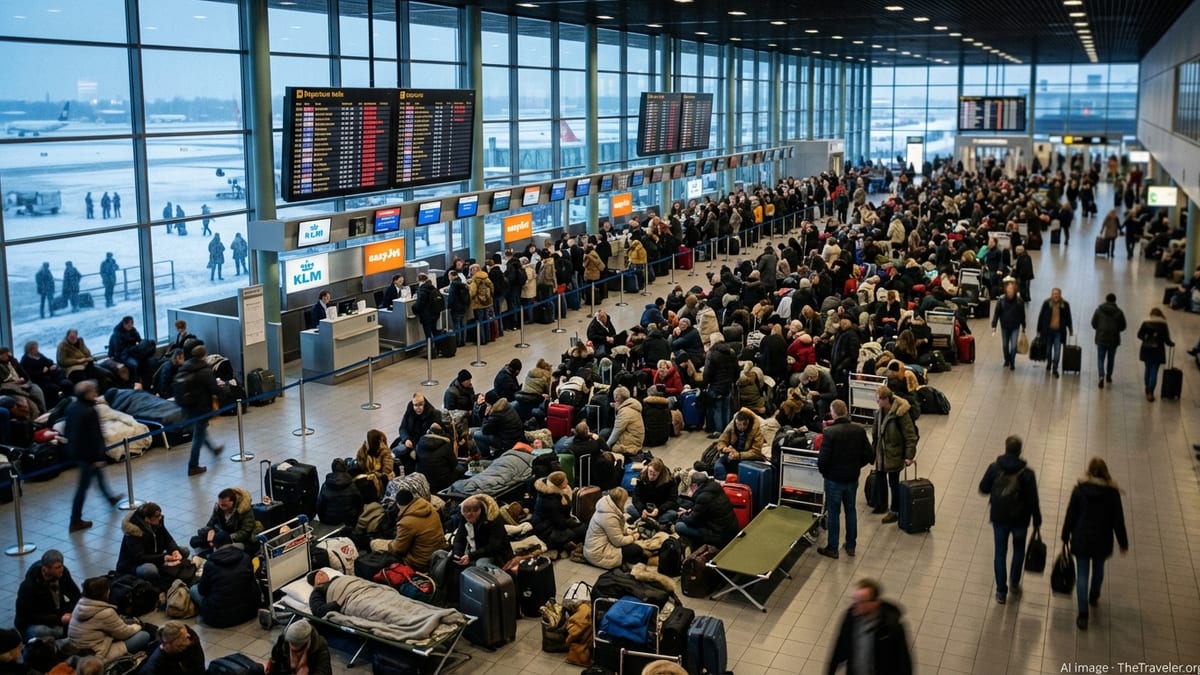
For passengers, the numbers translate into long queues at check in and security, extended waits on the apron, missed connections and last minute changes to itineraries. At major hubs affected by storms and capacity limits, travelers have reported extended boarding holds while aircraft wait for departure slots, followed by diversion of connecting passengers to later flights as banks of inbound services arrive behind schedule.
When cancellations occur, same day rebooking is increasingly difficult during the peak summer period, particularly on popular intra European routes linking leisure destinations and primary business centers. Hotel capacity near airports such as Frankfurt, Munich, Vienna and Zurich can tighten quickly on disruption days, leaving late evening passengers with limited accommodation options.
Consumer advocacy and air passenger rights organizations stress that travelers on flights departing from the European Union, or on EU carriers flying into the bloc, are protected by extensive regulations on care, rebooking and refunds when flights are heavily delayed or cancelled. Public guidance explains that airlines must typically offer meals, refreshments and accommodation when overnight stays become unavoidable, along with re routing or reimbursement options when services are cancelled outright.
However, weather related disruptions are often categorized differently from staffing shortages or technical issues in many regulatory regimes. This can affect whether additional financial compensation is payable on top of care and re routing obligations, and it adds a layer of complexity for passengers attempting to understand their rights after a severely delayed or cancelled flight.
Operational Strains Expose Structural Vulnerabilities
The latest wave of cancellations and delays highlights the structural vulnerabilities of Europe’s aviation system during peak travel months. Many carriers and airports streamlined operations during the pandemic years and have been rebuilding staffing and capacity ever since, leaving limited buffers when several disruptive factors converge at once.
Air navigation services across Europe have also come under pressure. Capacity restrictions in crowded portions of European airspace can require airlines to accept longer routings or speed controls en route, which extend flight times and reduce the number of rotations a single aircraft can operate in a day. When these constraints coincide with localized storms or strong convective activity near major hubs, the risk of widespread delay increases sharply.
Labor relations remain another central risk. In parts of central Europe, wage negotiations and working time disputes involving pilots, cabin crew and ground staff have triggered intermittent stoppages over the last year, resulting in hundreds of cancelled flights on individual strike days. Even when no active walkout is under way, contingency rostering and the need to rebuild aircraft positioning after previous actions can limit flexibility.
Airlines have responded by trimming some frequencies in advance, increasing schedule padding where possible and using larger aircraft on dense routes to move more passengers per flight. However, such measures can only partially offset the compound effect of weather, congestion and staffing challenges when they arise simultaneously.
What Travelers Can Do If Their Flight Is Affected
With punctuality under renewed strain across Europe, travel experts and passenger advocacy groups advise that anyone flying through Germany, Austria, Bulgaria, Switzerland or neighboring countries in the coming days closely monitor the status of their flights. Airline apps and airport information systems often provide the earliest indication of schedule changes, including gate adjustments, rolling delays and aircraft swaps.
Travelers with tight connections are encouraged to consider building in additional buffer time, especially when connecting through major hubs that have recently experienced storms or operational restrictions. Where feasible, some passengers may also look at alternative routings that avoid the most congested transfer points or shift travel to off peak times of day.
Those whose flights are cancelled or severely delayed can typically choose between rebooking at the earliest opportunity or requesting a refund, depending on the fare rules and applicable regulations. Publicly available guidance from airlines and regulators emphasizes the importance of retaining boarding passes, booking confirmations and receipts for meals, hotels or alternative transport arranged during the disruption, as these may be needed when submitting claims.
While the current tally of 91 cancellations and 1,457 delays underscores the intensity of the latest disruption, industry data suggests that volatility has become a recurring feature of European air travel in recent summers. Travelers planning itineraries through the region are therefore being urged by consumer advocates to prepare for potential schedule changes as part of their trip planning, even when no specific storm or strike has yet been announced.