


More news on this day
Travelers heading into the 2026 peak season are being warned to brace for what many are calling “airplane purgatory,” as a tight squeeze on airspace, airport capacity and airline staffing collides with near-record passenger demand.
Get the latest news straight to your inbox!
Record Demand Meets a Constrained System
Publicly available industry forecasts show that global air travel demand is still climbing in 2026, even as the pace of growth moderates compared with the post-pandemic surge. The International Air Transport Association’s latest outlook points to continued gains in passenger traffic alongside historically high load factors, meaning more seats filled on already busy routes. At the same time, reports indicate that airlines are grappling with delayed aircraft deliveries, maintenance bottlenecks and tight labor markets that limit how fast they can add new capacity.
This imbalance leaves carriers operating close to their limits. With planes flying fuller and schedules already dense, any disturbance in the system, from thunderstorms to equipment issues, is more likely to cascade into widespread delays and cancellations. Analysts note that, heading into mid-2026, airlines remain profitable but are relying heavily on high utilization and ancillary fees, both of which depend on keeping aircraft in the air as much as possible. That raises the stakes when disruption strikes.
Recent coverage of traffic trends suggests that North American and European hubs are under particular pressure as leisure and “visiting friends and relatives” travel stay strong. In this environment, the concept of “airplane purgatory” is less about rare, spectacular meltdowns and more about a grinding pattern of missed connections, rolling delays and overnight airport stays that can affect even routine trips.
Air Traffic Control Shortages Extend the Wait
One of the most persistent structural risks in 2026 is the shortage of fully certified air traffic controllers in the United States. Independent analyses of government workforce plans and aviation oversight reports indicate that the national airspace system is still operating with several thousand fewer certified controllers than internal targets call for. This gap has contributed to mandatory overtime, six-day workweeks at major facilities and reduced flexibility when storms or operational disruptions hit.
New workforce plans published in early 2026 revise staffing targets downward and emphasize scheduling changes and technology upgrades as a way to do more with fewer people. Critics quoted across trade publications and specialist aviation outlets argue that this strategy effectively bakes delays into the system, since controllers can safely manage only a finite volume of traffic at once. When staffing is tight, traffic flows must be slowed, creating ground stops, airborne holding and longer taxi times that passengers experience as unexplained delays.
For travelers, the result is less visible than a headline-grabbing shutdown but just as consequential. Flights that might once have departed on time now wait for gaps in the traffic flow, especially during peak hours at congested coastal hubs. Even on clear-weather days, reports from pilot groups and passenger forums describe routine ATC-related delays stretching from a few minutes into hours when combined with gate shortages and crew duty time limits.
Schedule Caps and Congested Hubs
Airport-level constraints are adding another layer to the sense of purgatory. Public documents show that the Federal Aviation Administration has extended caps on arrivals and departures at Newark Liberty International Airport into late 2026, an effort to reduce chronic congestion and knock-on delays in the New York region. Capacity limits at other high-traffic airports, combined with tight runway and gate availability, mean that airlines have less room to recover when a wave of delays hits.
To manage these bottlenecks, carriers have trimmed some frequencies and consolidated flights, but that can leave remaining departures heavily oversold during peak travel periods. When disruptions occur, rebooking options shrink, and passengers may find themselves stranded for many hours awaiting the next available seat. Travel data firms tracking day-of-flight performance this year describe an environment where overall cancellation rates may look moderate on paper, yet a significant share of travelers still experience extended disruptions due to missed connections and rolling delays.
Reports from major hubs across the United States also point to uneven performance among airlines and regional partners. Staffing issues at individual regional carriers, for example, can trigger strings of cancellations on smaller routes that feed big-city airports, leaving passengers stuck mid-journey. In a tightly synchronized network, each of these localized problems can ripple outward, further crowding already busy terminals and stretching airport services.
Security Lines, Shutdowns and the Human Bottleneck
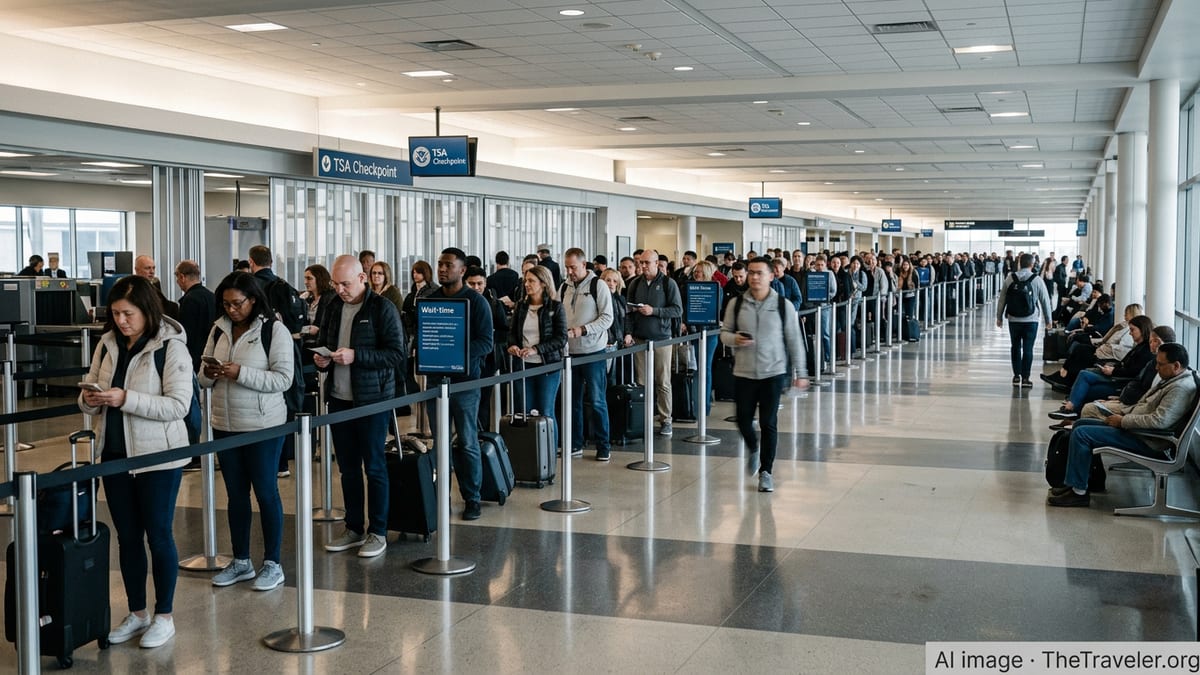
Beyond the cockpit and control tower, staffing shortages at security checkpoints and immigration desks are compounding the pressures. Coverage of the early 2026 federal funding disputes describes long security lines at major U.S. airports during periods when partial government shutdowns and budget uncertainty complicated hiring and scheduling. While core aviation safety functions continued, reduced staffing in passenger-facing roles translated into multi-hour queues, missed flights and crowded gate areas.
Travelers passing through large hubs in the first half of the year encountered what some consumer advocates describe as a “human bottleneck,” where every step of the journey depends on having enough staff in place. If a single link in the chain falters, from check-in counters to baggage handling, the resulting delays can leave passengers idling in terminals or on aircraft waiting for a free gate, unable to disembark.
Industry observers note that even as temporary shutdown-related issues ease, underlying recruitment and retention challenges remain. Security agencies and airport operators are competing in a tight labor market and in some cases struggling to match wages available in less stressful jobs. That reality suggests that, for many travelers, long lines and overworked staff may remain a recurring feature of peak travel days.
What “Airplane Purgatory” Looks Like for Travelers
For passengers, the convergence of high demand, constrained airspace and stretched staffing produces a particular kind of travel experience. Instead of dramatic, systemwide collapses that make headlines, many trips are marked by creeping delays: a boarding time pushed back in 15-minute increments, a plane that leaves the gate only to wait on the taxiway, a missed connection that turns an evening arrival into a night on an airport bench.
Travel behavior surveys conducted in late 2025 and early 2026 suggest that most travelers still report overall satisfaction with their journeys, yet they also show rising frustration with unpredictability and poor communication around delays. Analysts say this reflects a system that is mostly functioning but operating with very little slack. When everything goes right, flights run smoothly; when even one element falters, passengers quickly find themselves in limbo.
Looking ahead through the rest of 2026, aviation forecasts point to continued pressure on the system from fuel costs, infrastructure constraints and geopolitical disruptions, even as growth moderates. For those planning trips, the emerging message from industry data and on-the-ground reports is clear: airplane purgatory is likely to remain a recurring risk, especially during busy holiday weekends and summer peaks, and travelers may need to factor that reality into how they plan and pace their journeys.