


More news on this day
Air travel across the United States faced renewed disruption today as major hubs in New York, Illinois, California, New Jersey, Massachusetts, Texas and Florida reported 182 flight cancellations and 693 delays, unsettling peak summer schedules and stranding thousands of passengers headed for global cities including London, Toronto, Doha, Paris, Tokyo and Mexico City.
Get the latest news straight to your inbox!
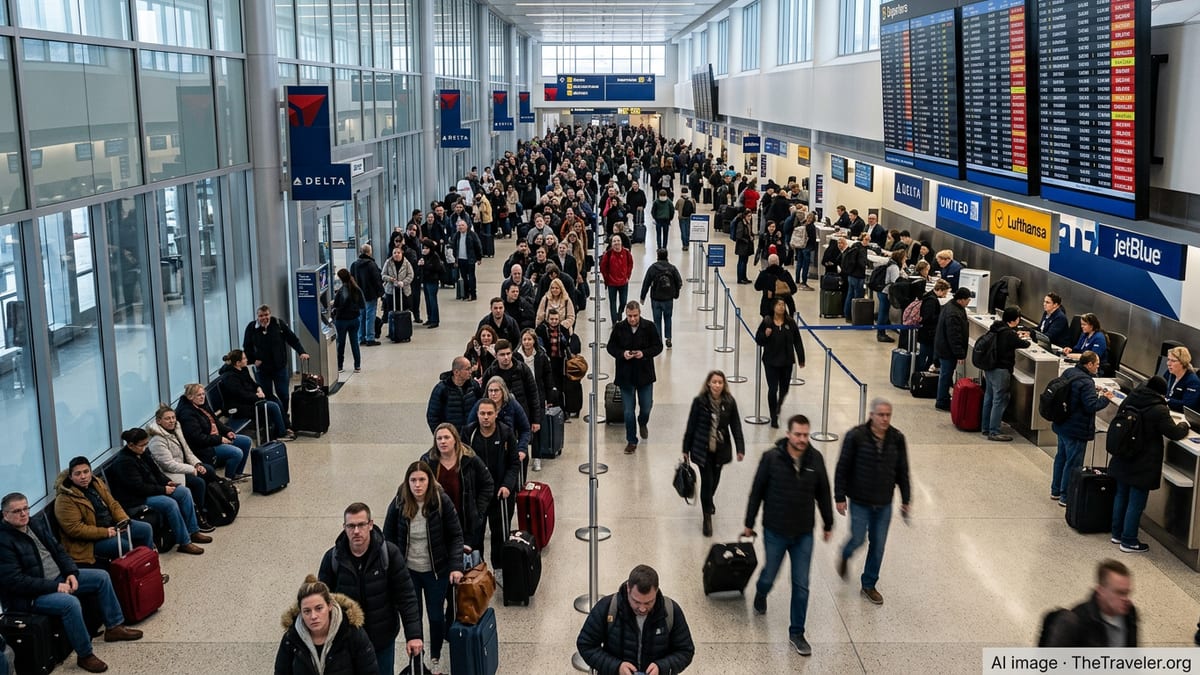
Nationwide Disruption Concentrated in Major Coastal and Sunbelt Hubs
Published data from aviation tracking platforms shows that the bulk of the latest cancellations and delays are clustered at large coastal and Sunbelt hubs, including New York’s JFK and LaGuardia, Chicago O’Hare, Los Angeles International, Newark Liberty, Boston Logan, Dallas Fort Worth and major Florida gateways. These airports serve as primary connectors between domestic routes and long haul services to Europe, the Middle East, Asia and Latin America, magnifying the impact of each schedule change.
The latest figures indicate 182 flights removed from schedules and 693 recorded delays across carriers, a level of disruption that is significant though below the most extreme weather or holiday peaks seen earlier in the year. However, because these interruptions are concentrated in a limited number of high traffic hubs, the ripple effects extend widely across the national network and into international connections.
Travel industry analyses note that passengers flying from or via New York, Chicago, Los Angeles, Dallas, Houston, Miami, Orlando, Tampa and Boston are particularly exposed when operational problems arise. Flights originating in smaller regional cities can quickly be affected when inbound aircraft or flight crews are delayed at these large transfer points, leading in some cases to missed onward services or last minute cancellations.
In this latest wave of disruption, east coast congestion has been closely linked with knock on effects in Texas and Florida, where late arriving aircraft from the northeast have constrained evening departure banks to Mexico, the Caribbean and Central America. Travelers with tight connections have been especially vulnerable, with some facing overnight stays as schedules compress.
International Routes to Europe, Canada, Asia and Mexico Affected
The current disruption is being felt most sharply on heavily booked transatlantic and transpacific services. Long haul flights between US hubs and London, Paris, Doha, Tokyo, Toronto and Mexico City have seen a combination of outright cancellations and extended delays, with some evening departures pushed deep into the night or rescheduled for the following day.
Popular routes from New York area airports to London and Paris, as well as services from Boston and Chicago to key European gateways, have encountered congestion as delayed inbound aircraft missed their scheduled turnaround windows. When accumulated delays near crew duty time limits, airlines sometimes cancel later rotations to avoid regulatory breaches, leaving aircraft and staff out of position for subsequent flights.
Connections to Canada and Mexico have also been affected, particularly services into Toronto and Mexico City that depend on tight turnarounds from busy US hubs. Even when core long haul flights operate, downstream links onward to regional Canadian or Mexican cities can be disrupted if international arrivals land outside their intended connection banks.
Across the Pacific, flights from California and Texas to Tokyo and Doha are sensitive to departure slot availability and crew scheduling. When earlier domestic legs into these hubs run late, airlines can be forced to shorten turnaround times or reassign aircraft, which may result in revised departure times or, in more severe cases, same day cancellations. Passengers on these routes often face the longest rebooking waits because frequencies are lower and seats are heavily booked during the summer peak.
Weather, Congested Airspace and Tight Crew Resources Combine
Reports from aviation operations dashboards point to a combination of localized storms, high traffic volumes and ongoing staffing constraints in parts of the air traffic control and airline workforces as the main drivers behind the latest wave of disruptions. Short lived but intense weather cells around key hubs can trigger ground stops, forcing arriving flights to hold or divert and backing up departures well into subsequent time banks.
Once departure queues form, airports serving dense corridors such as the northeast and the corridor between Texas and Florida often struggle to clear the backlog quickly, particularly during afternoon and evening peaks. Even after skies clear, congestion in surrounding airspace can require aircraft to depart under flow control measures, lengthening taxi times and reducing the number of flights permitted to take off in each hour.
Airlines continue to operate with relatively tight margins in crew availability and aircraft utilization, which leaves little room to absorb extended weather or airspace restrictions. When successive delays accumulate across the day, crews can reach maximum duty hours, forcing carriers to cancel later departures or operate them with substituted aircraft and routing. This in turn contributes to aircraft and staff being out of position for early morning departures on the following day.
Industry analysts highlight that such patterns have become increasingly common during busy travel periods, with moderate weather events or isolated technical problems now more likely to tip networks into widespread disruption. The concentration of long haul capacity at a limited number of coastal hubs means that any interruption at these airports can quickly be felt on intercontinental routes.
Impact on Passengers: Missed Connections and Overnight Strands
For travelers, the most immediate consequences of the latest cancellations and delays are missed connections, rebooked itineraries and, in many cases, unplanned overnight stays. Passengers scheduled to connect from domestic flights in New York, Chicago, Boston, Dallas, Houston or Florida airports onto evening departures to London, Paris, Doha, Tokyo, Toronto or Mexico City have been particularly vulnerable to disruption.
When long haul flights are delayed beyond their connection windows, travelers may find themselves automatically rebooked onto later services or alternative routings, often with additional stops. At times, availability on the same day can be limited, especially on heavily booked transatlantic and transpacific routes, leading to extended layovers or overnight hotel stays near major hubs.
Travel support organizations note that passengers with checked luggage can face additional uncertainty when rerouted. Bags may not always follow revised itineraries at the same pace, particularly when rebooked across partner airlines or alliance networks with differing handling systems. This can result in baggage arriving a day or more after the passenger has reached their final destination.
Families and business travelers on tight schedules are among those most affected, especially when disruption leads to missed events, tours, cruises or meetings at the far end of their journeys. Some travelers are opting to build in longer connection times or schedule critical trips outside the busiest travel days in an attempt to reduce exposure to cascading delays.
Practical Steps for Travelers Navigating the Turmoil
Consumer travel advisers emphasize that real time information and flexible planning remain the most effective tools for dealing with widespread cancellations and delays. Travelers are encouraged to monitor flight status frequently through airline channels and airport information boards, particularly in the 24 hours before departure and on the day of travel, when schedule changes are most likely.
When disruption hits, travelers often have better options if they act quickly. Same day changes to earlier flights on the same route, alternative connections through less congested hubs, or rerouting on alliance partners can sometimes be arranged, particularly for those who engage with digital self service tools or reach airline customer service channels early in the disruption cycle.
Passenger rights vary by jurisdiction and ticket type, especially on routes linking the United States with Europe, Canada, Mexico and Asia, so affected travelers are also reviewing the conditions of carriage and any relevant compensation frameworks. In some cases, particularly for flights touching European Union airports, specific rules may apply regarding care, assistance or financial compensation when cancellations or long delays occur.
With flight networks operating close to capacity during the peak season, travel experts suggest that passengers build additional margin into critical journeys, consider travel insurance that covers delays and missed connections, and keep essential items, medications and a change of clothes in carry on baggage in case checked bags are delayed. While the present wave of 182 cancellations and 693 delays may ease as schedules stabilize, similar episodes are expected to remain a recurring feature of the summer travel landscape.