


For frequent travelers who want to bypass crowded terminals and rigid airline schedules, Nicholas Air has become a recognizable name in the U.S. private aviation market. Headquartered in Oxford, Mississippi, the company positions itself as a boutique, membership-based operator with a young, owned-and-operated fleet and a focus on personalized service. Before you wire a six-figure deposit or move your family’s travel from first class to private, it is worth understanding exactly how Nicholas Air works, what you get for your money, and how it compares to other ways of flying private.
Get the latest updates straight to your inbox!
Who Nicholas Air Is For
Nicholas Air is designed for travelers who fly often enough to be frustrated by commercial schedules, but not so often that they want to buy and manage an entire aircraft. Typical members include business owners traveling between regional cities, families splitting time between multiple homes, and high-net-worth travelers who want predictable access to the same aircraft types. The company operates under Part 135 as a direct air carrier, which means it runs its own fleet rather than primarily brokering third-party aircraft, a key distinction if you value consistent product and training standards.
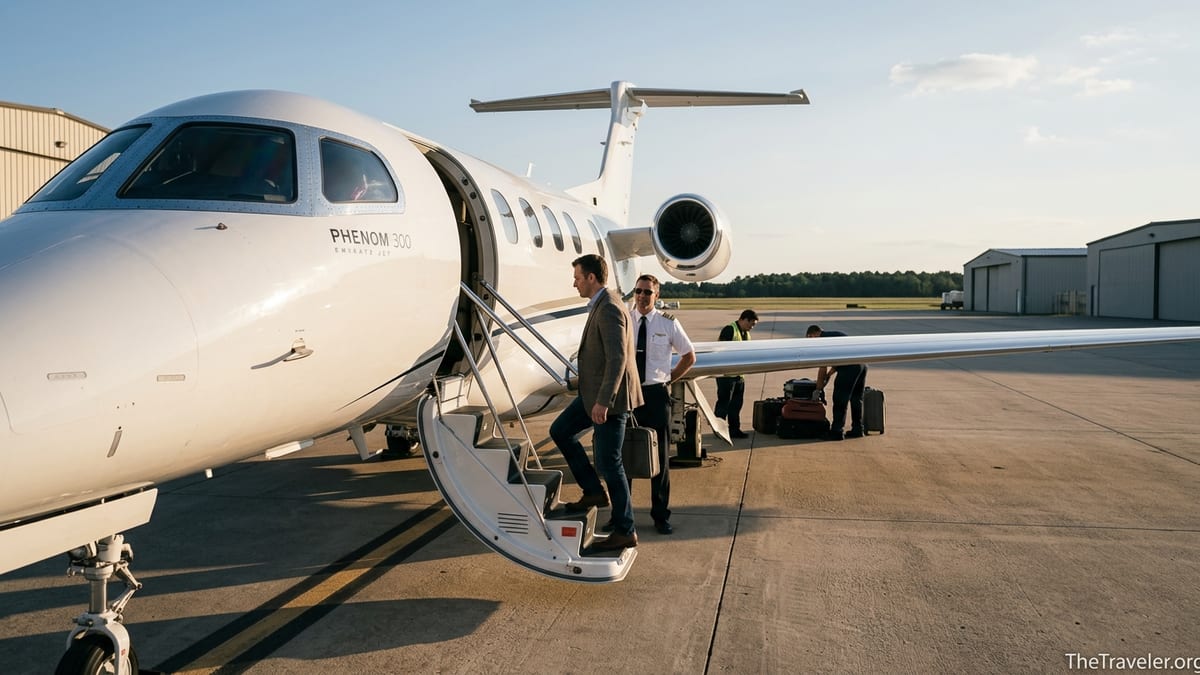
In practice, a Nicholas Air member might be a manufacturing executive based in Birmingham who needs to reach customers in smaller cities like Greenville or Little Rock several times a month. Instead of connecting through Atlanta or Dallas, that traveler can fly non-stop in a Phenom 300E, land at a closer general aviation airport, and be home the same evening. Another common profile is a family with a primary residence in Nashville and a vacation home on 30A in Florida, flying down on Thursday evenings in a Citation Latitude and returning Sunday without worrying about airline change fees or delays.
This model generally makes the most sense once your annual flying reaches roughly 25 to 50 hours, where on-demand charter starts to feel inconsistent or too time-consuming to book, but outright ownership is still hard to justify. Many members also use Nicholas Air as a “step up” from jet charter for a few years to test whether their travel patterns really support more permanent solutions like fractional ownership or purchasing their own aircraft later.
Because Nicholas Air focuses heavily on service and brand positioning, it tends to appeal to travelers who want a consistent, club-like experience rather than chasing the absolute lowest hourly rate. If your priority is to minimize cost at all times, a pure charter broker or a lower-frills jet card provider may be more appropriate.
Fleet, Cabin Experience, and Where You Can Fly
Nicholas Air promotes a modern, standardized fleet that it owns and operates itself. Aircraft commonly highlighted by the company include the Embraer Phenom 100 and 300E, Cessna Citation Latitude, Bombardier Challenger 350, and the long-range Gulfstream G600. Recent industry coverage in outlets like Aviation International News has noted that Nicholas Air has continued adding new Phenom 300E and Latitude jets, reinforcing the brand’s emphasis on younger aircraft and a consistent cabin experience rather than a patchwork of older, chartered airplanes.
For a traveler, the fleet mix translates into different use cases. A Phenom 100 might be used for a short business hop from Atlanta to Charlotte with two passengers and light bags, while a Phenom 300E can take a family of four plus luggage from Dallas to Aspen non-stop. The Citation Latitude and Challenger 350 serve mid-continent and West Coast missions such as New York to Jackson Hole or Chicago to Cabo under the right conditions. At the top end, the Gulfstream G600 can comfortably handle long legs such as Miami to London or Los Angeles to Honolulu, making Nicholas Air relevant for transatlantic or Hawaii trips in addition to domestic flying.
Cabin layouts and finishes are pitched as a step above typical charter. Expect club seating with pull-out tables, a small galley for snacks and drinks, and Wi-Fi on many aircraft types, though you should always confirm connectivity and any usage fees when booking specific flights. Many members use the cabin for true working time: a legal team flying from New Orleans to New York might spread case files across the table and conduct a strategy session in private, with no seatmates or overhead bin announcements to interrupt.
Geographically, Nicholas Air is strongest east of the Rockies, in part because of its Mississippi base and original growth in the Southeast. However, the company markets itself as a national and international provider, and members regularly use aircraft for transcontinental flights or trips into the Caribbean, Canada, and selected European destinations. If you primarily fly California shuttle routes such as Los Angeles to San Francisco or Las Vegas, you will want to ask explicitly about repositioning fees and average aircraft availability in the western U.S. compared with competitors that are based in states like California or Nevada.
Membership Options and How They Actually Work
Nicholas Air offers multiple ways to access its fleet, typically framed as jet cards, jet leases, and fractional jet shares, along with aircraft management for owners. While marketing language can sound similar across the industry, the financial and operational realities are quite different, so it is worth walking through how these structures look for a typical member.
Jet card membership is usually the easiest entry point. In practical terms, a new member might wire a deposit in the low six figures, which converts into a block of flight hours on a specific aircraft category at a fixed hourly rate, plus taxes and certain surcharges. For example, you might purchase 25 hours on a Phenom 300E at a locked-in rate for 18 or 24 months, with a stated minimum call-out time such as 24 hours for domestic trips. Travelers who fly 20 to 40 hours a year often choose this route because it functions much like a debit card: you consume hours as you fly, and when the balance runs low you decide whether to renew.
Lease and fractional share structures are deeper commitments. With a lease, you effectively take exclusive use of a particular aircraft or access category for a defined period, paying a fixed monthly fee plus hourly charges. Fractional shares go further: you buy a piece of an aircraft, often one-sixteenth or one-eighth, which confers a set number of annual hours, typically in the 50-to-100-hour range. In exchange for the larger upfront investment and longer term, you may see lower effective hourly rates and better access guarantees. A regional real estate group that knows it will be on the road nearly every week might opt for a Latitude share to lock in predictable availability to cities across the Midwest and South.
One differentiator Nicholas Air emphasizes is that programs are tailored. Instead of a rigid, one-size-fits-all jet card, the sales team will often structure deposits, term lengths, and aircraft mix around your actual pattern. If your year is split between frequent short hops from Houston to Austin for work and a few longer hauls from Houston to Vail with the family, they might suggest a mix of light and midsize aircraft hours rather than forcing you into a single category. However, the negotiation is bespoke, so the details you secure in your contract are more important than the headline marketing language.
Costs, Hidden Fees, and Real-World Value
Like most membership-based private jet operators, Nicholas Air does not publish a simple price list, and exact numbers vary with aircraft type, commitment level, and contract term. Broadly, effective occupied hourly rates in this part of the market often land in a range that can run from the low thousands of dollars per hour on very light jets to substantially higher figures on large-cabin aircraft. A 25-hour jet card on a light jet might be positioned as an entry-level option for travelers stepping up from first class, while a long-range program on a Gulfstream G600 can quickly reach into mid-six or even seven-figure territory over the life of a contract.
For many prospective members, the critical question is not just “What is the hourly rate?” but “What is included, and what surprises might appear?” Common additional costs in the private jet world include fuel surcharges that adjust with market prices, de-icing in winter, catering beyond standard snacks and drinks, hangar or overnight fees at some smaller airports, and international handling charges for flights into places like the Bahamas or Mexico. With Nicholas Air, you will want to clarify how fuel is handled, whether there are peak-day surcharges around holidays, and what counts as billable taxi time on each flight.
Consider a real-world scenario: a family in Atlanta buying a 25-hour program to shuttle to their lake house in North Carolina most weekends from May through September. On paper, the occupied time for each leg might be around an hour. However, if there are minimum segment charges, positioning legs from another city, or higher Saturday and Sunday rates, the effective cost per trip can rise significantly. A good membership advisor should walk you through sample itineraries from your real calendar, modeling not just the aircraft but the true end-of-year spend with all likely surcharges included.
Compared with on-demand charter, Nicholas Air’s value proposition is predictability. Once you have committed, you generally know the aircraft type, crew standards, and baseline pricing you will face across the year. Travelers who occasionally need a single flight may find better deals through charter brokers that shop each trip across multiple operators. Those who routinely return to the same routes, like New York to Palm Beach or Dallas to Telluride, often conclude that the stability and time savings of a Nicholas Air-style membership justify the premium over piecemeal charter.
Safety, Culture, and What Insiders Say
On paper, Nicholas Air emphasizes safety and training. Company materials highlight that it owns and manages its fleet, that pilots are typically assigned to a single aircraft type, and that crews undergo recurrent training throughout the year, often at established simulator centers. As a Part 135 operator, the company is subject to Federal Aviation Administration oversight, and like many premium operators it seeks to align with or exceed industry audit standards.
However, any serious evaluation of a private aviation provider should go beyond brochures. In Nicholas Air’s case, online forums and pilot communities include a mix of views, with some crew members and industry observers praising the professionalism of individual pilots, and others criticizing aspects of management culture, scheduling pressure, or employment practices. While Reddit threads and anonymous boards do not provide the full picture, they are a reminder that corporate marketing and front-line experiences can diverge.
For prospective members, the actionable takeaway is to ask concrete safety questions during the sales process. For example, you might request written confirmation of pilot minimum experience, how many hours of total time and time in type captains and first officers typically have, and how often crews complete simulator-based recurrent training. You can also ask the company to explain how it handles situations where a captain or crew member calls a safety-related delay or cancellation, and whether pilots are empowered to make conservative decisions without career repercussions. A transparent, confident operator should be comfortable answering these questions directly.
It is also reasonable to request a summary of recent third-party safety audits, insurance coverage levels, and any participation in voluntary safety programs such as safety management systems that go beyond basic regulatory requirements. While you are unlikely to receive proprietary internal reports, the tone and completeness of the answers are a useful indicator of how the company balances sales targets with operational discipline.
How Nicholas Air Compares to Other Private Flying Options
Joining Nicholas Air is only one of several ways to access private aviation, and it is helpful to see where it sits on the spectrum. On one end, you have occasional on-demand charter, where you book each flight through a broker or directly with an operator. This route can work well if you only need a handful of flights a year, but pricing and aircraft quality can vary widely trip to trip. On the other end, you have whole-aircraft ownership, which makes sense primarily for individuals or companies flying several hundred hours a year and willing to take on the complexities of maintenance, crews, and depreciation.
In the middle are membership, jet card, and fractional ownership programs. Nicholas Air lives in this middle ground, competing with brands like NetJets, Flexjet, Wheels Up, and smaller regional card providers. NetJets and Flexjet are larger, with global fleets and long histories in fractional ownership; their programs often involve higher buy-ins but extremely deep infrastructure. Wheels Up has focused on membership and dynamic pricing, attractive for some travelers but subject to evolving business conditions. Nicholas Air differentiates itself by remaining independently owned and by emphasizing a tightly controlled, younger fleet that it operates itself rather than heavily brokering third-party aircraft.
As a practical example, a tech entrepreneur based in Austin might compare a 25-hour Nicholas Air card on a midsize jet with a similar block from a national charter broker and a regional membership program centered on Texas. The broker may quote a lower rate on off-peak days but provide a different operator and aircraft on each trip. The regional program might offer excellent value on routes like Austin to Houston or Dallas but limited options for longer flights to New York or Europe. Nicholas Air, in turn, could provide a consistent cabin experience and coast-to-coast coverage, but with potentially higher minimum commitments.
The right fit depends less on brand prestige and more on hard data from your own travel. Before signing, gather a year of actual or projected trips: where you fly, how many passengers, how much luggage, and what level of schedule flexibility you have. Asking each provider, including Nicholas Air, to price the same set of missions on their program is the most reliable way to see which model delivers the combination of availability, comfort, and cost that matches your reality.
How to Evaluate a Nicholas Air Membership Before You Commit
Given the six-figure nature of many Nicholas Air relationships, it pays to treat the decision with the same rigor you would bring to any significant business contract. Start with a detailed discovery call in which you share your past 12 to 24 months of travel or your best forecast for the year ahead. A strong sales advisor should be able to map your trips to specific aircraft types, estimate annual hours, and explain whether a jet card, lease, or fractional share is likely to be most economical for your pattern.
Next, ask for sample contracts and take the time to review the fine print, ideally with legal and financial advisors if the sums involved are substantial. Pay close attention to terms related to refundability of unused hours or deposits, what happens if the company changes its pricing structure mid-term, and whether the operator has the right to substitute aircraft types or use partner operators under certain circumstances. Clarify how peak days are defined, how far in advance you must book to guarantee aircraft, and what penalties apply if you cancel or change trips at the last minute.
It is also wise to pressure-test the service culture before you sign. If possible, speak with existing members whose flying patterns resemble yours, not just handpicked testimonials. Ask them candidly about response times when plans change, how the company handled irregular operations such as winter storms or mechanical issues, and whether billing matched expectations. Real-world examples, such as how Nicholas Air arranged a last-minute aircraft substitution when an ice storm shut down part of the Southeast, will tell you more than polished marketing slogans.
Finally, consider starting with a smaller, time-limited program if you are new to private aviation altogether. A modest light-jet card for a single season of family travel, such as shuttling between New York and coastal New England over the summer, can be an effective trial. At the end of the term, you will have a concrete sense of whether the service level, aircraft, and culture meet your expectations before committing to a multi-year lease or fractional share.
The Takeaway
Flying privately with Nicholas Air promises a blend of controlled, modern aircraft, personalized service, and flexible membership structures aimed at serious but not necessarily ultra-frequent flyers. For the right traveler, that combination can transform business logistics and family travel, turning three-leg commercial days into efficient, door-to-door journeys that start and end at smaller, calmer airports.
At the same time, a Nicholas Air membership is a major commitment of capital and trust. The company’s polished branding and modern fleet are important, but they should sit alongside clear-eyed questions about safety practices, crew culture, contract terms, and the true all-in cost of flying your actual routes over a full year. Public commentary from pilots and industry observers is mixed, which reinforces the need to do thorough due diligence rather than relying solely on marketing materials.
If you arrive at the process with detailed travel data, a willingness to compare multiple providers, and a list of pointed questions about safety and service, you will be well positioned to decide whether Nicholas Air aligns with your expectations. For some travelers, it will provide exactly the blend of reliability and comfort they are seeking. Others may conclude that on-demand charter, a different membership model, or even continued commercial premium cabins better suit their needs.
Private aviation is ultimately about time, control, and peace of mind. Whether Nicholas Air becomes your partner of choice will depend on how well its particular mix of fleet, culture, and pricing delivers those benefits on the routes and schedules that matter most to you.
FAQ
Q1. What is Nicholas Air in simple terms?
Nicholas Air is a U.S.-based private jet operator that offers membership-style access to its own fleet of business jets, using jet cards, leases, and fractional shares instead of selling individual charter flights one trip at a time.
Q2. How much does it typically cost to join Nicholas Air?
Exact figures vary, but new members commonly commit at least a low six-figure amount for an entry-level jet card on smaller aircraft, with higher deposits or purchase amounts required for larger jets, leases, and fractional shares.
Q3. Does Nicholas Air own its aircraft or broker them from others?
Nicholas Air emphasizes that it owns and operates its core fleet under its own certificate, which allows for more standardized cabins and training than programs that primarily broker third-party aircraft, though it may work with partners in specific situations.
Q4. Where can I fly using a Nicholas Air membership?
Members frequently fly throughout the continental United States, to popular leisure destinations such as Florida and the Rockies, and to nearby international destinations including parts of the Caribbean, Canada, Mexico, and, on long-range aircraft, selected transatlantic routes.
Q5. How far in advance do I need to book flights?
Lead-time requirements depend on the specific program, but many members are asked to provide at least 24 hours’ notice for standard domestic trips, with longer requirements and more restrictions on peak holidays or complex international missions.
Q6. How does Nicholas Air compare to major players like NetJets or Flexjet?
NetJets and Flexjet are larger and heavily focused on fractional ownership, while Nicholas Air is a smaller, independently owned operator that concentrates on a controlled, younger fleet and customized membership structures, appealing to travelers who want a boutique-style experience.
Q7. What should I ask about safety before joining?
It is sensible to ask about pilot minimum experience, how often crews attend simulator-based recurrent training, what third-party safety audits the company participates in, and how management supports pilots who make conservative safety decisions that delay or cancel flights.
Q8. Are there hidden fees beyond the quoted hourly rate?
As with most private aviation programs, you should clarify potential extras such as fuel surcharges, catering beyond standard offerings, de-icing, hangar or overnight fees, and international handling charges so that you understand the true all-in cost of your flying.
Q9. Can I use different aircraft sizes within one Nicholas Air program?
Many members negotiate access to more than one aircraft category, such as a light jet for short business hops and a midsize or super-midsize jet for longer family trips, though the specific mix and pricing depend on how your membership is structured.
Q10. Is Nicholas Air a good fit if I only fly a few times a year?
If you fly fewer than about 15 to 20 hours annually, an on-demand charter arrangement may be more flexible and economical, while Nicholas Air and similar membership programs tend to deliver the best value for travelers with more frequent or predictable private flying needs.