


More news on this day
Passengers on an Emirates Airbus A380 from Dubai to Shanghai say they were left in stifling heat for around 10 hours on the tarmac in China after a diversion, with reports describing failed air conditioning, rising cabin temperatures and several people falling ill before they were finally allowed to disembark.
Get the latest news straight to your inbox!
Overnight diversion turns into hours of discomfort
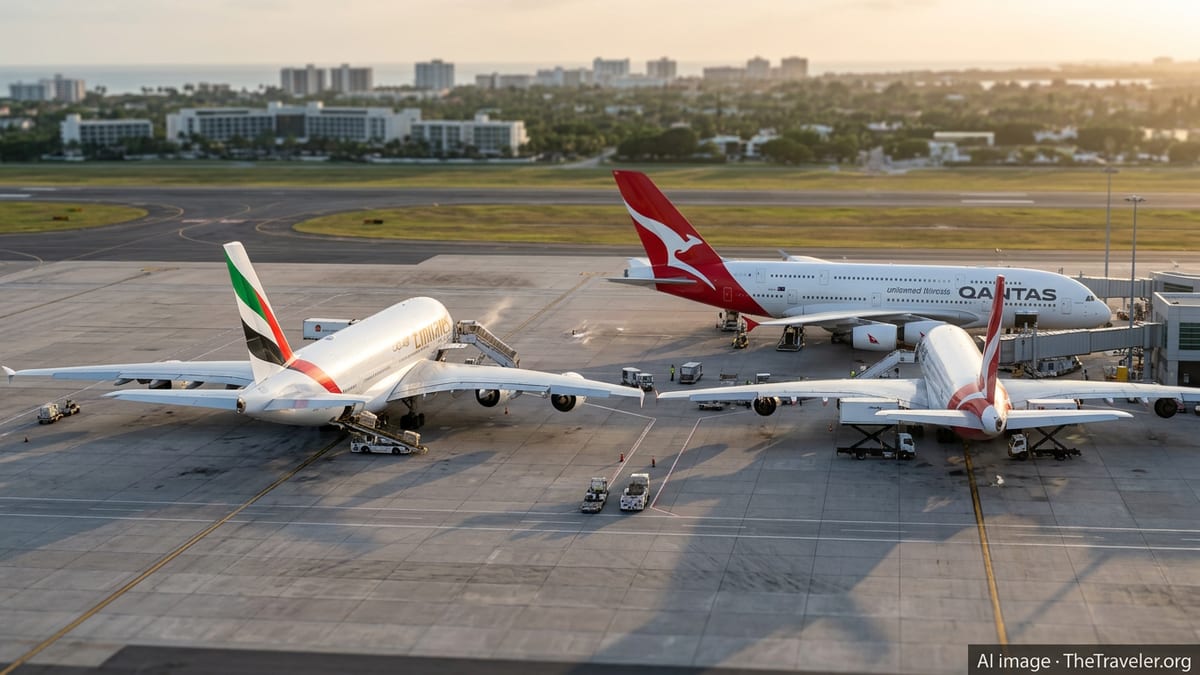
According to multiple media reports, Emirates flight EK302 departed Dubai for Shanghai on July 22 with 373 passengers on board, operated by an Airbus A380. Severe weather near Shanghai reportedly forced the aircraft to divert to Hangzhou, about 175 kilometers southwest of its intended destination.
Coverage from regional outlets indicates that the aircraft landed safely in Hangzhou late at night, but passengers remained on board for an extended period as the carrier and local ground services worked to determine a plan for continuing the journey. What began as a weather-related diversion evolved into a prolonged tarmac delay that stretched into the early hours of the morning.
As the hours passed, social media posts and local reports describe mounting frustration in the cabin, with parents trying to cool children, travelers fanning themselves with safety cards and some passengers pleading to be allowed off the aircraft. Video clips circulated online appear to show crowded aisles, fogged windows and visibly distressed travelers.
Air conditioning failure intensifies tarmac delay
Accounts from passengers and local coverage state that the A380’s air conditioning system did not function properly while the aircraft sat on the ground, turning the double-deck cabin into what some described as an oven-like environment. Temperatures reportedly rose as the night wore on and external ground power or ventilation support proved insufficient to keep the interior cool.
Reports from Chinese and international outlets indicate that at least one passenger fainted and others showed symptoms consistent with heat stress, prompting the arrival of medical staff and local police at the aircraft. Passengers described feeling woozy and dehydrated, with limited access to cool air despite the size of the widebody aircraft.
Images shared on social platforms show passengers using wet towels and improvised fans as they tried to cope with the heat. Some posts describe cabin crew attempting to distribute water and manage the situation, but passengers say the lack of effective cooling made conditions increasingly difficult as the delay approached double digits in hours.
Flight eventually canceled after repeated schedule changes
Published coverage from aviation-focused outlets reports that the onward flight from Hangzhou to Shanghai was rescheduled several times during the night. Initial indications that the aircraft might depart around midnight were later pushed back to approximately 3 a.m., then again to around 4:30 a.m., before the continuation of the journey was ultimately canceled.
After roughly 10 hours on board following the diversion, passengers were eventually allowed to disembark in Hangzhou. Many then faced the additional challenge of rebooking onward travel or securing overnight accommodation, with some describing confusion at the terminal and limited immediate guidance in the early stages after leaving the aircraft.
Some travelers later recounted their experience to local and international media, emphasizing both the physical discomfort caused by the heat and the emotional strain of the uncertainty. Several posts referenced concerns about elderly passengers and families with young children on board, highlighting the particular vulnerability of those groups during extended tarmac delays in high temperatures.
Questions raised over tarmac delays and passenger care
The incident has renewed attention on how airlines manage lengthy tarmac delays and onboard system failures, particularly in hot and humid conditions. Industry guidelines and regulatory frameworks in some jurisdictions place strict limits on how long passengers may be kept on an aircraft without the option to disembark, though rules and enforcement can vary by country.
Emirates publishes a contingency plan for lengthy tarmac delays in markets such as the United States, describing commitments to provide food, water and working lavatories, and to ensure adequate cabin conditions during extended waits. The Hangzhou incident, which occurred outside that regulatory context, has prompted debate online about how such principles should apply when flights are diverted to third countries or face unusual operational constraints.
Aviation observers note that modern widebody aircraft typically rely on either running aircraft systems or robust ground power and air supply to maintain comfortable temperatures when parked. When those inputs are interrupted or insufficient, cabin conditions can deteriorate quickly, especially in regions experiencing summer heat and high humidity.
Emirates under scrutiny as investigation and reviews expected
As details of the EK302 diversion and subsequent delay continue to circulate, industry commentators expect both Emirates and relevant authorities in China to review the sequence of events, including the air conditioning issues, the duration of time passengers remained on board and the coordination between airline, airport and local services.
Emirates is one of the world’s largest operators of the Airbus A380 and routinely highlights the aircraft’s spacious cabins and premium services in its marketing. The reports from Hangzhou stand in stark contrast to that image, with passengers describing a night marked by heat, uncertainty and limited information about when they would be allowed to leave the aircraft.
Travel industry analysts say the incident may feed into wider discussions about passenger rights during irregular operations, particularly as airlines operate at or near full capacity during busy summer travel periods. For travelers, the episode serves as a reminder of both the resilience required when journeys do not go as planned and the importance of clear communication and contingency planning when flights are disrupted in challenging conditions.