


More news on this day
Dozens of flights at Pulkovo and Vnukovo airports were canceled or rerouted in recent days as a fresh round of temporary airspace restrictions triggered widespread airline disruptions stretching from Moscow and St. Petersburg to Minsk, Gelendzhik and other regional hubs.
Get the latest news straight to your inbox!
Wave of Cancellations Centers on Pulkovo and Vnukovo
Publicly available airport boards and local media reports indicate that at least around 40 flights were canceled or heavily disrupted at Moscow’s Vnukovo Airport and St. Petersburg’s Pulkovo Airport within a short window, as both facilities operated under tightened airspace restrictions. A combination of outright cancellations, diversions and extended ground holds left passengers stranded or facing lengthy rebookings.
At Pulkovo, recent disruptions followed a pattern seen throughout the spring, when the airport repeatedly introduced temporary limits on arrivals and departures. Local outlets in St. Petersburg have documented several instances in which operations were either briefly halted or reduced, with dozens of flights removed from departure boards on affected days as aircraft were held in reserve or rerouted to alternate airports.
Vnukovo, one of Moscow’s key international gateways, has also shifted into restricted operating modes at various points, with traffic allowed only under special coordination procedures. In practice, this has meant that scheduled flights have been consolidated or scrubbed entirely when airspace constraints narrowed the available capacity, contributing significantly to the tally of around 40 cancellations linked to the latest disruptions.
The uneven pattern of delays and cancellations has made it difficult for travelers to predict whether flights would operate as planned, particularly on domestic routes that connect smaller regional centers to Moscow and St. Petersburg through Pulkovo and Vnukovo.
Sheremetyevo, Minsk and Southern Hubs Also Affected
The knock-on effect of restrictions has not been limited to Pulkovo and Vnukovo. Moscow’s Sheremetyevo Airport, one of the busiest hubs in the region, has repeatedly appeared in disruption reports, with flights forced into holding patterns, delayed on the ground or shifted to different time slots as airspace corridors were temporarily narrowed.
Further afield, airports in Minsk and across southern Russia, including popular resort gateways such as Gelendzhik, have been drawn into the same pattern of intermittent limitations. Publicly available information shows that services to and from these airports have been periodically curtailed, contributing to a patchwork of cancellations and schedule changes on regional networks.
When Sheremetyevo and Vnukovo simultaneously face capacity restrictions, the impact extends quickly across the broader route map. Carriers often rely on these airports as primary transfer nodes, and constraints at both ends can leave aircraft and crews out of position. This dynamic has led to secondary cancellations on routes that are not themselves covered by direct airspace notices but are dependent on aircraft arriving from affected locations.
Belarusian services through Minsk have likewise seen irregularities when flights are rerouted around restricted zones or subject to last minute timetable revisions. Travelers connecting between Belarus and Russian destinations through Moscow and St. Petersburg have faced especially tight margins and missed connections as airlines adjust operations in real time.
Drone Threats and Temporary Airspace Closures Drive Disruptions
Recent disruptions across Pulkovo, Vnukovo, Sheremetyevo and other airports have unfolded against a backdrop of recurring drone threat alerts and related airspace security measures. Publicly accessible notices and regional coverage point to temporary flight restrictions being imposed near major transport hubs when drone activity or perceived threats are reported in surrounding areas.
In practice, these measures often involve suspending takeoffs and landings for defined periods or restricting movements to flights specifically cleared through aviation authorities and air traffic control. Even short-lived closures can force airlines to cancel rotations when turnarounds become operationally unrealistic or when crews risk exceeding duty-time limits.
In southern Russia, similar patterns have been documented at airports serving resort regions along the Black Sea, including Gelendzhik and nearby hubs. Temporary suspensions of flights into and out of these destinations have periodically coincided with broader regional alerts, multiplying the number of affected passengers during peak travel periods.
While most of these measures are lifted within hours, the sequence of repeated alerts over many weeks has created a cumulative effect. Each new round of restrictions has left airlines with limited flexibility to recover schedules, leading to a growing backlog of stranded passengers and rebooked tickets.
Passengers Face Long Waits, Limited Alternatives
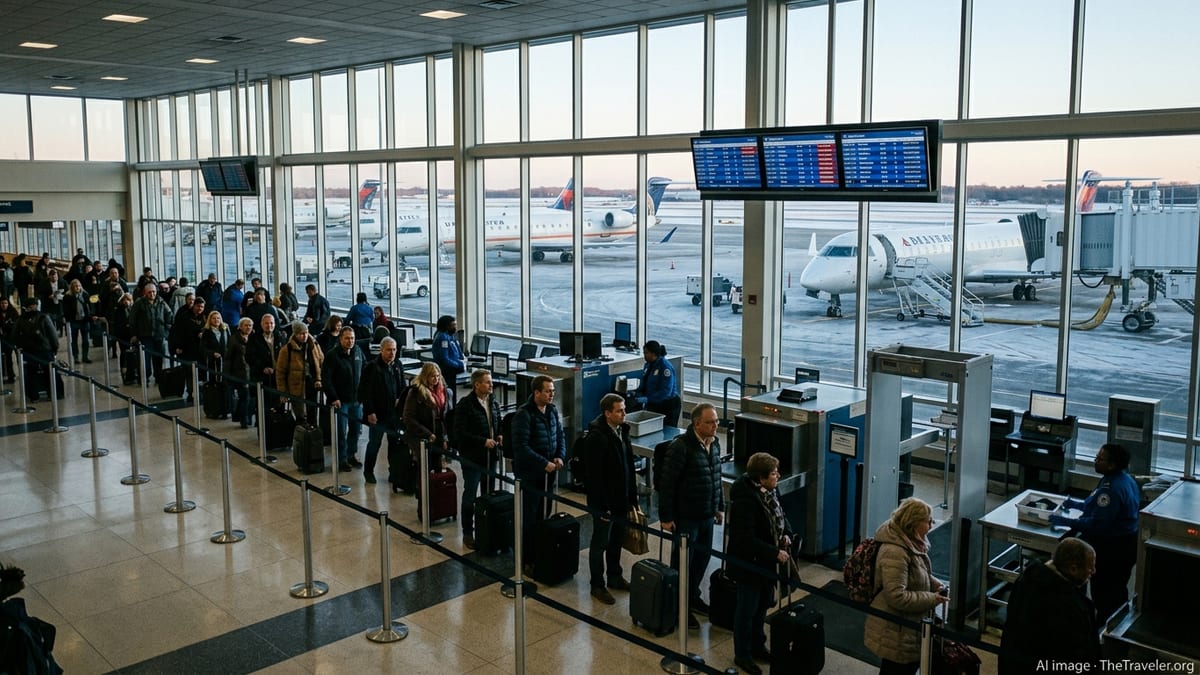
For travelers passing through Pulkovo and Vnukovo, the immediate impact of about 40 cancellations and wider delays has been felt in crowded terminals, long queues at airline counters and limited rebooking options. With multiple airports in the same region affected at once, passengers have had fewer viable alternative routes or nearby hubs to which they could be easily re-accommodated.
Some carriers have attempted to consolidate passengers onto remaining flights, but seat availability has been constrained, particularly on popular domestic routes linking Moscow, St. Petersburg and southern resort cities. Where flights from Gelendzhik or other regional hubs have been curtailed, travelers have often needed to travel overland to larger airports such as Krasnodar or Sochi to continue their journeys.
Publicly available social media posts and local news footage show passengers waiting for hours for updated information, with departure screens cycling through rolling delays and cancellations. The lack of clear timelines for the lifting of temporary restrictions has further complicated planning, as airlines have been reluctant to commit to rapid schedule restorations only to face new alerts.
In Minsk and other linking airports, connecting passengers have at times arrived to find their onward flights to Russian destinations canceled or rescheduled. This has increased demand for last minute hotel accommodation and onward rail or bus travel, especially when extended disruption windows have made same day completion of journeys impossible.
Airlines and Travelers Adjust to a New Operational Reality
As intermittent airspace restrictions continue to affect airports including Pulkovo, Vnukovo, Sheremetyevo, Minsk and Gelendzhik, airlines are increasingly building additional buffers into their timetables. Public schedules show longer planned connection times on some itineraries and more conservative block times on routes that frequently intersect with restricted zones.
Carriers are also adjusting their fleet and crew rotations to account for the risk that aircraft could be grounded unexpectedly at affected airports. This has included positioning extra aircraft at alternative hubs when feasible, or planning for flexible aircraft swaps so that prolonged closures at one location do not immobilize an entire day’s schedule.
For travelers, the new environment has underscored the importance of monitoring flight status closely before heading to the airport and, where possible, selecting itineraries with more generous connection windows. Passenger advocacy groups and travel advisers have highlighted the value of flexible tickets and comprehensive travel insurance on routes that have seen repeated disruptions in recent weeks.
With restrictions being activated and lifted on short notice, there is little indication that the pattern of sporadic cancellations and diversions will end immediately. Instead, industry observers expect airports such as Pulkovo and Vnukovo to continue operating under a heightened level of uncertainty, with travelers across the wider region potentially facing further rounds of sudden changes to their plans.