


More news on this day
Travelers heading to Thailand’s popular island of Koh Samui faced major disruption this week as a cluster of 27 flight cancellations between Bangkok’s Suvarnabhumi Airport and Samui Airport triggered delays, missed connections, and mounting concern over the resilience of a route critical to the country’s tourism economy.
Get the latest news straight to your inbox!
Wave of Cancellations Hits Core Tourism Corridor
Published flight information and local aviation coverage indicate that at least 27 services on the Bangkok–Samui corridor were withdrawn or heavily disrupted within a short time frame, affecting both departures from Suvarnabhumi Airport and arrivals and turnarounds at Samui Airport. The bulk of the affected flights involved Bangkok Airways, which dominates the route and operates most of the limited daily slots into the privately run island airport.
The cancellations were concentrated on domestic rotations that typically shuttle tourists, business travelers, and residents between the capital and the Gulf of Thailand. With many itineraries built on tight connections through Bangkok, the disruption quickly rippled outward, causing missed long haul departures, overnight delays, and unexpected hotel and rebooking costs for passengers.
Suvarnabhumi functions as Thailand’s primary international hub, while Samui Airport is the main gateway to one of the country’s most visited island destinations. Any reduction in flights on this corridor therefore has an outsized impact, particularly during peak holiday periods when load factors are already high and spare seats on alternative services are scarce.
Observers note that the sudden contraction in daily services came at a time when carriers serving Thailand were already adjusting schedules and cutting capacity on some routes in response to operational pressures, lending additional volatility to travel plans built months in advance.
Knock on Effects for Passengers Across Thailand
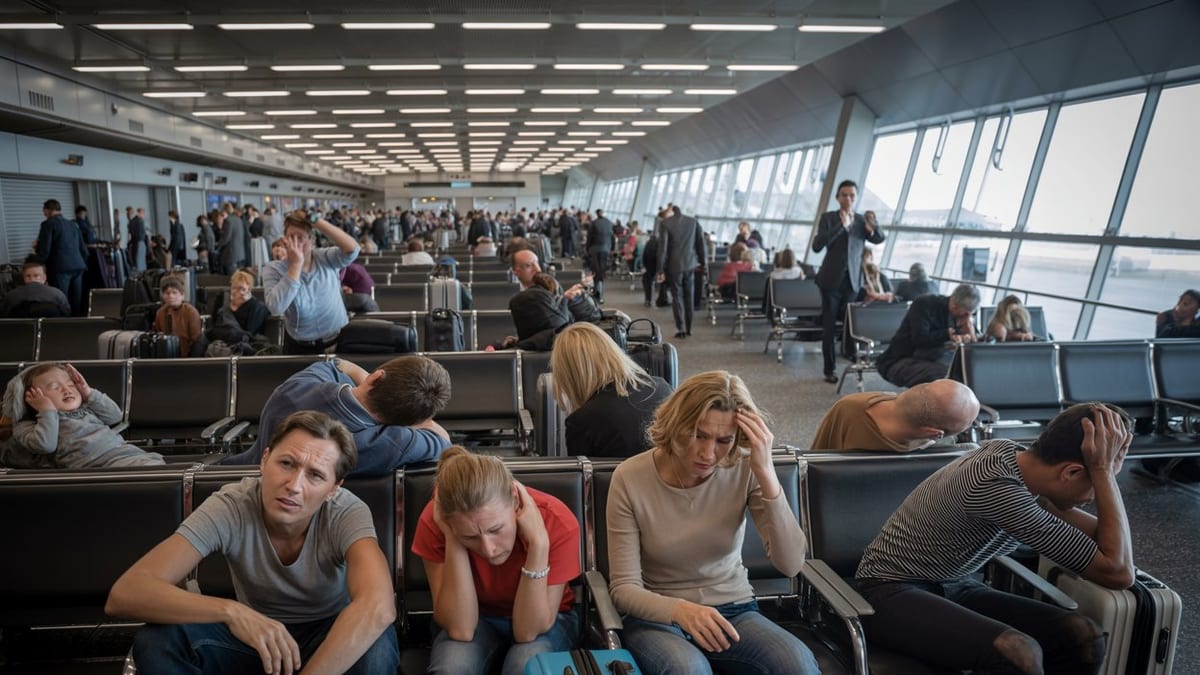
The immediate fallout for travelers was measured in missed hotel check ins on Koh Samui, broken multi leg itineraries, and long queues at airline service counters at both airports. Social media posts and traveler forums quickly filled with accounts of passengers attempting to rebook onward journeys from Suvarnabhumi after losing their domestic connection from Samui or Bangkok.
Because Bangkok Airways holds the vast majority of commercial slots at Samui Airport, options for same day re routing were limited. Travelers reported being pushed onto later flights, redirected via alternate Thai airports where possible, or encouraged to accept travel vouchers and revised departure dates. Some resort operators on Koh Samui also faced late night adjustments as guests arrived many hours behind schedule or not at all.
The disruption also affected domestic connectivity beyond the capital. Samui serves as a feeder for Chiang Mai, Phuket, and U Tapao on select days, meaning that cancellations on the core Bangkok link complicated opportunities to onward connect to northern or southern Thailand. For visitors on tight holiday windows, even a one day delay meant losing a significant portion of planned island stays.
Industry analysts point out that Thailand’s tourism recovery has been heavily dependent on smooth interlining between long haul arrivals and domestic island flights. When a relatively small airport like Samui experiences a wave of cancellations, the effect is magnified across hotel occupancies, tour schedules, and transport providers that rely on predictable daily arrivals.
Operational Constraints at a Slot Constrained Island Airport
Samui Airport operates under strict capacity limits, with a finite number of daily movements allowed due to runway design, surrounding communities, and environmental considerations. Most of those slots are controlled by a single carrier, which concentrates holiday traffic into compressed waves of arrivals and departures.
Under normal conditions this coordinated scheduling allows for efficient use of aircraft and staff. When irregular operations occur, however, such as technical checks, crew availability issues, or weather related restrictions over the Gulf of Thailand, the tightly packed timetable leaves little room to absorb disruption. Once a series of rotations is removed from the schedule, the impact can cascade through the day on both the island and Bangkok sides.
Publicly available flight tracking data for the affected period showed multiple Bangkok to Samui and Samui to Bangkok services labeled as canceled or not operating as scheduled. With Suvarnabhumi already handling high volumes of regional and long haul flights, retiming the withdrawn services or inserting replacement aircraft at short notice became difficult.
Analysts note that this episode underscores a structural vulnerability in Thailand’s tourism infrastructure. A major resort destination depends on a single short runway, dominated by one airline and linked primarily through one hub. Any prolonged disruption, whether driven by weather, maintenance, or commercial decisions, can quickly translate into hundreds or thousands of stranded tourists.
Broader Aviation Pressures Add to the Turbulence
The wave of cancellations on the Suvarnabhumi–Samui route comes against a wider backdrop of schedule adjustments by airlines serving Thailand and the broader region. In recent weeks, carriers have announced temporary capacity cuts, aircraft rotations, and timetable changes across Asia, moves that industry commentary links to fleet availability, maintenance backlogs, and fluctuating demand patterns.
Observers highlight that when long haul or regional services into Bangkok are reduced, domestic feeder routes must be rebalanced to avoid flying large numbers of empty seats. By contrast, when demand surges faster than aircraft can be deployed, airlines may be forced to trim frequencies on thinner or more operationally complex routes to protect performance on core markets.
Thailand’s aviation and tourism sectors are also preparing for higher passenger service charges at major airports, including Suvarnabhumi, later this year. Analysts suggest that cost pressures, combined with infrastructure constraints and tight labor markets, are creating a fragile operating environment in which even modest disruptions can snowball into more visible travel chaos.
In that context, the cancellations affecting flights between Bangkok and Koh Samui are being viewed by some industry watchers as a warning sign that the system is operating with little spare capacity, particularly at smaller resort gateways.
What Travelers Can Do When Flights Disappear
Consumer rights information published by Thai carriers outlines several options for passengers when flights are canceled, including rebooking on the next available service, refunds for unused sectors, and in some cases assistance with meals or accommodation depending on the circumstances. The exact remedies vary by airline, ticket type, and the cause of disruption.
Travel experts recommend that visitors bound for Koh Samui build additional buffer time into itineraries when connecting through Bangkok, particularly during peak travel months or the local rainy season when weather related disruptions become more frequent. Booking through tickets on a single airline, where possible, can simplify rebooking compared with separate point to point tickets on different carriers.
For travelers already in Thailand, alternative routings to the Gulf islands can include flying to nearby mainland airports such as Surat Thani or Nakhon Si Thammarat and continuing by road and ferry. These options are less convenient but can provide a valuable backup when Samui’s limited runway slots are fully booked or disrupted.
As Thailand’s tourism recovery continues, observers anticipate renewed debate over long term solutions for capacity bottlenecks at key resort gateways. For now, the recent cancellations at Suvarnabhumi and Samui serve as a reminder that even in an era of high frequency air links, a single cluster of flight disruptions can quickly turn a dream island getaway into a logistical challenge.