


Punta Sur Eco Beach Park sits at the southern tip of Cozumel, where open Caribbean water meets wide, wild beach. It is one of the island’s most scenic stretches of sand and a tempting place to slip on a mask and snorkel. Yet conditions here differ from Cozumel’s sheltered west coast reef sites, and many visitors arrive unsure what to expect, how beginner friendly it really is, or whether it is worth it compared with a classic Palancar Reef boat trip. This guide walks you through real-world conditions, gear and rental options, currents, marine life, beach clubs and park access so you can decide how Punta Sur fits into your Cozumel snorkeling plans.
Get the latest updates straight to your inbox!
Understanding Punta Sur’s Setting and Beach Conditions
Punta Sur Eco Beach Park occupies the far southern end of Cozumel, where the island curves into the open Caribbean. Unlike Cozumel’s southwest coast, which looks back toward the mainland and is largely sheltered, Punta Sur’s main swimming beaches face directly into open sea. That means long views and a sense of space you probably will not get at more built-up beach clubs closer to town, but it also means that wind, swell and currents have a bigger influence on day-to-day snorkeling conditions.
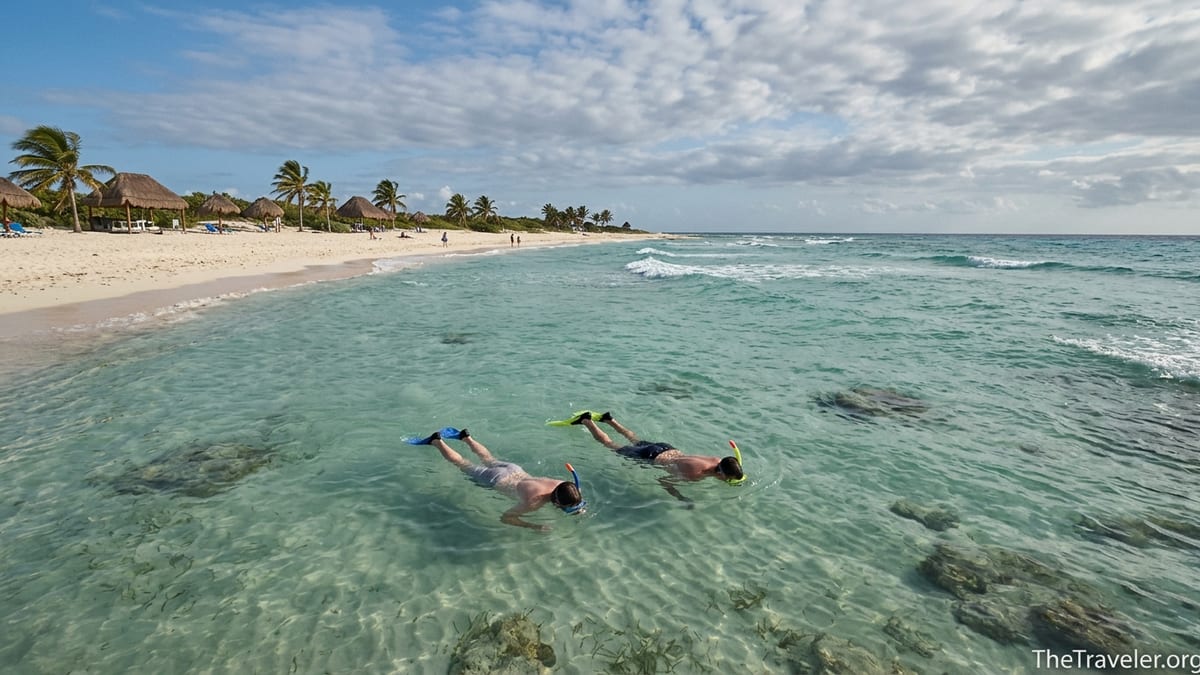
The park’s primary public beach area typically offers a broad, pale sand shoreline with shallow water extending a fair distance out. On calm days this feels like a gentle entry: you can wade in up to your waist and still see the bottom clearly, with sand patches and small rock outcrops. On windier days, especially when the prevailing east wind picks up, waves can build to knee or waist height at the shore. That is still manageable for many swimmers, but new snorkelers who are used to swimming pools or very flat bays should be prepared for a bit of chop and some sand stirred into the water.
Visibility at Punta Sur is normally best when seas have been calm for at least a day and the wind is light. Because there is a lot of sand, any significant wave action can cloud the shallows, particularly close to shore. Snorkelers who swim farther out toward the reef edge often report noticeably clearer water away from the surf zone. If you are visiting on a cruise schedule or only have one day, it is worth checking the forecast the night before and being realistic about how comfortable you are in moving water.
Practical access is straightforward. Most visitors arrive by rental car, taxi or organized excursion and then set up at one of the beach club areas or palapas that line the main swimming beach. Shade can be limited in the middle of the day, so if you are planning a long snorkel session, arriving early in the morning when the sun is lower and the wind is typically calmer can make for a more comfortable first experience of Punta Sur’s water.
Where You Actually Snorkel at Punta Sur
Snorkeling at Punta Sur usually starts from the sand. You walk straight into the water from the beach and kick out toward the darker patches that mark rock and coral structure. There is a shallow zone near shore that is mostly sand, which is ideal for getting used to your mask and fins. Beyond that, the bottom gradually transitions into seagrass and scattered coral heads. The more defined reef area sits farther offshore, roughly in line with the Punta Sur Beach Club at the southern end of the park, where the bottom drops off, and you start to see larger coral formations.
Visitors who have made that swim often describe two distinct experiences. In the inner zone, within perhaps 50 to 80 meters of shore, you will find small schools of grunts, juvenile tangs, and the occasional sergeant major or parrotfish feeding over rock and seagrass. It is a pleasant, low-intensity snorkel if you keep expectations modest. Farther out, along the outer reef edge, stronger swimmers sometimes report better fish density and larger coral heads, but you are also in deeper water with more noticeable current and boat traffic farther offshore.
Local advice often suggests using the Punta Sur Beach Club as a reference point. From the sand there, you can usually identify a darker band running roughly parallel to shore. That is where most snorkelers head, swimming out while keeping a visual line back to the beach. When there is a mild north or south set in the current, a common technique is to swim out to the reef, then drift with the current along the reef line while keeping an eye on your energy level and planning your swim back in to the beach before you get too far from your starting point.
If you are used to the easily accessed house reefs in front of some west coast hotels in Cozumel, Punta Sur may feel more like a half-day coastal swim than a casual step-off-the-ladder snorkel. It rewards reasonably confident swimmers who are comfortable in open water and do not mind a bit of surface chop. Families with younger children often choose to keep the snorkeling closer to shore, treating the reef as a bonus rather than the main attraction.
Currents, Safety and Beginner Suitability
Cozumel in general is known for its currents, particularly along the southwest coast where drift dives along walls like Palancar are a major draw. At Punta Sur, the pattern is a little different. Because you are at the island’s extreme southern tip and exposed to open Caribbean flow, currents can be variable. On some days the water feels almost still inside the shallow zone; on others there may be a steady push north or south parallel to shore, with a bit of in-and-out motion as waves break and recede on the sand.
For beginners, the key is to treat Punta Sur as a swim-first, snorkel-second environment. That means honestly assessing whether everyone in your group is comfortable treading water and swimming at least 100 meters in light chop without fins. If the answer is no, you are likely better off keeping your snorkeling in the knee-to-chest-deep zone, where you can always stand. More experienced snorkelers should pay attention to how the water feels before committing to a long swim out to the reef edge. If you float on your back and notice you are drifting steadily along the beach without kicking, currents are active and you will want a clear plan for how far you are willing to go.
Standard open-water safety practices matter at Punta Sur more than at many resort beaches. A brightly colored snorkel vest or inflatable signal tube makes you more visible to passing boats and helps non-experts rest mid-swim. Many regular Cozumel visitors also recommend using a simple surface marker float, such as a small bright orange buoy on a short line, particularly if you plan to explore near the outer reef where boat traffic from nearby dive and snorkel operations can be heavier.
In terms of pure beginner suitability, Punta Sur is best viewed as moderately challenging. The shallow inner zone can be manageable for first-timers on calm days, and the beach itself is a beautiful place to practice basic mask and snorkel skills. However, if your main priority is giving a nervous swimmer their first gentle look at fish in clear water, one of Cozumel’s west coast beach clubs with inshore reef access will generally offer an easier introduction.
Marine Life: What You Are Likely to See
Punta Sur is within the broader Cozumel reef environment, so you will still see many of the familiar Caribbean species that make the island such a favorite for snorkelers. In the shallows and transitional zone, look for yellowtail snapper and small schools of blue and brown chromis hovering over low coral heads. Graysby groupers and squirrelfish often hide under ledges, while juvenile angelfish pick at sponges on the rocks. Seagrass patches close to the beach can hold conch, hermit crabs and the occasional small stingray buried in the sand, so it is worth slowing down and scanning the bottom carefully.
Farther out along the reef edge, stronger swimmers sometimes encounter larger parrotfish, including midnight and rainbow parrotfish, grazing on the coral. French and queen angelfish, bar jacks, and clouds of sergeant majors are also common. Turtles are occasionally spotted in this area, though the odds are lower than on boat trips to places like Colombia Shallows or El Cielo, which are better known specifically for turtle and starfish encounters.
Conditions at Punta Sur are not as consistently clear as at Cozumel’s signature deep reefs, so set your expectations accordingly. On a calm, sunny morning you may have 15 to 20 meters of visibility and feel like you are floating over an aquarium. After a day or two of wind, visibility can drop, and you may see more muted colors and fewer distant silhouettes. That variability is part of the tradeoff of snorkeling from a wild-feeling beach rather than being dropped directly over a carefully chosen reef patch from a boat.
If you are a photographer, plan on a wide-angle action camera set to auto white balance or a simple compact camera in a housing. Natural light can be beautiful close to midday in shallow water, but you will want to stay within a few meters of the surface for the best color without artificial lighting. In sandy areas, kick gently to avoid stirring up clouds that will show as haze in your images.
Gear and Rental Options at Punta Sur
For most travelers, the easiest approach at Punta Sur is to bring your own basic snorkeling kit: mask, snorkel and fins, along with a rash guard or lightweight swim shirt for sun protection. A well-fitting mask you already know and trust makes a noticeable difference in comfort, especially in choppy surface conditions where repeated flooding can quickly ruin a first-time experience. If you are flying in, a compact travel fin rather than a full-size freediving fin is more than adequate for this type of snorkeling.
On Cozumel generally, beach clubs and small dive shops rent basic gear by the day. Prices vary by property, but as of recent seasons it is common to see full snorkel set rentals in the rough range of 15 to 25 US dollars per person for a calendar day at popular beach clubs along the west coast. At Punta Sur itself, facilities are more limited than in town, and you should not rely on being able to assemble a complete kit at the last minute. Some organized excursions that include Punta Sur provide gear as part of the package, but if you are arriving independently by rental car or taxi, assume that you will need to bring or rent your gear elsewhere before entering the park.
Simple upgrades can significantly improve comfort. A soft neoprene mask strap cover reduces hair tangles and pressure, which many long-haired visitors appreciate. A basic anti-fog solution or baby shampoo helps keep your mask clear. Lightweight reef-safe sunscreen applied at least 20 minutes before entering the water protects your skin while minimizing chemical load on the reef. Many Cozumel-based operators now actively encourage or require reef-safe formulas, so it is worth picking one up in town or at home before you go.
For additional security, consider an inflatable snorkel vest or waist belt. These compact devices can be deflated for surface diving and then re-inflated when you want extra buoyancy to rest. They are especially helpful if you plan to swim out to the reef edge or if you are supervising older children or adults who are not strong swimmers but want to see more than the inner sandy zone.
Beach Clubs, Park Access and Onshore Amenities
Punta Sur is managed as an eco park, and access typically requires a per-person admission fee collected at the entrance gate. The fee gives you access to the beaches, lagoon lookouts, lighthouse and small interpretive center. Prices can shift with the season and local management decisions, but travelers in recent years commonly report adult entry in the approximate range of 20 to 30 US dollars, sometimes including basic amenities like loungers or kayak use. It is wise to bring cash as well as a card, since point-of-sale systems at remote parks can occasionally be unreliable.
Inside the park, you will find a handful of beach club style areas rather than a single large complex. Simple palapa-roofed restaurants serve casual Mexican seafood dishes, snacks and cold drinks. The experience is low-key compared with resort beach clubs closer to the cruise piers; you are here as much for the setting and relative quiet as for the services. Chairs and loungers are usually available on a first-come, first-served basis. If you plan to spend several hours snorkeling and relaxing, arriving by mid-morning provides the best chance of securing a shaded spot close to the water.
Restrooms and freshwater showers are present but more basic than in town. Bring your own towel, a dry bag for valuables and any medications you might need, since you are a long taxi ride from the hotel zone. Mobile coverage can be patchy depending on your carrier. Many regular visitors keep a simple schedule: a morning swim or snorkel session before the wind picks up, an early lunch under a palapa, then a second, shorter snorkel or a walk to the lighthouse before departing mid-afternoon.
The relatively remote location means that taxis back to town may be less frequent than at busy west coast clubs, particularly late in the day. If you arrive by taxi, agree on a pick-up time and fare with the driver before they leave, or arrange return transportation through the park staff or an excursion operator. If you rent a car, check the condition of the access road and drive slowly, as potholes and washboard sections are common on the way to the southern tip.
How Punta Sur Compares to Palancar Reef
Visitors often weigh Punta Sur against the legendary Palancar Reef when deciding where to focus their limited snorkeling time. It is important to understand that you generally do not snorkel Palancar Reef from shore. The main reef system lies offshore along Cozumel’s southwest marine park and is accessed almost exclusively by boat. Tour operators based in town, at the cruise piers and at beach clubs like Playa Palancar run regular half-day trips that combine Palancar with other sites such as Colombia Shallows or El Cielo’s sandbar and starfish area.
Palancar’s appeal lies in its structure and clarity. Boat trips place you directly over towering coral formations, fingers and swim-throughs that rise from deeper water. Even as a surface snorkeler, you look down into clear blue water with 20 to 30 meters of visibility, watching schools of grunts and angelfish weave among giant barrel sponges. Turtles, eagle rays and larger parrotfish are more commonly encountered here than at most shore-accessible sites. The tradeoff is that you are usually in 20 feet or more of water, so many of the most impressive coral heads are below easy diving range for casual snorkelers.
From a beginner’s perspective, a well-run Palancar snorkel tour can actually feel easier than a long independent swim at Punta Sur. You wear a life vest as standard, guides stay in the water with small groups, and a support boat follows, allowing you to rest if you get tired. Currents are usually present but are managed as part of a drift snorkel, where you float along and let the guide and boat crew handle positioning. Prices for shared-boat snorkeling excursions that include Palancar typically fall in the broad range of 50 to 80 US dollars per person, depending on the operator, group size and whether food and drinks are included.
So is Palancar “better” than Punta Sur? For pure underwater scenery and marine life density, most experienced snorkelers and divers would say yes. Palancar offers the classic Cozumel reef experience in a way Punta Sur’s more modest nearshore reef system cannot fully match. Punta Sur, on the other hand, offers an expansive wild beach setting, flexibility to swim on your own schedule, and the chance to combine snorkeling with birdwatching in the lagoon, climbing the lighthouse or simply enjoying a quieter slice of the island. Many travelers choose to do both: a structured Palancar boat trip for the headline reef experience, and a more relaxed half-day at Punta Sur for the scenery and a lower-key snorkel.
Beginner Tips for a Successful Punta Sur Snorkel Day
First-time snorkelers heading to Punta Sur will benefit from a bit of preparation before ever stepping onto the sand. Practicing with your mask and snorkel in a hotel pool or calm beach earlier in your trip helps you get used to breathing through the tube and clearing minor leaks without stress. If you are traveling with children or nervous adults, turning this into a short, fun session the day before can dramatically increase confidence when you reach Punta Sur’s more open water.
Timing your visit around conditions is equally important. If you have flexibility, aim for a morning with light winds in the forecast. The first couple of hours after the park opens often provide the flattest seas and clearest water, before the combination of wind and day-boat traffic stirs things up. Start your snorkeling session in the shallow inner zone, keeping your fins well clear of the bottom to reduce stirred-up sand. Only when everyone feels relaxed and in control should you consider swimming farther out toward the reef edge.
Set conservative limits for your group. Pick a clear landmark on shore, such as a particular palapa or a colored flag, and agree that you will not swim beyond a certain distance from it. Check in with each other every few minutes with a simple hand signal. If anyone is feeling cold, tired or anxious, head back to shallower water together. It is easy to underestimate how quickly mild chop and current can tire out an infrequent swimmer, especially if they are excited and kicking harder than usual.
Finally, remember that Punta Sur is as much a beach and nature day as it is a snorkel outing. Pack a dry change of clothes, a light snack or plan for lunch at one of the simple beach restaurants, and leave room in your schedule to climb the lighthouse or watch for crocodiles and birds at the lagoon viewpoint. Seeing Punta Sur as a full eco-park experience takes pressure off the snorkeling to deliver everything in one go and makes it easier to adapt your plans if conditions are rough when you arrive.
The Takeaway
Punta Sur offers one of Cozumel’s most striking coastal landscapes, with a long, wild-feeling beach, lighthouse views and a sense of distance from the island’s busier west coast. Snorkeling here can be rewarding, especially for fit swimmers comfortable in open water who are content with modest reef structure and variable visibility. The experience is largely self-guided, and conditions on any given day depend heavily on wind and swell.
By contrast, Palancar Reef delivers the textbook Cozumel underwater scene, usually accessed by boat with guides and safety support built into the outing. For travelers whose top priority is seeing dense coral formations, frequent turtles and consistently clear water, a Palancar-including snorkel tour is the more reliable choice. Punta Sur shines when you value the full eco-park package: time on a quieter beach, freedom to snorkel on your own rhythm and the option to balance water time with nature viewing and simple seaside meals.
If your schedule allows, the two experiences complement rather than replace each other. Starting with a guided Palancar trip can set your expectations for Cozumel’s reefs, while a day at Punta Sur lets you slow down and enjoy the coastline on its own terms. With realistic planning about currents, gear and group abilities, both can become memorable highlights of a Cozumel visit.
FAQ
Q1. Is Punta Sur a good place for absolute beginner snorkelers?
For absolute beginners, Punta Sur can feel challenging because it faces open sea and can have surface chop and mild currents. On a calm morning and staying in the very shallow zone, confident swimmers can have a good first experience, but nervous beginners are usually better starting at a more sheltered west coast beach club before trying Punta Sur.
Q2. Can I rent snorkeling gear directly at Punta Sur?
Facilities at Punta Sur are more limited than at Cozumel’s main beach clubs, and rental options can vary by season. You should not count on assembling a full set of mask, snorkel and fins on arrival. It is safer to bring your own gear or rent from a shop or beach club in town before heading to the park.
Q3. How strong are the currents at Punta Sur compared with Palancar Reef?
Currents at Punta Sur are variable and depend on wind and swell. In the inner shallow zone they are often mild, but farther out along the reef edge you may feel a steady push alongshore. At Palancar, currents are usually stronger but managed as part of a guided drift snorkel from a boat, which many visitors actually find easier because the guide and support vessel handle positioning.
Q4. What marine life can I realistically expect to see at Punta Sur?
In the shallow areas you can expect small reef fish such as sergeant majors, snapper, juvenile tangs, parrotfish and various wrasses, along with occasional rays in sandy patches. Farther out on the reef edge, larger parrotfish, angelfish and sometimes turtles are possible, but overall fish density and coral size are more modest than at offshore sites like Palancar or Colombia.
Q5. Do I need a life vest to snorkel at Punta Sur?
Life vests are not always mandatory for independent snorkeling at Punta Sur, but they are strongly recommended for all except very strong, experienced swimmers, especially if you plan to leave the shallow zone. An inflatable snorkel vest or belt offers added buoyancy and visibility without making you feel restricted.
Q6. How much time should I plan for a Punta Sur snorkeling visit?
If you want to combine snorkeling with enjoying the beach, climbing the lighthouse and visiting the lagoon lookout, plan on at least a half day, roughly four to five hours. Dedicated snorkelers who want multiple sessions with rest periods in between can easily spend a full day in the park, especially if they stay for lunch at one of the beach restaurants.
Q7. Is it safe for children to snorkel at Punta Sur?
Safety for children depends heavily on conditions and swimming ability. On calm days, older kids who are strong swimmers can enjoy snorkeling in the shallow zone under close adult supervision. Small children or weak swimmers should be limited to playing near the shore in life vests, and families should be prepared to skip snorkeling entirely if the surf is up.
Q8. How does the cost of a Punta Sur day compare with a Palancar snorkel tour?
A Punta Sur visit usually involves park entrance fees and any food or drinks you purchase, plus transportation. For a couple or small family bringing their own gear, this can be comparable to or slightly less than a shared-boat Palancar snorkel tour that includes equipment and refreshments. However, once you factor in taxi or rental car costs, the difference may not be dramatic, so the choice should be based more on the type of experience you want than on price alone.
Q9. Can I snorkel both Punta Sur and Palancar in one day?
It is technically possible to do a morning Palancar boat tour and then visit Punta Sur in the afternoon, but it makes for a long, sun-intensive day on the water. Most travelers get more enjoyment by dedicating separate days to each, allowing time for rest and avoiding feeling rushed at the park or on the boat.
Q10. What is the best time of day to snorkel at Punta Sur?
The best time is usually in the morning, soon after the park opens. Winds tend to be lighter, the sea flatter and visibility better before midday. Morning sessions also help you avoid the strongest sun and leave time later to relax on the beach or explore the rest of the eco park.