


More news on this day
Flight operations to and from Qatar continue to run, despite a fresh wave of social media claims suggesting that the country’s airspace has been closed and services suspended.
Get the latest news straight to your inbox!
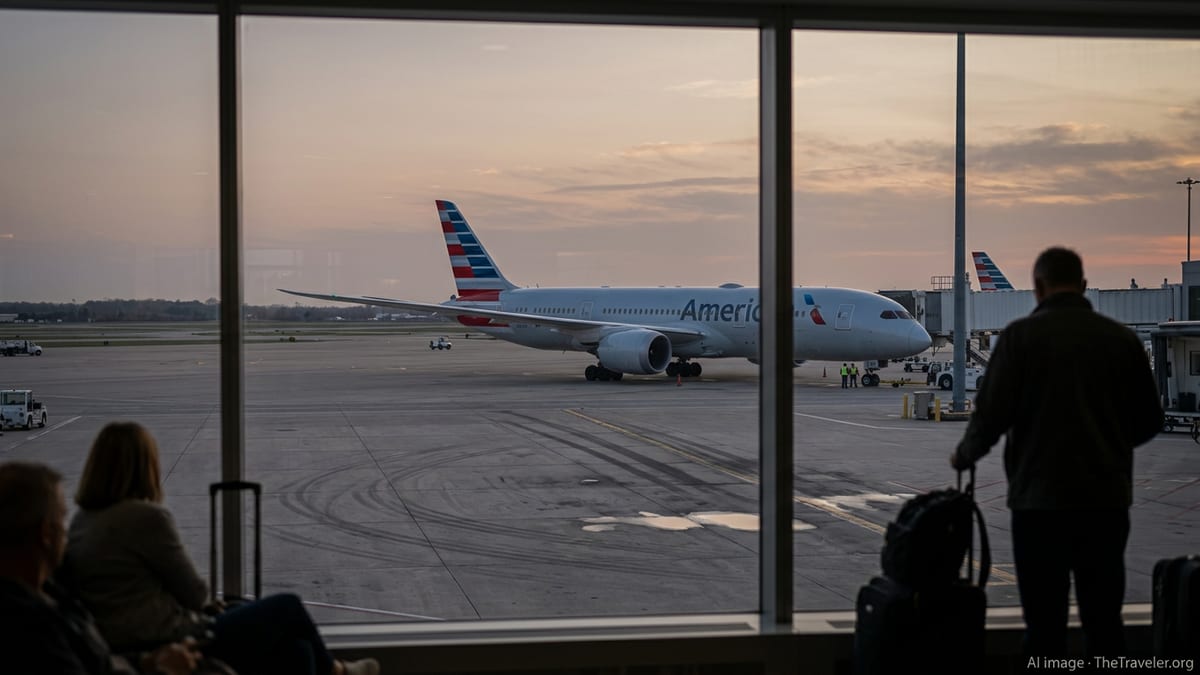
Airspace Speculation Meets Firm Clarifications
Recent posts circulating on social platforms have alleged that Qatar’s airspace has been shut and that flights have been brought to a standstill. Publicly available information from regional media and aviation notices instead points to a different picture: commercial traffic is operating, supported by updated routing measures intended to manage regional security risks and airspace congestion.
Reports in Doha-based and Gulf regional outlets describe how the current aeronautical notices, or NOTAMs, are focused on designating alternative air corridors rather than prohibiting traffic outright. These notices outline temporary procedures that allow flights to avoid sensitive areas while maintaining connectivity for passengers and cargo. Aviation trackers and published coverage show aircraft continuing to arrive and depart Hamad International Airport, albeit in some cases on longer or more indirect paths than before.
The latest statements referenced in local coverage stress that air navigation services in Qatar are functioning normally and that there is no blanket suspension of civil aviation. Travelers are being advised to distinguish between complete airspace closures, which halt routine commercial flights, and more nuanced restrictions that permit controlled but continuous operations.
Analysts following the Gulf aviation market note that temporary measures of this kind have become increasingly common in regions affected by geopolitical tension. The emphasis in Qatar’s case appears to be on preserving safety margins while upholding the country’s role as a major transit hub linking Europe, Asia, Africa and Oceania.
How Flight Operations Are Being Maintained
According to schedule updates carried by regional travel news platforms, Qatar Airways has been rebuilding and reshaping its network since the severe disruption triggered by the initial airspace restrictions earlier in 2026. The carrier has reintroduced services on a phased basis, using dedicated corridors coordinated with the civil aviation regulator to reconnect key long haul markets.
Coverage of recent timetable revisions indicates that the airline is again serving more than 120 destinations, with plans to reach a larger number of cities as mid June progresses. These flights generally operate via predefined tracks that keep aircraft clear of constrained zones while ensuring that transit connections in Doha remain viable. Many routes have returned with adjusted departure times, alternative overflight patterns or revised aircraft types to reflect the operational envelope now in place.
Aviation industry reports also highlight that parts of the Qatar Airways network remain suspended, particularly where regional airspace or destination country regulations still present challenges. Some long haul services have yet to resume, and others are operating at reduced frequencies compared with pre crisis levels. Even so, the direction of travel in published schedules is toward restoration rather than renewed shutdown.
The wider airport ecosystem in Doha has adapted in parallel. Hamad International Airport has reconfigured some flight banks, retimed connecting waves and adjusted ground handling plans to accommodate altered arrival and departure flows. Publicly accessible flight-status boards show a mix of on-time operations, retimings and cancellations, a pattern consistent with a major hub operating under constraints rather than one brought to a complete halt.
What Travelers Need to Know Before Flying
For passengers booked to travel via Doha in the coming days and weeks, the key message emerging from airlines and travel agents is to expect changeable conditions but not to assume that flights are automatically cancelled. Many services are running broadly as planned, while others have been retimed, rerouted or, in some cases, merged or substituted with different flight numbers.
Travel advisories shared on airline channels urge customers to monitor their booking status closely through official apps or websites, rather than relying solely on screenshots or second hand information shared online. Same day or near term changes remain possible as airspace coordination evolves, so checking for updates in the 24 to 48 hours before departure is particularly important.
Passengers are also being reminded to allow extra time for connections. Some itineraries that previously involved relatively tight transits in Doha may now require longer minimum connection times because of revised block hours and ground procedures. Where transfers fall below the airline’s new minimums, rebooking options are generally being offered, though terms vary by ticket type and point of sale.
Those who are uncomfortable with the fluid environment or whose plans are highly time sensitive may wish to explore voluntary changes. Public guidance from travel retailers notes that many fares on affected routes can be rebooked onto alternative dates or destinations, sometimes with change fees waived during specific policy windows. Refund eligibility depends on whether a flight has been cancelled or significantly retimed, and travelers are encouraged to review the precise conditions attached to their booking.
Operational Considerations for Airlines and Partners
For airlines operating in and out of Qatar, the current phase is marked by intensive operational planning rather than withdrawal. Carriers using Doha as a hub or destination are working with air traffic management authorities to secure slots, define safe routing and coordinate altitudes and waypoints across multiple neighboring flight information regions.
Industry coverage indicates that some operators have opted to consolidate flights or use larger aircraft on core routes to maintain capacity while limiting the number of individual movements through the most constrained segments of airspace. These decisions have knock on effects for codeshare partners, which must update inventory, revalidate tickets and adjust minimum connection times in their own reservation systems.
Ground handling providers, catering firms and airport service companies in Doha are also having to adapt to evolving patterns of demand. Peaks and troughs in traffic have shifted from their pre crisis norms, prompting changes to staffing rosters, gate allocation strategies and aircraft turnaround processes. Business travel demand remains uneven, while leisure flows show more resilience on certain corridors, requiring careful capacity planning.
Insurers, corporate travel managers and global distribution systems are tracking developments closely. While published information currently points to a stable if still recovering operational landscape around Qatar, contingency planning remains active in case of renewed volatility in regional airspace conditions.
Key Practical Steps for Those With Upcoming Trips
For individual travelers, the practical steps are relatively straightforward but increasingly important. First, confirmation of flight status through official airline or airport channels should be treated as essential, not optional. This is especially true for itineraries booked months ago, which may have undergone multiple schedule changes.
Second, passengers are advised to check transit requirements in their full routing, not only in Qatar. Rerouted flights may pass through alternative airspace or, in some instances, involve technical stops or partner-operated segments that carry their own visa, health or entry rules. Travel forums and specialist media have reported cases in which travelers discovered these changes only at the airport, leading to missed connections and unplanned overnight stays.
Third, flexible planning can provide a margin of safety. Opting for slightly longer connection times, avoiding the last flight of the day where possible and keeping accommodation bookings on flexible terms can all reduce the impact of unexpected adjustments. Carrying essential items and a change of clothes in cabin baggage remains a sensible precaution when flying in any region subject to heightened operational uncertainty.
Finally, observers note that despite the noise generated by social media speculation, published data on flight movements and schedules shows Qatar’s air travel system functioning, if not yet fully back to its pre crisis normal. For most passengers, the experience is one of modest disruption rather than outright cancellation, provided they stay informed and responsive to updates as their departure date approaches.