


More news on this day
Philippine tourism is facing fresh disruption after a powerful earthquake off Mindanao triggered a chain of at least 30 domestic flight cancellations affecting Manila, Cebu and General Santos, snarling peak-season travel and stranding hundreds of passengers across the archipelago.
Get the latest news straight to your inbox!
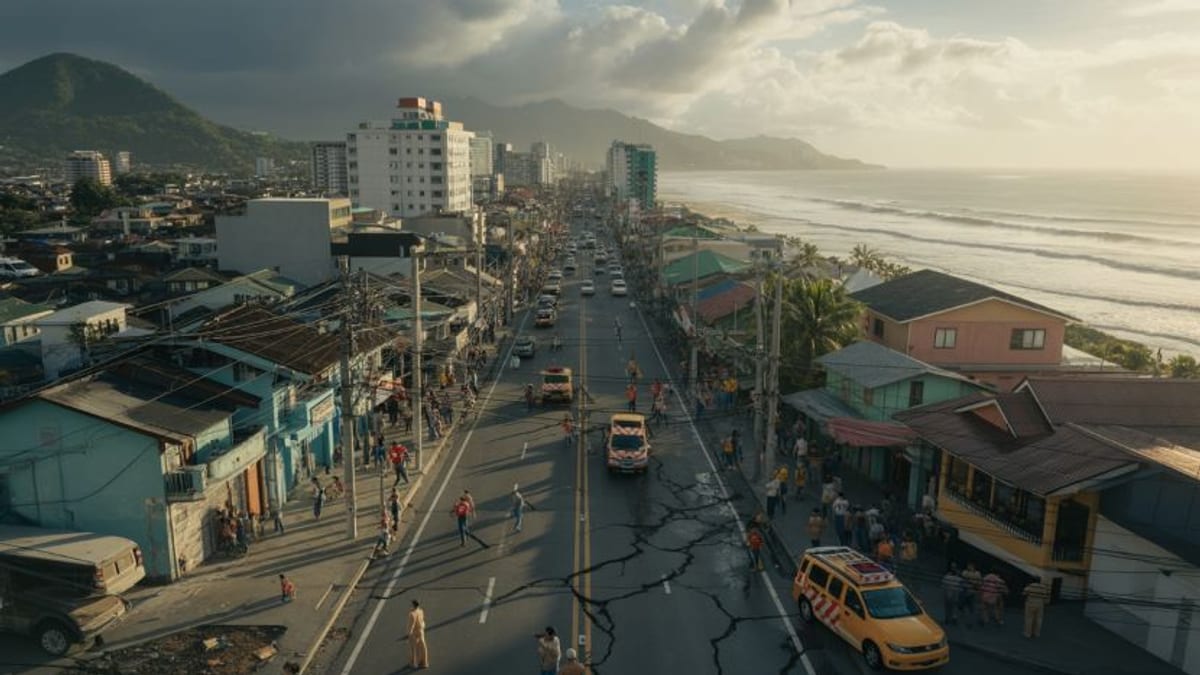
Earthquake Fallout Hits a Fragile Aviation Network
Published coverage from Philippine media and regional outlets indicates that the magnitude 7.8 earthquake off Sarangani on June 8 led to an immediate shutdown of General Santos International Airport, a key southern Mindanao gateway. Regulators issued a temporary notice halting operations while engineers checked the runway, terminal structures and navigation systems for potential damage.
Local reporting describes at least two dozen flights canceled into and out of General Santos on June 8 alone, mainly affecting services that connect the city with Manila, Cebu and Iloilo. Low cost carriers that dominate the domestic market, particularly on Mindanao routes, scrubbed multiple round trips as the airport remained closed for several hours and schedules could not be recovered within the day.
These cancellations have rippled across the country’s already stretched aviation network. With Mindanao still managing power interruptions and infrastructure checks, airlines have been forced to consolidate lightly loaded services, rotate aircraft to unaffected hubs and, in some cases, preemptively trim schedules for the coming days to avoid further last-minute disruptions.
Based on current airline advisories and route data, travel analysts estimate that combined with weather diversions and ongoing schedule rationalizations, the earthquake-related shutdown has now contributed to at least 30 cancellations on links touching Manila, Cebu and General Santos within a span of several days, upending plans for both domestic and international visitors.
General Santos Shutdown Severely Disrupts Southern Mindanao Tourism
General Santos International Airport plays an outsized role in the tourism economy of southern Mindanao, serving as the primary air access point not only for General Santos City but also for popular nearby destinations such as Sarangani’s beach resorts and diving spots. When the airport’s operations were temporarily halted after the quake and tsunami warning, travelers found themselves stuck at origin airports or marooned in General Santos with limited rerouting options.
Published accounts in national newspapers describe passengers queueing at Cebu and Manila terminals as airlines cancelled or retimed multiple General Santos services while the safety inspection window remained in force. Some travelers were reportedly offered rebooking on later flights or travel credits, but same-day alternatives were scarce given the lean frequencies on Mindanao routes even in the summer timetable.
Travel trade representatives note that tour groups bound for Sarangani and neighboring provinces were among the worst affected, with local operators now scrambling to rearrange itineraries, shift arrivals into Davao or Cebu, or postpone trips entirely. Hotel managers in General Santos and beach towns along Sarangani Bay are also assessing a wave of short-notice cancellations that could dent revenues during what is usually a busy mid-year period.
The airport has begun gradually restoring operations following initial checks, according to open-source aviation notices. However, residual disruption is expected as airlines rebuild rotations, clear backlogs of displaced passengers and await further engineering assessments of regional infrastructure.
Manila and Cebu Feel Knock-On Effects as Carriers Cut and Consolidate
While the epicenter of the quake-related chaos is in Mindanao, the country’s two primary hubs at Manila’s Ninoy Aquino International Airport and Mactan-Cebu International Airport have also been hit by knock-on effects. Because most General Santos routes are operated as tag flights or turnarounds from these hubs, the suspension effectively ground aircraft and crews that were scheduled for other legs.
Open airline data and consumer reports show a cluster of cancellations and schedule shifts on Manila–General Santos, Cebu–General Santos and connecting routes in the days following the quake. Some services disappeared from booking systems entirely for select days, while others were rescheduled outside their usual slots, forcing travelers to adjust hotel bookings and onward connections.
At the same time, Philippine carriers are working through a broader period of network adjustment. Low cost operators have already announced seasonal cuts on select international services out of Manila and Cebu for June through September, and anecdotal reports from travelers highlight last-minute timetable changes, equipment swaps and the consolidation of underperforming flights.
For passengers using Manila and Cebu purely as transit points, that combination of structural cuts and quake-driven disruption has produced a confusing patchwork of options. Travel forums are filled with accounts of customers juggling rebooking offers, partial refunds and credits, often with limited real-time visibility into which services will actually operate on their planned date of departure.
Tourism Stakeholders Confront Mounting Uncertainty
The timing of the disruptions is especially sensitive for the Philippines, which has been courting visitors with campaigns centered on beach holidays, dive tourism and cultural festivals across the Visayas and Mindanao. Tourism operators in Cebu and General Santos had anticipated steady mid-year demand from both foreign and domestic travelers, particularly with summer still under way in many source markets.
Industry observers point out that even a relatively small number of cancellations can reverberate across the tourism ecosystem in regions that rely heavily on a few key air links. When flights between Manila, Cebu and General Santos are removed or rescheduled, tour packages built around fixed arrival windows can quickly fall apart, affecting guides, transport companies and small businesses that depend on predictable visitor flows.
Publicly available hotel and booking data suggest a softening in near-term reservations for some Mindanao coastal destinations since the quake, although Cebu and Manila remain comparatively resilient. Travel advisors are now urging visitors with imminent itineraries through southern Mindanao to stay in close contact with their airlines and accommodation providers, and to build in additional buffer time for domestic connections.
Analysts add that the latest episode underscores the vulnerability of the country’s tourism recovery to both natural disasters and operational constraints in the aviation sector. Calls are growing in policy circles and industry forums for accelerated investment in resilient airport infrastructure, better real-time passenger information systems and clearer protocols for rebooking during large-scale disruptions.
Passengers Navigate Rebooking, Refunds and Future Travel Plans
For individual travelers, the most immediate challenge is navigating a maze of rebooking and refund options in the wake of cancellations. Based on current airline advisories and passenger experiences shared on public platforms, carriers serving the affected routes are generally offering free rebooking within specified windows, travel credits, or refunds in cases of outright flight cancellation.
However, the speed and clarity of these processes vary. Some customers report being able to move their trips by a few days at no extra cost, while others face limited seat availability on remaining services or must wait several weeks for refunds to clear. In a number of cases, travelers have opted to re-route via Davao or other Mindanao airports at their own expense simply to keep holiday plans alive.
Travel insurance policies are also being tested. Policy wording differs on whether natural disasters and subsequent airport shutdowns qualify for trip interruption payouts, and many visitors are now examining coverage terms more closely before booking. Agents note that flexible hotel reservations and refundable domestic tickets are becoming increasingly attractive for travelers eyeing multi-stop Philippine itineraries that include Mindanao and the Visayas.
As airlines gradually restore operations and adjust summer schedules, tourism stakeholders across Manila, Cebu and General Santos will be watching closely to see how quickly confidence returns. For now, the convergence of a major earthquake, airport shutdown and a wave of at least 30 related cancellations serves as a stark reminder of how quickly air connectivity in an island nation can unravel, and how central reliable flights are to sustaining its tourism lifeline.