


On the edge of the Arctic Circle, about an hour south of Rovaniemi, Ranua Resort offers a quieter, more nature-focused alternative to the bigger Lapland hubs. Centered on the renowned Ranua Wildlife Park and framed by the forests and shores of Lake Ranuanjärvi, it combines family-friendly animal experiences with atmospheric glass igloos, spacious holiday villas and a growing menu of outdoor activities in every season. This guide walks you through where to stay, what to do and how to make the most of a visit to Ranua Resort, with practical, up to date examples that will help you plan a real trip, not just dream about one.
Get the latest updates straight to your inbox!
Getting to Know Ranua Resort and the Wildlife Park
Ranua Resort is best known internationally as Ranua Wildlife Park, often simply called Ranua Zoo. Located in the small municipality of Ranua in Finnish Lapland, it is Finland’s northernmost zoo and home to around 150 animals representing roughly 50 Arctic and northern species, including brown bears, lynx, wolves and Finland’s only polar bears. The animal enclosures are spread along an approximately 2.5–3 kilometer forested path, so a typical visit to the park feels like an easy walk in the woods, broken up by viewing platforms and feeding points rather than a traditional city zoo layout.
The resort itself has grown around the wildlife park to include accommodation, restaurants, activity providers and services for both day visitors and overnight guests. Many travelers, especially families, base themselves here for one or two nights specifically to visit the park, then continue to Rovaniemi, Levi or other Lapland destinations. Others choose Ranua as a base for a quieter Lapland experience: evenings in a glass igloo on Lake Ranuanjärvi, daytime husky safaris or berry picking, and a quick stroll to see the polar bears before dinner.
Ranua Resort is open every day of the year, though what you experience varies widely by season. In winter, the focus is on snow-based activities, Christmas-time packages and the chance of northern lights. In summer and early autumn, it is about long days, forest hikes and the region’s famous cloudberries. When planning, it is worth checking which animals are most active in the month you intend to visit and what seasonal activities are scheduled during your stay.
Accommodation Options: Glass Igloos, Villas and Holiday Apartments
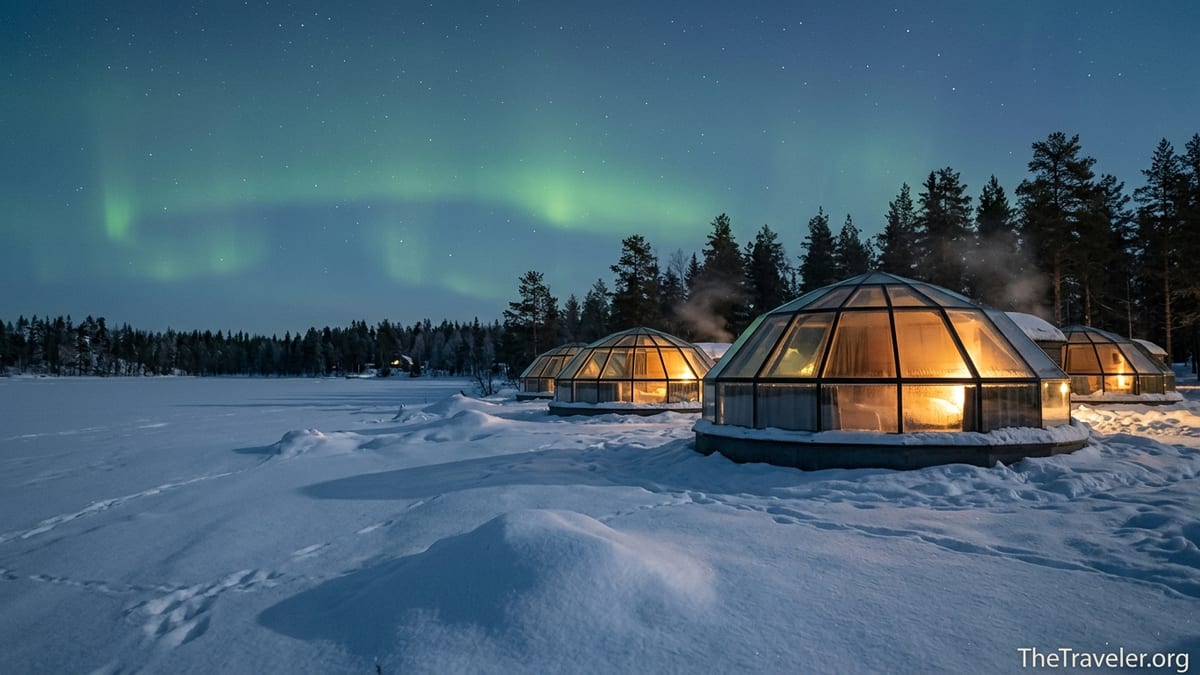
The most eye-catching accommodation at Ranua Resort is its cluster of Arctic glass igloos set on the peaceful shore of Lake Ranuanjärvi, about 6 kilometers from the main wildlife park area. Branded as Arctic Igloos or Arctic Fox Igloos, these 20 units are arranged in two rows so that each igloo faces out over the lake, away from light pollution. Inside, the bedroom side is almost entirely glass, with heated panels that prevent snow accumulation and fogging, giving you a clear view of the northern sky in winter or soft midsummer light in June.
Prices for the glass igloos vary widely by season. A public 2025–2026 price list for Ranua Resort’s Arctic Igloos shows that a Twin Igloo for one to two people starts around the mid-200 euro range per night in April to August, rises to the low to mid-300s in September and October, and can reach several times that amount during the peak Christmas and New Year period. A larger Lakeside Igloo for two adults plus up to two children is typically priced slightly higher than the Twin option in each season. These rates usually include breakfast and final cleaning, and in some packages, a visit to the wildlife park.
For travelers who want more space or a lower nightly cost, the resort’s holiday villas and apartments near the wildlife park are an attractive alternative. These timber-clad villas often sleep four to six people, with private saunas, fully equipped kitchens and living areas suited to families or small groups. Package descriptions for recent seasons indicate that three-night villa stays combined with guided activities and wildlife park tickets for two adults can start at around or just above a thousand euros, depending on season, which compares favorably to multiple nights in an igloo for the same group.
Budget-conscious visitors sometimes pair one special night in a glass igloo with more economical nights in a villa or apartment. For example, a couple might book a three-night “Discover Your Wild Soul” style package in a holiday villa with guided hikes and a wildlife park tour, then add a single igloo night on top for roughly the same price as staying in igloos every night. This mix-and-match approach lets you experience the igloo atmosphere and potential aurora viewing while keeping the overall budget under control.
Signature Experiences: Wildlife Encounters and Glass Igloo Nights
Most guests arrive at Ranua with two experiences in mind: meeting Arctic animals and sleeping under the northern sky in a glass igloo. Understanding how these actually play out on the ground will help you set realistic expectations and plan your time.
A visit to the wildlife park typically takes two to three hours at a gentle pace, longer if you linger at feeding times or travel with younger children. The path is well maintained and mostly flat, suitable for strollers and winter sleds. Enclosures are designed to resemble natural habitats in the surrounding forest, so animals often have space to retreat; patience and quiet observation are rewarded, especially with shyer species like lynx or wolverine. The polar bears, brown bears and otters tend to be among the most reliably visible, and many visitors plan their route around scheduled feeding sessions, which are usually posted at the entrance.
Staying in a glass igloo on Lake Ranuanjärvi is a contrastingly tranquil experience. Each igloo typically includes a private sauna, small kitchenette and compact bathroom in the wooden part of the structure, with the glass-walled bedroom facing the water and sky. On a clear winter night, you may see the Milky Way arching over the frozen lake, and with some luck, the green and occasionally pink ribbons of the aurora borealis. In summer, the magic lies in the midnight sun or long golden evenings reflected on the water, even if there is no chance of northern lights.
It is worth remembering that the aurora is never guaranteed, even in peak season. Some guests leave after a three-night stay with no northern lights sightings at all, while others see subtle displays from their bed on the very first night. If the aurora forecast looks promising during your stay, many visitors choose to turn off all interior lights, keep phones on a low brightness and simply lie back to watch. Others supplement the in-igloo experience with guided aurora hunting trips that drive out to darker vantage points if cloud cover near the lake is heavy.
Seasonal Activities: From Husky Safaris to Cloudberry Trails
Ranua’s activity offering is strongly seasonal, and many programs are packaged by the resort or partner operators. In winter, typically from December through March depending on snow conditions, activities often include husky safaris, snowmobile excursions, reindeer sleigh rides and snowshoe or cross-country ski outings. A half-day husky safari might include transfers from your accommodation, thermal clothing, a safety briefing and a 5 to 10 kilometer sled ride where two guests share a sled, one driving and one sitting, then swap halfway.
The resort also publishes seasonal activity schedules. A recent autumn schedule featured guided hikes to nearby nature attractions, berry-themed programs and relaxed evening experiences. One example includes a guided trip to the Korouoma canyon area, about an hour’s drive away, where in early winter huge frozen waterfalls line the cliffs and in summer and autumn hikers follow forest trails along the gorge. These excursions typically last most of the day and are better suited to guests who are reasonably fit and comfortable walking on uneven ground.
Summer and early autumn in Ranua are all about the forest and the lake. The region is known for its cloudberries, a golden berry that grows in boggy areas; they ripen roughly from mid-July to early August, and local markets and shops in Ranua village highlight cloudberry jams, liqueurs and sweets. Some accommodation packages include relaxed, guided berry-picking walks where you learn how to identify cloudberry bogs and other wild berries such as bilberries and lingonberries. On Lake Ranuanjärvi itself, visitors can rent canoes, rowboats or stand-up paddleboards, or join organized canoe trips that start from the igloo shore and explore the quieter corners of the lake in the evening light.
Shoulder seasons in Lapland can be particularly rewarding at Ranua. In late September and early October, autumn colors turn the forests into a patchwork of red, orange and yellow. At the same time, nights are dark enough again for possible aurora sightings, while daytime temperatures are often still mild enough for comfortable hiking. In April, long daylight hours and deep snow cover can create perfect conditions for late-season snowshoeing or cross-country skiing long after many southern resorts have turned to spring.
Practical Visitor Information: Getting There, Getting Around and Costs
Ranua sits roughly 80 kilometers south of Rovaniemi, the main gateway city for Finnish Lapland. Most international visitors first fly or take the train to Rovaniemi, then travel onward by road. A regular regional bus service, often operated by companies such as Eskelisen Lapinlinjat, runs between Rovaniemi and Ranua, stopping near Ranua Wildlife Park or Ranua center. Typical journey times are about 1 hour 15 to 1 hour 30 minutes. As of mid-2026, one-way bus fares for this route are commonly in the mid-teens to around twenty euros for adults, though exact pricing depends on operator and timetable.
For those who prefer more flexibility, renting a car at Rovaniemi Airport is straightforward, and the drive to Ranua follows a main highway that is maintained throughout winter. Journey time by car is about one hour in normal conditions. Some package tours and activity providers also offer direct transfers from Rovaniemi hotels or the airport to Ranua Resort, occasionally bundled with wildlife park entry or husky safaris. If you are arriving on a late-night flight in winter, factor in that regular buses may have stopped for the day; in that case, prearranged transfer or an overnight in Rovaniemi before continuing can make the trip smoother.
Within Ranua, most visitors do not need a car every day. The wildlife park, main accommodation village, restaurant and small supermarket are clustered close together. However, if you are staying at the lakefront igloos 6 kilometers away and want maximum independence, having your own vehicle or arranging transfers in advance is helpful, particularly in deep winter or if you plan early morning and late evening activities. The igloo area usually has its own small reception and service facilities, but you may still want to travel back and forth to the park or village.
In terms of overall budgeting, Ranua Resort generally sits in the mid to upper price range for Lapland when it comes to unique accommodation like glass igloos, but it can be more affordable than some of the more famous igloo destinations deeper in the Arctic. A realistic daily budget for a couple in winter might include 250 to 400 euros for accommodation depending on choice and season, 60 to 100 euros for meals if you mix restaurant dinners with self-catering, plus 100 to 200 euros per person for one organized activity such as a husky safari, snowmobile tour or full-day hike. Families can reduce per-person costs by choosing villas with kitchens and focusing on self-guided adventures like walking the wildlife park or exploring forest trails close to the resort.
Planning Your Stay: How Many Nights and When to Go
How long you should stay at Ranua Resort depends on your priorities. Many visitors who are primarily focused on seeing the wildlife park opt for a one-night stop: arrive by midday, spend the afternoon in the park, stay overnight in a villa or igloo and depart late the next morning. This works well for road trips through Lapland or for those combining Ranua with a Rovaniemi city break and a separate ski resort stay.
If you want to combine wildlife encounters with winter activities and a realistic chance of seeing northern lights, two to three nights is usually more comfortable. With two full days, you can dedicate one to the wildlife park and nearby services, and another to a husky safari or snowmobile outing, leaving nights free for aurora watching from your igloo or villa terrace. Adding a third night not only improves your chances of clear skies but also lets you slow down enough to enjoy the sauna, walk forest trails or simply sit by the lake without feeling rushed.
Seasonally, December to early March is peak time for snow and northern lights, but also for crowds and higher prices, particularly during Christmas and New Year weeks. Families bound by school holidays often choose this period, and igloo availability can be limited unless booked months ahead. Late November and late March can offer similar experiences with fewer visitors and somewhat lower rates, although snow depth and weather conditions vary from year to year.
Summer visitors, especially those from central Europe, frequently schedule Ranua as part of a wider self-drive itinerary through Lapland and the Finnish Lakeland region. In June and July, the midnight sun means it never gets truly dark; the wildlife park stays open into the evening, and you can paddle or hike long after dinner. August and early September offer a blend of warm days, colorful forests and the first chances of aurora sightings returning to the night sky. If you are drawn to berry picking and forest walks as much as to snow or northern lights, these shoulder seasons can provide excellent value.
The Takeaway
Ranua Resort occupies a distinctive niche in the Lapland travel landscape. It combines a genuinely interesting, year-round wildlife park with a compact resort setup that includes atmospheric glass igloos, spacious family villas and an evolving menu of activities tailored to the slow rhythms of Arctic nature. The result is a destination that works as a stand-alone short break or as one chapter in a longer Lapland journey.
For couples, a stay here is often about that one unforgettable night in a glass igloo on Lake Ranuanjärvi, paired with a husky ride or a quiet evening sauna before an attempt at spotting the northern lights. For families, it is the rare chance to watch polar bears and wolves in a snowy forest, then return on foot to a warm villa with a private sauna and the freedom to cook, play and rest. For independent travelers, Ranua offers an accessible wilderness-adjacent base that can be reached by bus, rental car or organized transfer from Rovaniemi without needing specialist winter driving skills.
If you approach Ranua with realistic expectations about aurora sightings, weather and pricing, and you plan your visit around the season that best matches your interests, it can deliver exactly what many travelers hope for from Lapland: authentic contact with Arctic landscapes and animals, quiet nights under a wide sky and enough modern comfort to savor it all. Whether you stay one night or three, Ranua Resort rewards those who slow down, dress for the weather and give the northern forest time to reveal its character.
FAQ
Q1. How do I get from Rovaniemi to Ranua Resort without a car?
Regional buses connect Rovaniemi and Ranua in about 1 hour 15 to 1 hour 30 minutes, usually stopping near Ranua Wildlife Park or Ranua center. Many visitors buy tickets online in advance or directly from the driver, and some activity companies and tour operators also offer combined transfer and park-entry packages in winter.
Q2. When is the best time to visit Ranua Resort for northern lights?
The northern lights are most visible from roughly late August to early April, when nights are dark enough. In practice, many visitors aim for mid-September to late March, with December to February offering the longest dark nights. Clear skies are crucial, so spending at least two or three nights improves your chances.
Q3. Are the glass igloos at Ranua Resort suitable for families with children?
Yes, the larger Lakeside Igloos are designed for two adults plus up to two children, often with pull-out extra beds. Families with very young children sometimes prefer to stay in a holiday villa, which offers more room to play, a separate bedroom and a full kitchen, then add one special igloo night as a highlight.
Q4. How much does a night in a Ranua glass igloo cost?
Rates vary by season and igloo type. As an approximate guide based on recent price lists, a Twin Igloo for two might start in the mid-200 euro range per night in quieter months and rise significantly during Christmas and New Year. Larger Lakeside Igloos cost a bit more. Special packages that include wildlife park tickets or romantic extras are often priced as fixed bundles for two people.
Q5. Can I visit Ranua Wildlife Park as a day trip from Rovaniemi?
Yes. Many travelers take a morning bus or organized transfer from Rovaniemi, spend three to four hours at the wildlife park, then return the same afternoon or early evening. This is a popular option for those who want to see Arctic animals but are already committed to accommodation in Rovaniemi or another resort.
Q6. Do I need special winter clothing for activities at Ranua Resort?
For everyday walking around the wildlife park, good insulated boots, a warm jacket, hat and gloves are usually sufficient. For longer outdoor activities such as husky safaris or snowmobile tours, most local operators provide thermal overalls, boots and mittens on top of your base layers, which is important in Lapland’s sub-zero temperatures.
Q7. How many nights should I stay at Ranua Resort?
If your main goal is to visit the wildlife park, one night can be enough. For a more relaxed experience that includes snow-based activities or aurora hunting, two or three nights give you time to explore without rushing and increase your chances of good weather and clear skies.
Q8. Is Ranua Resort a good destination for summer travel, or is it mainly a winter place?
Ranua is rewarding in summer as well. The wildlife park is open, the forest trails are snow free and Lake Ranuanjärvi is ideal for gentle canoe trips or evening walks along the shore. Cloudberry and other berry seasons in mid to late summer add another local highlight, and prices are often lower than during peak winter holidays.
Q9. Can I cook my own meals at Ranua Resort?
Yes, many of the holiday villas and apartments come with fully equipped kitchens, and the glass igloos usually include a small kitchenette suitable for simple meals. There is also dining available at the resort’s main restaurant and café, so you can mix self-catering with eating out according to your budget and preferences.
Q10. Do I need to book Ranua Resort far in advance?
For travel in the busy Christmas and New Year period or during popular school holiday weeks, it is advisable to book igloos and villas several months in advance, as availability can be limited. For shoulder seasons such as early autumn or late winter, you may find more flexibility, but booking ahead still gives you the best choice of room types and activity times.