


Across the northern regions of Norway, Sweden and Finland, Sámi museums offer one of the most respectful ways to learn about the Indigenous people of Sápmi. Whether you are heading to Jokkmokk in Swedish Lapland, Karasjok in Norway’s Finnmark plateau or Inari in Finnish Lapland, a bit of planning around opening hours, seasonal schedules and exhibit types will help you make the most of a short Arctic visit. This guide brings together practical, real-world information for travelers looking for Sámi museum opening hours, must-see exhibits and essential visitor tips.
Get the latest updates straight to your inbox!
Where You Will Find Sámi Museums in Sápmi
Sámi museums are spread across Sápmi, the traditional homeland of the Sámi people, which stretches over the far north of Norway, Sweden, Finland and parts of northwest Russia. For most travelers, the easiest to reach are in northern Scandinavia, tied into road, rail and regional flight networks.
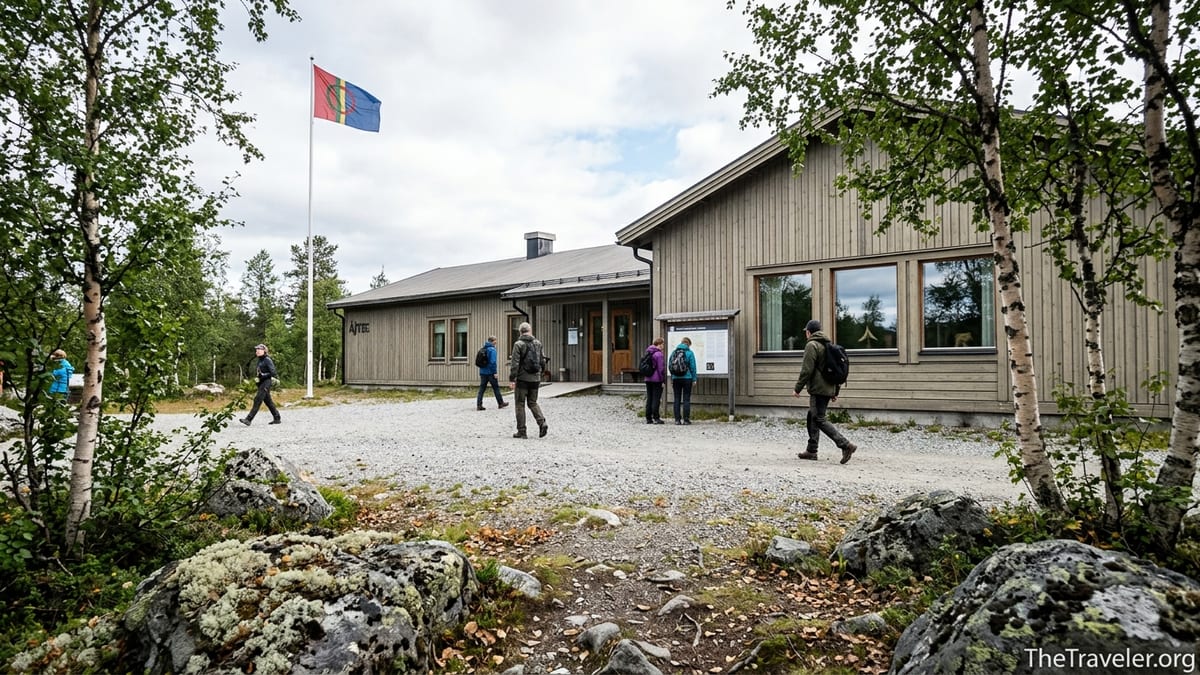
In Sweden, a key institution is Ájtte, the Swedish Mountain and Sámi Museum in Jokkmokk, just north of the Arctic Circle in Norrbotten. Ájtte acts as Sweden’s national museum for Sámi culture and also interprets the surrounding mountain landscapes. Many winter visitors first discover Jokkmokk while coming for the town’s famous February winter market, then stay to explore Ájtte’s permanent exhibits on reindeer herding, traditional clothing and sacred landscapes.
In Norway, the Sámi Museum in Karasjok, run by RiddoDuottarMuseat, is one of the main cultural centers. Karasjok is also home to the Norwegian Sámi Parliament, so a visit can easily combine the museum with a walk around contemporary Sámi institutions. In addition, Tromsø’s Arctic University Museum and the Museum for Northern Peoples in Manndalen both maintain substantial exhibitions on Sámi culture that are accessible to visitors who are already touring the coast.
In Finland, Siida, the Sámi Museum and Nature Centre in Inari, is the primary stop. Located on Lake Inari, it combines cultural history with a strong focus on Arctic nature, making it a good choice if you are also interested in hiking or lake trips. For travelers doing a road loop around northern Finland, Siida is a natural anchor point between Rovaniemi and the more remote tundra regions.
Understanding Opening Hours and Seasonality
Sámi museum opening hours vary significantly by season, often reflecting the rhythms of Arctic tourism as well as local life. Many museums increase their hours in summer, when long daylight and road access bring more travelers, and then run shorter schedules during the darker months outside peak holiday periods.
Ájtte in Jokkmokk typically operates with extended daily hours from mid-June through mid-August, when it is usually open every day from mid-morning to late afternoon. Outside that window, you are likely to find reduced hours, often Tuesday to Saturday with shorter days and closures on certain public holidays. Because exact times can shift slightly year to year, especially around Easter, Christmas and winter market week in early February, it is wise to check the museum’s own information shortly before traveling and avoid relying on a timetable you saw months earlier in a guidebook.
The Sámi Museum in Karasjok follows a similar pattern, with longer daily opening hours in high summer and more limited days the rest of the year. During July and early August, when many road-trippers and bus tours pass through Finnmark, you can generally count on being able to visit on most days of the week. In shoulder seasons such as late September or early April, it is not unusual to find that the museum is open only on selected weekdays or for shorter windows, so plan your driving days accordingly to avoid arriving after closing time.
Inari’s Siida museum also adjusts hours with the seasons. In practice, this means an all-week schedule during the main summer holiday and winter peak (when visitors come for northern lights and snow activities), but narrower hours in early spring and late autumn. A traveler doing a loop through Inari in, say, late October should not assume that high-season hours apply, and would be wise to schedule Siida for the middle of the day when it is most likely to be open, keeping mornings and evenings for outdoor walks or lakeside views.
How to Check Current Hours and Plan Your Visit
Because Arctic weather, public funding and special events can all influence when museums open, checking current hours directly with each institution is important. Aggregator sites that list museums and hours, or older printed brochures from tourist offices, may still show pre-pandemic timetables or temporary arrangements that have since changed.
For a practical example, consider a traveler heading to Jokkmokk in March. They may see an online listing that describes Ájtte’s winter season hours as Tuesday to Friday during late morning to mid-afternoon, plus a shorter opening window on Saturdays. In reality, the museum might have adjusted its winter timetable for that specific year because of staffing or energy costs. A quick check shortly before departure, or an email or phone call, can confirm if the museum will be open on the day you plan to pass through or whether you need to shift your itinerary by a day to avoid disappointment.
Similarly, visitors using Tromsø as a base and hoping to see the Sámi culture exhibitions at the Arctic University Museum often plan museum time around northern lights excursions and whale safaris. Typical opening patterns there favor daytime visits from Tuesday through Sunday, with Mondays frequently reserved for maintenance or closed altogether. In practice this means you might watch the aurora until late night, sleep in, and then dedicate a mid-day slot to the museum on a Tuesday or Wednesday, leaving Mondays for city walks and café time instead.
If you travel by car across Finnmark or Finnish Lapland, allow some flexibility. A snowstorm can delay you by several hours, and rural bus schedules may only line up with museum hours on certain days. Many Sámi museums are compact enough that a thorough visit can be done in 1.5 to 3 hours, so a realistic plan is to give them a full morning or afternoon rather than squeezing them into a short gap between long drives.
What to Expect Inside: Exhibits and Themes
Sámi museums usually combine ethnography, history and landscape interpretation, with a strong emphasis on Sámi voices and perspectives. Rather than being trophy collections of “exotic” objects, they are community institutions that aim to tell local stories in respectful and often contemporary ways.
At Ájtte, for example, you can walk through detailed reconstructions of traditional Sámi dwellings and learn about seasonal movements of reindeer-herding families across the mountain plateau. Clothing and handicrafts are a highlight: richly decorated gákti garments, silver jewelry, and intricately carved wooden items such as kuksa cups and reindeer antler tools. Exhibits describe not just how these objects look, but how they are used and what they signify in terms of identity, social status and region.
The Sámi Museum in Karasjok places particular emphasis on the cultural landscapes of the Finnmark plateau, including reindeer herding, fishing and traditional livelihoods. Seasonal activities like spring calving, autumn slaughter and winter migration are often presented through photographs, archival film and oral histories. Temporary exhibitions might focus on themes like Sámi children’s experiences in the late 20th century or the impact of land-use conflicts on traditional territories.
In Tromsø, the Arctic University Museum’s long-running “Samekulturen” exhibition provides a structured overview of Sámi life from prehistory to the present day. It discusses sacred places and shamanic practices, the pressure of Christianization, the loss and revival of language, and the ongoing political movements for recognition. Many visitors appreciate that the displays frame Sámi culture as living and evolving, not as something frozen in the past, with space dedicated to modern Sámi art, literature and music.
Tickets, Prices and On-site Facilities
Entrance prices at Sámi museums are generally moderate compared with major European capitals, reflecting their regional role and public funding. At Ájtte in Jokkmokk, a standard adult ticket is typically around the equivalent of 10 to 12 euros, with free or heavily discounted entry for children accompanied by an adult. Some visitors purchase an annual pass that pays off if they expect to return multiple times, for example if they are living seasonally in the region.
In Karasjok and Inari, prices are in a similar range, often presented in Norwegian or Finnish currency with an approximate euro equivalent. Families will usually find reduced rates for children and sometimes family tickets that cover two adults and several children together. If you are traveling as part of a small group, such as a photography tour or student group, it can be worth asking the museum in advance about group pricing or guided tour options.
On-site facilities vary but often include a café or small restaurant, a museum shop and occasionally additional services such as lecture rooms or temporary exhibition halls. Ájtte, for instance, includes a restaurant serving lunches and simple hot dishes, often based on local ingredients like reindeer, Arctic char or berries. This makes it easy to combine a morning in the galleries with a relaxed lunch before heading back out on the road.
Museum shops are especially good places to buy Sámi handicrafts responsibly. Rather than picking up mass-produced items at generic souvenir stands, you will find carefully selected pieces that support local craftspeople, such as hand-sewn mittens, silver brooches, knives with carved handles or textile art. Prices are not low, but they reflect the hours of work and the cost of making items in a remote region, and your purchase contributes directly to sustaining living traditions.
Language, Interpretation and Accessibility
Most Sámi museums operate in several languages, though the balance between them can differ by country. In Swedish Lapland, for example, exhibits at Ájtte prioritize Sámi languages and Swedish, with summaries or key labels available in English and sometimes German or other European languages. Travelers who only read English may need to slow down and take a bit more time, but will still be able to follow the main narrative.
In Norway and Finland, you can also expect a combination of Indigenous languages, the national language and English. Audio guides or short printed booklets may be available in multiple languages, and staff at reception desks are often used to answering questions from international visitors. If you have a strong interest in a particular topic, such as spiritual practices or political history, it can be worth asking if there are special brochures, catalogues or books in a language you read.
Accessibility is improving across northern museums, though older buildings and winter conditions can still pose challenges. Entrances are usually equipped with ramps or lifts, and major galleries tend to be on one or two levels with wide circulation spaces. In winter, however, snow and ice on paths and parking areas can make reaching the entrance more demanding. If mobility is a concern, consider visiting in the middle of the day when snow-clearing is most likely to have been done, and allow extra time for getting from your vehicle or bus stop into the building.
Lighting inside galleries is typically gentle rather than harsh, in order to protect delicate textiles and paper objects. This can make photography more challenging, but it also creates a calm, concentrated atmosphere. If you rely on lip-reading or need specific accessibility support, contacting the museum a few days in advance can help them advise you on quiet times or available services.
Respectful Behavior and Photography Etiquette
Sámi museums are more than tourist attractions; they are repositories of memory for communities that have experienced discrimination, forced assimilation and cultural loss. Many displays, especially those dealing with boarding schools, religious persecution or land conflicts, can be emotionally heavy. Approaching these spaces with respect means moving slowly, listening more than you speak and avoiding jokes or comments that trivialize what you see.
Photography policies vary from one institution to another. In many galleries, non-flash photography for personal use is allowed, but certain sections, particularly those dealing with sacred objects or sensitive archival materials, may prohibit photos altogether. Look for clear signs in exhibit rooms or ask staff if you are unsure. As a rule of thumb, if a label or display mentions that an item is sacred or used in ceremonial contexts, it is courteous to think twice before raising your camera, even if not explicitly forbidden.
When visiting outdoor museum sections or reconstructed camps, resist the temptation to treat traditional dwellings as playgrounds or props. Do not climb on structures, sit on items that look like benches unless they are clearly provided for that purpose, or move objects for a better photo. If other visitors are having a quiet moment in front of a display, give them space rather than stepping in front of them for your shot.
Respect also extends to conversations. Guides and staff are not obligated to share personal stories or speak on behalf of all Sámi people. If they do choose to share experiences or opinions, treat those conversations as you would any other personal exchange, and avoid pushing for details about trauma or spiritual practices out of curiosity.
The Takeaway
Sámi museums across Norway, Sweden and Finland give travelers something that no northern lights tour or reindeer-feeding excursion can fully provide: time and space to listen to Sámi voices in their own institutions. From Jokkmokk’s Ájtte to Karasjok’s collections, Tromsø’s university exhibits and Inari’s Siida museum, each offers a different angle on the same complex story of life in Sápmi.
By checking current opening hours carefully, allowing sufficient time for exhibits, and approaching these spaces with attention and humility, visitors can move beyond surface impressions and gain a richer sense of the landscapes they are moving through. A morning with archival photos and thoughtful displays will often change how you see the road ahead, whether you are crossing a reindeer migration route or a fjord that has anchored communities for centuries.
For many travelers, that deeper understanding becomes one of the most memorable parts of an Arctic journey. Long after your photos of auroras and snow-covered cabins have faded, you may find yourself recalling a single object in a glass case, a song in a language you do not speak fluently, or a map that showed Sápmi extending far beyond modern borders. Sámi museums are where those moments of recognition most often begin.
FAQ
Q1. Do I need to book tickets in advance for Sámi museums?
In most cases you can simply walk in during regular opening hours, especially in smaller towns like Jokkmokk or Karasjok. However, during peak times such as summer holidays or major events like Jokkmokk’s winter market, advance booking or arriving early in the day is sensible, particularly if you are part of a larger group.
Q2. How much time should I plan for a visit?
Plan at least 1.5 to 2 hours for a focused visit, and up to half a day if you like to read texts carefully, watch short films and spend time in the café or shop. Larger institutions with combined nature and culture exhibits, such as Siida in Inari, easily fill a full morning or afternoon.
Q3. Are Sámi museums suitable for children?
Yes, most Sámi museums are family friendly and include interactive elements like touchable materials, audio stories or small activity corners. Content on boarding schools and discrimination can be intense, so parents may want to guide younger children through those sections and adjust explanations to the child’s age.
Q4. What should I wear when visiting in winter?
Dress for outdoor conditions first, as you may need to walk over snow or ice from the parking area or bus stop. That means warm boots with good grip, a hat, gloves and layered clothing. Inside, museums are heated and comfortable, so layering makes it easy to adjust without overheating.
Q5. Are exhibits only about the past, or also about contemporary Sámi life?
While many displays cover traditional livelihoods and historical events, most Sámi museums also highlight contemporary culture, including modern art, design, music and political movements. Expect to see both historical artifacts and material that reflects current debates around land rights, language revival and identity.
Q6. Can I buy authentic Sámi handicrafts at the museums?
Yes, museum shops are among the most reliable places to find high-quality Sámi handicrafts sourced directly from artisans. Prices may be higher than at generic souvenir stands, but you gain assurance about authenticity and support local craftspeople in a transparent way.
Q7. Is it possible to join guided tours?
Many museums offer guided tours at set times during peak season or for pre-booked groups. Availability can depend on staff and language options in a given year, so if a guided visit is important to you, contact the museum in advance to ask about schedules and languages offered.
Q8. Are Sámi museums open year-round?
Most are open throughout the year but with changing hours. Summer and major holiday periods usually have longer opening times, while early spring and late autumn may see reduced days or shorter daily hours. Always check current information shortly before your visit.
Q9. Can I combine a museum visit with outdoor Sámi experiences?
Often yes. Towns like Jokkmokk, Karasjok, Tromsø and Inari host local tour operators who offer activities such as reindeer visits, short sled rides or storytelling evenings. A common pattern is to spend part of the day in a museum and then join a small-scale outdoor experience that builds on what you have learned.
Q10. How can I be a respectful visitor as a non-Sámi person?
Approach exhibits with curiosity and humility, follow photography rules, and avoid treating sacred objects or traditional clothing as props. Listen to Sámi voices in texts and recordings, support local businesses and craftspeople where you can, and remember that no single museum visit makes you an expert on Sámi culture; it is an introduction to a living, diverse community.