


More news on this day
The Port System Authority of the Central-Northern Adriatic Sea has confirmed that the new cruise terminal at Porto Corsini, serving Ravenna, is scheduled to open in spring 2027, with forecasts of around 365,000 cruise passengers that year and an explicit strategy to link the growing home port to Emilia-Romagna’s regional rail network rather than new high-speed services.
Get the latest news straight to your inbox!
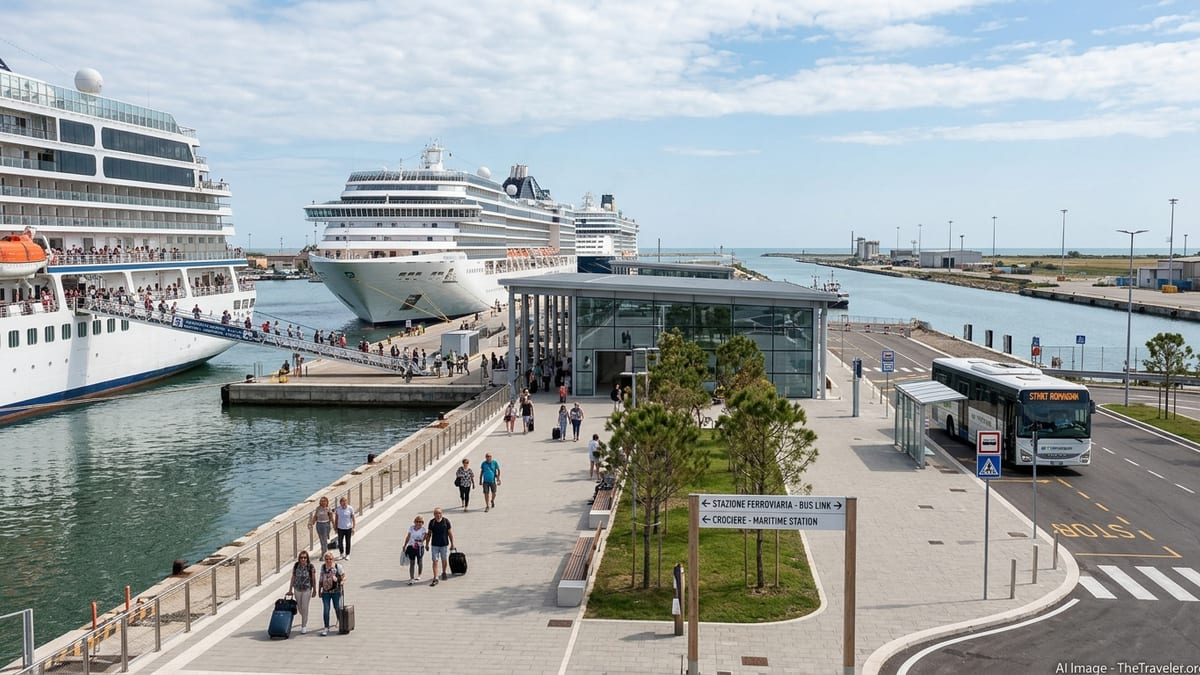
Spring 2027 opening caps record cruise growth
At a mid-November 2026 briefing in Ravenna, the Port System Authority outlined that the new maritime station at Porto Corsini is now slated for inauguration in spring 2027, after construction timelines that were initially focused on 2026 slipped into next year. Recent statements from the authority and local officials consistently describe the terminal as being in the final stages of completion, with the ribbon-cutting targeted for the coming cruise season rather than a specific day already fixed.
Port figures presented at the same briefing show how the new facility will arrive after a record run-up. The 2026 season is on track to close with more than 420,000 cruise passenger movements and just over 100 ship calls, largely driven by home-port operations. For 2027, the authority and terminal operator Ravenna Civitas Cruise Port project around 115 calls but about 365,000 passenger movements, reflecting different ship deployments and capacities even as the port leans further into its role as an embarkation and disembarkation point.
Officials and port documentation describe 2027 as a phase of consolidation rather than unchecked expansion, with the new terminal expected to improve handling quality, passenger flow and integration with the surrounding town of Porto Corsini. The port has also recently raised the maximum permitted length for some ships on the south quay, underscoring a technical framework designed to support the terminal as a long-term cruise asset.
Home-port ambitions tied to regional rail, not high speed
The latest projections frame Ravenna primarily as a cruise home port, with the majority of passengers expected to begin or end their voyages at Porto Corsini rather than simply calling in transit. In materials presented in November 2026, the authority and Ravenna Civitas Cruise Port repeatedly use the language of “homeport” to describe the city’s role, stressing that embarkation traffic has already generated most of 2026’s more than 400,000 movements.
Despite that positioning, there are no announcements of new high-speed Frecciarossa or other AV services directly serving Ravenna as part of the terminal opening. Instead, the strategy being described by regional and port stakeholders is to work with existing regional rail corridors and improve how cruise passengers connect to them. The emphasis is on predictable, frequent regional trains that can be paired with bus links and integrated tickets rather than on new long-distance train categories calling at Ravenna.
This approach fits the city’s existing place within Italy’s rail map. Ravenna sits off the country’s high-speed spine and relies on regional services for its core links, so the cruise-led transport plan builds on reinforcing those regional flows. Port statements around the 2027 season point to cooperation with local transport providers and the municipality, but they stop short of promising dedicated “cruise trains” or bespoke long-distance rail timetables tied to individual ship calls.
Current rail connections: incremental gains on key routes
Ravenna today is served by regional trains operated under the Trenitalia Tper brand on lines that connect the city to Bologna, Ferrara and Rimini, among others. Timetables published for Emilia-Romagna show a dense pattern of regional services on the Bologna–Castel Bolognese–Ravenna–Rimini axis, with journey times between Bologna and Ravenna typically around an hour depending on the stopping pattern. These are conventional regional trains rather than high-speed services, but they form the backbone of surface access to and from the city.
Over recent years, the region and operator have incrementally added capacity on some of these routes, including additional peak-time trains between Bologna and Ravenna in certain timetable updates. Official timetable documents indicate small schedule adjustments and service reinforcements rather than a wholesale redesign for 2027, and as of late November 2026 there is no confirmed special timetable specifically branded around the terminal’s opening. Travelers planning to use rail for cruise access will need to consult the final 2027 schedules once they are formally published.
What is already in place is a growing ecosystem of integrated regional products. The Marina di Ravenna Link combines regional train travel with a bus connection under a single ticket, sold through Trenitalia Tper and Trenitalia sales channels, giving an example of how rail and bus can be packaged together in the area. Transport tariff guides from Start Romagna highlight this and other integrated offers as tools to shift travelers away from private cars, which provides a template that could be extended or adapted around the cruise terminal even if specific cruise-focused products have not yet been announced.
Surface access from station to terminal and what travelers should watch
On the last leg between Ravenna’s railway station and Porto Corsini, surface transport remains the key link. At present, bus services operated by Start Romagna connect the city and the port district in around 30 minutes, with seasonal variations and occasional shuttle-style operations around busier summer and cruise periods. Municipal and port communications highlight buses and cycling as preferred ways for cruise passengers to reach the city center from the terminal, in line with broader local goals to manage traffic volumes through Porto Corsini and nearby resorts.
As of late 2026 there has been no formal publication of dedicated “cruise shuttle” timetables tied to the spring 2027 inauguration, nor confirmed special rail fares branded specifically for the new terminal. Local reporting and authority briefings suggest that the focus for the coming season is completing and opening the terminal building, then progressively integrating it into Ravenna’s urban and regional transport systems. Any additional buses or timetable tweaks for peak cruise days are likely to be confirmed closer to the start of the 2027 season and may appear first on local transport and port information channels.
For travelers planning Adriatic cruises from Ravenna in 2027, the most practical immediate planning assumptions are that the terminal should be operational from spring onward, that regional trains will remain the primary rail access from Bologna, Ferrara and Rimini, and that a bus transfer will still be required between the station and Porto Corsini. Prospective passengers should check final cruise itineraries, rail timetables and any updated integrated ticket offers once 2027 schedules are fully loaded, and verify whether their cruise line provides its own transfers or recommends specific public transport options for embarkation days.