


More news on this day
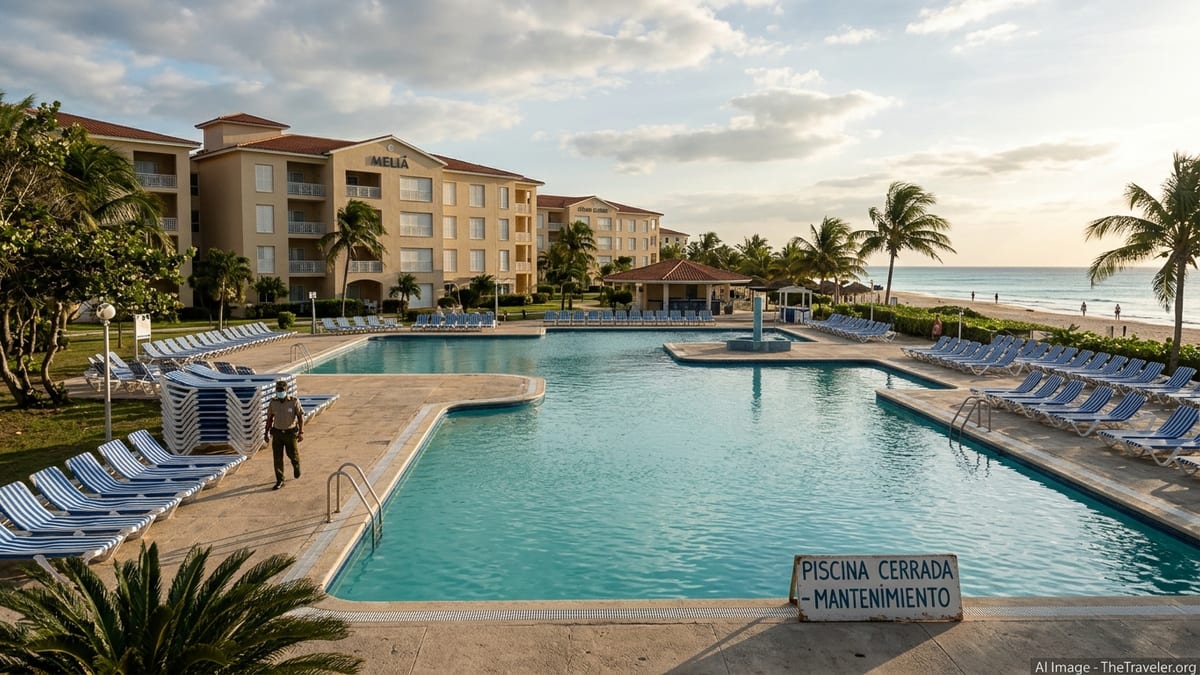
Cuba’s state-run tourism industry has entered its deepest crisis in decades, after Prime Minister Manuel Marrero reported to the National Assembly in late July 2026 that around 73% of the country’s hotel facilities are currently closed and some 25,000 tourism workers have been placed in “availability,” following a collapse in international visitor numbers and the exit of major foreign hotel chains.
Get the latest news straight to your inbox!
Sharp contraction in state hotel sector and jobs
In his late July 2026 appearance before Cuba’s National Assembly, Prime Minister Manuel Marrero confirmed that roughly 73% of hotels in the state tourism system are closed and that about 25,000 tourism employees have been put into “availability,” a status that effectively sidelines them from regular work. These figures, reported by regional and Cuban outlets that quoted his remarks, underscore the depth of the contraction in the state-dominated segment of the industry and remain the most specific official snapshot available of the current shutdowns.
Marrero linked the closures and job losses to the dramatic fall in international visitor numbers so far in 2026 and to the withdrawal of several foreign management companies that had operated a large share of Cuba’s hotel inventory. He indicated that international brands that once managed close to half of the island’s hotel rooms have now pulled out or sharply reduced their presence, leaving many large resort properties idle or operating under interim domestic management.
The government has not yet issued an updated, detailed list of which specific hotels have closed or changed operators since Marrero’s report, and the percentages may continue to evolve. For now, the 73% closure rate and 25,000 workers affected remain key reference points for understanding the scale of disruption in the state hotel network rather than a comprehensive, real-time census of every property on the island.
International arrivals slump on the back of fuel and sanctions shock
Official data from Cuba’s National Office of Statistics and Information (ONEI), as reported by multiple outlets, show that international visitor arrivals have fallen sharply in 2026 compared with 2025. According to figures released at the start of September, Cuba received 419,863 international visitors between January and July 2026, compared with 1,128,831 over the same period in 2025, a year-on-year drop of about 62.8%. Separate analyses drawing on ONEI’s monthly releases highlight similar declines over the first half of the year and into August.
This downturn has unfolded alongside what foreign media, airlines and multilateral bodies describe as an “energy embargo” or fuel blockade linked to tightened United States sanctions in early 2026, compounded by domestic supply problems. Since February 2026, Cuban authorities have restricted jet fuel provision at Havana and other airports, and carriers including Air France, Air Canada, Iberia, Turkish Airlines and World2Fly have temporarily suspended or severely reduced flights to the island, citing difficulties obtaining aviation fuel and worsening operating conditions.
The reduction in long-haul and regional connectivity has made it harder for visitors from Europe and Canada, traditionally key source markets, to reach Cuba, while frequent power cuts and fuel shortages have added operational challenges on the ground. Analysts and officials generally describe U.S. energy measures, Cuba’s broader economic crisis and the corporate risk calculations of foreign firms as contributing factors to the tourism collapse, but no single cause has been definitively established as the sole driver.
Foreign hotel chains depart as domestic sector strains
The contraction in visitor numbers and the deteriorating business environment have accelerated an exodus of international hotel brands. On July 24, 2026, Meliá Hotels International formally ceased all hotel management and marketing services in Cuba, covering 34 properties, after notifying Spain’s securities regulator that its Portuguese subsidiary would end operations in the country on that date. The company cited persistent operational, legal, economic and financial difficulties in its official filing and subsequent communications.
News and industry reports indicate that other major chains, including Spanish groups such as Iberostar and Barceló and non-Spanish brands like Canada’s Blue Diamond and Indonesia’s Archipelago International, have also withdrawn or scaled back their portfolios in recent months. Together, departing or downsizing foreign operators are estimated to have previously managed around 46% to 50% of the island’s hotel rooms, predominantly in key resort areas like Varadero, Cayo Coco and Cayo Santa María.
Where contracts have ended, some properties have closed outright, while others have reportedly attempted to continue under Cuban management or new partners, often with reduced services. However, comprehensive, up-to-date public information on which hotels have successfully transitioned to new operators is limited, and travelers are increasingly finding that previously familiar, brand-managed resorts are either shuttered or functioning under different conditions than advertised.
Destination not fully closed but operating with reduced capacity
Despite the headline figure of 73% of state-sector hotels closed, Cuba has not shut down to tourism entirely. A minority of state hotels remain open, particularly in Havana and in some resort enclaves, and many privately run casas particulares and small guesthouses continue to receive guests. These smaller accommodations, often less dependent on large tour operators, have in some cases become more prominent in the lodging mix available to independent travelers.
For visitors who do travel in late 2026, however, the experience is likely to be more constrained and unpredictable than in previous years. Reduced hotel capacity means less choice in specific destinations and categories, and tour operators report frequent reallocations of guests as properties temporarily close, change management or curtail services at short notice. At the same time, fuel shortages are affecting domestic transport and contributing to recurrent electricity outages, which can impact everything from air conditioning and water pumps to restaurant operations.
International air links have also thinned out. While some airlines from the United States, Latin America and the Caribbean continue to operate routes to Havana and select regional airports, European and Canadian connections are currently much more limited after multiple suspensions earlier in 2026. Prospective travelers should be aware that schedules are subject to change as fuel availability and regulatory conditions evolve, and that routings via third countries may be required where previous nonstop options are no longer offered.
What travelers should check before booking and emerging policy changes
Given the fluid situation, travelers considering Cuba in late 2026 or early 2027 are advised to verify several elements close to their intended travel date. These include confirming that their chosen airline is still operating the planned route, checking whether any intermediate fuel stops or schedule reductions have been introduced, and reviewing the latest entry and visa requirements from official consular sources, which may differ by nationality and point of origin.
On the accommodation side, it is important to confirm directly with hotels or hosts that a property is open, staffed and honoring reservations, especially in resort areas that have seen multiple closures and operator changes. Travelers booking package holidays through tour operators should scrutinize terms on rebooking and refunds in case of hotel or flight cancellations, and be prepared for potential last-minute changes in assigned hotels within the same category.
In an effort to adapt the tourism model, Cuban authorities have announced reforms in 2026, including a September decision to authorize private businesses to operate travel agencies and organize tours for international visitors. These policy changes are still in the early stages of implementation, and details on licensing, scope of services and how they will interact with existing state entities have not yet been fully clarified. Prospective visitors and industry partners should therefore treat them as emerging frameworks rather than established alternatives and monitor official communications and reputable travel advisories for updates before making firm plans.