


More news on this day
A Pacific storm and lingering low clouds over the San Francisco Bay Area have triggered Federal Aviation Administration traffic restrictions at San Francisco International Airport this week, forcing multi hour arrival delays and scattered cancellations that are rippling across parts of California’s air network, including some flights to and from Los Angeles International Airport.
Get the latest news straight to your inbox!
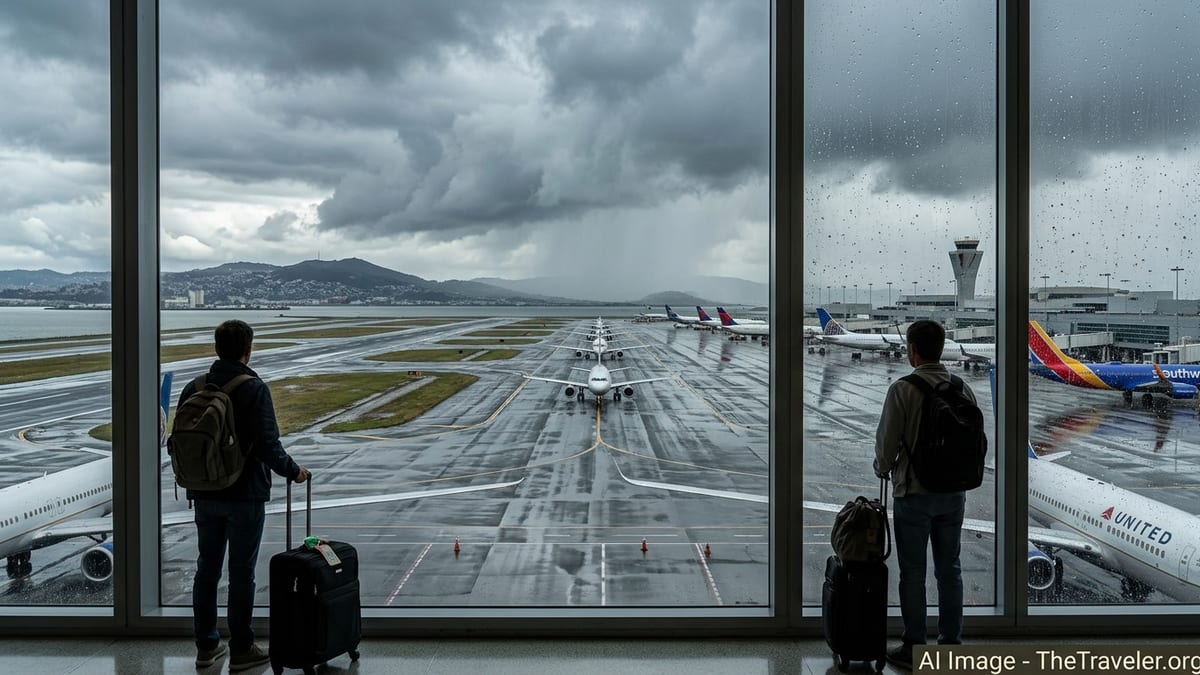
Stormy weather puts SFO at the center of disruption
On Wednesday 18 November 2026, the FAA ordered a ground stop for flights bound for San Francisco International Airport as a strong Pacific storm brought high winds into the Bay Area. FAA advisories cited weather and wind as the cause, temporarily halting departures to SFO from other airports while controllers managed reduced arrival capacity.
The same storm system has delivered several inches of rain and strong gusts across parts of Northern California, with local meteorological reports pointing to totals near 5 inches in some Bay Area locations along with pockets of flooding and power outages. Those conditions have periodically limited the number of aircraft that can land at SFO, especially when crosswinds or runway configurations require fewer simultaneous arrivals.
According to FAA traffic management summaries and consolidated delay trackers, the initial ground stop has now shifted into a sustained period of flow control into SFO rather than a complete halt to inbound flights. That means the airport remains open, but many arrivals are being metered to match what air traffic control can safely handle in low clouds and unsettled weather.
Ground stop vs ground delay: what travelers are seeing
For passengers, the most visible impact began with the 18 November ground stop, when some departing flights to San Francisco were held at their origin airports for around three hours before being released as conditions allowed. While the exact wait varied by route and airline, FAA planning data show average departure delays to SFO in the range of roughly two to three hours during the peak of the restriction.
By the early hours of Friday 20 November, SFO was no longer under a ground stop but under a formal ground delay program because of low ceilings. FAA status tools show that arrivals into San Francisco are currently subject to average delays of a little over two hours, with some flights facing significantly longer holds before takeoff or in airborne holding patterns.
Under a ground delay program, flights are assigned controlled departure times from their origin airports so that the flow of inbound traffic matches SFO’s temporary arrival rate. The practical result is that many travelers will see revised departure times on their boarding passes long before they reach the gate, and some flights may be rescheduled or canceled if the delay exceeds crew duty limits or if connection banks cannot be maintained.
Which flights are most affected
The current bottleneck is concentrated at SFO rather than across all California airports, and not every route is impacted to the same degree. Short haul services within California and the broader West Coast are particularly exposed because aircraft operating these routes typically turn around quickly; when one leg is delayed by an hour or more, it can immediately push back subsequent departures on the same aircraft.
Longer haul and transpacific flights are generally less sensitive to short term schedule changes because airlines often pad block times and recovery windows on these routes. Some international arrivals into SFO have still been affected, however, either by holding patterns on approach or by having to wait for a gate once on the ground when earlier delays congest the ramp.
Travelers connecting through San Francisco to smaller regional airports may face the greatest risk of missed connections and overnight disruptions. When inbound flights arrive late, onward departures to secondary California destinations or neighboring states can be rescheduled, consolidated or canceled if there are no available aircraft or rested crew.
How SFO delays are rippling into LAX and beyond
Los Angeles International Airport is not currently under an FAA ground stop or ground delay program related to the storm, and operations there are generally closer to normal. However, SFO’s constraints are still being felt in Los Angeles and at other West Coast airports as late arriving aircraft from San Francisco disrupt carefully timed schedules.
Flight tracking data for the LAX–SFO corridor on 20 November show multiple services operating with extended delays compared with their planned times, reflecting aircraft that left San Francisco late because of low ceiling restrictions. Individual traveler reports from recent days also describe multi hour waits on LAX–SFO and SFO–LAX services, missed onward connections and diversions when San Francisco operations became saturated.
These weather driven issues are unfolding less than a week after a rare nationwide FAA ground stop caused by a telecommunications problem, which left many aircraft and crews out of position. While that nationwide halt has since been lifted, residual imbalances in aircraft and staffing are still being worked through, making it harder for airlines to absorb a new round of weather disruptions centered on SFO.
What travelers should do next
Because conditions and FAA programs are being updated throughout the day, travelers booked into or through San Francisco over the coming 24 to 48 hours should treat schedules as subject to change. Checking flight status directly with the airline and monitoring airport and FAA status tools before leaving for the airport will give the most current picture of expected departure and arrival times.
Passengers with critical same day connections, particularly those relying on SFO as a hub between short haul California flights and long haul or international services, may want to build in additional buffer time or ask airlines about rebooking options through alternative hubs. In some cases, re routing via Los Angeles or another West Coast airport could reduce the risk of misconnecting, although availability will depend on seat capacity and ongoing knock on delays.
Weather forecasts for the Bay Area indicate that unsettled conditions and low clouds could persist in the short term, so further adjustments to the SFO ground delay program are possible. Until the FAA confirms that flow restrictions have been lifted and airlines have had time to reset their schedules, travelers should be prepared for longer than usual journey times on routes that depend on San Francisco’s capacity.