


More news on this day
The U.S. Embassy in Rome has issued a new security alert dated November 20, 2026, warning American travelers and residents in Italy to exercise extra vigilance at holiday markets, festivals and other crowded public places during the 2026 festive season, on top of the existing Level 2 State Department travel advisory for the country.
Get the latest news straight to your inbox!
What the November 20 alert actually says
The security alert, released in the run-up to the peak Christmas and New Year travel period and flagged by monitoring services on November 18 and 19, reminds U.S. citizens in Italy that the holiday season can bring a higher security risk in busy public spaces. The notice advises Americans to remain vigilant about their surroundings and to practice careful personal security and situational awareness, especially when visiting popular seasonal attractions.
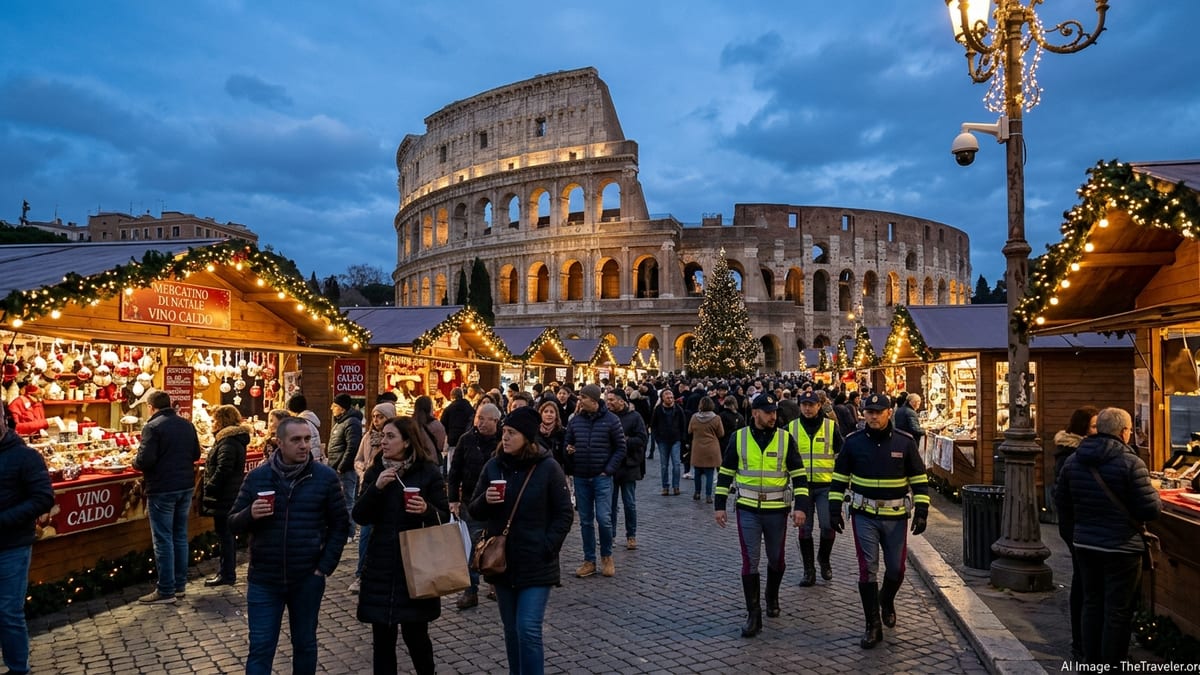
In line with similar recent notices from other U.S. missions in Europe, the alert highlights the potential risk of terrorist attacks or other acts of violence occurring with little or no warning. It points to locations that are especially attractive to both terrorism and petty crime, including outdoor markets, Christmas villages, holiday festivals, major public gatherings, shopping districts, transport hubs and places of worship that see increased attendance at this time of year.
The alert does not announce any specific, confirmed plot, nor does it raise Italy’s overall advisory level. Instead, it stresses that crowded seasonal venues and well-known tourist sites require more caution than usual and that U.S. citizens should stay aware of official updates while the alert is in effect over the 2026 holiday period.
How this fits with Italy’s current U.S. travel advisory
The November 20 security message sits on top of the standing U.S. State Department Travel Advisory for Italy, which remains at Level 2, “Exercise Increased Caution,” due to terrorism as of September 10, 2026. That broader advisory, which has not changed level, notes the risk of terrorist violence in Italy and recommends that travelers stay alert in tourist areas and on public transportation.
Unlike the country-level advisory, which can remain in place for many months, the new security alert is explicitly tied to the 2026 festive period and is meant to address seasonal patterns. It reflects longstanding concerns that large public events, such as Christmas markets, New Year’s celebrations and major religious or cultural gatherings, can be attractive targets because they bring together dense crowds and international visitors.
For travelers, the practical meaning is that Italy is not treated as “off limits” by U.S. authorities, but Americans are urged to apply the already existing guidance with extra care wherever holiday crowds are thickest. Standard advice such as enrolling in the Smart Traveler Enrollment Program and monitoring local media remains in place alongside this more time-specific reminder.
What U.S. travelers in Italy should do during the holidays
For those planning winter trips to Rome, Florence, Milan, Naples or Italy’s many smaller Christmas market towns, the alert is a prompt to adjust behavior rather than cancel plans. Travelers are encouraged to stay particularly attentive at seasonal markets, New Year’s fireworks events, concerts, winter festivals and other high-profile celebrations that draw large numbers of people into confined public spaces.
Practical steps recommended by U.S. and other Western government guidance include keeping a low profile in crowded venues, staying aware of exits and avoiding lingering at chokepoints such as narrow entryways, as well as securing valuables against pickpocketing and bag snatching. Visitors should be prepared for bag checks, security cordons and occasional access restrictions around major sites and events, and should follow instructions from local police or other authorities if areas are cordoned off or crowds redirected.
Travelers are also advised to keep their mobile phones charged, ensure they can receive emergency alerts and embassy messages, and to review how to contact Italian emergency services. Enrollment in STEP or equivalent alert systems can help U.S. citizens receive updates if the embassy issues further notices or modifies its assessment later in the season.
Security presence and what to verify before you go
Italian authorities already maintain enhanced security around sensitive locations, key transport hubs and major public events, and visitors during the holiday season should expect to see a visible presence of police and, in some cases, military personnel in busy urban centers. That heightened posture is intended as a preventive measure and is not, by itself, an indication that a specific incident is expected at any given market or festival.
Because security alerts can change quickly, anyone traveling to Italy in late 2026 or early 2027 should recheck the live pages for the U.S. Embassy and Consulates in Italy and the main State Department advisory for Italy shortly before departure and again during their trip. The November 20 alert is time bound to the holiday period, and any extension, cancellation or replacement notice will appear on those official channels.
Prospective visitors should also monitor local Italian news and municipal announcements for any changes affecting particular events, such as restrictions on access to central squares, temporary closures of specific markets, or adjustments to public transport around major celebrations. Verifying these details close to travel will help travelers interpret the embassy’s seasonal guidance in the context of their actual itinerary and the current security posture on the ground.