


More news on this day
Europe’s storied river cruise season is facing an abrupt course correction this summer, as historically low water levels on the Rhine, Danube and other major waterways trigger cancellations, ship swaps and hastily redesigned routes across the continent.
Get the latest news straight to your inbox!
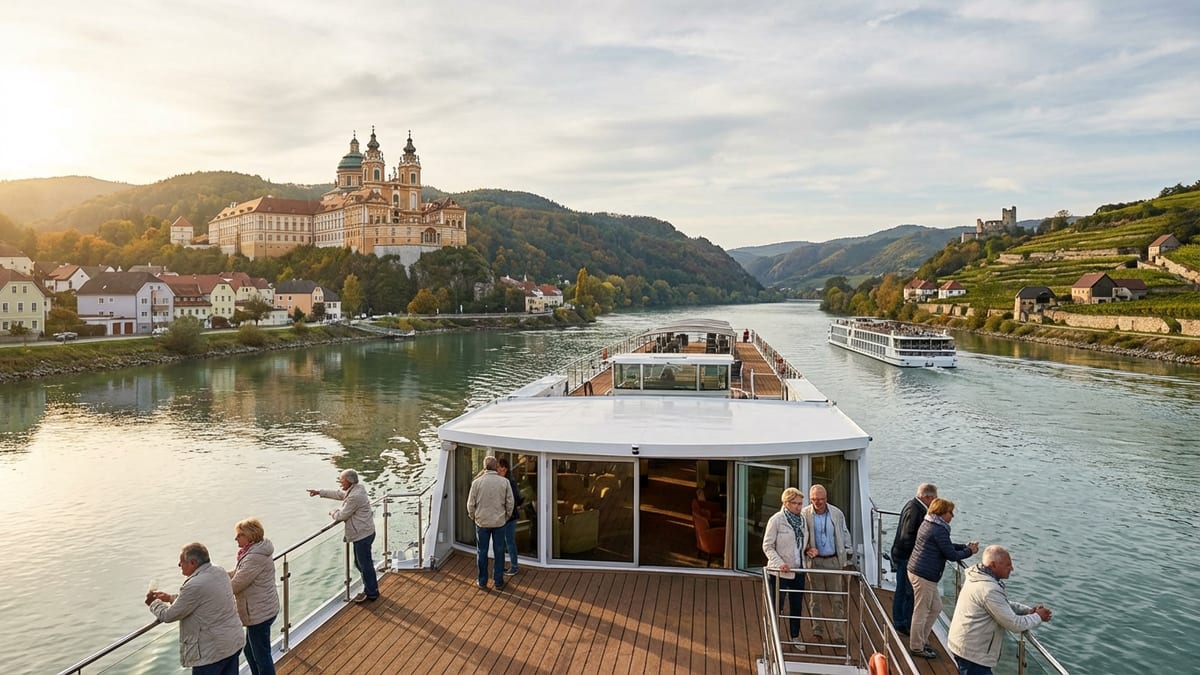
Heat, Drought and Rivers Running Shallow
Persistent heatwaves and an extended lack of rainfall since late June have pushed several of Europe’s key rivers to some of their lowest summer levels in decades, according to hydrological data and recent trade updates. The shallow conditions are most acute along stretches of the Rhine in Germany and the Danube through Austria, Hungary and further southeast, where gauges have fallen toward thresholds that complicate safe navigation for larger river vessels.
Publicly available information from cruise industry analysts indicates that this year’s dry spell is part of a broader pattern of increasingly volatile water levels, with low-water incidents occurring more frequently and earlier in the season. Research on inland navigation in Europe has highlighted rising operational risks during prolonged low-water periods, particularly along the Rhine corridor, which serves both heavy cargo and passenger ships.
While cargo operators have responded by loading vessels lighter and introducing low-water surcharges, passenger-focused river cruise lines face a different challenge. Their business model is built around seamless coastal-style touring deep into the continent’s interior, making sudden navigational bottlenecks especially disruptive for holidaymakers who have planned itineraries months or years in advance.
Cancellations, Shortened Voyages and Last-Minute Detours
Reports from cruise-tracking platforms and specialist media show that a growing number of Danube and Rhine sailings scheduled for July and August have been curtailed or cancelled outright when river depths dropped below key navigational markers. On parts of the lower Danube, several ships have been unable to pass shallow sections, leading operators to terminate journeys early and transfer guests to hotels or coaches for the remainder of their trips.
CruiseMapper and other industry-focused outlets note that major brands have adopted a mix of responses as conditions change from week to week. Avalon Waterways has cancelled a limited number of departures on both the Danube and the Rhine, while maintaining others with revised schedules. AmaWaterways, Riviera Travel and Viking are among lines reported to have adjusted routes, altered embarkation and disembarkation points, or restructured sightseeing programs to keep tours running despite the constraints.
On the upper Danube, Vienna-based operators have announced specific cancellations and timetable shifts on panoramic cruises that usually run long-distance itineraries. One major day-cruise provider has suspended a flagship “Grand Danube” route and is temporarily operating a shortened loop, reflecting how even domestic and regional services are being reshaped by the low water.
Ship Swaps and “Bus Bridges” Redefine the River Experience
Where complete cancellations are avoided, cruise lines are increasingly turning to ship swaps and “bus bridges” to preserve as much of the original travel experience as possible. Cruise commentators describe cases in which guests sail one segment of the river on their scheduled vessel, then disembark at a navigational choke point, travel several hours by coach, and board an identical or sister ship positioned on deeper waters upstream or downstream.
This logistical choreography has become most common on mid-Rhine sections near Kaub and on upper Danube routes between Vienna and Nuremberg, historically vulnerable stretches when water levels retreat. Travelers may still visit marquee destinations such as Cologne, Regensburg or Budapest, but the continuity of a single ship journey is often replaced by a patchwork of bus transfers and hotel nights arranged on short notice.
Some experienced river cruisers view the improvisation as an acceptable trade-off for seeing Europe’s interior during a difficult season, particularly when operators provide clear communication and additional excursions to compensate. Others, especially first-time guests drawn by the promise of effortless “unpack-once” travel, may find the disruption jarring, highlighting the reputational stakes for the sector as low-water episodes become more common.
Economic Ripples for Ports, Towns and the Wider Supply Chain
The impact of shallow rivers is not limited to holidaymakers. Inland shipping organizations and logistics providers have warned in recent weeks that critically low Rhine levels are disrupting cargo movements to and from Europe’s largest ports. Trade association updates describe congestion as freight is diverted from barge to already busy road and rail networks, adding costs and complicating supply chains for industries that rely on just-in-time deliveries.
For river cruise destinations, the economic shock is more localized but still significant. Towns that depend on high-season passenger traffic for income from tours, restaurants and souvenir sales are seeing fluctuating visitor numbers as ships skip scheduled calls or reroute to alternative docking points. Some port communities on deeper sections of the rivers are benefiting from increased calls as itineraries are redrawn to favor more reliably navigable stretches.
Insurance, fuel and operational planning costs are also coming under pressure as cruise companies and port operators factor in more frequent low-water contingencies. Industry observers suggest that recurring disruptions could accelerate investment in adaptive measures, such as flexible docking infrastructure, enhanced dredging in key bottlenecks and more granular water-level forecasting tailored to passenger operations.
Climate Risks Push Lines to Rethink Future Seasons
The latest disruption is reinforcing a longer-term shift in how river cruise lines plan itineraries in a warming climate. Expert commentary in travel trade media points to a steady recalibration of schedules, with some operators adjusting seasonal start and end dates, introducing more flexible terms, or building spare capacity so that ships can be repositioned at short notice.
Booking information for 2026 and 2027 itineraries already emphasizes that routes remain subject to change in the event of low or high water, with companies outlining contingency options such as hotel stays, modified excursions or coach transfers. These disclaimers, once buried in fine print, are increasingly highlighted in brochures and on booking pages as lines seek to manage expectations.
At the same time, analysts note that demand for European river cruising remains resilient, driven by aging but travel-hungry demographics in North America and Europe. The current summer’s disruptions may prompt would-be passengers to pay closer attention to route selection, seasonal timing and cancellation policies, but there is little sign that travelers are turning away from river itineraries altogether.
For now, with water levels on both the Rhine and Danube still well below seasonal norms in mid-August, operators are navigating week by week. Travelers embarking on European river cruises in the coming weeks are being advised through public information channels to prepare for possible itinerary changes and to view ship swaps and altered routes as part of an increasingly variable river landscape.