


More news on this day
Sofia is emerging as one of Europe’s standout budget city breaks, as new rankings highlight Bulgaria’s capital among the continent’s most affordable urban escapes and reflect a wider shift in how travellers plan European trips.
Get the latest news straight to your inbox!
Rankings Put Sofia At The Top Of Europe’s Value League
Recent comparisons of city-break costs place Sofia near, and in some cases at, the top of Europe’s affordability tables. Travel cost indexes and industry analyses for 2025 and 2026 indicate that Sofia consistently ranks among the cheapest major cities on the continent for short urban stays. These assessments typically factor in accommodation, local transport, meals, entertainment and basic sightseeing, providing a composite picture of value for visitors.
One analysis of European city breaks compiled by a UK lifestyle publication in early 2025 found that Sofia delivered some of the lowest combined costs for flights, hotels and dining among dozens of surveyed cities. The study reported that average nightly hotel prices and typical restaurant bills in Sofia undercut many rival destinations by a significant margin, while everyday expenses such as coffee, public transport tickets and museum entry also remained comparatively low.
Separate backpacker and budget indexes reach similar conclusions. They report that a day in Sofia, including a hostel bed, three budget meals, urban transport and a modest entertainment allowance, often comes in at a fraction of the cost of equivalent days in Western European capitals. Several online travel cost trackers describe Sofia as either the cheapest, or among the top few cheapest, European city breaks for 2025.
These rankings arrive as consumer polls and booking data point to a sustained demand for value, particularly from long-haul visitors from North America and Asia. Publicly available figures from European tourism bodies show that travellers are increasingly willing to adjust itineraries to capture better price-to-experience ratios, a dynamic that appears to favour cities such as Sofia.
Why Bulgaria’s Capital Stays So Affordable
Analysts attribute Sofia’s competitive pricing to a combination of structural and cyclical factors. Bulgaria’s general cost of living remains below the European Union average, and data from cost-of-living databases show lower indices for groceries, dining out and local services compared with many Central and Western European peers. This keeps baseline prices for tourism-facing businesses relatively contained, even as visitor numbers grow.
The Bulgarian lev’s long-standing peg to the euro provides currency stability while wage levels remain below those in more mature tourism economies. Hospitality groups point to comparatively low labour and property costs in the city, which feed through into hotel room rates and the price of food and drink. In addition, Sofia’s tourism sector is still developing relative to established city-break hubs, with fewer pressures linked to overtourism or saturation pricing in historic centres.
Publicly available data on air connectivity show an expanding network of low cost and full-service flights into Sofia from across Europe and the Middle East, adding downward pressure on overall trip costs. Budget carriers connect the Bulgarian capital with secondary airports in Western Europe, while regional services link Sofia with neighbouring Balkan and Central European cities. Promotional fares on these routes frequently make Sofia a cheaper entry point to the region than some coastal or Alpine alternatives.
Price-sensitive travellers also benefit from the city’s compact layout. Many of Sofia’s main attractions, including key churches, Roman ruins and public squares, sit within walking distance of one another, reducing the need for taxis or extensive use of public transport. Where transport is required, single tickets and day passes remain inexpensive relative to other European capitals, according to local tariff information.
Part Of A Wider Eastern European Value Trend
Sofia’s rise is part of a broader rebalancing of Europe’s city-break map in favour of Central and Eastern European destinations. Industry reports and tourism board data for 2025 describe strong growth in arrivals to value-oriented cities such as Bucharest, Kraków, Vilnius and Budapest, many of which feature prominently in rankings of Europe’s cheapest city breaks. Analysts describe this as a long-maturing trend that has accelerated as inflation and higher service costs reshape travel budgets in Western Europe.
A recent European travel trends report noted that several Central and Eastern European countries have benefited from what it called “value-seeking behaviour,” as travellers look beyond traditional hotspots in search of lower prices without sacrificing culture, food or heritage. The same report highlighted that these destinations tend to see longer average stays from long-haul visitors, who stretch their budgets further by basing themselves in lower-cost cities and making regional side trips.
Research by tourism economists also points to improving air links and easing border formalities as factors behind the surge. Bulgaria’s inclusion in the Schengen Area for air and sea borders, which took effect in 2025, has simplified travel for many visitors connecting via major European hubs. Publicly available statistics from European tourism organisations indicate that this change has supported increased arrivals to Bulgaria and its neighbours, aligning with the broader trend toward more convenient, multi-country itineraries in the region.
At the same time, Western European city-break staples are facing the impact of higher energy, accommodation and service-sector costs. Cost barometers from travel money providers in 2024 and 2025 repeatedly rank cities such as Amsterdam, Paris and some Nordic capitals among the continent’s most expensive. This divergence in pricing has encouraged travellers to look eastward when planning holidays, a shift that appears set to continue into the 2026 season.
What Budget Travellers Actually Pay In Sofia
While precise costs vary by season and booking window, recent price snapshots suggest that budget-conscious visitors can assemble a weekend in Sofia for considerably less than in many rival cities. Online travel cost aggregators for 2025 commonly cite daily budgets around the equivalent of a modest double-digit euro figure for backpacker-style trips, covering a hostel bed, basic meals, local transport and a low-cost activity or two.
Mid-range travellers, booking three-star hotels and dining at casual restaurants, still find that overall outlays compare favourably with other European capitals. Accommodation sector analyses show that average nightly rates for standard hotels in Sofia remain substantially below those in Western urban centres, particularly in shoulder seasons such as spring and autumn. Many central hotels and guesthouses include breakfast in the room price, further trimming daily costs.
Dining and nightlife also contribute to the city’s value profile. Restaurant price data indicate that a meal at a mid-range venue in Sofia typically costs less than equivalent dinners in major Western cities, even when including drinks. Cafés and bakeries provide inexpensive options throughout the day, while traditional taverns offer local dishes at prices that appeal to visitors who track their spending carefully.
Entrance fees to museums, galleries and cultural sites are generally moderate, and free walking tours and public events add to the city’s appeal for those prioritising experiences over high-ticket attractions. Parks, nearby mountain trails and historic neighbourhoods provide low-cost or no-cost activities, helping travellers keep daily budgets in check without feeling constrained.
Implications For Europe’s Tourism Map
The growing prominence of Sofia and its regional peers is prompting questions about how Europe’s tourism geography may evolve over the next few years. Market commentary from travel consultancies suggests that the continent’s city-break market is becoming more polycentric, with travellers dispersing beyond a small set of classic capitals into a wider network of second-tier and emerging cities.
For destinations like Sofia, this offers opportunities and challenges. On one hand, increased visitor numbers support investment in hotels, restaurants and cultural infrastructure, which can further enhance the city’s appeal. On the other, maintaining the affordability that attracts budget-conscious travellers may require careful management of demand, housing pressures and short-term rental growth in central districts.
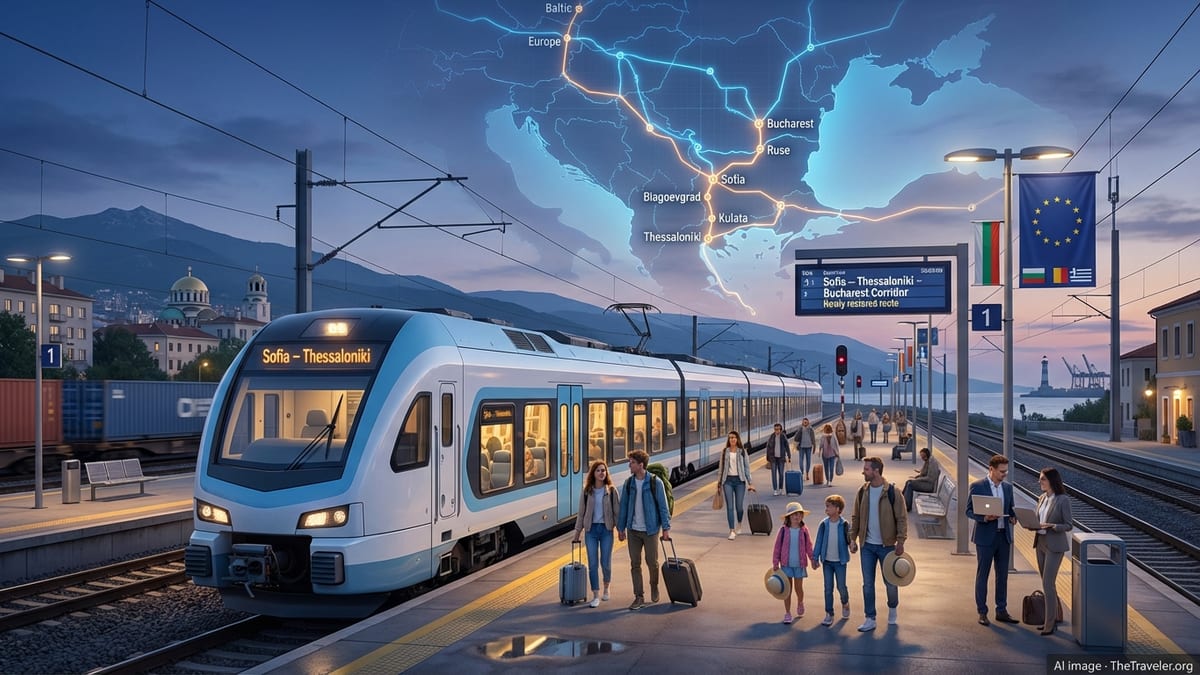
Regional tourism organisations are already highlighting rail connections and cross-border itineraries that link Sofia with other relatively low-cost cities in the Balkans and Central Europe. Itineraries combining Sofia with cities such as Bucharest, Skopje or Thessaloniki are gaining traction in travel features and package offerings, particularly for younger travellers and digital nomads seeking multi-country experiences on limited budgets.
With inflation and cost-of-living concerns still shaping household spending across many source markets, analysts widely expect value to remain a central theme in European travel planning through 2026. In that context, Sofia’s place near the top of affordability rankings suggests that Bulgaria’s capital is likely to remain prominent on budget travellers’ maps, reinforcing Europe’s broader affordable travel revolution.