


More news on this day
Regional air travel across East Tennessee faced mounting disruption as American Airlines, Delta Air Lines, and Allegiant Air collectively registered 46 delayed or canceled flights tied to Knoxville’s McGhee Tyson Airport, straining tight summer schedules and leaving travelers scrambling for alternatives across the Southeast.
Get the latest news straight to your inbox!
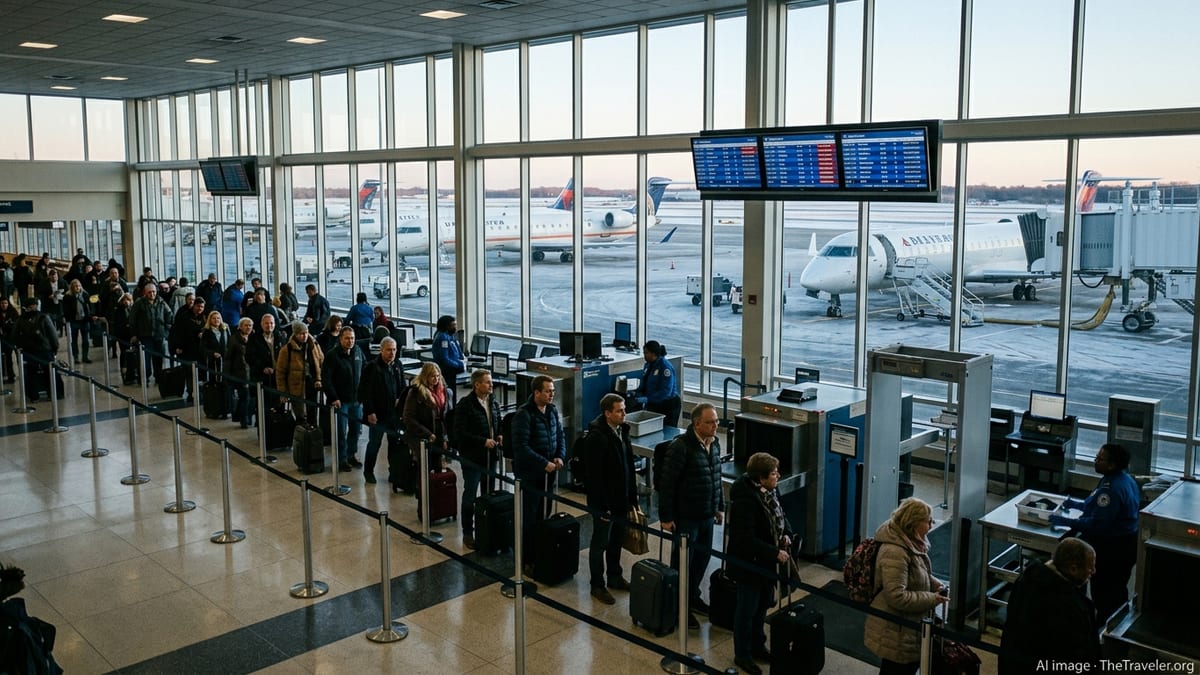
McGhee Tyson Becomes a Regional Bottleneck
Publicly available tracking data and airport schedules show Knoxville’s McGhee Tyson Airport emerging as a pressure point in the regional network, with dozens of flights involving American, Delta, and Allegiant either running significantly late or removed from schedules. The disruptions span both departures from Knoxville and inbound legs that feed key hubs across the Southeast, turning what is typically a modestly sized regional field into a flashpoint for operational stress.
The airport serves as an important spoke for connections to Atlanta, Charlotte, Dallas Fort Worth, and leisure destinations in Florida, making irregular operations in Knoxville ripple quickly into missed connections and rebookings at larger hubs. Reports from consumer flight-tracking tools indicate a clustering of delayed departures in the morning and early afternoon periods, when business travelers and vacationers are most likely to be moving through the terminal.
Although McGhee Tyson is not one of the nation’s largest airports, prior traffic reports from the local airport authority identify American, Delta, and Allegiant as core carriers at the field. This concentration means that when more than forty flights on a single day are delayed or canceled across these three airlines, the practical effect on Knoxville’s traveling public can be comparable to far larger disruptions at big-city hubs.
American and Delta Struggle to Keep Hubs Connected
American and Delta rely on Knoxville for short regional hops that funnel passengers into their main connecting complexes, including Charlotte and Dallas Fort Worth for American and Atlanta and LaGuardia for Delta. On the day of the disruption, multiple flights in these key corridors experienced extended delays, while some rotations were withdrawn from the schedule entirely, leading to a cumulative count of 46 affected flights across the three carriers.
Industry data and recent consumer reports suggest that problems in one part of the network can quickly cascade, particularly for hub-and-spoke operators such as American and Delta. Late arriving aircraft, minor maintenance concerns, and congestion at hub airports can combine to push back departure times from smaller spokes like Knoxville, creating a wave of missed onward connections for travelers bound for other domestic or international destinations.
Travelers using Knoxville as a starting point for trips into the Northeast and Midwest appear to be particularly exposed in such events, as their itineraries often depend on tight connection windows in Charlotte, Dallas Fort Worth, or Atlanta. When recurring delays at McGhee Tyson push regional departures outside these windows, passengers can face extended layovers, rebooking onto later flights, or even overnight stays, raising both out-of-pocket costs and frustration levels.
Allegiant’s Leisure Routes Add to the Chaos
Allegiant, which maintains an operating base at Knoxville, has become a significant player in linking East Tennessee with leisure markets in Florida and other sun destinations. On the day of disruption, a number of Allegiant-operated services tied to Knoxville showed altered departure times, unscheduled gaps, or cancellations in route histories, adding another layer of volatility to an already strained local schedule.
The carrier’s point-to-point model relies less on large connecting hubs and more on direct holiday traffic, but it is not immune to the broader operational challenges that have affected airlines across the United States in recent seasons. When a single Knoxville-based aircraft encounters maintenance issues or weather-related restrictions at a destination, it can throw off several subsequent legs, producing clusters of delayed departures that compound bottlenecks at McGhee Tyson.
Because Allegiant flights from Knoxville often operate only a few times per week on certain routes, a same-day cancellation can be particularly impactful. Travelers may have limited rebooking options on the same carrier from the same airport, meaning that even a single scrapped flight can strand vacationers or returning residents and force them to seek ground transportation to neighboring airports or entirely different travel dates.
Passengers Turn to Nearby Airports and Workarounds
As delays and cancellations stacked up in Knoxville, public discussion among travelers highlighted a familiar set of contingency plans. Some passengers looked to nearby Chattanooga or larger hubs within driving distance, such as Atlanta and Nashville, as potential escape valves when same-day options out of McGhee Tyson appeared constrained. Others turned to alternative carriers with more frequent frequencies at larger airports, even if it meant several hours on the road before boarding.
Online forums and traveler anecdotes from recent months illustrate how East Tennessee flyers increasingly mix driving and flying when irregular operations strike. For some, that means booking refundable tickets from multiple airports when weather or congestion appears likely to disrupt Knox-area departures. For others, it can involve accepting reroutes that add additional connections but offer a higher likelihood of reaching their destination on the same day.
The multi-airport strategy carries its own costs in terms of time and money, yet it reflects growing concern among frequent travelers that regional spokes can quickly become chokepoints when a combination of carrier-specific issues and broader system stress intersects. The latest episode at McGhee Tyson reinforces this perception, particularly as travelers compare Knoxville’s options with those in larger metro areas.
Patterns of Strain in a Busy Summer Travel Season
The disruption episode in Knoxville mirrors a broader pattern of strain visible across the U.S. airline system during peak periods. Recent coverage of gridlock events at other airports has underscored how quickly scheduled operations can unravel when traffic peaks intersect with tight crew availability, lingering maintenance backlogs, or air traffic control constraints in busy corridors.
Knoxville’s experience is emblematic of the challenges faced by regional airports that host a mix of network and leisure carriers. While McGhee Tyson does not see the same volume as major coastal hubs, its role as a connector for both business travel and tourism means that high numbers of delays and cancellations can reverberate far beyond East Tennessee. Families heading to vacation destinations, students traveling to and from universities, and business travelers all feel the downstream effects when dozens of flights fail to operate as planned.
With summer demand expected to remain strong, aviation analysts and travel advocates are watching how airlines adjust their schedules and staffing for smaller markets like Knoxville. The cluster of 46 disrupted flights involving American, Delta, and Allegiant serves as a reminder that operational resilience in regional spokes is just as critical to passenger experience as reliability at headline-making mega hubs.