


More news on this day
Hundreds of passengers at Raleigh–Durham International Airport faced hours of disruption on June 14 as a wave of weather related and knock on operational issues triggered 19 flight cancellations and more than 100 delays across PSA Airlines, Endeavor Air, Delta Air Lines, Southwest and American Airlines, snarling travel to major domestic hubs including Boston, Houston, Miami, Orlando and Los Angeles.
Get the latest news straight to your inbox!
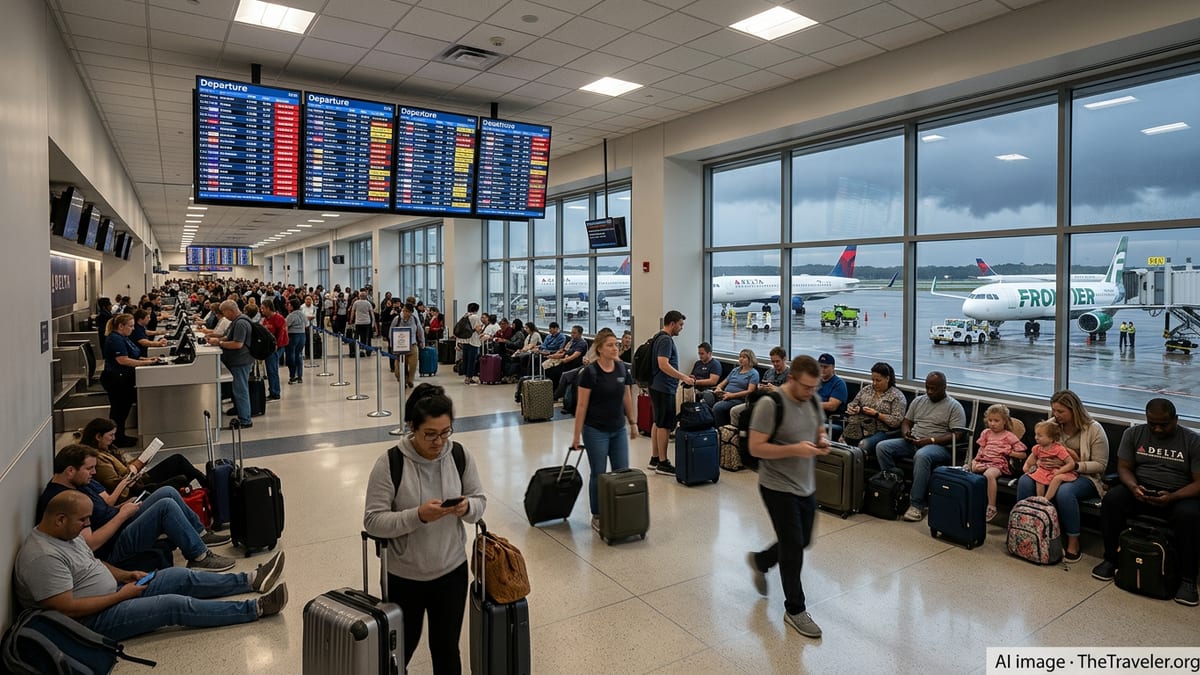
Ripple Effects Hit Key Domestic Routes
Publicly available flight tracking boards for Raleigh–Durham International Airport on June 14 show a concentration of disruption on high demand routes that link the Research Triangle with major business and leisure markets. Services to Boston, Houston, Miami, Orlando and Los Angeles all saw cancellations or extended delays, with some flights scrubbed entirely while others departed hours behind schedule.
Data compiled from multiple flight status platforms indicates that passengers headed to Boston were among the hardest hit, with at least one nonstop service from Raleigh–Durham dropped from the schedule and other departures posting significant delays. Similar patterns appeared on services to Florida leisure gateways, where tight turn times and high passenger loads make operations more vulnerable when weather or air traffic control programs slow the system.
Connections to Houston and Los Angeles also experienced disruption as crews and aircraft arriving late from other parts of the country missed their scheduled departure windows from Raleigh–Durham. The resulting rolling delays left departure boards showing gaps, gate changes and revised times across much of the afternoon and evening bank of flights.
For many travelers this meant missed onward connections and the need to rebook hotel and ground transport plans at short notice, particularly for those relying on same day transfers through busy hubs in the Northeast and Texas.
Regional Feeders PSA and Endeavor Under Strain
The pattern of disruption at Raleigh–Durham highlights the vulnerability of regional feeder operations that connect smaller markets into major airline hubs. PSA Airlines, which operates under the American Eagle brand, and Endeavor Air, a regional affiliate of Delta, both carry a significant share of connecting traffic through the airport according to airport activity reports and airline network data.
When weather or congestion slows hub operations, published coverage of recent events across the US network indicates that regional flights are often the first to be delayed or cancelled as airlines prioritize long haul and higher capacity services. The June 14 issues at Raleigh–Durham followed this familiar pattern, with smaller regional jets disproportionately affected and passengers on multi segment itineraries left to navigate complex rebooking scenarios.
In some cases, regional cancellations at Raleigh–Durham broke entire connection chains for travelers trying to reach Boston, Miami or Los Angeles via intermediate hubs. With seat availability tight at the start of the summer peak, many stranded passengers faced limited same day alternatives and were shifted to flights departing one or even two days later.
The situation also placed additional pressure on customer service channels, as travelers sought to change itineraries via mobile apps, call centers and airport kiosks while new delays continued to develop across the network.
Major Carriers Juggle Weather, Crews and Aircraft
Delta Air Lines, American Airlines and Southwest, all key operators at Raleigh–Durham, contended with simultaneous operational challenges that extended beyond North Carolina. Industry tracking of June 14 activity shows that thunderstorms and associated air traffic control programs across the Eastern United States led to ground delay measures, reroutes and capacity restrictions at several major hubs.
According to publicly accessible airline exception notices and operational summaries, carriers introduced flexible rebooking policies on select city pairs, including routes touching Boston, as weather systems moved through New England and the Mid Atlantic. These measures were designed to encourage passengers with flexible plans to shift to less congested days or flight times, easing immediate pressure on strained schedules.
At the same time, aircraft and crew scheduling proved difficult as earlier delays created a shortage of available pilots and flight attendants positioned at the right airports when later departures were due to operate. This contributed to rolling delays on some Raleigh–Durham departures even after local conditions improved, as replacement crews and aircraft had to be ferried in from other stations.
Southwest’s point to point model and the hub focused operations of American and Delta each faced distinct challenges, but all three carriers recorded irregular operations tallies that translated into longer lines at gates and customer service desks throughout the day.
Passengers Report Long Waits and Limited Options
Accounts shared across social media platforms and in local news coverage from June 14 describe long queues at check in and customer service counters at Raleigh–Durham, with some passengers waiting more than an hour to speak with airline staff about missed connections and overnight accommodations. Others reported relying heavily on airline mobile applications to secure new itineraries as airport staffing struggled to keep pace with the volume of disrupted travelers.
With 19 cancellations and more than 100 delays recorded across the airport’s departure boards, same day rebooking options on key routes such as Boston, Houston, Miami, Orlando and Los Angeles were quickly exhausted. Travelers with flexibility often accepted routings through secondary hubs or agreed to split groups across multiple flights to secure any remaining seats.
Families and leisure travelers heading to Florida and California destinations reported particular frustration as theme park tickets, cruises and vacation rentals were thrown into doubt. Business travelers, meanwhile, faced the prospect of rescheduled meetings or remote participation from airport lounges and hotel rooms as they waited for new departure times.
Consumer advocates note that compensation and accommodation policies vary by carrier and by cause of disruption, leaving many passengers uncertain about their entitlements when irregular operations are tied to a mix of weather and crew availability rather than a single identifiable factor.
Ongoing Vulnerabilities at a Fast Growing Airport
Raleigh–Durham International has grown rapidly in recent years, with published airport statistics showing strong traffic to major domestic markets such as Boston, Miami, Orlando, Houston and Los Angeles. That growth has increased the importance of the airport as both an origin and connecting point, while also exposing passengers to the cascading effects of disruptions elsewhere in the national airspace system.
Industry analysts point out that the reliance on regional affiliates such as PSA Airlines and Endeavor Air, combined with concentrated peak departure banks by Delta, American and Southwest, can amplify the impact of even a modest number of cancellations. When 19 flights are scrubbed and more than 100 are delayed within a single day’s schedule, aircraft and crews quickly fall out of position and recovery can take several rotations.
Travel experts suggest that passengers using Raleigh–Durham during the summer thunderstorm season build additional buffer time into itineraries that rely on tight connections, especially when routing through busy hubs in the Northeast and along the Gulf Coast. They also recommend tracking flights closely on the day of departure and considering earlier departures when possible to reduce exposure to afternoon and evening storm patterns that frequently trigger ground delay programs.
As airlines and the airport work through the aftermath of the June 14 disruptions, observers note that the episode underscores how quickly operations at a single fast growing airport can be upended when weather, staffing and network complexity converge at the start of the busy summer travel period.