


Reims combines grand Gothic architecture, underground champagne cathedrals and easy high speed access from Paris, which makes it one of France’s most appealing short breaks. Whether you are planning a single sparkling day trip or a long weekend focused on tastings, the city offers polished big name cellars, independent wine bars pouring grower champagnes and quick connections into the vineyards of the Montagne de Reims and Épernay. This guide brings together current, on the ground information to help you book trains, secure coveted cellar tour slots and design the kind of champagne experience that suits your time and budget.
Get the latest updates straight to your inbox!
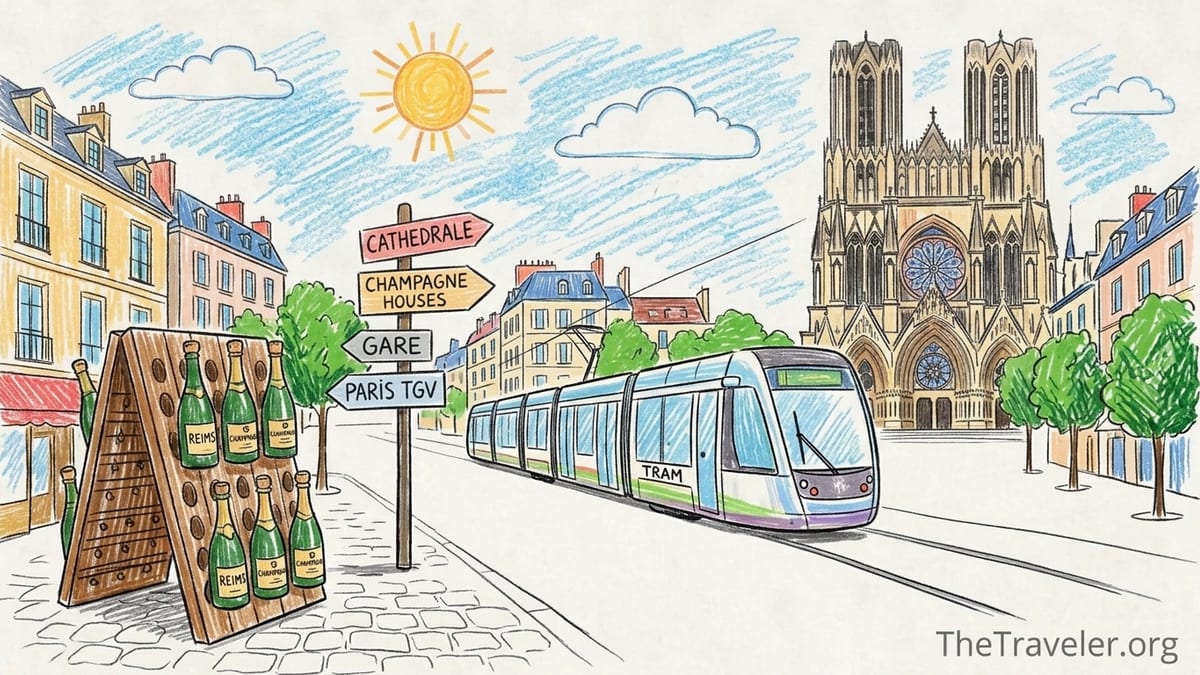
Why Reims is Champagne’s Essential City Break
Reims is the de facto capital of the Champagne region, around 130 kilometres east of Paris. It is large enough to offer serious dining, shopping and museums, yet compact enough that most visitors can cross the historic centre on foot in fifteen to twenty minutes. The city’s most striking landmark is Reims Cathedral, where French kings were crowned for nearly a thousand years. Just a short walk away, some of the world’s best known champagne houses age their wines in chalk quarries buried beneath the streets.
For travellers, one of Reims’s major advantages is how easy it is to reach without a car. Since the opening of the East European high speed line, direct TGV trains link Paris Gare de l’Est with central Reims in about forty five minutes, giving visitors the option to sleep in Paris and come in for the day, or base themselves in Reims and make several forays into the countryside. Regional trains connect Reims with Épernay and smaller towns in Champagne, so it is possible to see vineyards and visit producers without driving.
The city itself has invested in visitor infrastructure, with a modern tram network, a compact pedestrian core and a tourism office that publishes maps of champagne houses, museums and suggested walking routes. While Reims lacks the endless stream of international chains you might find in a larger capital, it does offer a strong range of midscale hotels and apartments frequently highlighted on large booking platforms, many within a short walk of the station or cathedral.
Beyond practicalities, Reims has a lived in, local feel. Champagne production shapes the rhythm of the year, especially in harvest season, but the city is also a university and regional administrative centre. Between tastings, you can fit in art at the Musée des Beaux Arts, stained glass by Marc Chagall in the cathedral, and café terraces along Place Drouet d’Erlon, where locals linger over a glass of fizz long after day trippers have boarded their evening trains back to Paris.
Getting to Reims from Paris and Around the Region
Most international visitors reach Reims by rail from Paris. From Gare de l’Est, high speed TGV InOui services cover the distance to Reims station in around forty five minutes. According to the latest timetable information published in 2024 and 2025, there are generally several direct TGV departures in each direction on a typical weekday, though exact frequencies can vary by season. Advance one way fares on these trains can sometimes fall under 30 euros if booked early, while last minute tickets on busy days can climb significantly higher, especially around harvest and holiday weekends.
Another option is to travel from Paris to Champagne Ardenne TGV station at Bezannes, just southwest of Reims. Certain high speed and regional services stop here, and a local tram or shuttle covers the roughly ten to twelve minute ride into the city centre. Some regional passes promoted on French transport forums combine a group ticket from Paris to Champagne Ardenne TGV with local connections, but these usually exclude the fastest TGVs. For most short stay visitors wanting to maximise time, the direct Paris Reims TGV remains the most straightforward choice.
Once in Reims, the main station sits at the edge of the compact centre. The city tram lines T1 and T2 and several bus routes stop outside, making it easy to reach hotels and champagne houses that are not within walking distance. Regional TER trains link Reims with Épernay in roughly forty minutes, putting Avenue de Champagne and producers such as Moët and Mercier within comfortable reach for a day trip. Visitors planning multiple vineyard excursions may also consider hiring a private driver or booking a small group minivan tour, especially for more rural producers where public transport is limited.
For travellers on a tighter budget, slower regional services between Paris and the Champagne area operate alongside the TGVs. These trains take longer and can involve changes at stations like Épernay or Château Thierry, but they are sometimes combined with weekend group passes promoted by regional operators, which can be cost effective for small groups willing to accept a longer journey and fewer departure choices.
Booking Reims Hotels and Using Major Platforms
Large online booking platforms, including those frequently used by international travellers, provide a good overview of accommodation in Reims. The city’s hotels and apartments cluster in three broad zones: near the station, around the cathedral and town hall, and in quieter residential districts just beyond the tram lines. Many properties near Gare de Reims market themselves specifically to visitors arriving for champagne tastings, highlighting early check in options and baggage storage for those planning to go straight from the train to a cellar tour.
Midrange chain hotels close to the station often advertise double rooms starting somewhere around 100 to 130 euros per night on off peak weekdays, with higher rates during major events and harvest season. More characterful boutique hotels within a short walk of the cathedral and Place Royale tend to price a little higher, reflecting their location in historic buildings and smaller room counts. Self catering apartments and aparthotels are also widely listed on platforms and can be a good value for groups who prefer a kitchen and separate sleeping spaces.
When using large booking sites, it is worth looking carefully at cancellation conditions. Many Reims properties offer free cancellation until a day or two before arrival, which can be valuable if you are also trying to coordinate cellar tours with limited daily slots. Filtering for properties within 800 metres of the cathedral or station will keep you within comfortable walking distance of most restaurants, bars and several major champagne houses, without needing to rely heavily on taxis or trams in the evening.
If your main goal is champagne, pay attention to hotel descriptions that mention partnerships with local houses or tour operators. Some hotels host small group tastings in their own bars, offer discounted cellar tour packages or can secure last minute spots with nearby houses when visitors miss their original bookings due to delayed trains. This kind of local support can be very useful on a tight schedule, especially for travellers on day trips from Paris.
Inside the Great Champagne Houses of Reims
Reims is home to several of the most recognisable champagne houses in the world, many of which age their wines in underground chalk quarries known as crayères. These cellars, some dating back to Roman times, are part of a UNESCO World Heritage listing and are among the city’s main visitor attractions. Tours combine a walk through dramatic galleries lined with bottles, an introduction to the region’s history and production methods, and a tasting of at least one cuvée.
Veuve Clicquot operates a dedicated visitor centre at 1 rue Albert Thomas in Reims, a short drive or taxi ride from the central station. According to 2026 pricing published on specialist booking and information sites that track the houses’ own rates, entry level cellar visits start around 36 euros for approximately one hour, including a tour of the crayères and tasting of its Brut Yellow Label. More elaborate experiences, such as extended ageing themed visits or vineyard picnics at the Manoir de Verzy estate, are priced higher and are often seasonal with specific opening periods between April and late summer.
Other major houses receive visitors on similarly structured tours. Taittinger welcomes guests at its cellars on Place Saint Nicaise, where visits include a video presentation, guided walk through Gallo Roman chalk pits and medieval remains beneath the former Saint Nicaise Abbey, followed by a tasting. Independent comparisons of Reims champagne houses suggest that standard visits at several big names such as Mumm and Pommery generally fall into the 30 to 50 euro range for one or two glasses of champagne, with more premium tastings available at higher prices.
Because cellar slots are limited and many houses close on certain weekdays or in winter, advance online booking is strongly recommended. Recent visitor reports indicate that popular afternoon slots at stars such as Veuve Clicquot, Ruinart and Taittinger can sell out weeks ahead during May, June, September and October, especially for English language tours. If you are planning a single day in Reims from Paris, it is sensible to secure your main tour first, then book train tickets that allow at least an hour between your planned arrival and the start of the visit.
Tastings, Wine Bars and Grower Champagne
While the famous houses dominate most first time itineraries, Reims also offers a dynamic scene for exploring smaller grower producers whose names rarely appear on supermarket shelves. For travellers who have already toured several big cellars, or who prefer to focus on tasting rather than guided walks, the city’s specialist wine bars and bottle shops provide an efficient and relaxed alternative.
Local recommendations frequently highlight addresses such as Trésors de Champagne, a bar and shop concept focused on independent winemakers, Wine Bar Le Vintage, and Le Pressoir, where champagnes are often organised by price and village. These venues typically pour a rotating selection of grower bottles by the glass, with prices starting somewhere around 8 to 12 euros for entry level pours and increasing for rarer cuvées. Staff are often happy to talk through styles and producers, which makes these bars excellent places to learn about terroirs and winemaking approaches without leaving the city centre.
Several Reims restaurants have also built notable champagne lists, pairing local bottles with contemporary French cooking. Recent traveller and guide commentary points to addresses such as Racine, a Michelin starred restaurant with a strong emphasis on Champagne producers, and Le Foch, known for classic preparations and an extensive cellar. Securing a table at these restaurants usually requires advance booking, especially on Friday and Saturday nights, but a long lunch paired with grower champagnes can be a highlight of a Reims stay.
For visitors keen to take bottles home, independent cavistes across the centre stock both big houses and smaller growers. Prices for non vintage brut champagnes from reputable growers in shops often start under 30 euros, while well known brands cost more, similar to city wine shop prices in Paris. International travellers should confirm duty free allowances and airline baggage limits before buying heavily, particularly if flying long haul soon after their Champagne visit.
Planning the Perfect Champagne Day Trip from Paris
A well structured day trip from Paris to Reims is very achievable and remains one of the region’s key draws. A common pattern is to book a morning or early afternoon TGV from Gare de l’Est to Reims, plan one major cellar tour, add a second tasting focused experience, and allow a couple of hours for the cathedral and a meal. With a direct high speed train, many visitors can have breakfast near their Paris hotel and still arrive in Reims before 10:00, leaving ample time for a late morning tour.
To give a realistic example using current schedules, imagine boarding a mid morning TGV from Paris that arrives in Reims around 10:15. After a short walk to drop bags at a hotel near the station or cathedral, you could take a taxi or tram to a late morning cellar visit at Veuve Clicquot or Taittinger starting around 11:30. Following the tour and tasting, a leisurely lunch back in the centre leaves the mid afternoon free for a second experience, such as a visit to another house like Pommery or a seated tasting flight at a specialist champagne bar.
Organised day trips from Paris bundle many of these elements. Operators advertise packages that include round trip high speed train tickets, a guided cellar visit at a major house, transport through the vineyards and a stop at a family run producer. Recent brochures for small group agencies give examples of full day programmes priced in the several hundred euro range per person when including TGV fares, lunch and multiple tastings. These tours are particularly convenient for travellers who are nervous about driving after tastings or who prefer not to manage separate bookings.
Do keep in mind that harvest season and key dates such as late summer weekends or the Reims Christmas market period can put pressure on both train tickets and cellar availability. Booking TGV seats several weeks ahead, arriving in Reims at least an hour before your first tour, and building a buffer before your return train can help avoid stress if there are delays or extended tastings.
Beyond the Bubbles: Culture, Seasons and Practical Tips
Although champagne is the star attraction, Reims rewards travellers who give themselves time for its cultural and seasonal layers. Reims Cathedral and the adjoining Palais du Tau together tell the story of French coronations, with sculpted façades, stained glass and royal treasures that warrant at least a couple of hours. The city also preserves Roman remains such as the Porte de Mars arch, and has museums dedicated to fine arts and to the 1945 German surrender in the Second World War, signed in a school building that now houses the Musée de la Reddition.
The timing of your trip will shape the feel of the city and the champagne experiences available. Spring brings fresh greenery to the surrounding vineyards and the reopening of some seasonal vineyard tours and picnics run by houses such as Veuve Clicquot at their Manoir de Verzy estate. Late August and September see harvest preparations and picking, though exact dates depend on the vintage and regulatory decisions. Many travellers enjoy visiting in autumn, when cellar tours still run but the crowds thin slightly outside school holidays. December is popular for the Reims Christmas market, when stalls and light displays give the centre a festive atmosphere, and some houses adjust their tour times to shorter winter days.
On the practical side, comfortable shoes and a light jacket are essential for cellar visits. Underground temperatures in the chalk quarries stay cool year round, often around 10 to 12 degrees Celsius, and there are usually several flights of stairs to descend and climb. Most houses offer tours in multiple languages on different time slots; English language visits can be limited in shoulder season, so check the booking options carefully when reserving.
Responsible tasting is an important consideration. Champagne pours on tours can be generous, and it is easy to underestimate the cumulative effect of multiple glasses, particularly at lunchtime and in the afternoon. Many visitors opt for spittoons during comparative tastings or alternate between alcoholic and non alcoholic drinks. If you plan to drive in Champagne, consider booking a designated driver, private guide or group minivan tour so you can enjoy the region’s wines without worrying about local drink driving laws.
Designing Your Ideal Reims Champagne Escape
Reims lends itself to several styles of trip, from a single sparkling detour out of Paris to a multi day base for exploring the wider Champagne region. A first visit might reasonably focus on one or two of the headline houses such as Veuve Clicquot, Taittinger or Pommery, a few glasses of grower champagne in a recommended wine bar, and time to walk between the cathedral, main squares and your hotel. With two or three nights, you can add a regional train ride to Épernay, a guided tour to small producers in the Montagne de Reims, or a long lunch in one of the city’s more ambitious restaurants.
When planning, start by fixing the key pieces that have limited daily capacity: cellar tours and, if you are travelling from Paris, TGV tickets. Once those are confirmed, use hotel booking platforms to select accommodation in the area that makes the most sense for your movements, whether that is a station side chain hotel aimed at short stays or a more atmospheric address in the old town. Fill the gaps with flexible options such as champagne bars, museum visits and cathedral time that can be swapped around if trains or weather change.
Above all, allow yourself some unscheduled moments. One of Reims’s quiet pleasures is simply stepping out of a chalk scented cellar into the daylight, walking back through tree lined streets, and pausing at a café terrace with a glass of something local. With good planning on trains, bookings and timing, the city offers both the high polish of world famous champagne houses and the relaxed rhythm of a provincial French town. That combination is what makes Reims stand out as one of the most rewarding and accessible sparkling getaways from Paris.