


Most travelers’ first glimpse of Iceland is not a waterfall or lava field but the glass and steel of Keflavik International Airport, about 50 kilometers from Reykjavik. For first-time visitors, understanding how this compact but busy airport works can make the difference between a stressful arrival and an easy start to your Iceland adventure. This guide walks you through arrivals, departures, transport, car rental, nearby hotels, parking, lounges and key tips tailored to people visiting Iceland for the first time.
Get the latest updates straight to your inbox!
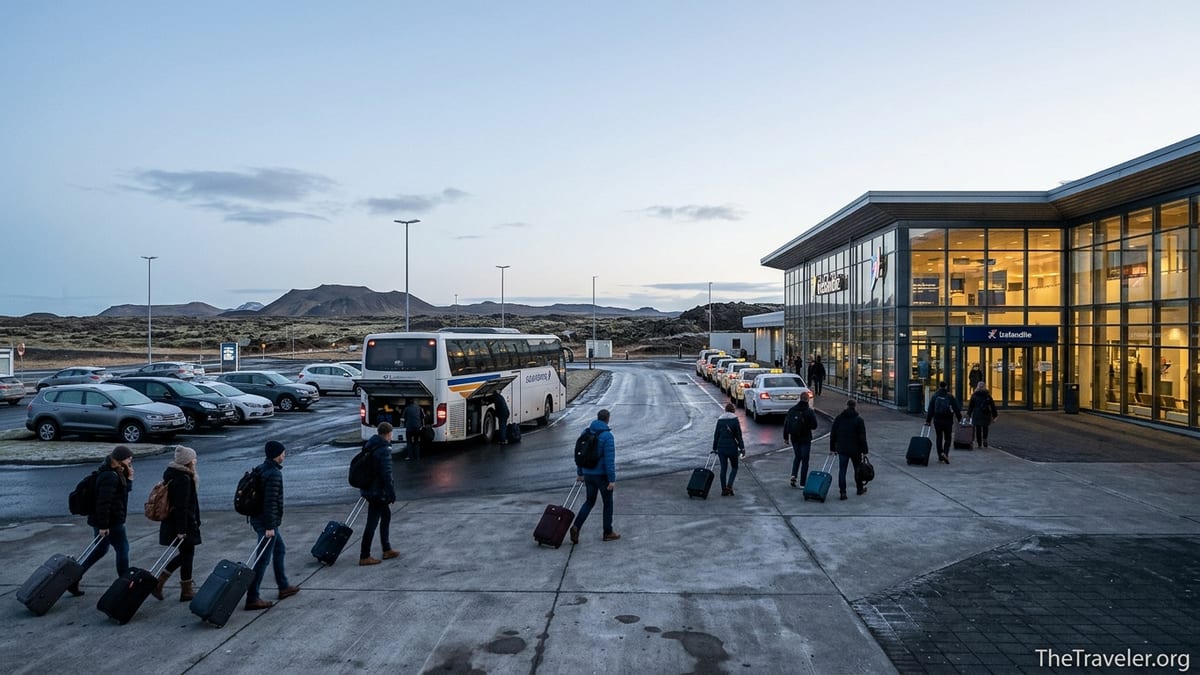
Understanding Keflavik: Iceland’s Main International Gateway
Keflavik International Airport, often abbreviated as KEF, is Iceland’s primary international gateway and the hub for Icelandair and several low-cost European carriers. It sits on the Reykjanes Peninsula, roughly a 45 minute drive from central Reykjavik in normal traffic. Despite sometimes being referred to as “Reykjavik Airport” in airline bookings, it is a separate facility from Reykjavik’s small downtown domestic airport, which handles most internal Iceland flights.
The airport operates from a single passenger terminal that has been expanded in stages, so you may notice older and newer sections connected together. For passengers, this means you do not need to worry about changing terminals for connecting flights; all international departures and arrivals share the same building. Walking distances are moderate, but if your gate is at the far end of the pier, expect a 5 to 10 minute walk from the main shopping and dining area.
Free Wi-Fi is available throughout the terminal, and mobile data coverage from major Icelandic providers is strong. Many travelers pick up local SIM cards or eSIM plans on arrival so they can navigate easily once they leave the airport. The terminal has several ATMs accepting major cards, and Iceland is highly card friendly, so cash is generally optional for most visitors.
Flight schedules at Keflavik are heavily peaked. Early morning and late afternoon often see clusters of transatlantic arrivals and departures. At these times, lines for passport control, security and coffee can grow quickly. Building in extra time during these peak windows is one of the simplest ways to reduce stress, especially if you are connecting on to Europe or North America the same day.
Arriving in Iceland: From Plane Door to Exit
On arrival, passengers typically disembark via jet bridge and walk through a series of corridors to passport control. For travelers from the Schengen Area, you may enter through a different passport lane than non-Schengen arrivals, but the overall flow is straightforward with clear English signage. Wait times at passport control can vary from a few minutes to around 30 minutes when multiple large flights arrive together. Electronic gates are occasionally available for some passport holders but you should be prepared to queue.
After passport control, you reach baggage claim. The hall is compact with a row of carousels, overhead screens showing flight numbers, and duty free shops positioned both for arriving and departing passengers. Many Icelanders and frequent visitors buy liquor or cosmetics here because prices are often lower than in Reykjavik city shops. For a first-time visitor, it can be a good place to pick up basic items like sunscreen, moisturizer for the dry air or a power adapter if you forgot one.
Once you collect your luggage, you pass customs, which usually involves walking through a green channel unless officers request inspection. Immediately after customs, you emerge into the public arrivals hall. Here you will find bus company desks such as Flybus and Airport Direct, car rental counters, a small selection of cafes and fast food outlets, an information desk, and restrooms. This is the moment to decide whether you will walk to your bus, collect a rental car, or head to a nearby hotel.
If you land late at night or very early in the morning, note that some concessions in the arrivals hall may have limited opening hours, although major transport services time operations to match flight schedules. If you have a long layover or need to wait for companions, the seating areas around the arrivals hall and just upstairs in departures offer places to sit, connect to Wi-Fi and regroup before continuing your journey.
Ground Transport: Getting From Keflavik to Reykjavik and Beyond
For first-time travelers, the most common way to reach Reykjavik from Keflavik is by airport coach. Services such as Flybus and Airport Direct run frequent buses that meet arriving flights and operate into the city. As a rough guide, a one-way adult ticket from the airport to Reykjavik’s main bus terminal typically costs in the range that many visitors would spend on an inexpensive dinner, with discounts for returns and children. These buses usually take about 45 minutes to 1 hour, depending on traffic and whether you have arranged a hotel drop off.
Coaches depart from bays directly outside the terminal. After exiting the arrivals hall, follow signs for “Buses” or “Airport buses.” Many passengers pre-book online, but you can usually buy tickets at the company desk in the arrivals hall or from self service kiosks. For example, a traveler landing on a morning Icelandair flight from Boston might walk straight from customs to the Flybus counter, buy a one-way ticket with hotel drop off, and be on a bus within about 30 to 40 minutes of landing.
Taxis are also available in a rank just outside the terminal. A metered taxi to central Reykjavik typically costs several times more than an airport coach ticket, so taxis are best for groups who can share the fare, travelers with large amounts of luggage, or those arriving at times when buses are less frequent. Some taxi companies offer fixed price airport transfers if booked in advance. For a family of four with suitcases, a pre booked taxi can be cost competitive with four coach tickets while providing direct hotel to door service.
Public bus route 55 operated by the regional bus company offers a lower cost option between Keflavik and Reykjavik, but it runs less frequently and stops at a bus station a few hundred meters from the terminal near the main car rental area. This option suits budget travelers who are comfortable walking with luggage in potentially windy or rainy conditions and who have checked the timetable in advance. Journey times are longer than the dedicated airport coaches but the savings can be significant for solo travelers on tight budgets.
Car Rental, Driving and Returning Vehicles at Keflavik
Renting a car is one of the most popular ways for visitors to explore Iceland, especially if you plan to drive the Ring Road or visit remote areas. At Keflavik, major international brands like Hertz, Avis, Budget, Europcar and Sixt operate alongside local companies such as Blue Car Rental and Reykjavik Rent A Car. Most companies maintain desks in or just outside the terminal, with vehicles parked in designated car rental lots within a short shuttle ride or walk.
For a typical summer trip, many visitors book compact crossovers or 4x4 vehicles that can handle gravel roads and changeable weather. Daily prices vary widely by season, demand and vehicle size, but it is common for summer rentals to cost several times more than winter rates. Rental desks often offer additional insurance coverage for gravel, sand and ash damage, which can be worthwhile given Iceland’s conditions. A realistic example would be a couple renting a small 4x4 for a week in July, adding gravel protection and an extra driver at pick up, and paying the equivalent of several hundred US dollars for the package.
When returning a car to Keflavik, follow signs for “Car rental return” as you approach the airport. These direct you to a cluster of lots and mini offices slightly away from the main terminal. You will usually park in a marked bay, have the vehicle inspected for damage and fuel level, and then either walk or take a short shuttle back to the terminal. Many travelers recommend allowing at least 30 extra minutes on top of your usual airport arrival time to handle car return, especially on busy days or if weather is poor.
First-time drivers should remember that Iceland’s roads outside the capital can be narrow, unlit and exposed to wind. Connecting your phone to offline maps before leaving the airport and familiarizing yourself with local rules, such as mandatory headlights at all times, can prevent problems. In winter, it is wise to check the national road administration’s weather and road reports before deciding whether to drive into the interior or stick to main routes closer to Reykjavik.
Hotels Near Keflavik Airport and When to Use Them
Although many visitors stay in Reykjavik, there are several hotels close to Keflavik Airport that are useful for early morning departures, late night arrivals or short layovers. The Aurora Airport Hotel is located within easy walking distance, roughly across the main parking area from the terminal. It appeals to travelers who want to land, collect their bags, walk to a warm bed in five to ten minutes and walk back in time for a dawn departure without arranging any transport.
A little farther away, the Courtyard by Marriott Reykjavik Keflavik Airport and other local hotels in the town of Keflavik offer modern rooms and are a short taxi ride from the terminal. Guests often book these properties when they have an early flight out and do not want to risk unexpected bus or road delays from Reykjavik. For example, a traveler with a 7:00 a.m. departure to New York might stay at the Courtyard the night before, take a quick taxi to the terminal around 4:30 a.m., and be at check in within minutes.
Prices near the airport can fluctuate significantly with seasons and events. In peak summer, same day bookings at the Aurora Airport Hotel can be at a clear premium compared with budget hotels in Reykjavik, but the convenience of being able to walk to your room after a midnight arrival is often worth the additional cost. In winter, airport hotels may offer more competitive rates, making them a practical base for an early visit to the Blue Lagoon or exploration of the Reykjanes Peninsula before heading into the city.
If you instead plan to go straight to Reykjavik on arrival, it is still helpful to know that the main airport coaches offer hotel drop off or designated bus stop drop off in central areas. Many first-time visitors book accommodation near the main BSI bus terminal or one of the official bus stops, such as those used in the downtown and harbor districts, to avoid navigating narrow streets with large suitcases.
Parking and Dropping Off at Keflavik
For travelers picking up or dropping off friends, or for those who have rented a car in Reykjavik and driven to the airport, Keflavik offers a mix of short term, long term and premium parking options around the terminal. The official airport parking maps show several color coded lots with different walking distances and price levels. Short term parking is located closest to the terminal entrance, suitable for quick drop offs or pick ups where you expect to stay less than an hour.
Long term parking is set slightly farther back and is typically used by residents leaving their cars for several days, or visitors who have borrowed a vehicle from friends in Reykjavik and need to leave it while they travel. Prices are usually charged per 24 hour period and can add up on longer trips, so many locals compare the total parking cost against taking an airport coach from the city. A practical example would be a Reykjavik based traveler leaving a car for a week in long term parking and spending an amount similar to two return coach tickets, making driving worthwhile if several family members travel together.
Premium parking, positioned closest to the terminal doors, is more expensive but useful for travelers with mobility issues, heavy luggage or very tight schedules. It can also be valuable in rough winter weather when icy winds and blowing snow make even a short outdoor walk unpleasant. Regardless of which lot you use, it is sensible to photograph your parking space number, row or nearby landmarks so you can find your vehicle easily when you return, especially if you arrive back in darkness, which is common in winter months.
Drop off areas near departures are typically signed for quick stops only. Drivers should not leave vehicles unattended outside the terminal or in coach bays, as this can lead to fines or towing. If you need to accompany someone inside for check in, the short term lot is the safer choice, allowing you to park legally and take the few extra minutes to walk with them into the building.
Departures, Security and Lounges
The departures level at Keflavik is accessed via escalators or elevators from the arrivals hall. Check in counters line the main hall, grouped by airline. Icelandair occupies a large block of counters, while low cost carriers like Play, Wizz Air and some seasonal operators use other banks. Many passengers check in online and proceed straight to bag drop kiosks, which can save time during busy morning waves.
After check in and any necessary tax refund procedures, you proceed through security screening. Lines move reasonably quickly during off peak hours, but during early morning and late afternoon rush periods, it is wise to allow at least two hours before departure for European flights and closer to three hours for North America, especially in peak summer. There is currently no large scale fast track program for most economy passengers, so arriving early remains your best strategy.
Post security, you emerge into the main departures hall with duty free shops, Icelandic design boutiques, cafes and casual dining options. Food choices range from simple sandwiches and pastries to sit down meals featuring local fish or lamb. Prices reflect airport markups but are not dramatically higher than downtown Reykjavik. Many travelers grab a bowl of lamb soup, a skyr yogurt and a coffee here as a last taste of Iceland before boarding.
For those seeking quiet space, the Icelandair Saga Lounge is the primary full service lounge at Keflavik. Access is usually limited to Icelandair business class and Saga Premium passengers, higher tier frequent flyers and selected partner airline elites. It is not typically available via major lounge membership programs, and walk up paid entry is rare. Inside, guests find buffet food, drinks including local beer, showers and panoramic runway views. Economy travelers without status often choose to instead find quieter corners near the far gates or sit in one of the restaurants with a view while charging devices before boarding.
First-Time Iceland Tips: Weather, Timing and Common Mistakes
One of the most surprising aspects of arriving in Iceland is how quickly you go from a controlled airport environment to stark, open landscapes. Even in summer, the wind on the Reykjanes Peninsula can be strong and cold. Having a warm layer accessible in your carry on and putting it on before leaving the terminal makes waiting for a bus or walking to parking far more comfortable. Waterproof outerwear is practical year round, as rain and sea spray are common near the coast.
Timing is another cornerstone of a smooth first trip. If you arrive in the early morning after an overnight flight from North America, it may be only 6:00 or 7:00 a.m. local time, and your Reykjavik hotel room might not be ready. In this case, some travelers choose to book the previous night so they can check in immediately, while others drop luggage at hotel storage and go for a walk or a soak in a public pool once they reach the city. At the airport itself, there is limited comfortable sleeping space, so planning in advance where you will rest is important.
First timers often underestimate transit times between Keflavik and Reykjavik. A common mistake is booking a domestic flight from Reykjavik’s city airport too close to an international arrival at Keflavik. Given potential delays, passport control and the 45 minute transfer, it is safer to allow at least three hours between scheduled landing at Keflavik and any onward domestic departure, or overnight in Reykjavik if connections are tight. Likewise, on departure day, leaving the city just two hours before a North American flight can be risky in bad weather or heavy traffic.
Finally, remember that Iceland is extremely card friendly and tipping culture is subdued compared to North America. You can usually pay for buses, food and even small purchases with credit or debit cards, and most locals only tip in restaurants if service is exceptional or when rounding up the bill. ATMs at Keflavik and in Reykjavik make it easy to obtain a small amount of local currency if you want, but carrying large sums of cash is unnecessary for most visitors.
FAQ
Q1. Is Keflavik the same as Reykjavik Airport?
Keflavik International Airport is the main international airport about 45 minutes from Reykjavik, while Reykjavik Airport near downtown handles most domestic flights within Iceland.
Q2. How long does it take to get from Keflavik Airport to Reykjavik?
Airport coaches and taxis usually take around 45 minutes to 1 hour in normal traffic between the terminal and central Reykjavik, slightly longer in winter or bad weather.
Q3. Do I need to book the airport bus in advance?
Advance booking is recommended in busy summer months and for late night arrivals, but you can often buy tickets at company desks or kiosks in the arrivals hall after landing.
Q4. Can I walk from Keflavik Airport to a hotel?
The Aurora Airport Hotel is within easy walking distance across the main parking area. Most other hotels in Keflavik town require a short taxi or shuttle ride.
Q5. How early should I arrive at Keflavik for my departure?
Plan to arrive around two hours before European flights and about three hours before North American flights, adding extra time if you are returning a rental car.
Q6. Is there a lounge I can use with a Priority Pass at Keflavik?
The primary lounge is the Icelandair Saga Lounge, which generally serves business class and elite passengers and is not widely accessible through standard lounge programs.
Q7. Do I need cash at Keflavik Airport?
Not necessarily. Most services accept major credit and debit cards, though ATMs are available if you prefer to withdraw a small amount of Icelandic krona.
Q8. Is driving from Keflavik safe for first-time visitors?
Driving is straightforward in good weather, but roads can be windy and icy in winter. Renting a suitable vehicle and checking road conditions before departure is essential.
Q9. Can I go to the Blue Lagoon directly from Keflavik?
Yes. Many travelers book bus transfers or shuttles that go directly from the airport to the Blue Lagoon, often visiting there before continuing to Reykjavik or their hotel.
Q10. What is the biggest mistake first-time travelers make at Keflavik?
Underestimating transfer and check in times is common. Allow generous buffers for buses, check in and security, especially during busy early morning and afternoon waves.